wayground logo

Free Printable Worksheets

Font size

S
M
L
XL
Worksheets

Earth Matters quiz

Total questions: 90

Worksheet time: 2hrs 42mins

Name
Class
Date
1.

What is the correct order of the earth's layers from inside to outside?

a)

inner core, mantle, outer core, crust

b)

outer core, inner core, mantle, crust

c)

crust, mantle, outer core, inner core

d)

inner core, outer core, mantle, crust

2.

What is the correct order of earths layers from outside to inside?

a)

crust, mantle, outer core, inner core

b)

mantle, outer core, inner core, crust

c)

inner core, outer core, crust, mantle

d)

crust, outer core, inner core, mantle

3.

Which is the thinnest layer?

a)

crust

b)

mantle

c)

outer core

d)

inner core

4.

Which is the hottest layer?

a)

crust

b)

mantle

c)

outer core

d)

inner core

5.

What is the correct order of the layers from hottest to coolest?

a)

crust, inner core, mantle, outer core

b)

mantle, inner core, outer core, crust

c)

inner core, outer core, mantle, crust

d)

crust, mantle, outer core, inner core

6.
Atmospheric pressure increases as you move towards lower elevations and decreases as you move into higher elevations.
a)
True
b)
False
7.

The pressure of the gas in the balloon in the ice water will be:

a)

Greater than that of the balloon in the boiling water.

b)

Less than that of the balloon in the boiling water.

c)

The same as that of the balloon in the boiling water.

d)

Not enough information to answer the statement.

8.

The pressure inside the balloon will:

a)

Decrease

b)

Increase

c)

Remain the same

d)

Not enough information to formulate an answer

9.

The pressure inside the syringe will decrease if we move the plunger in:

a)

Direction A

b)

Direction B

c)

We don't have to move the plunger as the pressure will change on its own.

d)

None of the above answers.

10.

We can increase the pressure of a gas by:

a)

Adding more gas.

b)

Reduce the volume of the container.

c)

Increase the temperature of the gas.

d)

None of the above answers.

11.
Which of these animals would probably cause the greatest pressure on the ground?
a)
A fat cow with big feet
b)
A fat cow with small feet
c)
 A calf with big feet
d)
A calf with small feet
12.
What two types of measurements make up DENSITY
a)
Mass and Volume
b)
Temperature and Mass
c)
Grams and Centimeters
d)
Volume and Weight
13.
Jack has a rock. The rock has a mass of 14g and a volume of 2cm3. What is the density of the rock?
a)
7 mL
b)
7 g/cm3
c)
28 g/cm3
d)
1/7 g/cm3
14.
What is the formula for density?
a)
density = mass x volume
b)
density = mass / volume
c)
density = mass + volume
d)
density = mass - volume
15.
Helium balloons rise on earth because
a)
helium is less dense than air
b)
helium is more dense than air
c)
helium is cooler than air
d)
helium is warmer than air
16.

State of matter with a definite shape and definite volume.

a)

solid

b)

liquid

c)

gas

17.

State of matter with a definite volume, but no definite shape.

a)

solid

b)

liquid

c)

gas

18.

State of matter with no definite shape and no definite volume.

a)

solid

b)

liquid

c)

gas

19.

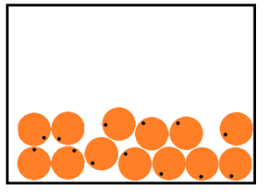
Particles are closely spaced.

a)

solid

b)

liquid

c)

gas

20.

Particles vibrate in place and do not change relative positions.

a)

solid

b)

liquid

c)

gas

21.

Particles move relative to each other, but remain in contact with each other.

a)

solid

b)

liquid

c)

gas

22.

Particles are not so closely spaced and slide past each other.

a)

solid

b)

liquid

c)

gas

23.

Particles are widely spaced except when they collide.

a)

solid

b)

liquid

c)

gas

24.

What happens to particles when their temperature increases?

a)

The particles move slower

b)

The particles move faster

c)

The particles lose mass

d)

The particles gain mass

25.

When ice sits out on a counter and melts, it is because the ice has...

a)

gained mass

b)

gained energy

c)

lost mass

d)

lost energy

26.

When water sits in the freezer and freezes into ice, it is because the water has...

a)

gained mass

b)

gained energy

c)

lost mass

d)

lost energy

27.

The AVERAGE kinetic energy of particles in a substance is its...

a)

Mass

b)

Volume

c)

Thermal Energy

d)

Temperature

28.

The TOTAL kinetic energy of particles in a substance is its...

a)

Heat

b)

Volume

c)

Thermal Energy

d)

Temperature

29.
When molecules flow around each other, they are in this phase
a)
solid
b)
liquid
c)
gas
d)
plasma
30.
Sam had a solid and added energy to it. What did the molecules look like?
a)
The molecules moved in place.
b)
The molecules moved away from each other.
c)
The molecules didn't move.
d)
The molecules moved around each other.
31.
What takes place when a liquid changes to a gas?
a)
condensation
b)
melting
c)
evaporation
d)
freezing
32.
What takes place when a solid changes to a liquid?
a)
condensation
b)
melting
c)
evaporation
d)
freezing
33.
What takes place when a liquid changes to a solid?
a)
condensation
b)
melting
c)
evaporation
d)
freezing
34.
What takes place when a gas changes to a liquid?
a)
melting
b)
freezing
c)
evaporation
d)
condensation
35.
What takes place when a solid changes to a liquid?
a)
condensation
b)
freezing
c)
melting
d)
evaporation
36.
If you have a liquid that changes to a gas, explain it's freedom of movement in both phases.
a)
molecules move away from each other, then around each other
b)
molecules move in place, then around each other
c)
molecules move around each other, then away from each other
d)
molecules move around each other, then in place
37.
Before: molecules move around each other, After: molecules move in place
a)
Before, the substance was a solid and later a liquid.
b)
Before,the substance was a gas, and later a liquid.
c)
Before, the substance was a liquid and later a solid.
d)
Before,the substance was a liquid, and later a gas.
38.
The phase change from water vapor to liquid water is known as...
a)
evaporation
b)
precipitation
c)
condensation
d)
sublimation
39.
What is sublimation?
a)
phase change between solid and liquid
b)
pahse change from gas to solid
c)
phase change from solid to gas
d)
phase change from solid to solid
40.
When things are hot molecules are moving...
a)
Fast
b)
Slow
c)
They are not moving
d)
They are moving by not fast or slow
41.
Everything has heat
a)
True
b)
False
42.
Heat and Temperature are the same thing
a)
True
b)
False
43.
Heat that is transferred because of touching is called...
a)
Radiation
b)
Conduction
c)
Convection
d)
Reflection
44.
Energy that does need a medium (usually air or water) to transfer heat is called...
a)
Radiation
b)
Conduction
c)
Convection
d)
Reflection
45.
Heat passes from...
a)
High to low
b)
Cold to hot
c)
Hot to cold
d)
Heat cannot be passed
46.
what is the meaning of conduction
a)
when heat transfers from objects that are not touching
b)
heat rise 
c)
cold fall
d)
when heat transfers from objects that are touching
47.
what is the meaning of convection?
a)
cold rises heat falls
b)
heat
c)
cold
d)
hot rises cold falls
48.
what kind of heat is happening when the sun heats your body
a)
conduction
b)
convection
c)
density
d)
radiation
49.
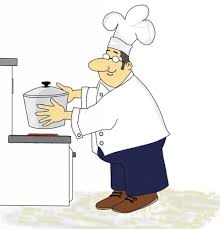
The man goes to take the hot pot off the stove with his bare hands.
a)
conduction
b)
convection
c)
radiation
50.
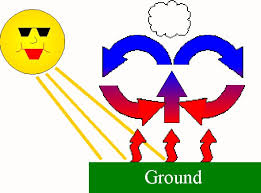
Warm air rises and the cool air sinks.
a)
conduction
b)
convection
c)
radiation
51.
In this experiment, the WARM red dye and the COLD blue dye was placed in the water at the same time. The warm red dye rose to the top while the cold blue dye sank to the bottom.
a)
conduction
b)
convection
c)
radiation
52.
The chocolate bunny and the lamp.
a)
conduction
b)
convection
c)
radiation
53.
The chocolate bunny and the iron.
a)
conduction
b)
convection
c)
radiation
54.

When air is heated, what happens to its mass?

a)

increases

b)

decreases

c)

remains the same

55.

When air is heated, its volume ____________.

a)

increases

b)

decreases

c)

remains the same

56.

When air is heated, its density ___________.

a)

increases

b)

decreases

c)

remains the same

57.

Convection can take place in ____________.

a)

solids only.

b)

liquids only.

c)

liguids and gases only.

d)

solids, liquids and gases.

58.
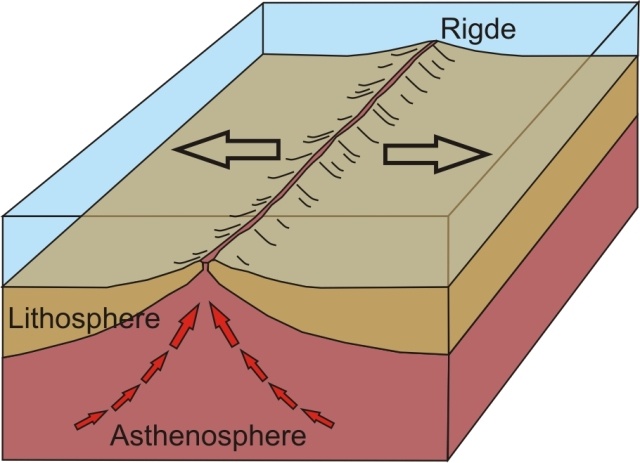
What kind of plate boundary is shown here?
a)
divergent
b)
convergent
c)
transform
d)
submergent
59.
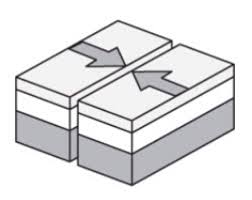
What kind of plate boundary is shown here?
a)
divergent
b)
convergent
c)
transform
d)
subducting
60.
What kind of plate boundary is shown here?
a)
divergent
b)
convergent
c)
transform
d)
strike slip
61.
What geologic feature/event you be most likely to find at a transform boundary?
a)
Earthquakes
b)
Volcanoes
c)
Mountains
d)
Rift Valleys
62.
What geologic feature/event would you most likely to find at a divergent boundary between two pieces of continental crust?
a)
Mid-Ocean Ridge
b)
Mountain
c)
Rift Valley
d)
Island Arc
63.
What geologic feature/event would you most likely to find at a convergent boundary between two pieces of continental crust?
a)
Volcano
b)
Mountain
c)
Rift
d)
Island Arc
64.
A subduction zone is formed...
a)
when one tectonic plate sinks below another
b)
at every type of convergent plate boundary
c)
at every type of divergent plate boundary
d)
at transform boundaries
65.
Name the boundary
a)
convergent boundary
b)
divergent boundary
c)
transform boundary
d)
sergent boundary
66.
Name the boundary
a)
convergent boundary
b)
divergent boundary
c)
transform boundary
d)
sergent boundary
67.
In which type of boundary do the plates move away from each other?
a)
convergent
b)
normal
c)
divergent
d)
transform
68.
The area where two or more plates meet is called a __________________.
a)
fault
b)
plate boundary
c)
plate edge
d)
ring of fire
69.
Plates move towards one another at ______________ boundaries.
a)
divergent
b)
convergent
c)
transform
d)
detergent
70.
Plates slide past one another at ____________ boundaries.
a)
divergent
b)
convergent
c)
transform
d)
submergent
71.

New oceanic crust (sea floor) is created at this boundary.

a)

Divergent Oceanic

b)

Divergent Continental

c)

Convergent Oceanic

d)

Transform

72.

Oceanic crust (sea floor) is destroyed at this boundary.

a)

Convergent Oceanic

b)

Divergent Oceanic

c)

Convergent Continental-Continental

d)

Divergent Continental

73.

The process where oceanic crust slides under another plate and is melted is called ___________.

a)

seafloor spreading

b)

subduction

c)

continental drift

d)

recycling

74.

What two crustal features occur near every subduction zone?

a)

Volcanoes and Trenches

b)

Rift Valleys and Mid Ocean Ridges

c)

Volcanoes and Rift Valleys

d)

Mid Ocean Ridges and Trenches

75.

A divergent boundary in the ocean creates what feature?

a)

Mid Ocean Ridge

b)

Rift Valley

c)

Deep Ocean Trench

d)

Subduction Zone

76.

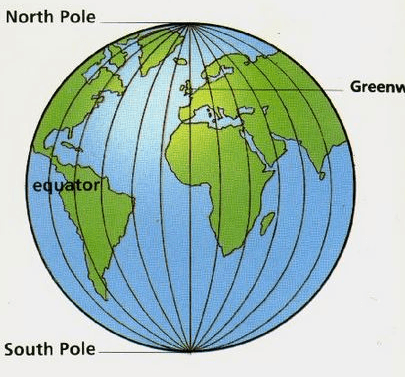
The imaginary line drawn exactly midway between the two poles is called

a)

Hemisphere

b)

North pole

c)

Equator

77.

The vertical lines are also known as

a)

Longitude

b)

Latitude

c)

Grid

78.

The latitude is specified by degrees, starting from and ending up with____

a)

80°

b)

90°

c)

95°

79.

Latitude is the measurement of distance north or south of the Equator

a)

true

b)

false

80.

There are _______° of longitude around the world

a)

180

b)

360

c)

120

81.

The longitude line of 0° is known as the ____________________

a)

Equator

b)

Prime Meridian

82.

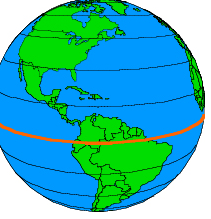
What´s the name of this imaginary line?

a)

Longitude

b)

Latitude

83.

What´s the name of this imaginary line?

a)

North Pole

b)

Prime Meridian

c)

Equator

84.
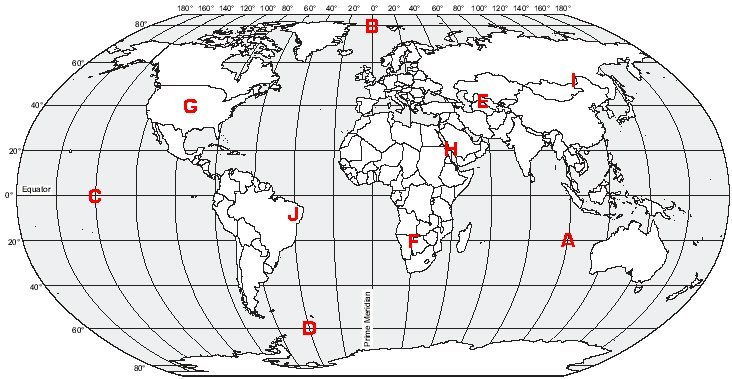
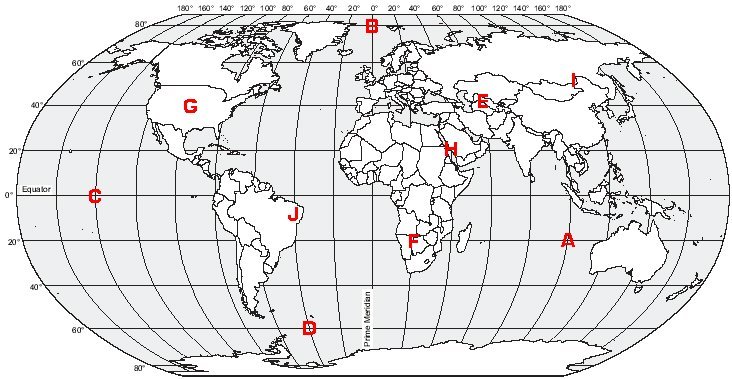
What is the approximate location of letter B?
a)
80oN, 0o
b)
0o, 80oW
c)
80oS, 0o
d)
0o, 80oE
85.
What is the approximate location of G?
a)
100oW, 40oN
b)
40oN, 100oW
c)
40oS, 100oW
d)
40oN, 100oE
86.
Which letter would you find at 15oS, 60oW?
a)
A
b)
C
c)
L
d)
H
87.
a)
The map show the lines of longitude.
b)
The map shows the lines of latitude.
88.
a)
The map shows lines of longitude.
b)
The map shows lines of latitude.
89.
Which STATE is located at...
120°W, 45°N
a)
WA
b)
OR
c)
UT
d)
ND
90.
Which STATE is located at...
100°W, 48°N
a)
NM
b)
ND
c)
SD
d)
CO