
 Worksheets
2nd Six Weeks Review
Total questions: 104
Worksheet time: 8hrs 22mins

Nonmetals tend to
gain electrons
lose electrons

Metals tend to
gain electrons
lose electrons
Na1+ F1-
Cr3+ O2-
K1+ S2-
Al3+ O2-
When a nonmetal gains electrons, it becomes this type of ion.
Anion
Cation
When a metal loses electrons, it becomes this type of ion.
anion
cation
A cation is where
There are more electrons than protons
Protons and electrons are equal
The number of electrons are less than the number of protons
Anions are formed from
Metals giving away electrons
Non-metals receiving additional electrons
Non-metals giving away electrons
Cations losing their charge
FeCl3
The name of FeCl₂ is
iron chloride
iron (II) chloride
iron (I) chloride
iron dichloride
When naming ionic compounds with transition metals you need to include roman numerals to show the _____ of the metal..
atomic number
mass number
charge
ionization energy
Each row on the periodic table represents:
an energy level
a sublevel
an electron
There are 4 different types of subshells(orbitals) s,p,d,f
true
false
What is the maximum number of electrons that an S orbital can have?
1 electron
2 electrons
3 electrons
4 electrons
Which area on the periodic table represents the electrons in the "d" sublevel?
representative elements
columns 3-8
rare earth elements
transition elements

1s2 2s2 2p6 3s2
How many electrons can the f sublevel hold?
14
10
8
2
3 subatomic particles that makeup an atom.
Positive, negative, neutral
Positron, Neutral, Electron
Proton. Neutron, Electron
This subatomic particle has a positive charge.
Proton
Neutron
Electron
The subatomic particle holds the atom together.
Proton
Neutron
Electron
Nucleus
The subatomic particles found in the nucleus.
Electron, Neutron
Proton, Neutron
Electron, Proton
Proton, Neutron, Electron
The subatomic particle that identifies the element.
Proton
Positron
Neutron
Electron
The subatomic particle that determines reactivity.
Electron
Proton
Shell
Neutron
A neutron has a _____ charge.
Positive
Negative
Neutral
1/2 charge
A electron has a ______ charge.
No charge
Positive
Neutral
Negative
The atomic number tells you the number of
Neutrons
Protons
Neutrons plus Protons
An isotope has different number of ______.
Neutrons
Protons
Electrons
Nucleus
Which atom has the largest atomic radius?
potassium
rubidium
francium
cesium
Ionization energy is the energy needed to...
remove an electron
remove a proton
gain an electron
gain a proton

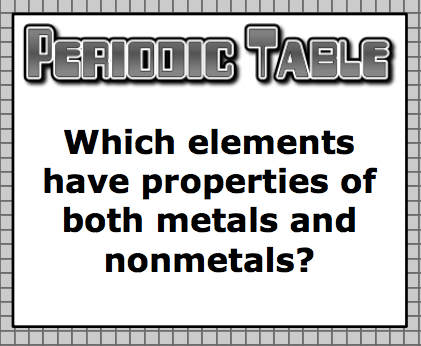
Who invented the Periodic Table?
Mendeleev
Bohr
Lewis
Democritus
What happens to the number of shells as you move down a group?
They decrease by 1
They increase by 1
Nothing
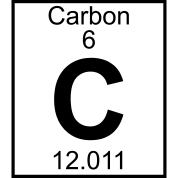
Which of the following is a physical change?
Ice melting
Baking potatoes
Rusty nail
Rotting wood
Which change creates a NEW substance?
Physical change
Chemical Change
The wick of a candle burning is a
chemical change
physical change
Wax in a candle melting, the wax can be reformed to its original shape.
physical change
chemical change
proton

Homogeneous
Heterogeneous

Homogeneous
Heterogeneous

Homogeneous
Heterogeneous

Homogeneous
Heterogeneous
Which elements have the most similar chemical properties?
boron and carbon
oxygen and sulfur
aluminum and bromine
argon and silicon
True or False: Atoms that have a valence electrons of less than eight are not stable.
true
false
How many valence electrons does chlorine have?
2
3
6
7
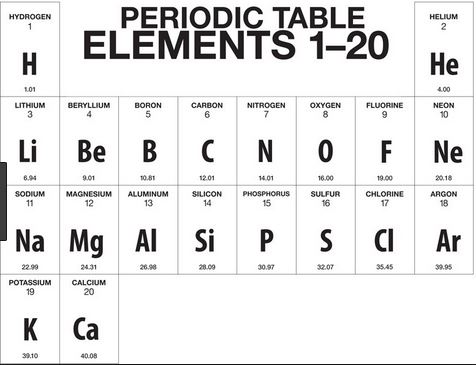
How many valence electrons does Aluminum Have?
1 Valence electron
2 Valence electron
3 Valence electron
4 Valence electron
5 Valence electron
How many valence electrons does Potassium Have?
1 Valence electron
2 Valence electron
3 Valence electron
4 Valence electron
5 Valence electron
How many valence electrons does Lithium Have?
1 Valence electron
2 Valence electron
3 Valence electron
4 Valence electron
5 Valence electron
The subatomic particles found in the nucleus.
Electron, Neutron
Proton, Neutron
Electron, Proton
Proton, Neutron, Electron
The subatomic particle that determines reactivity.
Electron
Proton
Shell
Neutron
The building block of everything.
Atoms
Elements
Positive
Biology
Bohr stated that _______ are found in shells orbiting the nucleus.
Electrons
Protons
Neutrons
Clouds
A piece of paper contains_______ of atoms.
Hundreds
Tens
Millions


What piece of equipment is shown in the picture?
beaker
test tube
erlenmeyer flask
pipette


This picture represents which of the following?
Element
Compound
Molecule
Which of the following cannot be broken down into something simpler?
A compound
An element
A mixture


