
 Worksheets
Evolution and Classification Pt. 1
Total questions: 75
Worksheet time: 1hrs 15mins
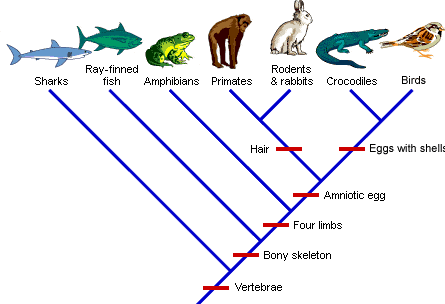
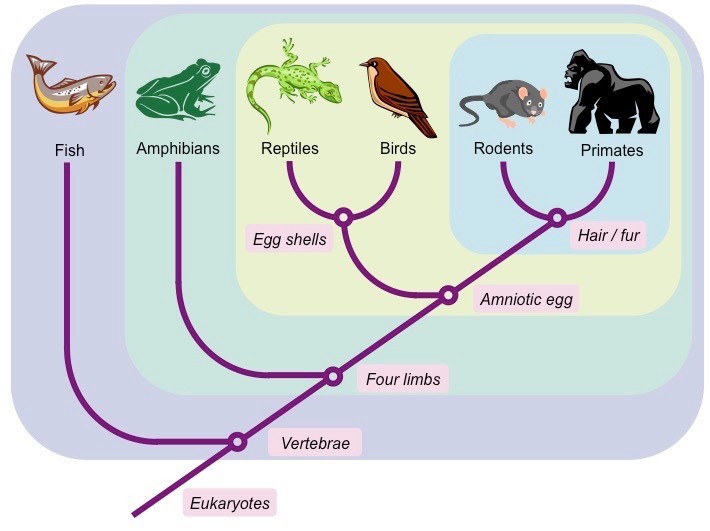
What characteristic distinguishes amphibians from birds and reptiles?
Amniotic egg
Egg shells
Vertebrae
Hair/fur

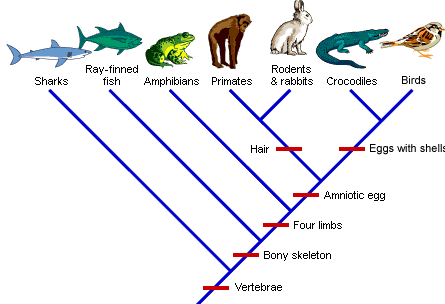
What characteristic do all the organisms on this cladogram share?
Being bi-pedal & having language
Complex brains
Fully binocular vision
Partial binocular vision & opposable thumbs
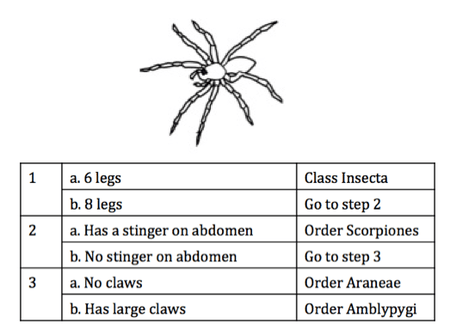
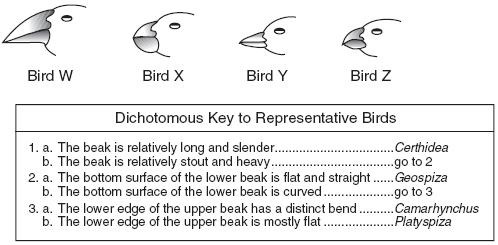
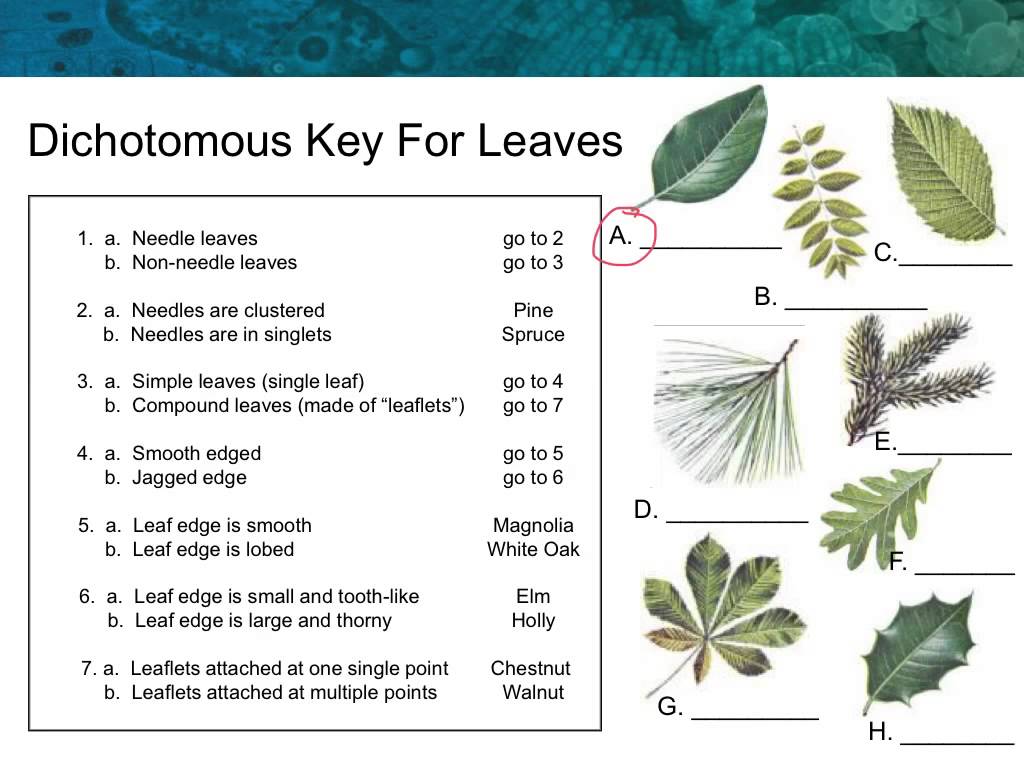



What number is the common ancestor of C and D
1
2
3
4

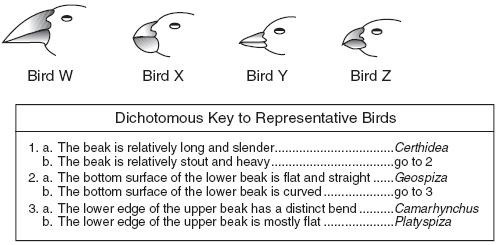
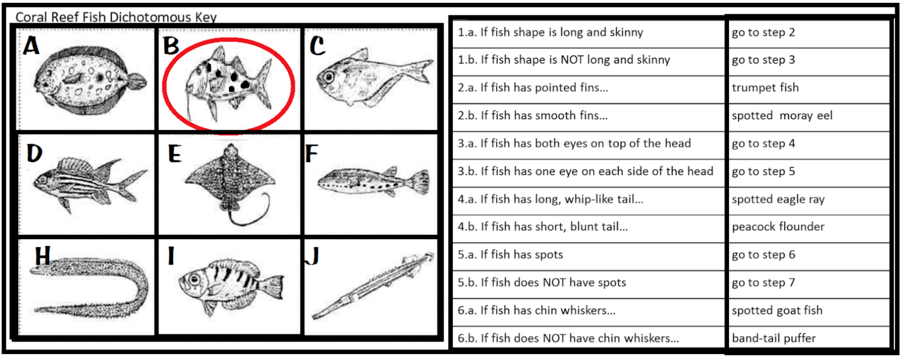

Identify ladybug B.
Ladea allison
Ladea jessica
Ladea kaley
Ladea rachel

Which of the following organisms is M. erminea?
A
B
C
D
E

Identify leaf F
Cydonia
Magnolia
Aesculus
Fraxinus
Ilex

Which of the following is a centipede?


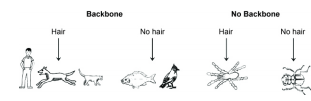
According to the classification key above, which pair of animals could be classified as mammals?
humans and dogs
birds and fish
birds and fish
cats and birds


Biologist group living things based on ____.
Habitat
Size
Colors
Shared Characteristics
What is the genus name here:
Canis lupus
Canis
lupus

Scientists group similar organisms together through a process called .....
identification
Estimation
Classification
Organization
Which of the following is a reason scientists use scientific names as opposed to their common names?
Scientists around the world use the same names so there is no language barrier
No two species have the same name, so there is no confusion about which organism is being studied
Scientific names can help you know which organisms are related if they share a common genus name

Phylogeny is usually represented by a tree diagram called a _________ - _____
Genetic Line
Phylogenetic Tree
Photographic Queue
Future Babies

In a phylogenetic tree, the branching points represent common ancestors.
Yes
NO

Which group on the cladogram arose FIRST?
Theropods
Allosaurus
Robin
Velociraptor
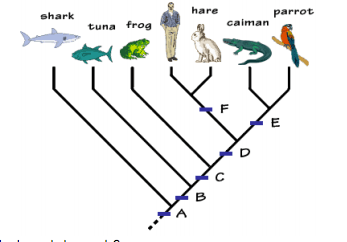
On the cladogram, which organism is the closest relative of the parrot?
Frog
Hare
Caiman
Parrot
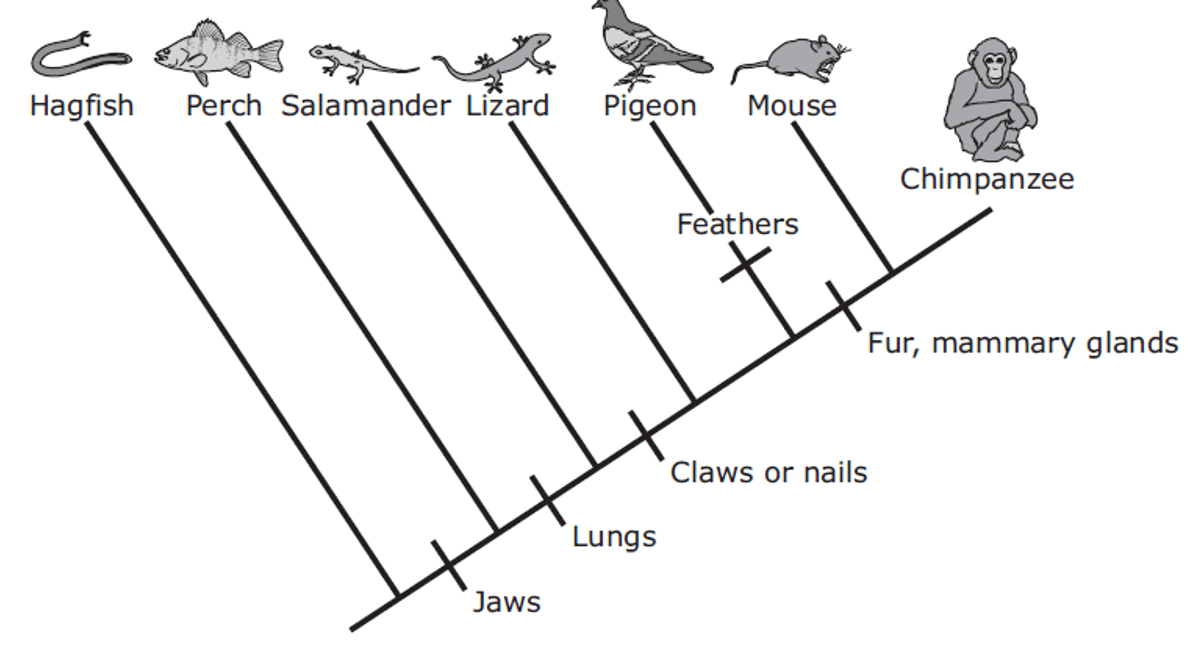
All the animals to the right of the salamander would have the common characteristic of...
Fur
Claws or nails
Lungs
Jaws
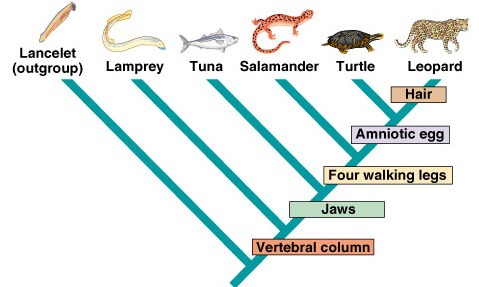
Which is the newest trait?
Amniotic egg
Walking legs
Jaws
Hair

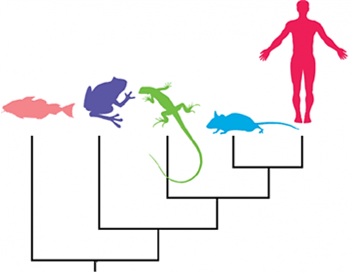
According to this phylogenetic tree, which creature is the least related out of all pictured?
Fish
Frog
Salamander
Human
According to this phylogenetic tree, which creature is the least related out of all pictured?
Fish
Frog
Salamander
Human

What is common ancestry?
When a species no longer exists
When organisms are descended from a single ancestor

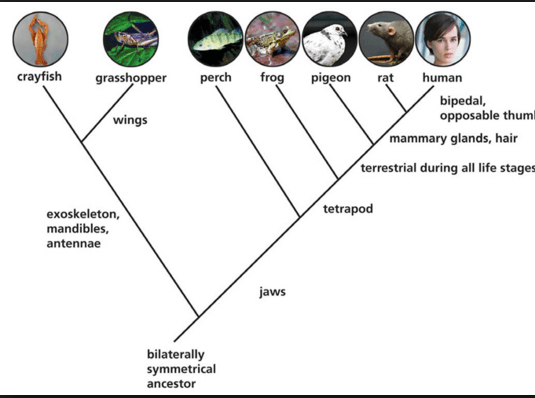
According to the cladogram, which organism is most distantly related to the human?
crayfish
grasshopper
perch
frog

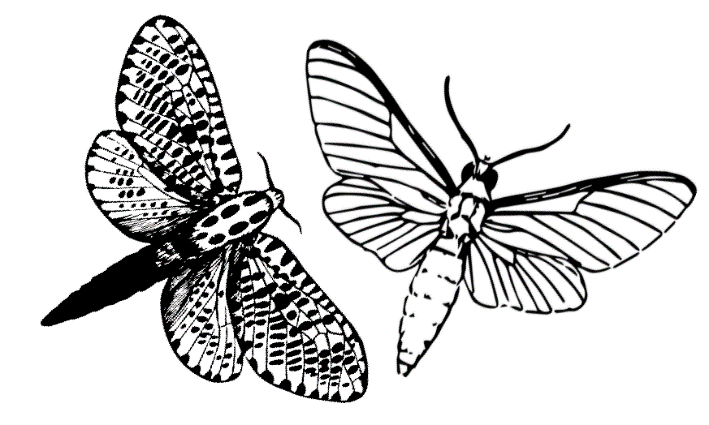
A physical trait favored by an environmental change can be called an
adaptation
extinction
possibility
mutation
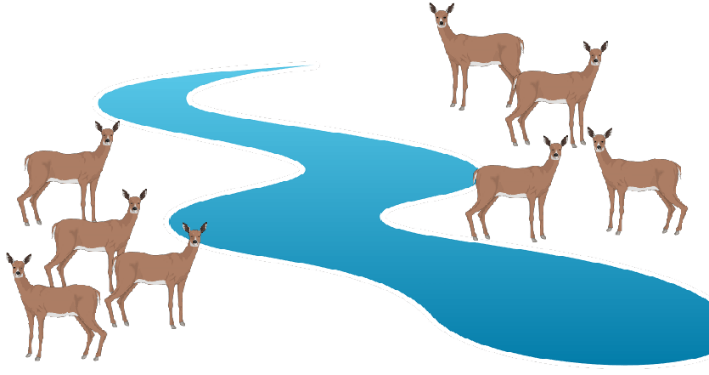
Two populations of the same species are separated by land barriers like rivers or mountains.
geographical isolation
temporal isolation
adaptive ratiation
behavioral isolaton

After a long time in isolation, Island fruit flies and mainland fruit flies meet. They do not produce viable eggs due to genetic differences. The flies have resulted in two seperate lineages due to:
Gene Pool
Genetic Drift
Gene Frequency
Speciation

All of these finches have different shaped beaks, they are an adaptation to gain access of
Water
Food
Shelter
Mates

According to the theory of natural selection, why are some individuals more likely than others to survive and reproduce?
Some individuals pass on to their offspring new characteristics they have acquired during their lifetimes.
Some individuals are better adapted to exist in their environment than others are.
Some individuals do not pass on to their offspring new characteristics they have acquired during their lifetimes.
Some individuals tend to produce fewer offspring than others in the same environment.


Mutations are important because they bring about
death of the organism in which they develop
genetic variation needed for a population to evolve
benefits for the individual, not for the population
Hardey-Weinberg equilibrium within a population


Why has antibiotic resistance evolved in bacteria?
Bacteria reproduce quickly
Bacteria with a resistance to the antibiotic, passed that trait to offspring
Bacteria that are resistant reproduce faster than non resistant strains
Bacteria exposed to antibiotics develop a resistance to them

Genetic drift is change in the allele frequency of a population due to...
random chance
natural selection
non-random mating (sexual selection)
artificial selection
A(n)________ is a measure of how common a certain allele is in a population.
Allele Frequency
Gene Pool
Genotypical Number
Genetic Drift

Which word means the formation of new species?
speciation
specialization
founder effect
sexual selection

When members of two populations cannot successfully reproduce.
reproductive isolation
lonely isolation
convergent isolation
genetic drift


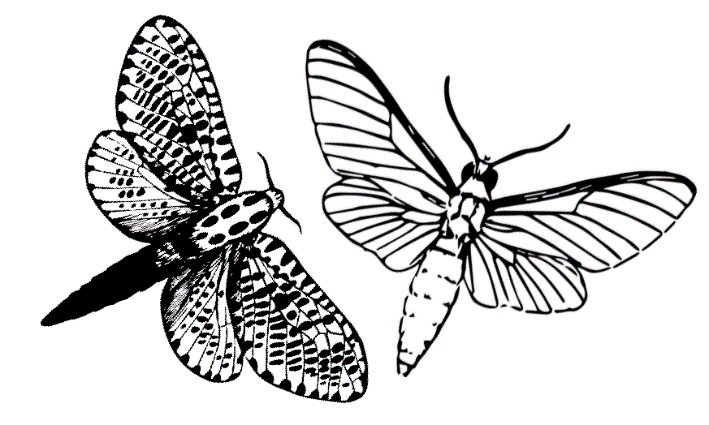
According to natural selection, light colored tree trunks would favor
light colored moths
dark colored moths
red colored moths
red and light colored moths

Label the natural selection graphs correctly...
1 Stabilizing, 2 Directional, 3 Disruptive
1 Disruptive, 2 Stabilizing, 3 Directional
1 Directional, 2 Stabilizing, 3 Disruptive

Starlings produce an average of five eggs. If there are more than five the parents cannot adequately feed the young. Fewer than five and predators may destroy them. As a result, five eggs becomes the most common number.
Stabilizing
Directional
Disruptive

Seed cracker birds have either large beaks or small beaks. They do not have medium sized beaks because medium sized beaks do not allow for adequate cracking of seeds.
Stabilizing
Directional
Disruptive

A scientist measures the circumference of acorns in a population of oak trees and discovers that the most common circumference is 2 cm. There are very few acorns with circumferences of 3 cm or circumferences of 1 cm. Only the 2 cm circumference acorns survive.
Stabilizing
Directional
Disruptive

A population of Madagascar hissing cockroaches lives in a woodpile. The cockroaches are eaten by lizards. Because the lizards have small heads, the lizards are unable to eat the very largest adult cockroaches, and instead prey upon small and medium sized adults. Over time, only the large headed lizards survive.
Stabilizing
Directional
Disruptive

Female birds that lay close to the optimum number of eggs have the most surviving offspring. Those that lay fewer or more eggs have lower relative fitness.
Stabilizing
Directional
Disruptive

A population of birds with various size beaks eats seeds. Small seeds can be eaten by birds with small beaks. Larger, thicker seeds can only be eaten by birds with larger, thicker beaks. During a drought, only large thick seeds exist so only the large, thick-beaked birds survive.
Stabilizing
Directional
Disruptive

Black rabbits (BB) and white rabbits (bb) are both able to survive because they can camouflage into the white and black rocks in their environment. However, the intermediate gray rabbits (Bb) do not survive. This results in only white and black rabbits.
Stabilizing
Directional
Disruptive

Small lizards have difficulty defending territories so they end up dying out. Large lizards are more likely to be preyed upon by owls. Over time, only medium sized lizards end up surviving.
Stabilizing
Directional
Disruptional

Women often have complications during labor while giving birth to very large babies, whereas very small babies tend to be underdeveloped. As a result, medium sized babies are the ones that end up surviving to adulthood.
Stabilizing
Directional
Disruptive

