
 Worksheets
A&P: Chapter 5 Question Bank
Total questions: 90
Worksheet time: 15hrs 0mins
What are the four types of tissues in the human body? (Select all that apply)
Epithelial
Connective
Muscle
Nervous
How do we classify epithelial tissue?
Shape
Shape and number of layers
Counting the number of individual cells
Squamous

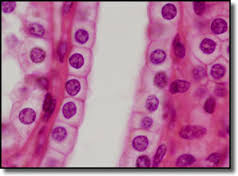
Identify the type of epithelial tissue from the picture above.
Simple squamous
Simple cuboidal
Stratified columnar
Stratified cuboidal

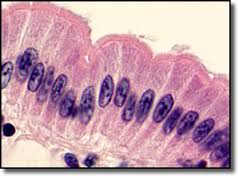
Identify the epithelial tissue from the picture above
Psuedostratified Columnar
Transitional
Stratified columnar
Stratified squamous
What is histology?
Study of organs
Study of different types of tissue
Study of histamines
Study of skin
What does pseudostratified mean?
Many layers of cells
Single layer that looks like many layers of cells
Single layer of cells
No layer of cells
What is the most abundant type of tissue in the human body?
Nervous
Muscle
Connective
Epithelial
Which one of the following is NOT a type of loose connective tissue?
Elastic
Areolar
Adipose
Reticular
Which of the following is NOT a type of cartilage found in the human body?
Hyaline
Elastic
Regular
Fibrocartilage
Connective tissue only function is protection
True
False

Identify the type of connective tissue from the picture above.
Spongy Bone
bone (osseous)
reticular
dense irregular

Identify the type of connective tissue from the picture above.
adipose/fat
areolar
blood
lymph
What are the three types of muscle tissue?
cardiac
smooth
skeletal
biceps femoris
Striations can be seen in which type of muscle tissues?
Smooth and cardiac
smooth and skeletal
skeletal and cardiac
Cardiac only
In which body structure would we find smooth muscle?
Heart
hamstring muscles
bladder
skin
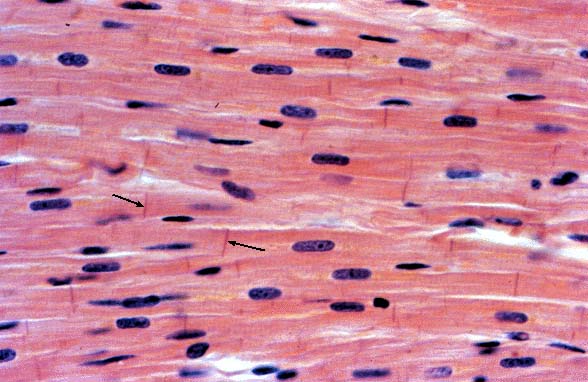
In which tissue type do we find "intercalated discs?"
Adipose tissue
Cardiac muscle
Nervous tissue
Connective tissue
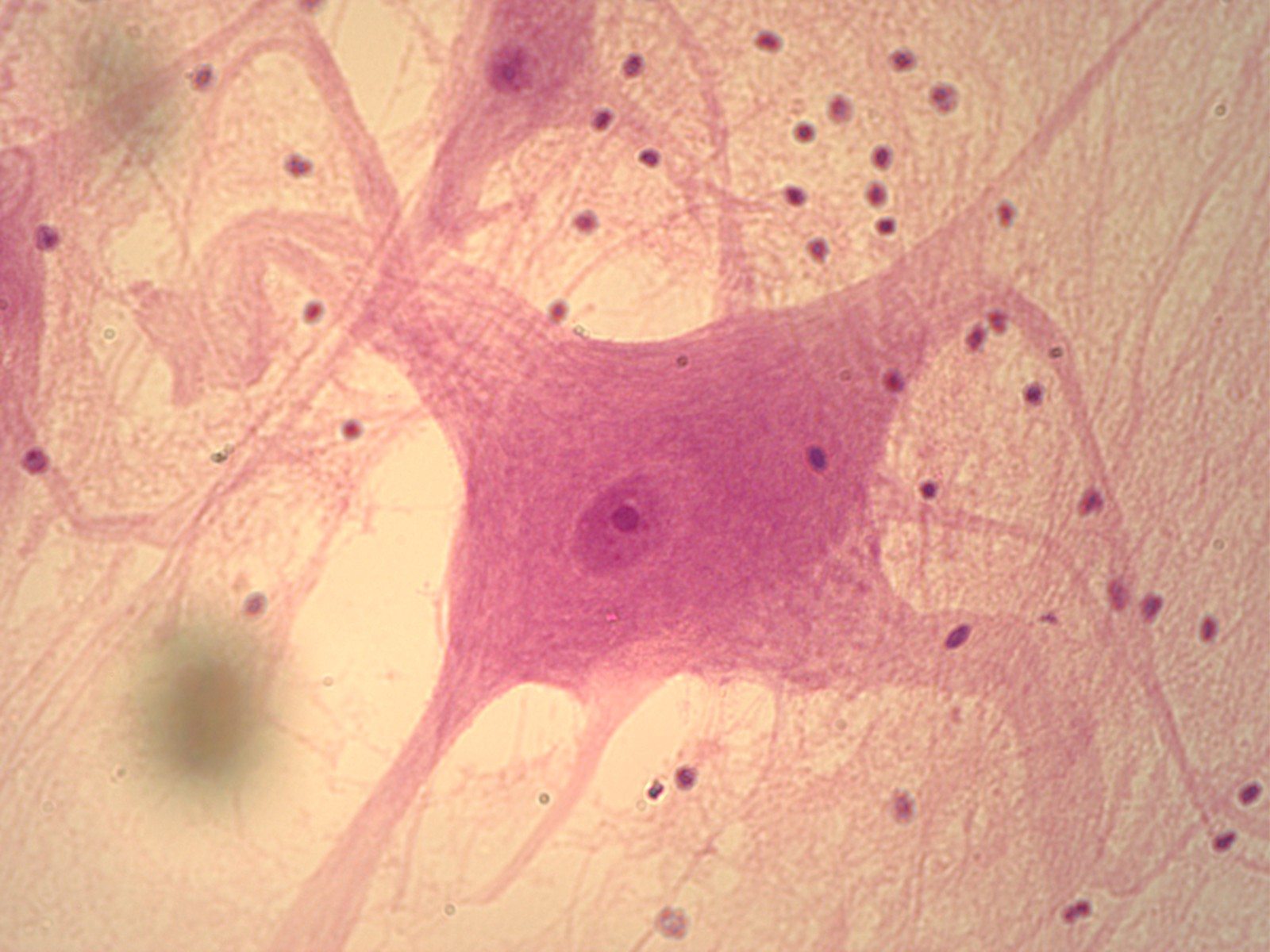
What are the two main cells that make up nervous tissue?
neurons
myelin
axon
neuroglia
Nervous tissue is found in the brain, spinal cord, and nerves and is responsible for communication.
true
false
What type of muscle tissues is "involuntary muscle?"
Cardiac
Skeletal
Smooth
Urine is confined to the human bladder in part due to the structure of junctions that connect the cells lining the bladder. These junctions form a barrier that prevents the exchange of ions and solutes between the blood and urine. What is the likely identity of these junctions?
Gap junctions
Tight junctions
Adhering junctions
Plasmodesmata
Which type of cellular junction is prominent in cardiac myocytes and allows for a unified contraction of the heart? Hint: in order for these cells to contract in unison, ions need to flow rapidly between them.
Tight
Adhering
Gap
Plasmodesmata
Junctions are necessary for comunications between cells in many types of tissues including animal embryos and heart muscles.
Tight junctions
Desmosomes
Gap junctions
All of the above
Epithelial tissue regenerate really quickly
True
False

According to the picture, where is the basement membrane?
Apical Side
Columnar Cells
Avascular tissue
Basal Side






Define tissue with regards to anatomy
Multiple sheets of thin paper used to clean your nose
The smallest structural and functional unit of an organism
A series of different cells in the same area
A group of structurally and functionally related cells that come together to perform common functions
What is the difference between exocrine and endocrine functions?
Exocrine cells secrete fluids to the outside of the body; endocrine cells secrete fluids into the inside of the body
They are synonymous
Exocrine cells secrete fluids into ducts; endocrine cells secrete fluids into the blood stream
Exocrine cells secrete clear fluids; endocrine cells secrete opaque fluids
What type of Connective tissue is found at the ends of bones to reduce friction?
Dense connective tissue
Cartilage
Adipose Tissue
Loose connective tissue
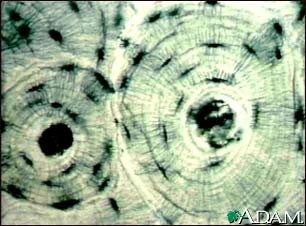
Collagen is a protein that is particularly abundant in
covering and lining epithelium
dense regular connective tissue
smooth muscle
adipose tissue
Osteocytes embedded within chambers that are surrounded by a matrix of mineral salts and collagen may be found in
bone
hyaline cartilage
dense regular connective tissue
loose connective tissue
Chondrocytes secrete an intercellular material that contains thickened ground substance in which type of tissue
compact bone
dense connective tissue
cartilage
skeletal muscle
Which muscle type is striated?
cardiac
skeletal
smooth
cardiac and skeletal
What type of muscle(s) is involuntary?
skeletal and smooth
cardiac and skeletal
smooth and cardiac
skeletal
What type of muscle is not banded or striated?
cardiac
skeletal
smooth
Circumferential
What type of muscle makes up your heart?
Cardiac
Skeletal
Smooth
Canulary
Which muscle tissue is located inside blood vessels?
Cardiac
Smooth
Skeletal
Vestibular

What feature found on the surface of this epithelial layer greatly increases the surface area for absorption?
cilia
microvilli
endoplasmic reticulum
multiple nuclei

Name the type of secretion
merocrine
apocrine
holocrine
berocrine

Name the type of secretion
merocrine
apocrine
holocrine
berocrine

Name the type of secretion
merocrine
apocrine
holocrine
berocrine
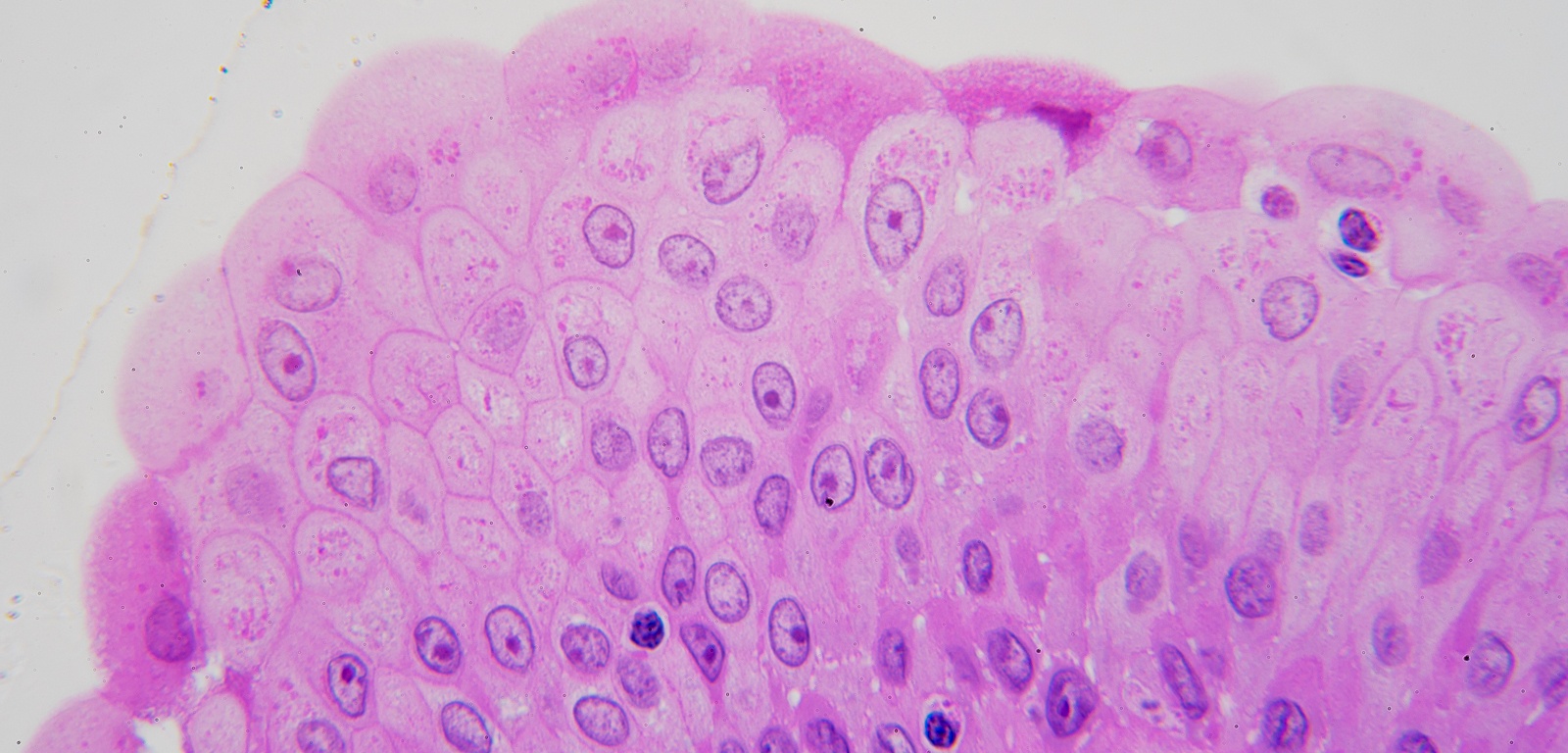
What type of epithelial tissue is this and where might you find it?
stratified cuboidal ; small intestine
simple squamous ; lung
pseudostratified columnar ; trachea
transitional ; bladder
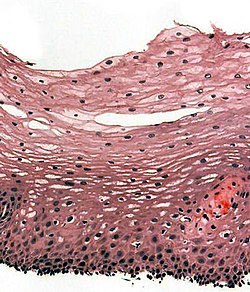
What type of epithelium is this and where might you find it?
stratified squamous ; skin
pseudostratified columnar ; trachea
simple squamous ; lung
simple cuboidal ; kidney tubules
All of the following are common locations of simple squamous epithlium EXCEPT
lungs
lining blood vessels
trachea
kidney tubules
What type of epithelium is this and where might you find it?
stratified squamous ; skin
pseudostratified columnar ; trachea
simple squamous ; lung
simple cuboidal ; kidney tubules
What physiological functions are enhanced by epithlial cells bearing microvilli and cilia?
increased surface area for absorption & capturing debris
decreased surface area for absorption & capturing debris
increased surface area for absorption of oxygen
decreased surface area for absorption of oxygen
Which of the following is NOT a main function of epithelial tissues?
covering exposed surfaces
lining internal passageways
producing glandular secretions
contracting to produce movement
The difference between endocrine and exocrine glands can best be described by which of the following?
exocrine secretions are released into surrounding tissues and blood whereas endocrine secretions are discharged onto the surface of the skin or other epithelial surfaces
endocrine secretions are released into the surrounding tissues and blood whereas exocrine secretions are discharged onto the surface of the skin or other epithelial surfaces
exocrine secretions and endocrine secretions are both released directly into the blood at all times
exocrine secretions and endocrine secretions are both released directly onto the surface of the skin at all times

The neuron is part of the
nervous tissue
connective tissue
epithelial tissue
muscular tissue

