wayground logo

Free Printable Worksheets

Font size

S
M
L
XL
Worksheets

Biology Exam Study Guide

Total questions: 115

Worksheet time: 4hrs 49mins

Name
Class
Date
1.

What is an example of an independent variable?

a)

height of the plant

b)

Fertilizer you give the plant

c)

When you bought the plant

d)

What the name of the plant starts with

2.

What is a dependent variable

a)

The variable that is on the y axis

b)

The variable that is on the x axis

c)

The variable that stands alone

d)

The variable that’s being measured

e)

A Controlled variable

3.

What are the organic molecules?

a)

Amino acids, nucleotides, fatty acids, and monosaccharides

b)

adenine, thymine, cytosine, and guanine

c)

Adenine , uracil, cytosine, and guanine

d)

Carbohydrates, lipids, proteins, and nucleic acids

4.

What is one cell organelle that plant cells have that animal cells do not have?

a)

Cell wall

b)

cell membrane

c)

nucleus

d)

Endoplasmic reticulum

5.

What does the centriole do in an animal cell?

a)

controls what goes in and out of the cell

b)

Helps cell division

c)

Makes proteins

d)

Contains the animals DNA

6.

Cells that contain a nucleus and other membrane bound organelles are called:

a)

Prokaryotic

b)

Eukaryotic

c)

Simple

d)

Bacteria

7.

Eukaryotic cells all have MITOCHONDRIA. What is the function?

a)

To create proteins for the cell

b)

To clean out cell waste

c)

To generate energy from glucose

d)

To store DNA

8.

A type of cell has a nucleus, lysosomes, cell membrane & chloroplast. The type of cell is:

a)

Animal Cell

b)

Plant Cell

c)

Bacteria

d)

All of the above

e)

None of the Above

9.

What cell part is responsible for the conversion of sunlight and water into glucose (photosynthesis)?

a)

Lysosome

b)

Central Vacuole

c)

Endoplasmic Reticulum

d)

Chloroplast

10.

Select all cell organelles that are found ONLY in plant cells.

a)

Cell Wall

b)

Central Vacuole

c)

Cell Membrane

d)

Chloroplast

e)

Golgi Apparatus

11.

A cell has a cell wall, ribosomes, but NO nucleus. What type of cell is it?

a)

Plant Cell

b)

Bacteria Cell

c)

Animal Cell

12.

What does DNA stand for? (The full name for DNA)

(a)  

13.

What makes up a nucleotide?

a)

Sugar

b)

Polymer

c)

Nitrogen Base

d)

Polypeptide

e)

Phosphate

14.

DNA Replication begins with the movement of DNA helicase. What is its function?

4 lines
15.

What kind of bonds hold nitrogen bases together?

a)

Polymer Bonds

b)

Hydrogen Bonds

c)

Ionic Bonds

d)

Peptide Bonds

16.

Which nitrogen base pairs up with Thymine in a DNA molecule?

a)

Guanine

b)

Adenine

c)

Cytosine

d)

Adrenaline

17.

What is the complementary strand of the DNA sequence ATA GCC AGC AAG? (Include spaces)

(a)  

18.

Which nitrogen base in found only in mRNA?

a)

Thymine

b)

Lysine

c)

Uracil

d)

Cytosine

19.

RNA and DNA are both made up of building blocks called...

a)

Cells

b)

Proteins

c)

Nucleotides

d)

Atoms

20.

Every 3 nucleotides codes for an

a)

Codon

b)

Amino Acid

c)

Protein

d)

Polypeptide

21.

Three nucleotides on tRNA are called an

a)

Codon

b)

Codes

c)

Anticodon

d)

Amino Acid

22.

The building blocks of proteins are...

(a)  

23.

What 3 observations make RNA different from DNA?

a)

Single-stranded

b)

An acid

c)

Contains Uracil

d)

Ribose sugar

e)

Located in the nucleus

24.

DNA Replication begins with the movement of DNA helicase. What is its function?

a)

To separate double-stranded DNA into a single strand to be copied

b)

To cause adenine to match with cytosine instead of thymine

c)

To triple the mRNA

25.

organelle that contains digestive enzymes to

breakdown harmful substances

a)

Chloroplast

b)

Vacuole

c)

Lysosome

d)

Centriole

26.

long hair like projection used for movement in

cells; uses a whip-like motion

a)

Cilia

b)

Flagella

c)

Microsome

d)

Vesicle

27.

network of proteins found within the cytoplasm

for support and structure in cell

a)

Cytoskeleton

b)

Mitochondria

c)

Cilia

d)

Ribosome

28.

breaks down food into energy that the cell can

use in a process called cellular respiration

a)

chloroplast

b)

ribosome

c)

mitochondria

d)

nucleus

29.

chlorophyll containing organelle in plants that

uses light energy to help create glucose in a

process called photosynthesis

a)

mitochondria

b)

chloroplast

c)

vacuole

d)

lysosome

30.

transports proteins throughout the cell

a)

lysosome

b)

vesicle

c)

cilia

d)

vacuole

31.

organism/cell type with no nuclear or internal membranes

a)

Eukaryote

b)

Prokaryote

c)

Cilia

d)

Chloroplast

32.

organelle for photosynthesis

a)

Chloroplast

b)

Chromosome

c)

Cilia

d)

Photorganelle

33.
Prokaryotes have a nucleus to store their DNA. True or False?
a)
True
b)
 False
34.
What word describes the process of having the advantageous traits that helps an organism survive  and reproduce?
a)
natural selection
b)
adaptation
c)
mutation
d)
genetic engineering
35.
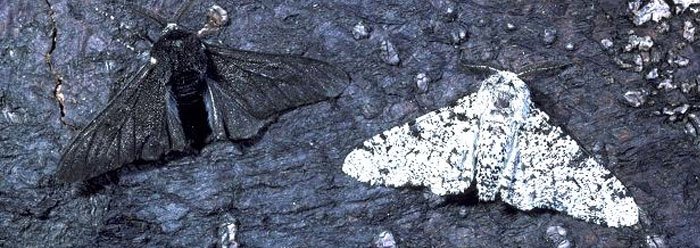
The trees these moths used to live on were white, but have been covered in soot from coal factories. Which moth will be more successful in this environment?
a)
Dark moth
b)
Light moth
c)
Both will be equally successful
d)
Neither will be successful
36.

Which scientist discovered bacteria?

a)

Jansen

b)

Hooke

c)

Van Leuwenhoek

d)

Newton

37.

The idea that all living things are composed of cells, the cell is the basic unit of structure and function, and all cells come from cells is known as the

a)

Theory of relativity

b)

Agenda Theory

c)

Cell Theory

d)

Theory of naturalization

38.

Variable that is manipulated

a)

Independent

b)

Dependent

39.

All cells have DNA,cytoplasm, ribosomes, and

a)

Nucleus

b)

Cell membrane

c)

Golgi body

d)

Endoplasmic Reticulum

40.
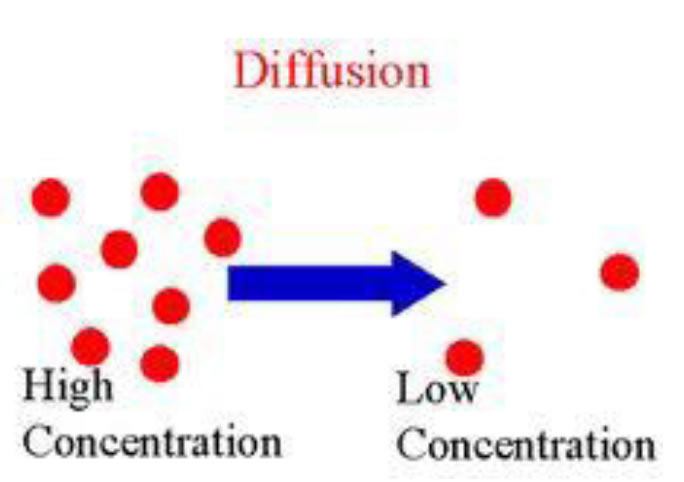
Movement of particles from high to low concentration. 
a)
Passive Transport
b)
Active Transport
41.
Osmosis is a form of ______________. 
a)
Passive Transport
b)
Active Transport
42.
What is it called when molecules move across the cell membrane from an area of high concentration to an area of low concentration through a carrier protein?
a)
Diffusion
b)
Osmosis
c)
Active Transport
d)
Facilitated Diffusion
43.
This picture represents what type of cell transport?
a)
endocytosis
b)
exocytosis
c)
osmosis
d)
passive transport
44.
Osmosis is the movement of _____ across a membrane.
a)
food
b)
energy
c)
oxygen
d)
water
45.
This cell organelle helps organisms maintain homeostasis by controlling what substances may enter or leave cells.
a)
vacuole
b)
nucleus
c)
cell membrane
d)
cell wall
46.
Which is true about active transport?
a)
It requires energy
b)
it does not require energy
c)
It moves substances down the concentration gradient
d)
it moves material from high to low concentration
47.
The cell below is in a _________ solution.
a)
Hypotonic
b)
Hypertonic
c)
Isotonic
48.
A cell in an isotonic solution will
a)
swell
b)
shrink
c)
stay the same size
d)
impossible to tell
49.
When a cell is placed in a hypertonic solution water
a)
moves from the inside of the cell to the solution
b)
moves from the solution to the inside of the cell
c)
moves equally in and out of the cell
d)
none of these
50.
The amount of particles in a given space.
a)
diffusion
b)
concentration
c)
permeable
d)
active transport
51.
When the concentration of particles inside of a cell is the same as the concentration of particles outside of the cell. 
a)
active transport
b)
concentration
c)
diffusion
d)
equilibrium
52.
Cell membrane surrounds a particle and encloses it (for large particles)
a)
Endocytosis
b)
Exocytosis
c)
Permeable
d)
In high concentration
53.

Which body system controls the body to maintain homeostasis?

a)

excretory

b)

nervous

c)

circulatory

d)

skeletal

54.
The maintenance of an organism’s internal environment is called:
a)
compensating
b)
homeostasis
c)
balancing
d)
routine
55.

Which of the following is NOT true about enzymes?

a)

Enzymes are a type of lipid

b)

Enzymes are not used up in a reaction

c)

Enzymes are catalysts

d)

Enzymes are very specific

56.

The reactants of a reaction that bind to an enzyme are called...

a)

products

b)

catalysts

c)

substrates

d)

inhibitors

57.
What is another word for "substrate?" 
a)
Solvent 
b)
Product 
c)
Solute 
d)
Reactant 
58.
If the activation energy is lowered, the reaction will take...
a)
More energy 
b)
Less energy
c)
The same amount of energy
d)
No energy
59.
The area on the enzyme where the reactant binds to is called the...
a)
Activation energy
b)
Active site
c)
Substrate
d)
Product 
60.
On the graph above, an increase in temperature results in....
a)
A decrease in the activation energy. 
b)
A decrease in the reaction rate. 
c)
An increase in activation energy. 
d)
An increase in the reaction rate. 
61.

Which of these is not one of the four classes of biochemical compounds?

a)

lipids

b)

proteins

c)

nucleic acids

d)

metabolism

62.

The term aerobic means

a)

wine-making

b)

with carbon dioxide

c)

without carbon dioxide

d)

with oxygen

e)

without oxygen

63.

Respiration ____ and cellular respiration ____.

a)

produces ATP, is gas exchange

b)

is gas exchange, produces ATP

c)

produces glucose, produces glucose

d)

uses glucose, produces glucose

64.

which of the following is the result of glycolysis?

a)

reduction of FAD to FADH2

b)

production of carbon dioxide

c)

conversion of glucose to 2 three carbon compounds

d)

conversion of NADH to NAD+

65.

Glycolysis

a)

does not occur in plant cells

b)

does not occur in animal cells

c)

does not occur in bacterial cells

d)

takes place in virtually all cells

66.

The end products of the KREBS cycle include all of the following except

a)

carbon dioxide

b)

pyruvic acid

c)

ATP

d)

NADH

67.

In the electron transport chain, electrons are passed from one electron transport molecule to another and are finally accepted by

a)

an oxygen molecule

b)

a molecule of carbon dioxide

c)

a molecule of water

d)

ADP

68.

Which of the following processes is most efficient (produces most ATP per molecule if glucose oxidized)

a)

aerobic respiration

b)

anaerobic respiration

c)

alcoholic fermentation

d)

lactic acid fermentation

69.

In yeast cells,

a)

lactic acid is produced during anaerobic respiration

b)

lactic acid is produced by glycolysis

c)

alcohol is produced during KREBS cycle

d)

alcohol is produced after glycolysis

70.

Muscle soreness associated with strenuous exercise is at least partly due to

a)

an excess of ATP that builds up during exercise

b)

the presence of lactic acid from fermentation by muscle cells

c)

the large amount of carbon dioxide that builds up in muscle

d)

the accumulation of alcohol from anaerobic respiration

71.

In which way are photosynthesis and cellular respiration similar?

a)

Both processes destroy energy.

b)

Both create energy.

c)

Photosynthesis breaks down sugar while cellular respiration produces sugar.

d)

Both processes transfer energy from one form to another.

72.

What is the correct equation for cellular respiration?

a)

oxygen + glucose -> carbon dioxide + water + Energy

b)

carbon dioxide + glucose + Energy -> carbon dioxide + water

c)

carbon dioxide + water -> oxygen + glucose + Energy

d)

carbon dioxide + water + Energy -> oxygen + glucose

73.
Which structures shown in the Figure make up the ADP molecule?
a)
A and B
b)
A, B and C
c)
A, B, C, and D
d)
C and D
74.
What does the "TP" in ATP stand for?
a)
2 phosphates
b)
tri (3) phosphates
c)
Two proteins
d)
tri (3) proteins
75.
Energy is released from ATP when
a)
a phosphate group is added
b)
adenine bonds to ribose
c)
ATP is exposed to sunlight
d)
a phosphate group is removed
76.
Plants need carbon dioxide from their environment to produce glucose during which stage of photosynthesis? 
a)
The light-dependent stage
b)
The light-independent stage 
c)
The electron transport chain
d)
ATP formation
77.
Where do the light-dependent reactions occur? 
a)
thylakoid 
b)
stroma
c)
mesophyll
d)
mitochondria
78.
Which of the following is the correct equation for PHOTOSYNTHESIS?
a)
carbon dioxide + water --> oxygen + glucose
b)
carbon dioxide + glucose + water --> oxygen 
c)
oxygen + water --> carbon dioxide + glucose
d)
glucose+ oxygen ---> water + carbon dioxide 
79.
What are the products of photosynthesis?
a)
Carbon dioxide and water
b)
Carbon dioxide and oxygen
c)
Glucose and oxygen
d)
Glucose and water
80.
Fermentation involves
a)
aerobic respiration
b)
anaerobic respiration 
81.
Why is yeast used to bake bread? 
a)
The waste gas, CO2, makes bread rise
b)
The alcohol produced makes bread dangerous
c)
The yeast consumes O2, causing bread to rise
82.
What is a disadvantage of fermentation as a process? 
a)
It produces too much ATP
b)
It only produces 2 ATP
c)
It occurs in the absence of oxygen
d)
It is only for quick bursts of energy
83.
What cells in the body may undergo lactic acid fermentation during exercise? 
a)
Muscle cells
b)
Fat cells
c)
Liver cells
d)
Skin cells
84.
Lactic acid fermentation occurs in your muscles after a workout because your cells are struggling to get
a)
Glucose
b)
Sunlight
c)
Oxygen
d)
Water
85.
The process carried out by yeast that causes bread to rise is
a)
alcoholic fermentation
b)
lactic acid fermentation
c)
cellular respiration
d)
yeast mitosis
86.
Determine the sex of the individual whose karyotype is displayed in the image.
a)
female
b)
male
87.
Which structure is labeled as C in the diagram?
a)
Centromere
b)
Chromosome
c)
Sister chromatids
88.
What is the structure that holds the sister chromatids together called?
a)
homologous chromosome
b)
centromere
c)
chromatid
d)
nondisjunction
89.
When chromosomes fail to separate correctly during anaphase of meiosis, what can occur?
a)
extra chromosomes are found in the sex cell
b)
chromosomes of the sex cell are doubled
c)
chromosomes of the sex cell are halved
d)
meiosis never completes
90.
What makes this individual's karyotype not normal?
a)
An extra sex chromosome
b)
An extra autosome
c)
A missing sex chromosome
d)
A missing autosome
91.
What is the sex of this individual?
a)
female
b)
male
92.
What do we use pedigrees for?
a)
To look at families
b)
To make determinations about the offspring
c)
To track traits in families
d)
Nothing
93.
How many generations are shown in this pedigree?
a)
1
b)
2
c)
3
d)
4
94.
What does a horizontal line between a square and a circle mean?
a)
They are siblings
b)
They are cousins
c)
They are married ("together")
d)
They are the children
95.
AA and Aa always show up as
a)
dominant
b)
recessive
96.
In the second generation-how many people are carriers of the trait?
a)
2
b)
3
c)
5
d)
6
97.
Which individual in the first generation is a carrier?
a)
The male
b)
The female
c)
individual 1
d)
None of the above
98.
How many kids did the mother and father from the first generation have?
a)
2
b)
4
c)
5
d)
6
99.
B = brown fur  b = white fur
In the punnett square, what is the probability for white fur? 
a)
0%
b)
25%
c)
50%
d)
75%
100.
In a flowering plant species, red flower color (R) is dominant over white flower color (r). What is the genotype of any red-flowering plant resulting from this species?
a)
rr
b)
R
c)
RR
d)
RR or Rr
101.

"transgenic" refers to an animal that:

a)

Has DNA from another organism spliced into its genome

b)

Has undergone DNA modification

c)

Has unique genes for its species

102.

In which ways can genetic engineering can improve crops

a)

Make them pest or drought resistant

b)

Make them more nutritious

c)

Make them larger

d)

All answers are correct

103.
When DNA is manipulated and moved from one source to another it is known as
a)
genetic engineering
b)
electrophoresis
c)
gene therapy
d)
GMO
104.
Charles Darwin came up with this theory 
a)
Natural Selection
b)
Mutation
105.
Darwin wrote that organisms with traits that are best suited to the environment will ________________
a)
increase in number
b)
become extinct
106.
Which of the following is NOT an example of natural selection? 
a)
People selectively breeding hamsters.
b)
Insect populations developing resistance to certain pesticides.
c)
Bacteria becoming resistant to antibiotics.
d)
Male birds of certain species developing colorful feathers to attract female mates.
107.

According to our book, the broadest level of classification is . . .

a)

kingdom

b)

phylum

c)

genus

d)

species

108.

The more classification levels that organisms share, the more characteristics that they have in common.

a)

True

b)

False

109.

The most specific level of classification is . . .

a)

kingdom

b)

phylum

c)

genus

d)

species

110.
Where does the energy start in this food chain?
a)
Plant
b)
Sun
c)
Deer
d)
Wolf
111.
Which food chain is in the correct order?
a)
cat, grass, bird, snail
b)
bird, snail, grass, cat
c)
grass, snail, bird, cat
d)
grass, cat, bird, snail
112.
In this energy pyramid, which organisms have the most energy available?
a)
Producers
b)
Carnivores
c)
Herbivores
d)
Top Predator
113.
How many carnivores are shown in this food web?
a)
6
b)
4
c)
5
d)
3
114.
Use the diagram to answer the question.
The Mayfly is a food source for which 3 organisms?
a)
Frog, Dragon Fly and snake
b)
Frog, trout and dragon fly
c)
Frog, salamander and trout
d)
Frog and phytoplankton
115.

Are you ready to pass the exam??

4 lines