wayground logo

Free Printable Worksheets

Font size

S
M
L
XL
Worksheets

ECOLOGY

Total questions: 107

Worksheet time: 27hrs 45mins

Name
Class
Date
1.

This sphere contains all life on Earth

a)

Geosphere

b)

Hydrosphere

c)

Atmosphere

d)

Biosphere

2.
Body of air surrounding our planet. 
a)
Hydrosphere 
b)
Biosphere 
c)
Atmosphere 
d)
Geosphere 
3.
An ecosystem is made up of all the ________________ and _________________ factors in an area.
a)
species and organisms
b)
abiotic and species
c)
biotic and species
d)
abiotic and biotic
4.
A group of the same type of organisms living in the same place at the same time.
a)
threatened species
b)
populations
c)
community
d)
limiting factor
5.
A collection of organisms that belong to different populations but all live in the same area and interact with one another.
a)
Population
b)
Ecosystem
c)
Community
d)
Ecosphere
6.
What is the source of energy for photosynthesis?
a)
carbohydrates-chemical
b)
sunlight-radiant
c)
heat-thermal
d)
television-electrical
7.
What is the purpose of photosynthesis?
a)
make glucose
b)
make ATP
c)
make light
d)
release carbon dioxide
8.
What type of organism uses photosynthesis?
a)
plants
b)
bacteria
c)
animals
d)
both plants and bacteria
9.
In which organelle (part of the cell) does photosynthesis take place?
a)
mitochondria
b)
chloroplast
c)
nucleus
d)
cell membrane
10.
Cellular respiration takes place in the
a)
nucleus
b)
cytoplasm
c)
ribosomes
d)
mitochondria
11.
__________ is an organism that only eats plants for energy.
a)
Carnivore
b)
Herbivore
c)
Omnivore
d)
Terivore
12.
What does a Primary Consumer eat?
a)
Tertiary Consumers
b)
Secondary Consumers
c)
Producers
13.
All energy on Earth ultimately comes from what source?
a)
Water
b)
Sun
c)
Consumers
d)
Oxygen
14.
A relationship between two species where one benefits while the other is harmed.
a)
Mutualism
b)
Commensalism
c)
Parasitism
d)
Naturalism
15.
When a population grows past the ecosystem's carrying capacity, what happens to the population?
a)
Continues to grow
b)
The population starts to die off to return to carrying capcity
c)
The population will go extinct due to lack of resources
d)
The population grows then finds a new carrying capacity
16.
Which of the following is an example of competition?
a)
Two vultures fight over a dead rabbit
b)
A bear eats a fish
c)
Birds migrate south
d)
Pet dog keeps a man company
17.
A tapeworm and a cat have this type of relationship.
a)
mutualism
b)
parasitism
c)
commensalism
d)
competition
18.
A tree blocks the light from the grass below. This is an example of _________.
a)
mutualism
b)
commensalism
c)
competition
d)
parasitism
19.
Food, water, sunlight, air, soil are resources that are often __________.
a)
limiting factors
b)
wet
c)
messy
d)
found in rocks
20.
A relationship between two organisms in which one organism benefits and the other is unharmed
a)
Mutualism 
b)
Competition
c)
Parasitsm 
d)
Commensalism 
21.
Any thing or organism that regulates the size of a population is known as __________.
a)
a limiting measure
b)
a limiting factor
c)
carrying capacity
d)
biodiversity
22.
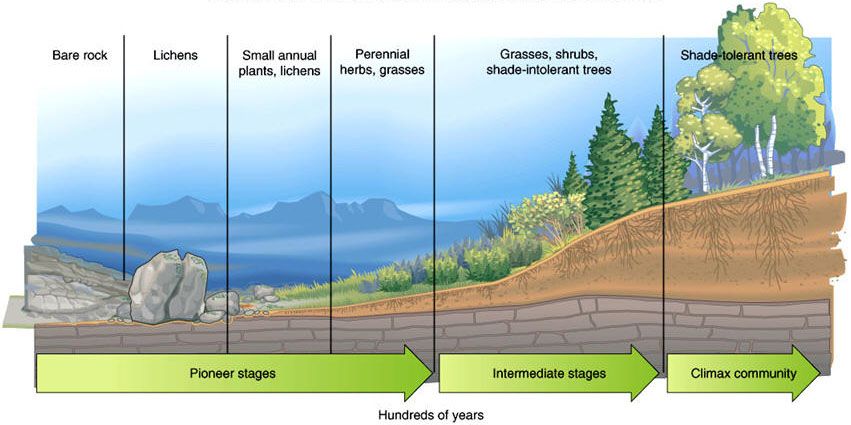
What is the order of succession shown in this figure?
a)
A, B, C, D
b)
B, A, D, C
c)
C, D, A, B
d)
D, A, B, C
23.
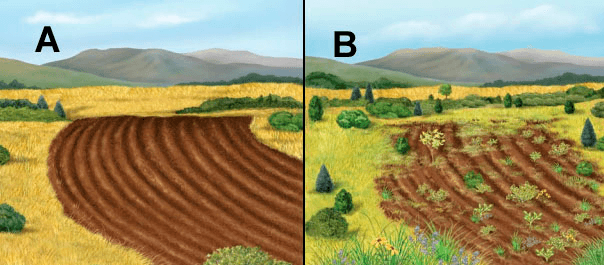
What type of succession is shown going from figure A to figure B?
a)
primary succession
b)
ecological succession
c)
secondary succession
d)
intermediate
24.
The picture shows what type of succession?
a)
primary
b)
secondary
c)
tertiary
d)
quadanary
25.
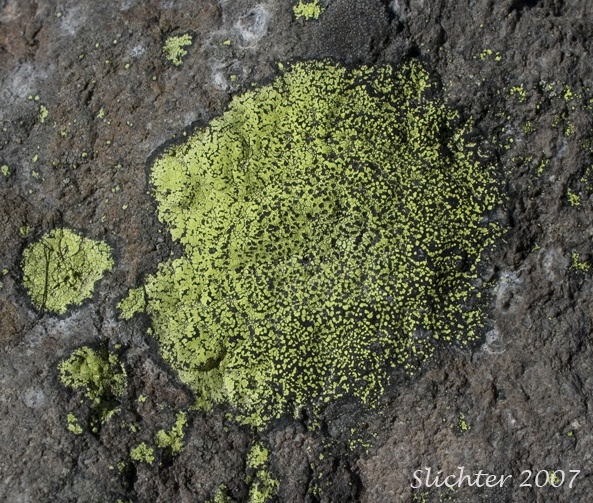
What is the name given to lichen or algae after a primary succession?
a)
pioneer species
b)
volunteer species
c)
founder species
d)
conqueror species
26.
the process by which a new community forms where no community lived before 
a)
resource
b)
invasive (non- native) species
c)
primary succession
d)
competition
27.
Final illustration (#8) shows
a)
pioneer species
b)
climax community
c)
only biotic factors
d)
only abiotic factors
28.
Any species in which every last member has died. 
a)
Invasive
b)
Pest
c)
Extinct
d)
Weeds
29.
Which of the following is NOT part of overall biodiversity?
a)
species diversity
b)
genetic diversity
c)
individual diversity
d)
ecosystem diversity
30.
How can humans best help an endangered species avoid extinction?
a)
they can feed the animals
b)
they can put the animals in a zoo
c)
they can protect the animal’s habitat
d)
they can take the animal to new habitats
31.
Where are many biodiversity hotspots located? 
a)
deserts
b)
tropical rain forests
c)
polar ice regions
d)
rocks
32.
What is THE most major cause of extinction today?
a)
habitat destruction by humans
b)
poaching
c)
disease
d)
hunting
33.
What does this picture represent?
a)
species diversity
b)
ecosystem diversity 
c)
genetic diversity
d)
biodiversity
34.
Kudzu has overgrown many parts of southern Missouri and native ground plants have disappeared from the area. This is an example of:
a)
Parasitism between kudzu and the native plants
b)
A predator prey relationship between ground plants and kudzu
c)
Competition occurring between the native and invasive species
d)
Commesalism occurring between the kudzo and native plants
35.
Why do the populations of invasive species grow so quickly? 
a)
Invasive Species are native to an area. 
b)
Invasive species are prey to many animals.
c)
Invasive species have no predators.
d)
Invasive species keep the ecosystems in equilibrium.
36.

DDT accumulation in North American Eagles, pelicans, and other birds disrupted birds' calcium metabolism, causing...

a)

Infertility

b)

Thin Eggshells

c)

Severe nerve damage

d)

Adult Deformities

e)

All of these are correct

37.
DDT is ____________ in the environment.  This means it doesn't break down/decompose.  It lasts a long time.
a)
persistent
b)
synergistic
c)
acute
d)
threshold
38.
All the living communities in an area PLUS the abiotic factors.
a)
population
b)
ecosystem
c)
biome
d)
habitat
39.
Study of interactions between living things and their environment.
a)
Biology
b)
chemistry
c)
paleontology
d)
ecology
40.

Organism that has an unusually large effect on its ecosystem.

a)

top predator

b)

tertiary consumer

c)

producer

d)

keystone species

41.
Organism that makes its own food from abiotic sources.
a)
autotroph
b)
producer
c)
fungus
d)
heterotroph
42.

The role or position that an organism has in its environment.

a)

Habitat

b)

Niche

c)

Competition

d)

Predation

43.

Occurs when more than one organism uses a resource at the same time.

a)

Habitat

b)

Niche

c)

Competition

d)

Predation

44.

Relationship in which one organism hunts and eventually eats another.

a)

Habitat

b)

Niche

c)

Competition

d)

Predation

45.

Organism that eats the prey.

a)

Predation

b)

Prey

c)

Predator

d)

Detrivore

46.

Type of symbiosis in which both organisms benefit form the relationship.

a)

Symbiosis

b)

Mutualism

c)

Commensalism

d)

Parasitism

47.

Remoras attach themselves to a shark's body. They travel with the shark and feed on the left over food scraps after the shark has finished its meal. The shark is unaffected as it's done eating anyway


This is an example of _____________.

a)

commensalism

b)

parasitism

c)

detrivorism

d)

mutualism

48.
What term best describes this group of bison?
a)
Species
b)
Community
c)
Ecosystem
d)
Population
49.
What term best describes all the plants and animals in this image?
a)
Species
b)
Population
c)
Ecosystem
d)
Community
50.
This image shows both living and non living things in an area.  What term best describes this?
a)
species
b)
community
c)
population
d)
ecosystem
51.
Which term best describes this baobab tree?
a)
Autotroph
b)
Heterotroph
c)
Herbivore
d)
Omnivore
52.

An organisms role in the environment

a)

Community

b)

Biome

c)

Niche

d)

adaptation

53.
Which level of ecological organization is composed of many similar ecosystems with the same climate and geographic locations? 
a)
A community
b)
A population
c)
A biome
d)
A biosphere
54.
The average temperature of the surface of Earth has increased approximately 1°C in the past century. Which reason best explains this increase in temperature?
a)
lower levels of ozone in the atmosphere
b)
lower levels of nitrogen in the atmosphere
c)
higher levels of carbon dioxide and other greenhouse gases in the atmosphere
d)
higher levels of oxygen in the atmosphere
55.
What is a herbivore?
a)
an animal that gets energy from eating other animals
b)
an organism that gets energy from eating only plants
c)
an animal that gets energy by eating both plants and other animals
d)
an animal that eats only herbs
56.
Where do all life forms get their energy?
a)
Earth's Core
b)
Water
c)
Plants
d)
The Sun
57.
What is this called?
a)
Food Web
b)
Food Chain
c)
Abiotic Factors
58.
The most important abiotic factors when studying biomes are...
a)
Food and Water
b)
Water and Sunlight
c)
Temperature and Oxygen
d)
Water and Temperature 
59.
The living portions of the ecosystem.
a)
Biotic factors
b)
Abiotic factors
60.
Organisms that look similar and can produce fertile offspring
a)
Species
b)
Fish
c)
Community
d)
Trees
61.
An area where an organism finds food, shelter and water in a specific arrangement
a)
niche
b)
biosphere
c)
biome
d)
habitat
62.
An individual belonging to a specific species
a)
Biotic
b)
Community
c)
Organism
d)
Reptile
63.
How is the burning of fossil fuels related to global warming?
a)
Magic
b)
Fuels are hot
c)
Greenhouse effect
d)
Photosynthesis
64.
How much of the atmosphere is composed of nitrogen gas?
a)
87%
b)
38%
c)
78%
d)
21%
65.
Growing legumes such as alfalfa or soy beans increases
a)
denitrification
b)
nitrogen fixation
c)
ammonification
d)
ammonium oxidation
66.
the maximum population size that can be sustained by a given environment 
a)
carrying capacity
b)
adaptation
c)
migration
d)
impact
67.
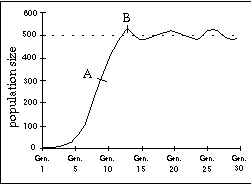
What is the carrying capacity of the following graph?
a)
1000
b)
8000
c)
800
d)
600
68.
What is the carrying capacity of the graph?
a)
around 500
b)
more than 500
c)
less than 500
d)
around 600
69.
What will happen to the population when the birth rate is larger than the death rate?
a)
grow
b)
shrink
c)
stay the same
70.

If predator populations decrease, what happens to the prey populations as a result?

a)

prey population will decrease as well

b)

prey population will remain the same

c)

prey population will increase

d)

whole food chain collapses

71.
This graph shows changes in two populations. What relationships do you observe between the two populations?
a)
When the prey population decreases it is followed by a decrease in the predator population.
b)
When the prey population increases, it is followed by a decrease in the predator population
c)
When the predator population increases it is followed by an increase in the prey population.
d)
When the predator population decreases it is followed by a decrease in the prey population.
72.
In this diagram, removing which living factor will have the MOST impact on this food chain?
a)
sun
b)
grass
c)
grasshopper
d)
robin
73.
Which image represents a population?
a)
A
b)
B
c)
C
d)
D
74.
What is the original source of almost all energy in most ecosystems?
a)
carbohydrates
b)
sunlight
c)
water
d)
carbon
75.
Members of a species in a defined area
a)
Ecosystem
b)
community
c)
biodiversity
d)
population
76.
Where an organism lives
a)
habitat
b)
niche 
c)
heterotrogh
d)
biosphere
77.
Non-living factor that affects an ecosystem
a)
biotic factor
b)
abiotic factor
c)
food chain 
d)
biome
78.
A pond ecosystem is shown in the diagram below. Which statement describes an interaction that helps maintain the dynamic equilibrium of this ecosystem?
Which statement describes an interaction that helps maintain the dynamic equilibrium of this ecosystem?
a)
The frogs make energy available to this ecosystem through the process of photosynthesis.
b)
The algae directly provide food for both the rotifers and the catfish.
c)
The green-backed heron provides energy for the mosquito larvae.
d)
The catfish population helps control the populations of water boatman and waterfleas.
79.
Organisms that relies on other organisms for food; consumer
a)
herbivore
b)
decomposer
c)
heterotroph
d)
species
80.
All the organisms in a particular location, including their nonliving environment
a)
ecosystem
b)
carnivore
c)
niche
d)
population
81.
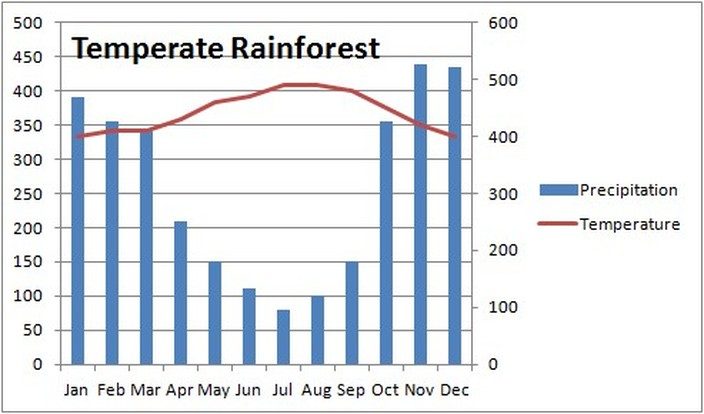
Which biome, because of its climate and amount of rainfall, has the largest number of species of plants and animals?
a)
Tundra
b)
Rainforest
c)
Desert
d)
Pineforest
82.
Example of a decomposer
a)
fungus
b)
mouse
c)
plants
d)
frogs
83.
relationship in which two species live closely together
a)
resource
b)
mutualism
c)
succession
d)
symbiosis
84.

What is the greenhouse effect?

a)

It is a phenomenon where the sun’s rays are absorbed by clouds.

b)

It is a phenomenon that occurs when heat escapes into space.

c)

It is when heat is trapped by gases, then sent back to earth’s surface.

d)

It describes the atmosphere’s composition.

85.

Barnacles are animals that cannot move. In order to get food, they attach to whales and catch any floating plankton in the water. The whale is neither helped nor harmed in the interaction. What type of symbiosis is this?

a)

Mutualism

b)

Commensalism

c)

Parasitism

d)

Neutralism

86.

In the wild, some alligators gets their teeth cleaned by birds. The birds gets their food from the alligators' teeth.

What type of symbiosis is this?

a)

Mutualism

b)

Commensalism

c)

Parasitism

d)

Neutralism

87.

In an ecosystem, there are populations of moose, rabbits, grass, and pine trees. Suddenly, a fire blazes through the area, which kills all of the populations. As the months go on, new species of grass begin to take root. This attracts animals, and eventually the ecosystem is restored.


What type of ecological succession happened?

a)

Primary succession

b)

Secondary succession

c)

Tertiary succession

d)

None of the above

88.

What is this picture describing?

a)

It is describing natural selection.

b)

It is describing direct competition between flamingos and ducks.

c)

It is describing abiotic factors of the tundra.

d)

It is describing the niche of each bird.

89.
Which of the following interactions is an example of symbiosis?
a)
an insect acts as a pollinator for a plant species
b)
a population of hummingbirds migrates during the summer
c)
a tropical bird performs a courtship dance for a mate
d)
a mother bear feeds and protects her cubs
90.
Which human activity has had the greatest impact on climate change?
a)
building skyscrapers
b)
deforestation
c)
burning fossil fuels
d)
production of nuclear waste
91.
The graph below shows population data for two species.  What can be said about the relationship between species 1 and species 2?
a)
When the population of species 1 increases, the population of species 2 decreases.
b)
The population of species 1 and species 2 stay the same over the time period shown.
c)
The population of species 1 is not influenced by the population of species 2.
d)
When the population of species 1 increases, the population of species 2 increases.
92.
Overpopulation occurs when a population exceeds its carrying capacity.  White-tailed deer are considered to be an overpopulated species in the central United States.  What is one consequence of white-tailed deer exceeding their carrying capacity?
a)
People don't see deer as often in urban areas.
b)
The deer are less healthy and more prone to disease.
c)
There are more predators to eat the deer.
d)
The deer have stopped breeding.
93.
After a natural disaster such as a hurricane or tornado, what will happen in the damaged ecosystem?
a)
Nothing; it will remain uninhabited.
b)
A new, different ecosystem will evolve.
c)
An ecosystem like the previous one will be re-established.
d)
No one really knows what to expect after a natural disaster.
94.
The synthesis of organic compounds by certain bacteria, especially in deep-sea hydrothermal vents, using energy obtained from the chemical oxidation of simple inorganic compounds. 
a)
photosynthesis
b)
chemosynthesis
c)
geochemicalsynthesis
d)
astrosynthesis
95.

What of the following is listed in order correctly from smallest to largest?

a)

organism, community, population, ecosystem, biome

b)

organism, population, community, ecosystem, biome

c)

organism, ecosystem, community, biome, population

d)

organism, population, ecosystem, community, biome

96.
The carrying capacity of an environment for a particular species at a particular time is determined by the
a)
number of individuals in the species.
b)
distribution of the population.
c)
reproductive potential of the species.
d)
supply of the most limited resources
97.
What will happen to the population when the death rate is larger than the birth rate?
a)
grow
b)
shrink
c)
stay the same
d)
None of these
98.

Which of the following are density dependent factors?

a)

competition for resources

b)

predation

c)

disease

d)

natural disasters

99.

Which of the following are examples of a density independent factors?

a)

forest fire

b)

seasonal cycles

c)

storms

d)

disease

100.
Tree kangaroos live in the upper branches of trees in the rainforests of Queensland, as well as on the island of New Guinea. This is an example of the tree kangaroos ___.
a)
niche
b)
habitat
c)
community
d)
population
101.
Rabbits and deer eat lettuce leaves from a garden.
What ecological interaction describes the relationship between rabbits and deer?
a)
Mutualism
b)
Competition
c)
Commensalism
d)
Predation
102.

Which statement best describes the relationship between species A and B?

a)

Species A is the prey of Species B

b)

Species A is a parasite of Species B

c)

Species A is a consumer and B is a producer

d)

Species A and B has a mutualistic relationship

103.

Which of the following are abiotic factors (choose 3)?

a)

the number of trees in an area

b)

the wind

c)

the temperature

d)

the amount of light in a place

104.

What are three types of symbiotic relationships?

a)

mutualism, commensalism, parasitism

b)

population, community, organism

c)

biotic, abiotic, limiting factor

d)

saprophyte, heterotroph, autotroph

105.

What is a niche?

a)

the job of an organism in an ecosystem

b)

a tree branch with a notch cut out of it

c)

water eroding soil from the edge of a river

d)

plants competing for sunlight

106.

All of the squirrels living in Hubbard Park would be considered a

a)

population

b)

community

c)

ecosystem

d)

organism

107.

All of the fish and aquatic plants living in Mirror Lake are considered a

a)

species

b)

population

c)

community

d)

biome