wayground logo

Free Printable Worksheets

Font size

S
M
L
XL
Worksheets

1st Semester Practice Final - Chemistry

Total questions: 159

Worksheet time: 3hrs 26mins

Name
Class
Date
1.

What is the definition of matter?

a)

The smallest particle in a substance

b)

Something that has mass and takes up space

c)

How much something weighs

d)

Something that only goes through a chemical change

2.

What does an elements ATOMIC NUMBER represent?

a)

number of atoms in its nucleus

b)

number of protons in its nucleus

3.

What is the atomic symbol for Carbon?

a)

Ca

b)

C

c)

Cb

d)

Cn

4.

An atom's nucleus contains what particles?

a)

protons and positrons

b)

protons and neutrinos

c)

quarks and quasars

d)

protons and neutrons

5.
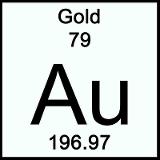
Which number is the atomic mass?
a)
79
b)
196.97
6.
Element is a
a)
pure substance
b)
compound
c)
mixture
d)
molecule
7.
What are the 3 subatomic particles?
a)
Protons, Electrons, Neurons
b)
Neutrons, Protons, Electrons
c)
Solids, Liquids, Gases
d)
Quarks, Bosons, Positrons
8.
Particles in an atom that are negative 
a)
molecules 
b)
electrons 
c)
neutrons 
d)
protons 
9.
Solids have a....
a)
Definite volume, indefinite shape
b)
Indefinite volume, indefinite shape
c)
Definite volume, definite shape
d)
Indefinite volume, definite shape
10.
Liquids have a...
a)
Definite volume, indefinite shape
b)
Indefinite volume, indefinite shape
c)
Definite volume, definite shape
d)
Indefinite volume, definite shape
11.
all matter is made of what 
a)
energy 
b)
atoms 
c)
electrons 
d)
compounds 
12.
The positive particles of an atom are 
a)
electrons 
b)
positrons 
c)
neutrons 
d)
protons 
13.
an atom with atomic number 6 would have how many protons 
a)
6
b)
12
c)
3
d)
cannot be determined 
14.
Particles in an atom that are neutral and have no charge are 
a)
negatrons 
b)
electrons 
c)
neutrons 
d)
protons 
15.
Which state of matter do the particles in this picture represent?
a)
solid
b)
liquid
c)
gas
d)
plasma
16.
Ice melting
a)
Chemical Change
b)
Physical Change
17.
Wood burned in a fireplace
a)
Chemical Change
b)
Physical Change
18.
Cake batter baked in an oven
a)
Chemical Change
b)
Physical Change
19.
Baking soda and vinegar combine to make carbon dioxide
a)
Chemical Change
b)
Physical Change
20.
Baking soda and vinegar combine to make carbon dioxide
a)
Chemical Change
b)
Physical Change
21.
Glass bottle that is shattered
a)
Chemical Change
b)
Physical Change
22.
Which of the following is a Physical Property?
a)
Combustion
b)
Electronegativity
c)
Color
d)
PH Level
23.
Subatomic particle with a charge of 0
a)
neutron
b)
proton
c)
electron
d)
quark
24.

Subatomic particles with a negative charge

a)

Electrons

b)

Neutrons

c)

Protons

d)

Quarks

25.
Subatomic particles with a positive charge
a)
neutrons
b)
atomic mass
c)
protons
d)
isotopes
26.
When a solution is saturated:
a)
No additional material will dissolve in it
b)
You need to stir it more 
c)
Two materials have combined to create a clear liquid
d)
Crystals form 
27.
To dissolve more material in a saturated solution:
a)
Add water or boil it
b)
Shake or stir faster
c)
Evaporate it
d)
You can only add water. Boiling it won't help.
28.
amount of solute that can dissolve in a given amount of solvent at a given temperature
a)
saturated solution
b)
solubility
c)
pure substance
d)
colloid
29.
What would be the effect on the particles if more heat is supplied to the system?
a)
They would slow down
b)
They would stop moving
c)
They would speed up
d)
There would be no effect
30.
A reaction is performed in a beaker with a temperature probe recording the temperature changes of the reaction.  If the temperature began at 15.0 degrees Celsius and ended at 27.5 degrees Celsius. Is the reaction endothermic or exothermic?
a)
Exothermic
b)
Endothermic
31.
In an exothermic process, the surroundings are gaining energy.
a)
True
b)
False
32.

Heat always travels from...

a)

Warm to cool

b)

Cool to warm

c)

Warm to warm

d)

Cool to cool

33.
What two types of measurements make up DENSITY
a)
Mass and Volume
b)
Temperature and Mass
c)
Grams and Centimeters
d)
Volume and Weight
34.
Look at this image.  Which object has the LOWEST density in water? How
a)
The Ping Pong Ball because it floats to the top 
b)
The bolt because it has sunk to the bottom
c)
The soda cap because it is not just full of air like the Ping Pong ball
35.
Jack has a rock. The rock has a mass of 14g and a volume of 2cm3. What is the density of the rock?
a)
7 mL
b)
7 g/cm3
c)
28 g/cm3
d)
1/7 g/cm3
36.
Why do the liquids form different layers?
a)
They have different densities.  
b)
They have different masses.  
c)
They have different volumes.  
d)
They are different temperatures.  
37.
What units can be used to express density?
a)
g/mL
b)
grams
c)
millimeters
d)
milliliters
38.
Frank has a paper clip. It has a mass of 9g and a volume of 3cm3. What is its density?
a)
3 g/cm3
b)
1/3 g/cm3
c)
27 g/cm3
d)
39 g/cm3
39.
Archimedes used density to discover if the crown of gold was real because
a)
Substances have their own unique densities
b)
Substances can change densities depending on their size
c)
Substances can change densities depending on their mass
d)
Substances can change densities depending on their volume
40.
What piece of equipment (tool) is used to measure mass?
a)
Graduated Cylinder
b)
Meter Stick
c)
Triple-Beam Balance
d)
Beaker
41.
What piece of equipment (tool) is used to measure volume  more accurately?
a)
Graduated Cylinder
b)
Meter Stick
c)
Triple-Beam Balance
d)
Beaker
42.
What is the measurement using the correct number of sig. figs.?
a)
39.5 mL
b)
40 mL
c)
39 mL
d)
40.0 mL
43.
What is the measurement using the correct number of sig. figs.?
a)
8.5mL
b)
8.50mL
c)
8.45mL
d)
8.4mL
44.
What is the measurement using the correct number of sig. figs.?
a)
89cm
b)
88.9cm
c)
88.90cm
d)
88cm
45.
If the beams are balanced with the riders in the positions shown, what is the total mass of the object?
a)
545.2g
b)
540.52g
c)
540.2g
d)
545.20g
46.

The amount of matter in an object

a)

Mass

b)

Volume

c)

Length

47.

The graph above is from which type of reaction?

a)

Endothermic reaction

b)

Exothermic Reaction

48.

In an endothermic reaction, energy is _________.

a)

absorbed

b)

released

49.
What kind of energy is in a moving skateboard?
a)
Potential
b)
Kinetic
50.

You freeze juice to make ice pops.

a)

exothermic

b)

endothermic

51.

Baking pizza in the oven

a)

endothermic

b)

exothermic

52.

Which process is an example of a physical change?

a)

Cutting Carrots into pieces and mixed in a salad

b)

A peanut butter and jelly sandwich being digested

c)

Sodium metal and water combining to form a compound and a gas

d)

Sodium metal and chlorine gas combined to form table salt

53.

Which type of change does the diagram show?

a)

A change in mass

b)

A physical change

c)

A chemical change

d)

A change in reaction

54.

Gordon adds a solid and a liquid together and produces a gas. Which process must have occurred?

a)

Evaporation

b)

Condensation

c)

A physical change

d)

A chemical change

55.
You know 1000 mg = 1 g.  Convert 2.5 grams into milligrams.
a)
25 mg
b)
25,000 mg
c)
250 mg
d)
2500 mg
56.

How many kilograms of calcium are there in 173 pounds of calcium? (1 pound = 454 grams; 1 kg = 1000 g)

a)

1.10 kg

b)

78.54 kg

c)

110 kg

d)

78500 kg

57.
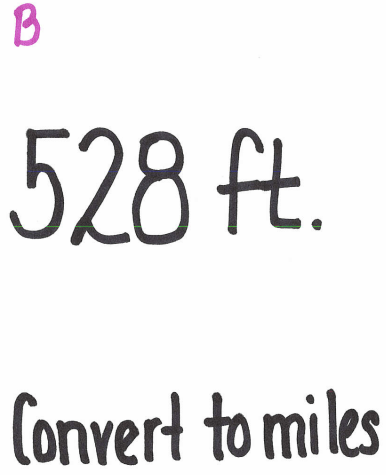
What unit should be in the denominator of the conversion factor?
a)
yards
b)
leagues
c)
feet
d)
fathoms
58.

If you are converting 490 grams to pounds, which 2 of the following conversion factors would you use?

a)

28.3 grams = 1 ounce

b)

16 ounces = 1 lb.

c)

1 lb = 0.45 kg

d)

1 kg = 2.2 lbs

59.

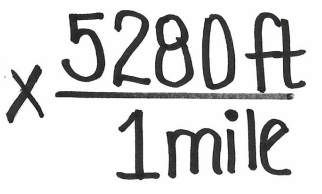
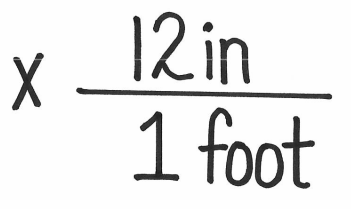
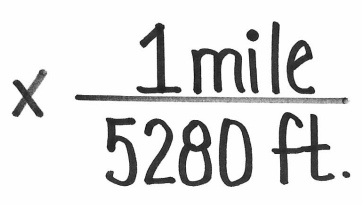
Which conversion fraction would be needed from this starting amount?
a)
b)
c)
60.

A child weighs 40.0 lb and is to receive 0.10 mg of an antibiotic for each kg of body weight. How many milligrams of the antibiotic shall the child receive? 1 kg = 2.2 lbs

a)

18.2 mg

b)

182 mg

c)

0.182 mg

d)

1.82 mg

61.

Which of the following conversion factors could you use to convert between g and kg?

a)

 1 kg1000 g\frac{1\ kg}{1000\ g} 

b)

 1000 kg1 g\frac{1000\ kg}{1\ g} 

c)

 100 g1 kg\frac{100\ g}{1\ kg} 

d)

 10 kg1 g\frac{10\ kg}{1\ g} 

62.

The Olympic record for the high jump is just over 2.6 yards. What is that distance in feet? (1 yd = 3 ft)

a)

0.867 ft

b)

7.8 ft

c)

2.6 ft

d)

93.6 ft

63.
What does the term kilo mean?
a)
100
b)
10
c)
.001
d)
1000
64.
m stands for....
a)
millimeter
b)
meter
c)
centimeter
d)
Liter
65.

40 ft = __________ inches

a)

400

b)

3.3

c)

480

d)

12

66.

Convert 3.5 gallons into cups. (1gal = 16cups)

a)

56 cups

b)

0.21875 cups

c)

19.5 cups

d)

48 cups

67.
Energy due to motion is ____________ energy. 
a)
Potential 
b)
Energy
c)
Kinetic
d)
Friction
68.
The faster an object moves, the ________ kinetic energy it has. 
a)
more
b)
less
c)
none of the above
d)
all of the above 
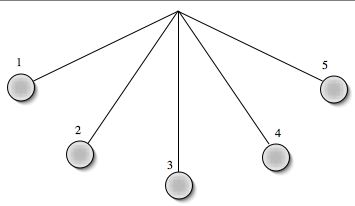
69.
When a pendulum swings, at which point is potential energy at its greatest?
a)
1
b)
2
c)
3
d)
4
70.
Food has _________ energy. 
a)
Potential 
b)
Kinetic 
c)
None of the above 
d)
All of the above 
71.
Which is the name of the kind of solid substance formed in this figure?  
a)
aqueous 
b)
precipitate
c)
acid
d)
synthesis 
72.
Provides evidence that a chemical reaction has occurred. 
a)
dissolving 
b)
melting
c)
formation of a gas
d)
bending
73.
the starting materials in a chemical reaction
a)
Products
b)
Reactants
c)
Starters
d)
Enders
74.
a substance that is formed as the result of a chemical reaction
a)
Product 
b)
Reactant
c)
Starters
d)
Enders
75.
the symbolic representation of a chemical reaction
a)
Long Hand
b)
Short Hand
c)
Electron Configuration
d)
Chemical Equation
76.

The symbol for a substance dissolved in solution is ______

a)

(s)

b)

(l)

c)

(aq)

d)

(g)

77.

Is this diagram endothermic or exothermic

a)

Endothermic

b)

Exotermic

c)

Exothermic

d)

Endote

78.

Why is this scale not in balance?

a)

All the masses are not on zero all the way to the left.

b)

The pan is not empty.

c)

The adjustment knob needs to be turned.

d)

Nothing this scale is in balance.

79.

Why is this scale not in balance?

a)

All the masses are not on zero all the way to the left.

b)

The pan is not empty.

c)

The adjustment knob needs to be turned.

d)

Nothing this scale is in balance.

80.

Why is this scale not in balance?

a)

All the masses are not on zero all the way to the left.

b)

The pan is not empty.

c)

The adjustment knob needs to be turned.

d)

Nothing this scale is in balance.

81.
When you calibrate the scale you slide all three riders to the ___________ position. 
a)
leftmost 
b)
rightmost 
82.
What part of the triple beam balance holds the moving weights?
a)
pan
b)
pointer 
c)
beams 
d)
zero adjustment knob
83.

What does this triple beam balance read?

a)

265.63g

b)

265.73

c)

265.7g

d)

265.73g

84.

What is the value on the balance?

a)

11.230g

b)

11.220g

c)

11.21g

d)

11.2g

85.

Whose model suggested that negative particles were mixed in with positively charged material - like seeds in a watermelon?

a)

J.J. Thomson

b)

Ernest Rutherford

c)

Niels Bohr

d)

Albert Einstein

86.

Who discovered that the atom had an small, dense, positively charged center?

a)

Ernest Rutherford

b)

J.J Thomson

c)

Robert Millikan

d)

John Dalton

87.
What can you conclude from the fact that scientists continue to update the atomic model?
a)
New information about atoms continues to be discovered
b)
Old information about atoms is completely useless
c)
Scientists did not have any information about atoms until a few years ago
d)
Scientists still have no idea what atoms look like
88.

Which scientists believed an atom was indivisible? (Choose all correct responses.)

a)

Democritus

b)

Dalton

c)

Thomson

d)

Rutherford

89.

Which scientist discovered that the atom has parts - which means it can be divided?

a)

Democritus

b)

Dalton

c)

Thomson

d)

Rutherford

90.

Which scientist proposed a new atomic model after discovering the electron in 1897?

a)

Dalton

b)

Thomson

c)

Rutherford

d)

Bohr

91.

In the atomic model nicknamed the "plum pudding" model, what do the raisins represent?

a)

the nucleus

b)

the atom

c)

the electrons

d)

the positive material

92.

J.J. Thomson discovered the electron using

a)

gold foil and alpha particles.

b)

oil drops.

c)

a cathode ray tube.

d)

emission spectra of a hydrogen atom.

93.

Who proposed that electrons move around the nucleus in circular orbits?

a)

Dalton

b)

Thomson

c)

Rutherford

d)

Bohr

94.

Rutherford realized that the atomic nucleus was positively charged because

a)

it attracted alpha particles.

b)

it deflected alpha particles.

c)

it had no effect on alpha particles.

d)

it produced alpha particles.

95.

Niels Bohr added _______________ to the model of the atom.

a)

electrons.

b)

a nucleus.

c)

neutrons.

d)

energy levels.

96.

Which of the following is the best description of J.J. Thomson's model of the atom?

a)

a featureless, indivisible sphere

b)

a sphere of positive material with electrons embedded in it

c)

mostly empty space with electrons randomly orbiting around a positive nucleus

d)

mostly empty space with electrons located in set orbits around a positive nucleus.

97.

Which of the following is a positively charged particle found in the nucleus of an atom?

a)

Electron

b)

Proton

c)

Neutron

d)

Quark

98.

Which particle carries no charge?

a)

Neutrons

b)

Electrons

c)

Protons

99.

What were J. J. Thomson's three contributions to the atomic theory?

a)

Discovered the electron

b)

Discovered the nucleus -did the gold foil experiment

c)

Used the cathode ray tube in his discovery

d)

Created a model of the atom with electrons moving around the nucleus in fixed orbits

e)

Created the "plum pudding" model of the atom
100.
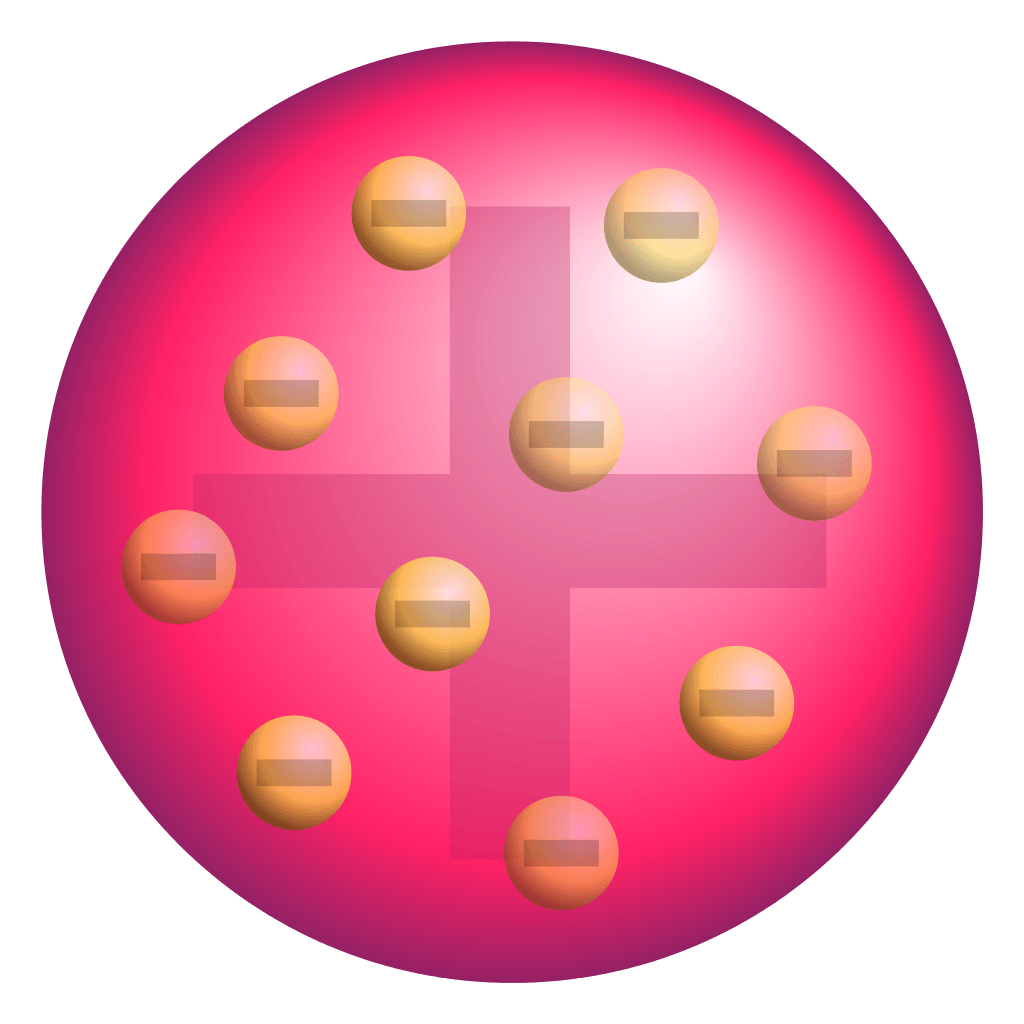
Who's model is this?
a)
Thomson
b)
Rutherford
c)
Democritus
d)
Bohr
101.

Who came up with this model of an atom that included electrons in fixed energy levels?

a)

J.J. Thompson

b)

Ernest Rutherford

c)

Neils Bohr

d)

James Chadwick

102.
Rutherford’s experiment determined that the nucleus of an atom is tiny, dense and  ______ charged. 
a)
neutrally
b)
negatively
c)
positively
103.
A chemical bond resulting from the electrostatic attraction between positive and negative ions is called a(n)
a)
covalent bond.
b)
ionic bond.
c)
charged bond.
d)
dipole bond.
104.
How many valence electrons does a bromine atom have?
a)
1
b)
2
c)
6
d)
7
105.
How do the following two elements bond together?
Al3+  O2-         
a)
AlO
b)
Al2O3
c)
Al3O6
d)
Al3O2
106.
If my charge becomes 2+ what does that say about me?
a)
I am stealing 2 electrons
b)
I am losing 2 electrons
c)
I am in period 2
d)
I have an atomic # of 2
107.
If I gain electrons I become
a)
Positive because I've added to my atom
b)
negative because I've added electrons
c)
same because i'm balanced
d)
equal because now I have electrons
108.
Metals tend to 
a)
gain electrons
b)
lose electrons
109.
What is the correct formula for the compound, lithium oxide?
a)
LiO
b)
Li2O
c)
LiO2
d)
Li2O2
110.
The oxidation number for Fe in Fe2O3:
a)
+2
b)
+3
c)
+1
d)
-2
111.
The oxidation number for copper in Cu2S:
a)
+1
b)
+2
c)
-1
d)
-2
112.
AgF
a)
silver fluoride
b)
silver fluorine
c)
monosilver monofluoride
d)
silver monofluorine
113.
Nonmetals tend to 
a)
gain electrons
b)
lose electrons
114.
If I gain electrons I become
a)
Positive because I've added to my atom
b)
negative because I've added electrons
c)
same because i'm balanced
d)
equal because now I have electrons
115.
How do the following two elements bond together?
Cr3+  O2-         
a)
CrO
b)
Cr3O2
c)
Cr2O3
d)
CrO3
116.
When a nonmetal gains electrons, it becomes this type of ion.
a)
Anion
b)
Cation
117.
When a metal loses electrons, it becomes this type of ion.
a)
anion
b)
cation
118.
The proper formula for magnesium hydroxide:
a)
MgOH
b)
Mg2OH
c)
Mg(OH)2
d)
Mg2OH2
119.
How do the following two elements bond together?
Na1+  F1-         
a)
NaF
b)
NaF3
c)
Na3F
d)
Na1F2
120.
How do the following two elements bond together?
K1+  S2- 
a)
KS
b)
K8S
c)
K6S3
d)
K2S
121.
How do the following two elements bond together?
Al3+  O2-         
a)
AlO
b)
Al2O3
c)
Al3O6
d)
Al3O2
122.
When an ionic compound is formed, its charge is 
a)
negative
b)
neutral (no charge)
c)
positive
123.
What is the charge on the simple (single atom) ion that sulfur forms?
a)
1-
b)
2+
c)
3+
d)
2-
124.
How are electrons arranged in an atom?
a)
In groups of five
b)
In energy levels
c)
By color
d)
By shape
125.
An element with five valence electrons is
a)
phosphorus
b)
oxygen
c)
beryllium
d)
rubidium
126.
How many electrons are in the outer (valence) shell of Chlorine (Cl)?
a)
1
b)
3
c)
6
d)
7
127.
What is the name of the group that never reacts--ever ever they are stable with a full outermost ring!!!
a)
noble gases
b)
transition
c)
halogens
d)
borons
128.
The period for Bromine is ___________.
a)
3
b)
2
c)
4
129.
What's a valence electron?
a)
electrons in the second energy level
b)
electrons in the outermost energy level
c)
the atomic number
d)
electrons in the first level
130.
How many Valance electrons does Iodine Have?
a)
6
b)
16
c)
7
d)
17
131.
How many electrons should Flourine have around its Lewis dot model?
a)
5
b)
6
c)
7
d)
8
132.
How many electrons should Carbon have around its Lewis dot model?
a)
1
b)
3
c)
4
d)
5
133.
?
a)
Helium
b)
Hydrogen
c)
Argon
d)
Silver
134.
How many electrons does potassium K contain? (click to see image)
a)
19
b)
39
c)
20
d)
40
135.

How many valence (outer) electrons does an Oxygen atom have?

a)

2

b)

6

c)

8

d)

16

136.

What element is represented in this Bohr Model?

a)

Carbon

b)

Hydrogen

c)

Aluminum

d)

Lithium

137.
What is the name of this element?
a)
Lithium
b)
Boron
c)
Carbon
d)
Neon
138.
This is a correct dot diagram for fluorine (F)
a)
true
b)
false
139.

When drawing a Bohr model, how do you determine the number of electrons?

a)

Valence Electrons

b)

Mass Number

c)

Atomic Number

d)

Atomic Mass Unit

140.
This is a correct dot diagram for magnesium (Mg)
a)
true
b)
false
141.
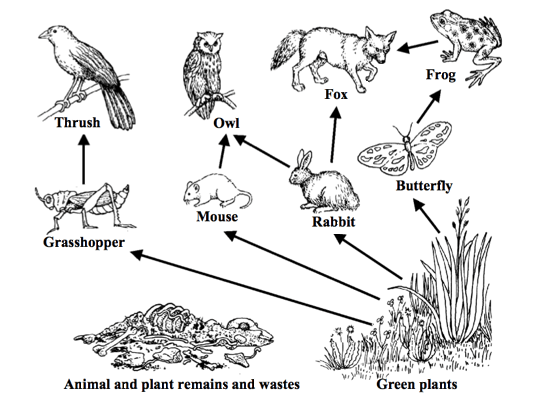
A diagram of a food web is shown below.Which organism receives the least amount of energy from the producers?
a)
Hawk
b)
Rabbit
c)
Grasshopper
d)
Mouse
142.
The owl receives energy from which organisms?
a)
grasshopper and mouse
b)
mouse and rabbit
c)
rabbit and butterfly
d)
butterfly and frog
143.
Use the diagram answer the question.
What is a fitting description for this diagram?
a)
A Food Chain
b)
An Ecosystem
c)
A Food Web
d)
Biotic and Abiotic Factors
144.

Which block model could represent SrCl2?

a)
b)
c)
d)
145.

What is the state when electrons move to a higher energy level upon absorption of energy?

a)

active

b)

inactive

c)

excited

d)

ground

146.

What particles in the heated compounds are responsible for the production of the colored light?

a)

proton

b)

neutron

c)

electron

d)

proton and neutron

147.

How do electrons become excited?

a)

Emitting light/energy

b)

Absorbing light/energy

c)

Going down an orbital/energy level

d)

Going up an orbital/energy level

148.

What is the color of the light that sodium compounds give off?

a)

Green

b)

Red

c)

Violet

d)

Yellow-orange

149.

What compound gives off bright red color when heated over a flame?

a)

Lithium

b)

Calcium

c)

Strontium

d)

Potassium

150.

What color did the copper solution burn and how many electrons does copper have?

a)

Blue and 29 electrons

b)

Yellow and 64 electrons

c)

Blue-Green and 64 electrons

d)

Blue-Green and 29 electrons

151.
Substance dissolved in a solution
a)
concentration
b)
solute
c)
solvent
d)
solution
152.
A precipitate is:
a)
The solid material that forms as a product of a chemical reaction
b)
The dissolved liquid in a chemical reaction
c)
The fizzing during a chemical reaction
d)
None of these
153.
dissolves in the solvent
a)
solute
b)
solvent
c)
mixtures
154.

If you put a tea bag in water, the water is the_____.

a)

Solute

b)

Solvent

c)

Solution

155.

Ionic bonds are between...

a)

Metal and Nonmetal

b)

Nonmetal and Nonmetal

156.

Ionic compounds are formed between what type of ions?

a)

positive (+) and negative (-) ions

b)

two positive (+) ions

c)

two negative (-) ions

157.

When Calcium (Ca) loses 2 electrons, what charge does it have?

a)

+2

b)

+1

c)

0

d)

-1

158.

How many valence electrons does a nonmetal ion have?

a)

0

b)

1

c)

2

d)

8

159.
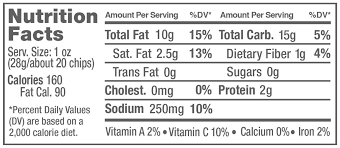
Based on the label, how many chips are in 1 serving of this bag of potato chips?
a)
20 chips
b)
28 chips
c)
160 chips
d)
90 chips