
 Worksheets
AP Physics Semester Exam Review
Total questions: 80
Worksheet time: 2hrs 47mins

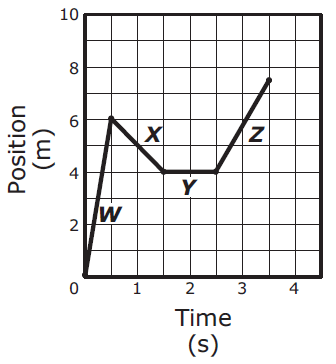
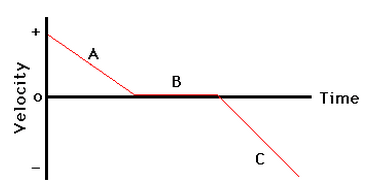
Select the two correct statements that describe the object's motion.
The object is moving in the positive direction.
The object is moving in the negative direction.
The object is moving at a constant speed.
The object is speeding up.
The object is slowing down.

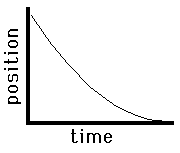
Select the two correct statements that describe the object's motion.
The object is moving in the positive direction.
The object is moving in the negative direction.
The object is moving at a constant speed.
The object is speeding up.
The object is slowing down.

Select the two correct statements that describe the object's motion.
The object is moving in the positive direction.
The object is moving in the negative direction.
The object is moving at a constant speed.
The object is speeding up.
The object is slowing down.

Select the two correct statements that describe the object's motion.
The object is moving in the positive direction.
The object is moving in the negative direction.
The object is moving at a constant speed.
The object is speeding up.
The object is slowing down.

Select the two correct statements that describe the object's motion.
The object is moving in the positive direction.
The object is moving in the negative direction.
The object is moving at a constant speed.
The object is speeding up.
The object is slowing down.

Select the two correct statements that describe the object's motion.
The object is moving in the positive direction.
The object is moving in the negative direction.
The object is moving at a constant speed.
The object is speeding up.
The object is slowing down.

Select the two correct statements that describe the object's motion.
The object is moving in the positive direction.
The object is moving in the negative direction.
The object is moving at a constant speed.
The object is speeding up.
The object is slowing down.

Select the two correct statements that describe the object's motion.
The object is moving in the positive direction.
The object is moving in the negative direction.
The object is moving at a constant speed.
The object is speeding up.
The object is slowing down.

Select the two correct statements that describe the object's motion.
The object is moving in the positive direction.
The object is moving in the negative direction.
The object is moving at a constant speed.
The object is speeding up.
The object is slowing down.

Select the two correct statements that describe the object's motion.
The object is moving in the positive direction.
The object is moving in the negative direction.
The object is moving at a constant speed.
The object is speeding up.
The object is slowing down.

Select the two correct statements that describe the object's motion.
The object is moving in the positive direction.
The object is moving in the negative direction.
The object is moving at a constant speed.
The object is speeding up.
The object is slowing down.

Select the two correct statements that describe the object's motion.
The object is moving in the positive direction.
The object is moving in the negative direction.
The object is moving at a constant speed.
The object is speeding up.
The object is slowing down.
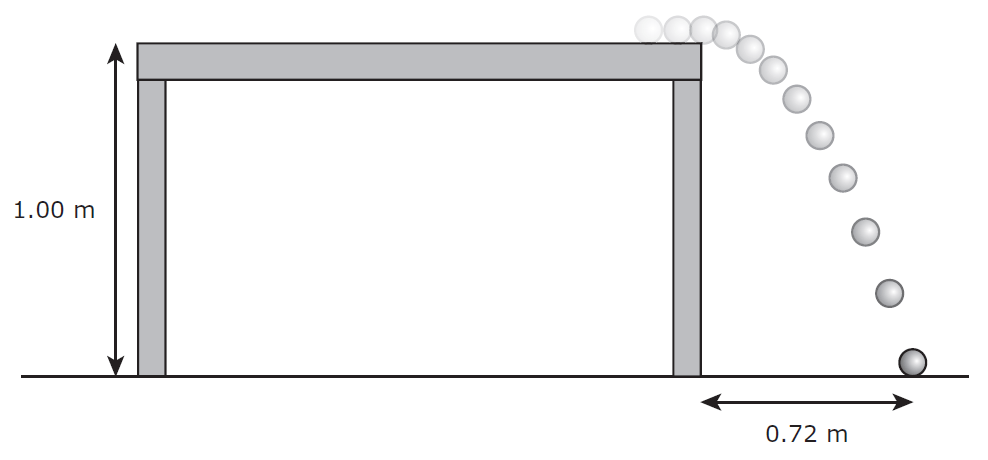

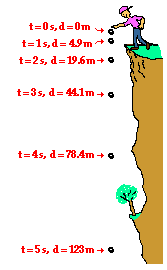

A car is traveling at a velocity of 35.0 miles per hour. The car runs off a cliff that has an unknown height. The car 'lands' 50.0 meters from the base of the cliff.
How long would it take the car to 'land' after exiting the rim of the cliff?


The graph above shows the velocity v as a function of time t for an object moving in a straight line. Which of the following graphs shows the corresponding displacement x as a function of time t for the same time interval?


A force of 8 Newton’s is applied to a crate so that it moves at a constant velocity of 1.5 m/s. What is the net force?
1.5 N
8 N
12N
0 N
A force of 8 Newton’s is applied to a crate so that it moves at a constant velocity of 1.5 m/s. What is the magnitude of the frictional force?
1.5 N
8 N
12N
0 N

Why is there no net force in the middle of this graph? This is F to t for an elevator.
There is. You can't trick me.
The elevator is at rest
The elevator is accelerating
The elevator has a constant speed

Is this object in equilibrium?
Yes and it's moving right
Yes and its at rest
No, it's accelerating right
No, it's at rest
Which of these is a correct sum statement for Fx?
Fa - Ff = ma
Fnet = Ff
Fn/Fg
Fa = ma

What's happening in this FBD?
Forward acceleration
Braking
at rest
constant velocity
Is it possible to be moving to the left like this and have friction in that direction?
Yes. You have negative acceleration.
Yes. You have a constant velocity
No. The force vectors must always point in the direction of motion
No. You have negative acceleration.

Is it possible for the normal force to be equal to the gravitational force?
Yes. If the surface is horizontal.
Yes. If the surface is vertical
No. FN will always be less than Fg
No. Fg will be less than FN.

Is it possible for the normal force to be zero?
Yes. If the surface is horizontal.
Yes. If the surface is vertical
No. FN will always be less than Fg
No. Fg will be less than FN.

Here are 3 FBD diagrams for an elevator. Consider them to be A, B, C. Which one shows an elevator accelerating upward?
A
B
C
none of these
Here are 3 FBD diagrams for an elevator. Consider them to be A, B, C. Which one shows an elevator at rest?
A
B
C
none of these
Here are 3 FBD diagrams for an elevator. Consider them to be A, B, C. Which one shows an elevator moving upward but braking?
A
B
C
none of these

Is it possible for the object in the diagram to be moving to the right and have this FBD?
Yes. It's possible that the x forces were just left off the diagram.
Yes. It could be moving at a constant velocity.
No. The FBD shows that the system is in equilibrium.
No. An FBD shows all F.

Why is this funny?
Because gravity.
It's not the impact velocity, it's the stopping acceleration that causes destruction
because most people don't understand it
the greater your mass is the harder you hit
A forward force of 15 N is counteracted by a backwards frictional force of 6 N. The mass of the object is 2 kg. what is the acceleration?
it cannot be determined
4.5 m/s/s in the direction of the larger force
7.5 m/s/s in the direction of the larger force
3 m/s/s in the direction of the smaller force.
A student has a weight of 155 lb. What is this in Newtons?
70.5 N
690 N
155 N
none of these is corrected

The figure above shows a truck pulling three crates across a rough road. Which of the following shows the directions of all the horizontal forces acting on crate 2:


Acceleration is _____.
inversely proportional to mass
inversely proportional to force
directly proportional to mass
directly proportional to momentum
If the sum of all the forces acting on a moving object is zero, the object will _____.
slow and stop
immediately stop
accelerate uniformly
continue with a constant velocity


Which of the following statements is true about the image above?
The accelerations of the blocks will vary according to their mass
The net force acting on each block is the same
The blocks will experience the same acceleration
The 3m box will eat the 2m and the m boxes

Which of the following is not true about the system?
T3 is equal to the scalar sum of the magnitudes of T2 and T1
T3 is equal in magnitude to Fg
The x- components of the T1 and T2 and equivalent but in opposite directions
The system is in equilibrium.

What would the force between them be if the distance between them were doubled?



The time taken for one complete cycle is called the...
Period
Frequency
Angular velocity
What happens to an object's speed as the radius is cut in half?
It is halved
It doubles
It remains unchanged.

