
 Worksheets
States of Matter and Thermochem review
Total questions: 56
Worksheet time: 46mins
Collisions in which particles transfer all their kinetic energy to other particles are called ___.
elastic
inelastic
760 mmHg is equal to
1 torr
760 atm
760 torr
101 Pa
A gas is at a pressure of 95 kPa. What is its pressure in atmospheres?
1.5 atm
1.09 atm
0.94 atm
0.82 atm
What does STP (standard temperature and pressure) stand for?
0.0 degree Celcius and 1 atm
1.0 mmHg and 273 degree Kelvin
1.0 degree Celcius and 0 atm
1.0 atm 273 degree Celcius
How many mm Hg is a pressure of 1.05 atm?
529 mm Hg
798 mm Hg
104.8 mm Hg
760 mm Hg

According to the reference table, what is the boiling point of ethanoic acid at 80 kPa?
28 oC
100oC
111oC
125oC

Which liquid has the highest vapor pressure at 75oC?
ethanoic acid
ethanol
propanone
water

Define the term allotropes
Atoms with same proton number but different number of neutrons
Atoms with same proton number but different mass number
Atoms in different arrangement but same structure
Atoms in different arrangement and different structural form

What letter on the diagram represents a gas?
A
B
C
D
What letter on the diagram represents a solid?
A
B
C
D
What letter on the diagram represents the triple point?
A
B
C
D
What is the boiling point of this substance at 1 ATM of pressure?
40
60
100
110
What is the phase change of a solid to a liquid?
freezing
melting
boiling
condensation
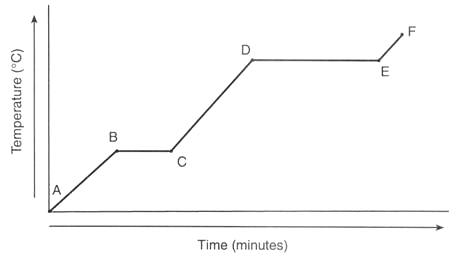
Is the substance gaining or losing energy?
Gaining
Losing

Is the substance gaining or losing energy?
Gaining
Losing
What is happening to the particles in the substance between points D and E?
Melting
Freezing
Vaporizing
Sublimating
What is happening to the particles in the substance between points A and B?
Melting
Freezing
Speeding Up
Slowing Down
What state/phase is the object likely from points A to B?
Solid
Liquid
Gas
Plasma

Where on the graph are phase changes taking place?
1
2
3
4
5
Which substance has the weakest intermolecular forces?
Substance A, boiling point of 75 °C
Substance B, boiling point of 105 °C
Substance C, boiling point of 25 °C
Substance d, boiling point of 45 °C

Convert
450 K to Celsius723oC
277oC
177 oC
623oC
Convert
0oC to Kelvin−273 K
273 K
32 K
−32 K
Which of the following examples is an endothermic reaction?
Potassium Chloride dissolves in water the temperature drops.
Acid mixed with Sodium Carbonate the temperature drops.
In an endothermic reaction, energy is _________.
absorbed
released
What is the change in temperature?
(not in sig figs) Hf = 80.0 cal/g, Hv = 560.0 cal/g, SH = 1.00 cal/g ºC
The following equation shows the reaction between Ag+ and Cl− ions.
Ag+ + Cl− -> AgCl Δ H= -65 kJmol−1
Which of the following is true about the above equation?
Exothermic reaction occurs
Heat is absorbed from the surrounding
The energy content of the reactants is less than the products
65 kJ of heat is absorbed when 1 mole of silver chloride is formed
A chemical reaction that absorbs heat from the surroundings is said to be __________ and has a __________ΔH at constant pressure
endothermic; positive
endothermic; negative
exothermic; negative
exothermic; positive
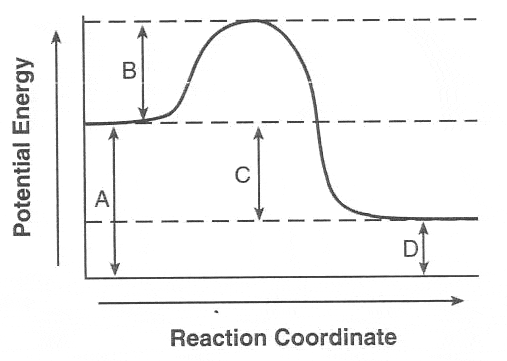
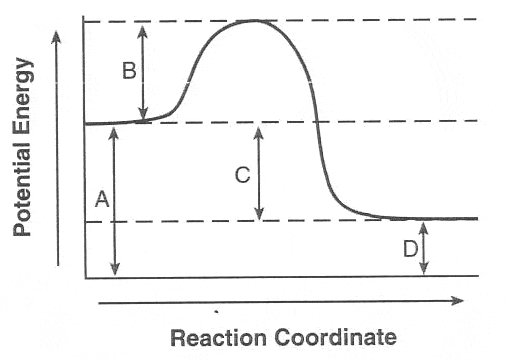
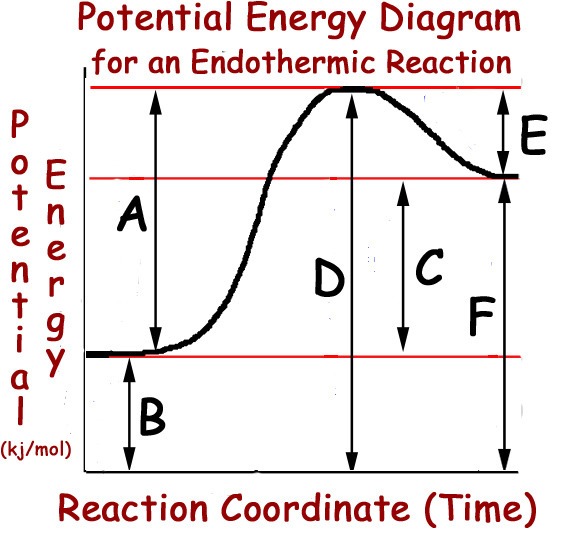
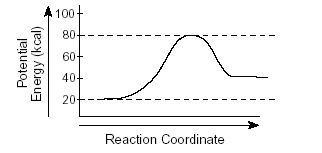
What is the ΔH of this reaction?
40 kJ
20 kJ
80 kJ
-60 kJ
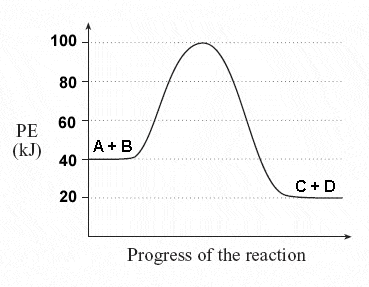


What is the change of the heat of the reaction (ΔH)?
100 kJ
-175 kJ
-50 kJ
75 kJ
Using the equations below:
C(s) + O2(g) → CO2(g) ∆H = –390 kJ
Mn(s) + O2(g) → MnO2(s) ∆H = –520 kJ
what is ∆H (in kJ) for the following reaction?
MnO2(s) + C(s) → Mn(s) + CO2(g)
910
130
-130
-910
Consider the following equations.
Mg(s) + O2(g) → MgO(s) ∆H = –602 kJ
H2(g) + O2(g) → H2O(g) ∆H = –242 kJ
What is the ∆H value (in kJ) for the following reaction?
MgO(s) + H2(g) → Mg(s) + H2O(g)
-844
-360
+360
+844
Hess' Law makes use of which principle to calculate the enthalpy change of a reaction?
The law of conservation of energy
The law of conservation of matter
The law that you will always find a lost item in the last place you look for it
Murphy's law
The standard enthalpy change of formation values of two oxides of phosphorus are:
P4(s) + 3O2(g) → P4O6(s) ΔHf = –1600 kJ mol–1
P4(s) + 5O2(g) → P4O10(s) ΔHf = –3000 kJ mol–1
What is the enthalpy change, in kJ mol–1, for the reaction below?
P4O6(s) + 2O2(g) → P4O10(s)
+4600
+1400
–1400
–4600

