
Font size
 Worksheets
(PRACTICE) Food Science Final Exam
Total questions: 65
Worksheet time: 1hrs 8mins
Why is food science called an integrated course?
it involves unrelated topics from various disciplines
it involves related topics from various disciplines
it involves various disciplines from non related topics
none of the above
___________ is the study of food components and their use by the body to sustain life and health.
nutrition
adulteration
organic
food science
_____________________ is the study of the nature of food, causes of deterioration, the principles underlying food processing, and the improvement of foods for the consuming public.
food science
nutrition
organic
food processing
___________ lowered quality and safety of a product caused by adding inferior ingredients that may be toxic.
nutrition
adulteration
organic
food science
Milk being watered down, or having chalk, starch, or borax added to it, is an example of ________________.
nutrition
adulteration
organic
food science
True or False:
Both the FDA and the USDA share the responsibility of food labeling.
True
False
True or False:
salting, incinerating, mixing, cutting, and freezing are some common ways of food processing techniques.
True
False
crops whos roots are suspended in liquid nutrient solutions are known as
hydroponic flowers
food deserts
farm to form
none of the above
N2+O2--> _NO
What are the coefficients that would properly balance this equation?
__AgNO3 + __H2S --> __Ag2S+ __HNO3
2,1 --> 1,2
1,2 --> 1,1
1,2 --> 1,2
1,2 --> 2,1
Mn + _ HNO3 → Mn(NO3)2 + H2
Balance the the following equation.
__Zn+__HCl -->__ZnCl2 +__H2
1,1,2,1
1,1,1,2
1,2,1,1
2,1,1,1


is the study of the nature of food, the causes of deterioration.
food science
nutrition
food processing
adulteration
is the study of food components and their use by nobody to sustain life health.
food science
nutrition
food processing
adulteration
is lowered quality and safety of a product caused by adding inferior ingredients that may be toxic.
food science
nutrition
food processing
adulteration
these are professionals trained to know the biology and chemistry of food and the process used to improve and preserve them.
Food scientists
Hydroponic crops
Farm to fork
Cryogenic liquids
substances that are in liquid form at extremely low temperatures.
Food scientists
Hydroponic crops
Farm to fork
Cryogenic liquids
grown with their roots suspended in liquid nutrient solutions.
Food scientists
Hydroponic crops
Farm to fork
Cryogenic liquids
The process of putting scientific knowledge to practical use.
Applied science
Mass
Matter
Electron
have a negative electrical charge that is equal to, but opposite of, the positive charge of protons
Applied science
Mass
Matter
Electron
anything that occupies spaces and has mass.
Applied science
Mass
Matter
Electron
the electrons are transferred from one atom to another.
Ionic bond
Covalent bond
Double bond
Pure substance
is formed when atoms share one or more pairs of electrons
Ionic bond
Covalent bond
Double bond
Pure substance
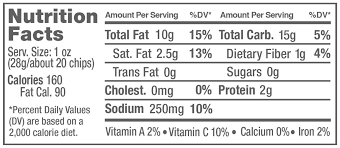
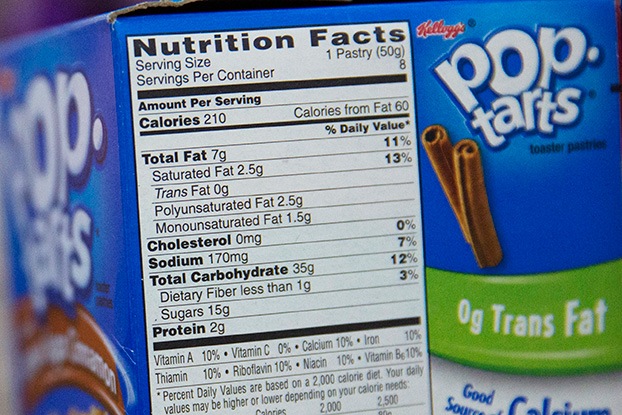
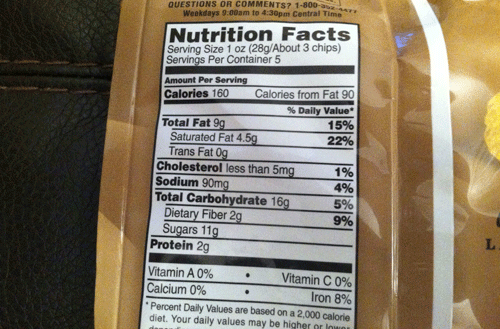
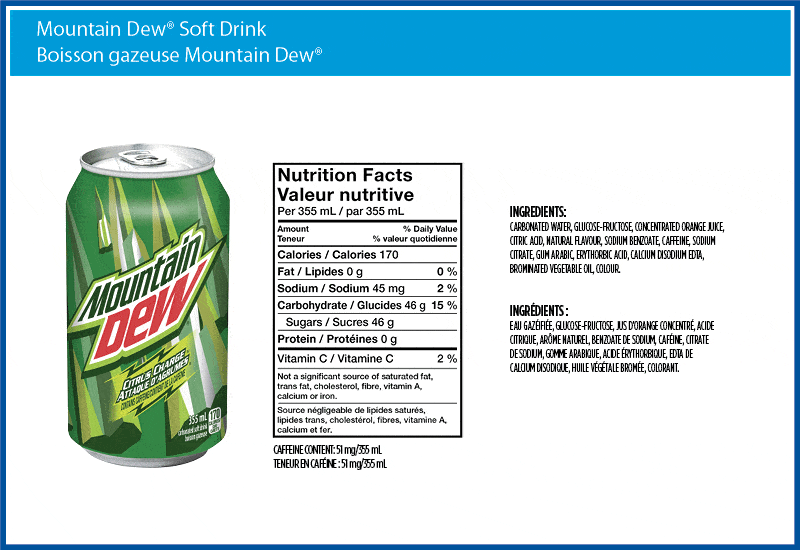
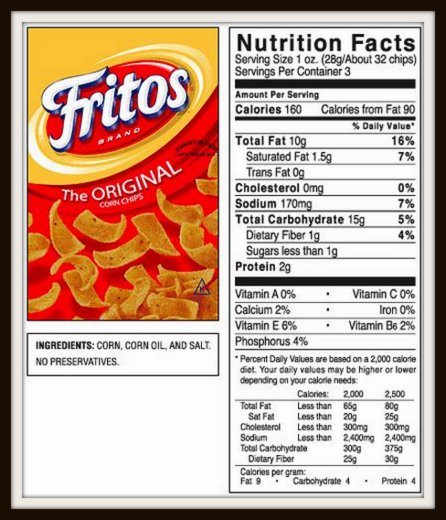

If you ate all of the eggs in the container how many calories would you consume?
50 calories
10 X 50 = 500
12 X 50 = 600
3.5 X 12 = 42

How much calories would you consume if you use this entire container?
1120
280
4200
None of the above

How many grams of carbohydrates would I consume if I had 3 servings?
120
480
40
80

How many calories from Protein would I consume if I ate 2 servings?
80
60
40
20

If I had the entire container, what is the total amount of calories I would have consumed?
1088
100
272
800
Enzymes are catalysts than are used up in biochemical reactions to produce products.
True
False
Most enzymes appear in either Tertiary or _______________ structures.
primary
secondary
quaternary
none of the above
Enzymes can be used in biological and industrial processes
True
False
The _______ of the enzyme affects the function of the enzyme.
shape
size
temperature
pH
All protein are enzymes; but not all enzymes are protein.
True
False
The enzyme's shape is determined by the sequence of carbohydrates in its structure.
True
False
Enzymes that are able to work at their best are most likely in their _________________ environment
optimum
desired
active
none of the above
Enzymes work their very best at a specific temperature and pH; this is known as the (a) environment.
If the conditions are too extreme, the enzyme may get ________________ and lose it's ability to bind to the substrate.
denatured
optimum
substrate
reactant
To describe how the substrate fits into the active site of the enzyme: "The enzyme is the lock, and the reactant is the (a) . "
Select which of the following are TRUE:
During food processing, changes to food can:
make food easier to eat
damage nutrients in the food
make food easier for long term storage
none of the above
If vitamins are lacking, ________ will slow down or even stop.
enzymes
breathing
hydration
none of the above
needed in very small amounts in our diet
vitamins
carbohydrates
lipids
protein
Select which of the following are FAT SOLUBLE vitamins
A
D
E
K
This vitamin aides in night vision, and can be found present in the retina to help react with light for vision.
A
D
E
K
This is the ACTIVE form of vitamin A.
retinol
provitamins
precursors
none of the above
Our body can make all we need of this specific vitamin, we just need exposure of our skin to sunlight
Vitamin D
Vitamin A
Vitamin E
Vitamin K
______________________ in our skin is converted into Vitamin D precursors. This in turn help us convert it into Vitamin D.
cholesterol
protein
carbohydrates
none of the above
This vitamin acts like an antioxidant, preventing oxidation from damaging the body.
E
D
A
K
This vitamin quickly reacts with Oxygen, and preventing it from damaging blood cells, helps fight inflammation, and even supports our immune system.
E
D
A
K
True or False:
Our own gut flora (bacteria) produces about HALF of our Vitamin K supply.
True
False
This vitamin is important for blood clotting.
A
D
E
K
Which of the following are water soluble vitamins?
Vitamin A
Vitamin D
Vitamin B
Vitamin C
_______________ is an amino acid that is produced by the body which can damage artery walls in high amounts.
pyridoxine
homocysteine
niacin
folate
_______________ is needed for red blood cell production and DNA synthesis.
pyridoxine
homocysteine
niacin
folate

