
 Worksheets
Chemistry Final Exam Review
Total questions: 101
Worksheet time: 25hrs 15mins
An ionic bond is between
metal and metal
metal and nonmetal
nonmetal and nonmetal
A covalent bond is between
metal and metal
metal and nonmetal
nonmetal and nonmetal
A metallic bond is between
metal and metal
metal and nonmetal
nonmetal and nonmetal
What is the oxidation number for Carbon?
+4 and -4
-3
+1
What is the oxidation number for Nitrogen?
+4 and -4
-3
+1

Which one shows the items in the image from HIGH density to LOW density:
honey, dish soap, water
water, dish soap, honey
Which item has the highest density #?
honey
dish soap
water
vegetable oil
Which name represents the formula Fe2O3 ?
Iron (III) oxide
Iron (II) oxide
Which is the electron configuration of an atom of Period 2 element?
1s22s1
1s22s22p63s1
Alkali metals have...
1 valence electron, +1 charge
2 valence electrons, +2 charge
1 valence electrons, -1 charge
Decomposing of an apple is an example of...
chemical change
physical change
Which one is the least reactive group?
Alkali metal
Alkali earth metal
Halogens
Noble Gases
Which answer is an example of a chemical change?
Boiling water
rusting iron
dissolving powder
freezing water
Which answer is an example of a physical change?
freezing water
burning coal
rusting iron
baking a cake
1s22s22p63s23p63d104s24p3
Which element does this configuration belong to?
Arsenic
Calcium
Lithium
Aluminum
Which of the following are examples of Physical Changes?
shape, length, mass
reactivity, flammability, corrosive
freezing, melting, boiling

Atoms of the same element that have different numbers of neutrons.
Isotope
Covalent Bond
Enzymes
Ionic Bonds

Particles in an atom that are neutral and have no charge are
negatrons
electrons
neutrons
protons

A covalent bond is formed as a result of
transferring electrons
sharing electrons
transferring protons
sharing protons
Subatomic particles found on the outermost shell & responsible for the atom's reactivity
neutrons
valence electrons
isotopes
ions

How many valence electrons does this picture show?
2
3
4
5
6

The number 16 for the atomic element sulfur is the
ionic number
isotope
atomic mass
atomic number
The lease electronegative elements are the
halogens
alkaline earth metals
alkali metals
metalloids
In ionic bonds, valence electrons are:
equally shared
transferred
destroyed
unequally shared
Which will have the biggest ionization energy?
carbon
beryllium
boron
lithium
The mass number of an atom is determined by
adding the neutrons and electrons
the number of protons only
adding protons and electrons
adding the neutrons and protons
The elements with the largest atomic radii are found in the:
lower left-hand corner of the periodic table
lower right-hand corner of the periodic table
upper right-hand corner of the periodic table
upper left-hand corner of the periodic table
In non-polar covalent bonds, valence electrons are
destroyed
unequally shared
equally shared
transferred
MgSO4 + KOH --> Mg(OH)2 + K2SO4
When this equation is balanced, what is the coefficient in front of KOH?
1
2
3
4

The elements highlighted in orange are known as the
alkaline earth metals
alkali metals
noble gases
halogens
transition metals

The elements highlighted in red are known as the
alkaline earth metals
alkali metals
noble gases
halogens
transition metals
What is the correct name for the compound P2S4?
phosphorus sulfide
phosphorus (II) sulfide
diphosphorus tetrasulfide
phosphorus disulfate
Which of these is an ionic compound?
K2O
H3PO4
CBr4

What type of reaction is this?
synthesis
decomposition
single replacement
double replacement
combustion

What type of reaction is this?
synthesis
decomposition
single replacement
double replacement
combustion

What type of reaction is this?
synthesis
decomposition
single replacement
double replacement
combustion
A piece of rock weighs 7.0 g and takes up 1.2 cm3 of space. Calculate the density of the rock. Round your answer to the correct significant figures.
0.17 g/cm3
0.2 g/cm3
5.83 g/cm3
5.8 g/cm3
6 g/cm3

How many protons, neutrons, and electrons are in this calcium atom?
40 protons, 20 neutrons, and 2 electrons
20 protons, 20 neutrons, and 20 electrons
20 protons, 20 neutrons, and 18 electrons
20 protons, 20 neutrons, and 22 electrons
20 protons, 40 neutrons, and 22 electrons

Which letter represents the protons?
A
B
C
D
Balance the following reaction:
___Pb(OH)2 (s) → ___PbO (s) + ___H2O (g)
1:1:1
2:1:2
1:1:2
2:2:1
Which of the following statements is NOT true about what happens in all chemical reactions?
The ways in which atoms are joined together change
New atoms are formed as products
The starting substances are called reactants
The bonds of reactants are broken and new bonds of products are formed
A K atom differs from a K+ ion in that the K atom has one
a. more electron
b. less electron
c. more proton
d. less proton


How many neutrons does Chlorine have?
18
17
35
52
All atoms are most stable with (or would "prefer") how many electrons in their valence shell?
1
2
8
18
What groups are the most reactive metals?
2
7A
1
17
Why are halogens so reactive?
They want to get rid of their only valance electron
They only need one more electron
They are non reactive, they have a full shell
What is the average mass of this element?
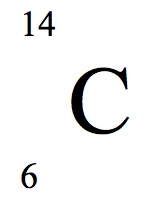
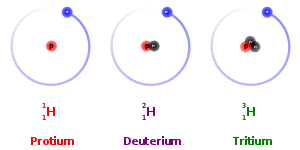

If an element is diatomic it should have a subscript of___
1, always
2, only when it is an element
it shouldn't have a subscript, it should have a coefficent
2, when bonded in a compound
Predict the products for the this Single Replacement reaction:
K + HCl →
KCl + H2
KHCl
KH + Cl2
HCl + K2
Predict the products for the this Double Replacement reaction:
AgNO3 + KCl →
AgCl + KNO3
AgK + ClNO3
KAg + NO3Cl
AgCl + 3 KNO
Complete the balanced equation for this Double Replacement reaction.
3 NaOH + Fe(NO3)3 →
NaFe + OH(NO3)3
NaNO3 + Fe(OH)3
3 NaNO3 + Fe(OH)3
3 NaFe + 3 (OH)NO3
Predict the products for this equation.
(Zn with a charge of +2)
Zn + H2SO4 -->
Zn(SO4)2 + H
ZnSO4 + H2
ZnSO4 + H4
What is the correct way of representing hydrogen gas alone, in a reaction?
2H
H
H2
Which has the strongest forces between particles (usually)?
ionic bonding
metallic bonding
covalent bonding
Which has the weakest forces between particles (usually)?
ionic bonding
metallic bonding
covalent bonding
Which substance has the weakest intermolecular forces?
Substance A, boiling point of 75 °C
Substance B, boiling point of 105 °C
Substance C, boiling point of 25 °C
Substance d, boiling point of 45 °C
The weaker the intermolecular forces of a substance the _____________ the boiling point
higher
lower

Is the following molecule polar or nonpolar?
polar
nonpolar
When two atoms of the same nonmetal element bond together, they form a(n)
ionic bond.
nonpolar covalent bond.
polar covalent bond.
James Bond.
Which of the following pairs of elements is most likely to form an ionic bond? (You should refer to a Periodic table.)
sulfur and oxygen
sulfur and fluorine
sodium and sulfur
oxygen and fluorine
__________ bonds involve an unequal sharing of electrons, while __________ bonds involve an equal sharing of electrons.
Nonpolar, polar
Polar, metallic
Metallic, nonpolar
Polar, nonpolar
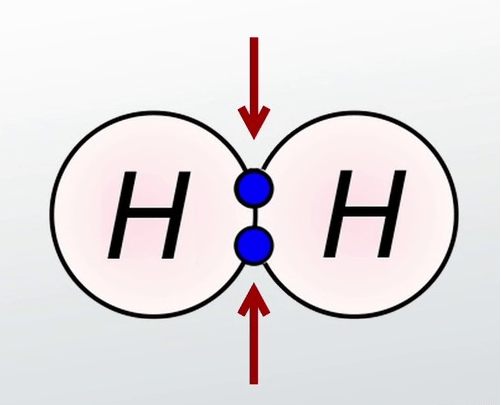

What type of bond is depicted in the image?
Nonpolar Covalent
Polar Covalent
Ionic
What is a positive ion called?
anion
cation
isotope
covalent
What is a negative ion called?
anion
cation
covalent
isotope
Why do elements form bonds?
to get a charge
so they can make friends
to become stable by getting a full valence shell
to become stable by increasing their mass
How many electrons would a Nitrogen ion gain/lose?
lose 5
gain 5
lose 3
gain 3
Which electron configuration belongs to a Chloride (Cl-) ion?
1s2 2s2 2p6 3s2 3p5
1s2 2s2 2p6 3s2 3p6
1s2 2s2 2p6 3s2 3p7
1s2 2s2 2p6 3p7

When coal burns carbon dioxide is produced from the carbon in coal and the oxygen in air. Which of these is the best evidence that a chemical reaction occurs when coal burns?
The shape of the coal changes
Oxygen is present
A new substance is produced
Coal is made up of more than one element
Which of the following describes a precipitate?
a new liquid forms when a solid reactant is heated and melts
a new solid product formed from two aqueous reactants
a new gas forms when a solid is dissolved in a liquid
bubbles form when two aqueous reactants are mixed
a new solid forms when an aqueous reactant freezes
All of the following are indicators of a chemical reaction except one. Which one is NOT an indicator that a chemical reaction has taken place?
the production of heat or light
a color change
the production of gas bubbles
the dissolving of one substance in another
an odor change

