
 Worksheets
Ecology Unit Test Review
Total questions: 100
Worksheet time: 1hrs 20mins

What is the relationship between the snake and the mouse in this food web?
The snake is a primary producer and the grasshopper is a tertiary consumer
The snake is a predator and the mouse is its prey
The mouse is a parasite and the snake is the host
The snake is a tertiary consumer and the mouse is a primary consumer

What is the relationship between the Polar Bear and the Orca in this food web?
They are producers
They are decomposers
They are competitors
Excess nitrogen fertilizers sometimes drain into waterways that flow into the Galveston Bay. This nitrogen may cause algae blooms, which reduce dissolved oxygen in the water. How does nitrogen negatively affect the Galveston Bay?
fish births increase
fish populations decrease
sediment on the bottom of the bay

Which of these four species of bear would be most in danger of becoming extinct if one of its food sources became unavailable?
Brown Bear
Black Bear
Polar Bear
Panda Bear
Organisms that make their own food are called __________________.
producers
consumers
decomposers
Where does all the energy originate from in a food web?
All energy comes from the Sun.
All energy comes from the Moon.
All energy comes from your Face.
All energy comes from the Sun.
Blue whales live in oceans. What type of factors do they rely on for their existence?
Only biotic factors
Only abiotic factors
Both biotic and abiotic factors
Neither biotic nor abiotic factors

Which type of interaction exists between shrimp and blue crabs in this food web?
Shrimp prey on blue crabs.
Shrimp compete with blue crabs for food.
Shrimp help blue crabs filter polluted water.
Shrimp decompose matter for blue crabs

In this food web, which organism has the greatest number of food sources?
Snake
Hawk
Shrew
Mouse
Rainforest are home to a variety of plant and animal species. Most have yet to be discovered. One study in a Brazilian rainforest found 487 tree species, 320 butterfly species and over a thousand species of insects on 2.5 acres of land. With so many different species living within a particular region, this can best be described as –
Biodiversity
Species
Niche
Food chain

The diagram shows the beaks of five species of birds that developed over time from one parent species. Which of the following best explains why the beak shape of each species of bird developed differently?
Each beak shape helps the birds to produce different songs.
Each beak shape is an adaptation to a specific source of food.
Each beak shape is designed to construct a different type of nest.
Each beak shape helps protect the birds from a different predator.
A certain type of mite is a parasite of honeybees. Which statement best describes the relationship between the mites and the bees?
The mites harm the bees by feeding on their blood.
The mites get honey in return for helping the bees stay healthy.
The mites help the bees find food but get nothing in return.
The mites live in the hive of the bees but do not interact with the bees.
Different species of carnivorous animals that share the same habitat in an ecosystem may –
become decomposers
compete for biotic food
produce their own food
mate with each other
What is one way humans are trying to positively impact the ocean?
Fishing
Creating artificial reefs
Harvesting oil and natural gas
Transporting goods in ocean vessels

A grassland is pictured. Grasses are considered –
Autotrophic
Decomposers
Heterotrophic
Primary consumers
Energy is lost at each level of a food chain.
True
False
Materials like carbon, water, phosphorus, and nitrogen are recycled within an ecosystem.
True
False
A zebra is an autotroph.
True
False
What is the correct definition for a population?
A group of organisms of different species living in the same area
A group of organisms of the same species living in the same area
All of the abiotic and biotic factors within an ecosystem
One individual organism
The amount of biomass decreases as one moves up through the trophic levels.
True
False
Which of the following factors are examples of abiotic factors? (Select all that apply)
Trees
Algae
Sunlight
Water
Fish
A biologist who studies how several species in an area interact is interested in the biological level of organization called ___________________.
An organism
A population
An ecosystem
A community
All of the abiotic and biotic factors in an environment make up a(n) _______________________.
food chain
food web
community
ecosystem

Which of the following organisms in this food web is a primary consumer?
Insects
Wolves
Ferns
Skunk
Which of the following organisms in this food web is a secondary consumer?
Insects
Wolves
Ferns
Skunk

Which organism in this food web has the least amount of energy available to them?
Grasshopper
Snake
Plant
Rabbit
The burning of plant material returns carbon primarily to the ________________________.
herbivores
water
vegetation
atmosphere
A rabbit that eats a plant is a __________________________.
primary consumer
producer
secondary consumer
carnivore
Which of the following statements is true regarding the flow of energy and matter in an ecosystem?
Both energy and matter are recycled and used again.
Matter is recycled and used again, energy is lost.
Energy is recycled and used again, matter is lost.
Neither energy not matter are recycled and used again.
The Yellowstone area contains organisms representing all trophic levels, including plants, algae, moss, fungi, blue jays, and grizzly bears. Which sequence best represents the transfer of energy through Yellowstone trophic levels?
fungi to moss to algae to fish
blue jay to moss to fungi to plant
algae to fish to grizzly bear to fungi
plant to blue jay to algae to grizzly bear

According to the food web shown, how do you think the population size of the small fish would react to an increase in population size of Pelicans and Herons?
The population size would decrease
The population size would increase slightly
The population size would stay the same
The population size would double


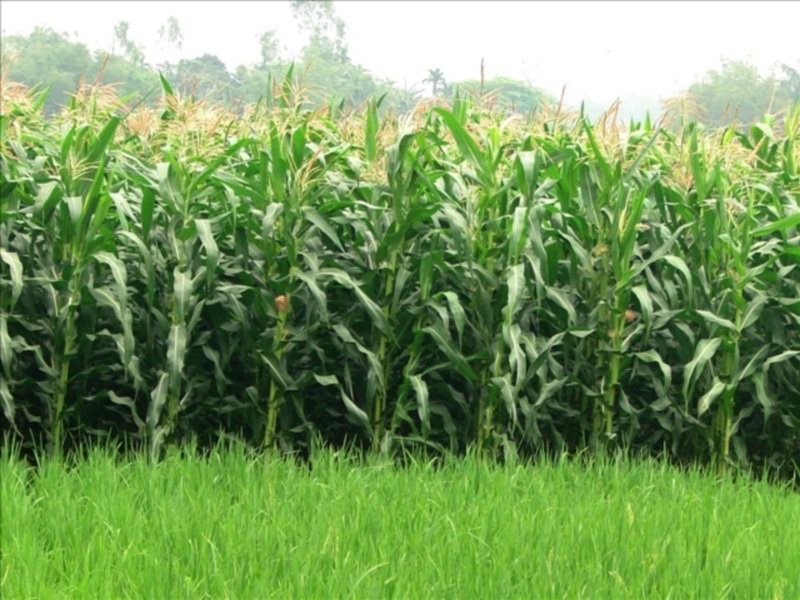


Photosynthesis will most likely appear in which of these cycles?
Nitrogen
Carbon
Water
A population is...
All of the members of a species in the same area.
All of the different species in the same area.
All of the Biotic and Abiotic factors in an area.
Natural disturbances, such as fires or hurricanes can result in (select the most accurate)
commensalism
parasitism
competition
successsion
Which is most likely to be a pioneer species during primary ecological succession?
deer
bird
tree
lichen
Natural disturbances, such as fires or hurricanes can result in (select the most accurate)
commensalism
parasitism
competition
successsion
If the number of deaths & emmigrations of a population is greater than the number of births & immigations
population size increases but then decreases
the population size remains the same
population size increases
population size decreases
Which of the following is the smallest ecological unit?
an ecosystem
a community
a biome
a population
Which of the following is considered an abiotic factor?
Sunlight
Predators
Autotrophs
Decomposers
Which of the following is the best definition for "ecology"?
Study of the living factors in an area
Study of the nonliving factors in an area
Study of the living and nonliving factors in an ecosystem
Study that focuses on the organisms that live on land
All of the following types of organisms can perform photosynthesis except:
Bacteria
Fungi
Algae
Plants
In the Light Reactions of photosynthesis, which of these are the reactants?
Energy from sunlight and water
Energy from sunlight and carbon dioxide
ATP and NADPH
Water and carbon dioxide
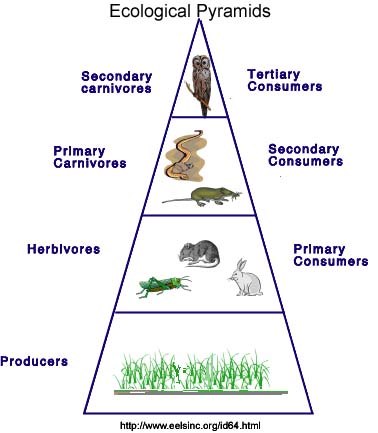


Matter in a food web is...
released
recycled

The trees in this food web would be considered a:
Consumer
Producer
Herbivore
Insectivore
The hare in this food web would be considered a(n):
Omnivore
Producer
Herbivore
Insectivore
The hawk in this food web would be considered a(n):
Insectivore
Omnivore
Herbivore
Carnivore

Is wind a biotic or abiotic factor?
biotic
abiotic

Is soil a biotic or abiotic factor?
biotic
abiotic

Is water a biotic or abiotic factor?
biotic
abiotic

Is temperature a biotic or abiotic factor?
biotic
abiotic

In this food web...which of these would be the LEAST impacted if mangoes went extinct?
rat
fruit fly
thrush
dragonfly
frog

In this food web interspecific competition occurs between
dolphins and otters for pollock
eel grass for bacteria and little schools of fish
dolphins and seals for herring
orca for dolphins and seals
True or False: When there are more resources the population will decrease.
True
False
The lion hunting and eating an antelope is an example of:
symbiosis
cooperation
predation
Which of the following is considered an abiotic factor?
Sunlight
Predators
Autotrophs
Decomposers


