
 Worksheets
2021 A&P Semester 1 Review
Total questions: 70
Worksheet time: 50mins
Anatomy is the study of the functions of the body and its parts
True
False
The frontal plane divides the body into
Front and Back
Upper and Lower
Right and Left
Which of the following is NOT a type of muscle tissue?
Cardiac
Smooth
Skeletal
Epithelial
Tissue type that protects the body by covering internal and external surfaces AND produces secretions (sweat, hormones)
Epithelial
Connective
Muscle
Nervous
Anatomical position is when you are facing forward, arms at your side, palms facing up, feet flat on the ground.
True
False
To make a banana split, you halve a banana into two long, thin, right and left sides along the ________.
coronal plane
longitudinal plane
midsagittal plane
transverse plane
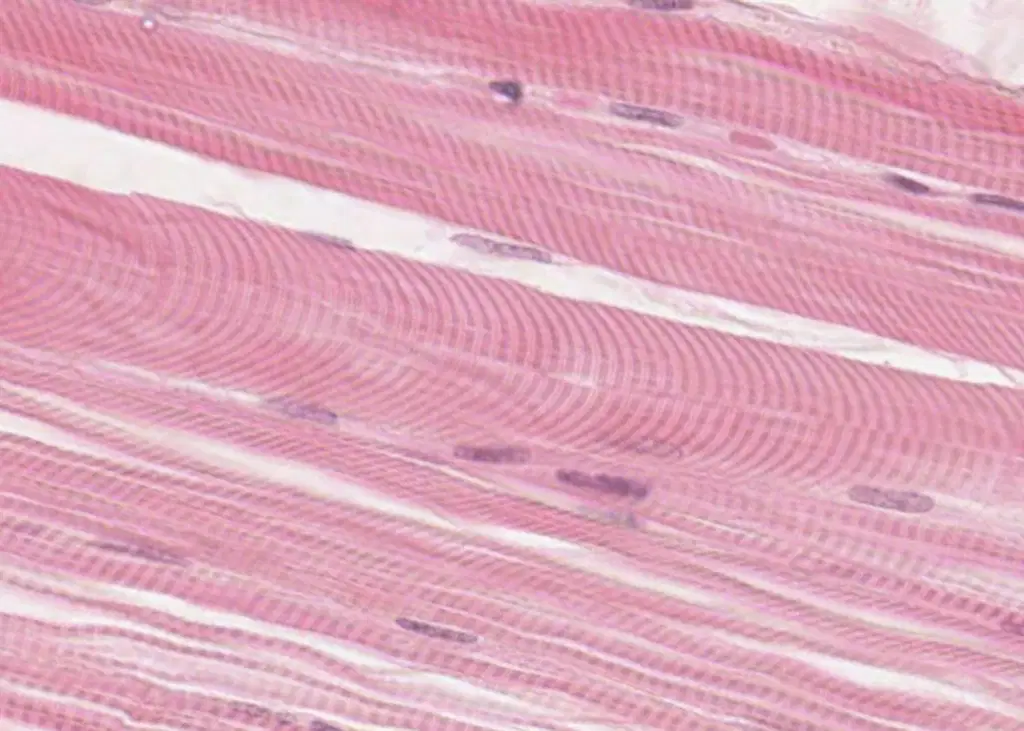
Cardiac
Skeletal

Muscle
Epithelia
Nervous
Connective
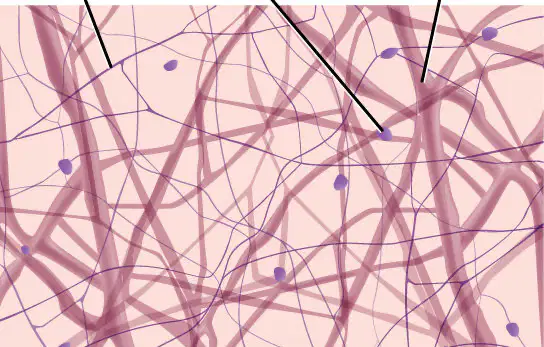
Connectice
Epithelial

Epithelial
Connective
Nervous
The primary component of the cell membrane is the group of lipids called
prostaglandins
cholesterol
phospholipids
carbohydrate
What is the main chemical neurotransmiter that allows transmission of signal from neuronal to muscle cell?
acetylcholine
calcium
ATP
Cells within the nervous system that transmit information to other nerve cells, muscle, or gland cells
Cartilage
Pathogens
Neuron
Homeostasis
Tissues that connect bones to bones
Ligaments
Cartilage
Diaphragm
Alveoli
Tissues that cover the ends of bones so they don't rub together
Ligaments
Cartilage
Arteries
Veins
When the body maintains stable internal conditions
Pathogens
Saliva
Neuron
Homeostasis
Which of the following is not a function of the skin?
regulates body temperature
stores water and fat
prevents entry of bacteria
supports body movement
a structure out of which strands of hair grow
Follicles
Pores
Head
Eyelashes
What causes goose bumps?
hair follicles
sebaceous glands
arrector pili muscle
hot weather
Which of the following are functions of the bones?
Support and Protection
Attachment to the muscles
Stores inorganic salts
All of the above

What bone is highlighted?
Skull (Cranium)
Mandible
Scapula
Clavicle


Name the following in order from largest to smallest:
muscle, muscle fascicle, muscle cell, myofibril, filaments
muscle, muscle fascicle, muscle cell, filaments, myofibril
muscle, muscle cell, muscle fascicle, myofibril, filaments
muscle, muscle cell, muscle fascicle, filaments, myofibril
Which of these is the smallest?
myofilament
myofibril
muscle fiber
fascicle
What do you call a single bundle of muscle cells?
muscle
fascicle
fiber
myofibril
A fascicle
is a bundle of reticular fibers.
is surrounded by perimysium.
possesses an external lamina.
isonly found in smooth muscle.
Muscle myofibrils
hold muscle cells together.
are found in the sarcolemma.
contain myosin and actin myofilaments.
extend from the sarcolemma to the T-tubule.
Thin myofilaments are _______ myofilaments, and thick myofilaments are _________ myofilaments.
tryptin; actin
actin; myosin
myofibril; globular
myosin; sarcomere
The connective tissue that covers the fascicle
epimysium
endomysium
perimysium
The connective tissue that surrounds the whole muscle
epimysium
perimysium
endomysium
The muscle cell is also known as ___________________
muscle fiber
myofibril
myofilament
fascicle
The connective tissue that covers the muscle cell or muscle fiber _______________________
perimysium
endomysium
epimysium
Strong band of tough tissue that attach muscle to bone
Cartilage
Ligaments
Tendons
Involuntary muscle


Neuroglial cells that form the fatty myelin sheath on neurons in the CNS are ___________ in the PNS are ________________?
ganglia and oligodendroglia
astrocytes and schwann cells
schwann cells and oligodendroglia
oligodendroglia and schwann cells
The entire junction between 2 nerves or a nerve and another structure
axons
synaptic cleft
synapse
synaptic knob
Small cells that engulf and destroy microbes and cellular debris in the CNS
microglia
horns
neuroglia
astrocytes
Which ion is pumped into the axon of a neuron to help maintain the resting potential?
calcium
hydrogen
potassium
sodium
Depolarization occurs when
sodium channels open
potassium channels open
sodium channels close
potassium channels close
Action potentials run along the ______ from ______ to ________.
axon, dendrites, axon terminals
axon, axon terminals, dendrites
dendrites, axon, axon terminals
axon terminals, axon, dendrites

What is number 1?
Lens
cornea
ciliary bodies
retina

What is number 4?
lens
cornea
pupil
retina

Number 6 is the ?
aqueous humor
vitreous humor

Number 10 is the?
aqueous humor
vitreous humor


Structure 5
Cochlea
Incus
Malleus
Tympanic Membrane

Structure 1
Incus
Malleus
Pinna
Stapes

