Wayground logo

Free Printable Worksheets

Font size

S
M
L
XL
Worksheets

Anatomy and Physiology Final

Total questions: 100

Worksheet time: 2hrs 36mins

Name
Class
Date
1.
A group of tissues that perform a similar function is called_____. (Examples include the heart, lungs or stomach)
a)
cells
b)
tissues
c)
organs
d)
organ system
2.
What is the correct order of organization
a)
tissues-cells-organs-organ systems-organism
b)
cell-tissue-organs-organ systems-organism
c)
organism-cells-tissues-organ systems-organism
d)
tissues-cells-organs-organ sytems-organism
3.

The pH of blood should be very constant at

a)

7

b)

8.2

c)

7.4

d)

2

4.
How do Calcium and Phosphorus relate to the skeletal system?
a)
Calcium and Phosphorus are made by the skeletal sytem
b)
Calcium and Phosphorus are stored in the skeletal system
c)
Calcium and Phosphorus are toxic to the skeletal system
d)
There is no connection between the skeletal system, Calcium and Phosphorus
5.
Movement away from the mid-line is called _____________.
a)
abduction
b)
adduction
c)
internal rotation
d)
external rotation
6.
Turning the hand so that the palm is upward or facing anteriorly (in anatomical position).
a)
supination
b)
pronation
c)
flexion
d)
dorsiflexion
7.
Bones of the arms and legs, such as the humerus, femur, and tibia are part of which skeleton?
a)
Axial
b)
Appendicular
8.
What are the 3 types of muscle tissue?
a)
Thigh, Calf, & Shoulder
b)
Traps, Forearm, & Abs
c)
Hamstring, Biceps, & Triceps
d)
Smooth Muscle, Cardiac Muscle, & Skeletal Muscle
9.
The two superior receiving chambers of the heart are known as the _________
a)
atria
b)
ventricles
10.
Large blood vessels that carry blood away from the heart are called:
a)
arteries
b)
capillaries
c)
veins
d)
venae cavae
11.
What does letter D represent?
a)
Aorta
b)
Left Atrium
c)
Left ventricle
d)
Right Atrium
12.
Which bone is not part of the axial skeleton
a)
Ribs
b)
Sacrum
c)
Clavicle
d)
Vertebrae
13.

Which of the following is not a lobe of the brain?

a)

Parietal lobe

b)

Frontal lobe

c)

Coxal lobe

d)

Temporal lobe

14.
A person with B- blood could receive...
a)
B+ blood
b)
AB- blood
c)
O- blood
d)
A+ blood
15.
What types of antigens are present in a person with O+ blood?
a)
A and B
b)
Rh, only
c)
A, B and Rh
d)
None
16.
What is the boundary of the sarcomere? 
a)
H Zone
b)
M Line
c)
I Band
d)
Z Line
17.
Out of the three ways to make ATP, which method uses oxygen to create 36 ATP/1 Glucose
a)
Creatine Phosphate
b)
Aerobic Respiration
c)
Anaerobic
18.
What is an isometric contraction? 
a)
When muscle shortens or lengthens
b)
When muscle stays the same size
19.
The bone marrow makes
_______________________ cells.
a)
blood
b)
cancer
c)
large
d)
normal
20.
How many bones are there in the human body?
a)
208
b)
126
c)
206
d)
80
21.
The bands of tissue that connect bones to muscle?
a)
tendons
b)
cartilage
c)
ligaments
d)
muscle
22.
a)
Femur
b)
Humerous
c)
Skull
d)
Shin
23.
a)
rib
b)
spine
c)
scapula
d)
clavicle
24.
a)
ulna
b)
humerus
c)
radius
d)
vertebrae
25.
Someone scares you, your fight or flight reflex kicks in.  This is the...
a)
CNS
b)
PNS
c)
Sympathetic NS
d)
Parasympathetic NS
26.
Which letter represents the Cervical Region of the spinal cord?
a)
A
b)
B
c)
C
d)
D
27.
Name this muscle.
a)
Hamstring
b)
Achilles Tendon
c)
Quadricep
d)
Gastrocnemius
28.
Name this joint 
a)
gliding
b)
saddle
c)
hinge
d)
ball and socket
29.
What muscle is this?
a)
Trapezius
b)
Erector spinae
c)
External obliques
d)
Internal obliques
30.
The study of the functions of the organs and systems of the body is known as:
a)
Gross Anatomy
b)
Physiology
c)
Anatomy
d)
Biology
31.
Identify the two vertebrae that make up C1 and C2.
a)
Atlas, Anvil
b)
Anvil, Axis
c)
Atlas, Axis
d)
Anvil, Hammer
32.
Which part of the spine has 12 vertebrae?
a)
Lumbar
b)
Coccyx
c)
Cervical
d)
Thoracic
33.
A 33 year old has wrecked on a motorcycle and is going into shock. The body initially compensates to maintain balance. This is an example of ___________________?
a)
Homeostasis
b)
Ventilations
c)
Perfusion
d)
Physiology
34.

Identify the first layer of skin?

a)

Epidermis

b)

Dermis

c)

Subcutaneous Layer

d)

Dermal

35.

A sunburn (first degree burn) effects which layer of skin and in identified by:

a)

Dermis, redness

b)

Dermis, blisters

c)

Epidermis, blisters

d)

Epidermis, redness

36.

The epidermis, dermis, and subcutaneous are all part of the _________ system?

a)

Integumentary

b)

Lymphatic

c)

Endocrine

d)

Digestive

37.

What type of body movement occurs in the neck when a person turns the head from side-to-side to signal "No?"

a)

flexion

b)

extension

c)

abduction

d)

rotation

38.

What is the name for the bones of the lower back?

a)

cervical

b)

thoracic

c)

lumbar

d)

sacrum

39.
Towards the Front. 
[The eyes are _______ to the brain].
a)
Inferior
b)
Deep
c)
Lateral
d)
Anterior
40.
Away from midline
a)
Lateral
b)
Distal
c)
Superior
d)
Transverse
41.
Divides body into top and bottom portions (superior-head; inferior-feat)
a)
Medial Plane
b)
Sagittal
c)
Proximal 
d)
Transverse Plane
42.
Body is standing straight, facing forward, upper limbs at side and palms facing forward. 
*right and left refer to "right" and "left" of the body in position.
a)
Sagittal
b)
Anatomical Position
c)
Anterior Position
d)
Anatomical Plane
43.
Closer to midline in relation to another part
a)
Deep
b)
Distal
c)
Medial
d)
Proximal
44.
The cranial cavity and the spinal (vertebral) cavity are both contained within the _______ cavity.
a)
dorsal
b)
ventral
c)
abdominal
d)
throacic
45.
Which body cavity is located above the diaphragm and is surrounded by the rib cage?
a)
abdominal
b)
pelvic
c)
thoracic
46.
buccal
a)
leg
b)
arm
c)
cheek
d)
armpit
47.
crural
a)
lower leg
b)
forearm
c)
elbow
d)
thigh
48.
gluteal
a)
buttocks
b)
lower back
c)
spine
d)
shoulder
49.
The back of the body is ______.
a)
anterior 
b)
posterior 
c)
medial 
d)
distal
50.
A wound at the body's surface is
a)
superficial 
b)
deep 
c)
proximal 
d)
distal
51.
What is this?
a)
Cerebrum
b)
Cerebellum
c)
Brain Stem
d)
Diencephalon
52.
Label the Neuron-What does the letter "D" represent?
a)
Dendrite
b)
Axon
c)
Myelin Sheath
d)
Node of Ranvier
53.
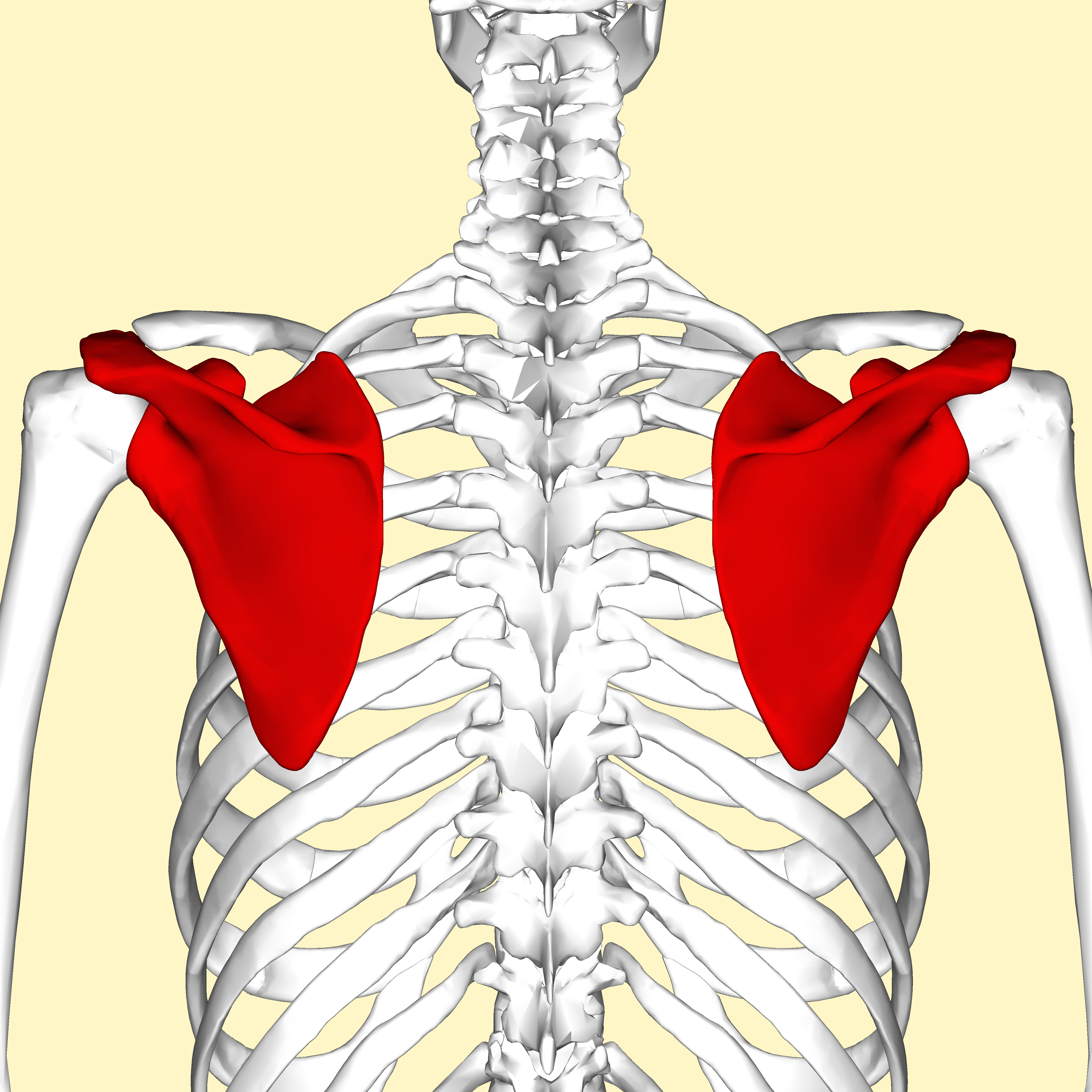
What bones is represented in the  picture?
a)
Clavicle
b)
Scapula
c)
Sternum
d)
Carpals
54.
Which of the following planes divides the body into left and right halves?
a)
frontal
b)
transverse
c)
horizontal
d)
sagittal
55.
A motor unit is made up of _______________.
a)
all the muscle fibers within a given muscle
b)
a motor neuron and the muscle fibers it innervates
c)
all the neurons going into an individual section of the body
d)
a fascicle and a nerve
56.
If this portion of the brain is damaged, you might have problems maintaining proper heart rates, respiratory rates, blood pressure levels, etc.
a)
Pons
b)
Cerebellum
c)
Brain stem
d)
Thalamus
57.
The split-brain procedure involves the cutting of this
a)
Cerebral Cortex
b)
Cerebellum
c)
Corpus Callosum
d)
Caudate Nucleus
58.

The purpose of this structure is to protect the brain

a)

ventricles

b)

vertebral column

c)

meninges

d)

choroid plexus

59.

Which plane of the body cuts into anterior and posterior halves?

a)

coronal

b)

sagittal

c)

medial

d)

transverse

60.

What is this structure that shortens when muscle fibers contract?

a)

sarcomere

b)

fascicle

c)

actin

d)

axon

61.

Which structure is most superficial on the anterior eye?

a)

iris

b)

lens

c)

retina

d)

cornea

62.

Which cells allow you to see in low light?

a)

rods

b)

cones

63.
The average heart beats about _____ times per minute
a)
35
b)
50
c)
75
d)
105
64.
If a blood type is said to be positive it means?
a)
It has a sunny disposition
b)
it contains the Rh factor
c)
its lacking the Rh factor
d)
nothing
65.
All foreign materials that cause a response from the immune system are called _____________________.
a)
Antigens
b)
Active Immunity
c)
Antibodies
d)
Antibiotics
66.
Lifting your shoulders towards your ears is an example of...
a)
Shoulder Abduction
b)
Shoulder Adduction
c)
Shoulder Elevation
67.
Which muscle listed below is not a leg muscle?
a)
Deltoid
b)
Gastrocnemius
c)
Quadricep
d)
Hamstring
68.
A joint that can fully move is a
a)
hyaline cartilage
b)
fixed joint
c)
cranium
d)
synovial joint
69.
what part of the skull is shown above?
a)
zygomatic process
b)
foramen magnum
c)
mandible
d)
frontanel
70.
Identify this group of muscles (1,2,3).
a)
hamstrings
b)
quadriceps
c)
abs
71.
Identify this muscle.
a)
biceps brachii
b)
deltoid
c)
triceps
72.

Which 2 body systems are most in control of homeostasis?

a)

Nervous and circulatory

b)

Digestive and Urinary

c)

Nervous and Endocrine

d)

Reproductive and muscular

73.
The purpose of carbohydrates is:
a)
to provide a layer of insulation for protection.
b)
to boost the immune system and fight off infection.
c)
to provide the body with energy.
d)
to help us get a good night's rest.
74.

Promotes repairing and rebuilding of muscle tissue

a)

Protein

b)

vitamins

c)

minerals

d)

fats

75.

This nutrient helps keep your bones and teeth strong

a)

vitamins

b)

carbohydrates

c)

Minerals

d)

Fats

76.
Which of the following foods is NOT a carbohydrate?
a)
rice
b)
bread
c)
fruit 
d)
fish
77.
Which of the following foods is NOT a protein?
a)
Orange
b)
Steak
c)
Eggs
d)
Chicken
78.
Grains are a good source of...
a)
Protein
b)
Carbohydrates
c)
Sugar
d)
Water
79.

The role of fibre is to

a)

Strengthen teeth and bones

b)

Keep the digestive system healthy

c)

Provides the body with energy

d)

Repairs muscle and tissues

80.

Vitamin C is important because...

a)

It keeps the immune system healthy

b)

Provides the body with energy

c)

Improves eye health and vision

d)

Reduces the risk of brittle bones

81.
The esophagus leads to the
a)
stomach
b)
liver
c)
intestines
d)
pancreas
82.
Digestion takes place in a long tube-like canal called the digestive tract.  Food travels through these organs in the following order:
a)
mouth, esophagus, stomach, small intestine, large intestine, anus
b)
mouth, esophagus, stomach, large intestine, small intestine, anus 
c)
mouth, stomach, esophagus, small intestine, large intestine, anus
d)
mouth, small intestine, large intestine, stomach, esophagus, anus
83.
Which of the following are water soluble vitamins?
a)
A, D, E and K
b)
sugary and starchy foods
c)
zinc and calcium
d)
B and C
84.
Which of the following are considered fat soluble vitamins?
a)
B and C
b)
A, D, E and K
c)
iodine and magnesium
d)
iron and calcium
85.
This fat (lipid) is solid at room temperature:
a)
unsaturated fat
b)
saturated fat
c)
trans fat
d)
protein
86.
The chewing and grinding of food into smaller pieces is an example of...
a)
Mechanical Digestion
b)
Chemical Digestion
87.
Nutrients from digested food are absorbed in which digestive organ?
a)
Small Intestine
b)
Stomach
c)
Large Intestine
d)
Gallbladder
88.
Which of the following is NOT part of the digestive tract?  (Hint:  Identify the secondary organ.)
a)
Mouth
b)
Esophagus
c)
Small Intestine
d)
Liver
89.
Number 4 is pointing to the....
a)
Anus
b)
Rectum
c)
Large Intestine
d)
Small intestine
90.
Number 5 is pointing to the...
a)
Liver
b)
Gallbladder
c)
Pancreas
d)
Stomach
91.
Number 3 is pointing to the...
a)
Small intestine
b)
Rectum
c)
Large intestine
d)
Stomach
92.
Number 2 is pointing to the...
a)
Esophagus
b)
Stomach
c)
Small intestine
d)
Anus
93.
Which secondary organ makes digestive juices like insulin to help absorb food in the small intestine?
a)
Large intestine
b)
Pancreas
c)
Liver
d)
Gallbladder
94.
Enzymes (chemicals) in your saliva help break down food while chewing.  This is...
a)
Mechanical digestion
b)
Chemical digestion
95.
WHAT IS AFTER THE SMALL INTESTINE?
a)
Large intestine
b)
nothing
c)
liver
d)
pancreas
96.
A substance such as a fat, a protein, or a carbohydrate that a living thing needs to survive.
a)
Nutrients
b)
Saliva 
c)
Digestion
d)
Absorb
97.

Which of the following is a good analogy or example for what the stomach does?

a)

A car engine

b)

a garbage disposal

c)

a washing machine

d)

a battery pack

98.

What is the body's prefered energy source

a)

Fat

b)

Protein

c)

Carbohydrates

d)

Nucleic acids

99.

How many body systems have a direct connection to maintaining blood pH levels

a)

2

b)

4

c)

6

d)

12

100.

How many body systems were covered in Chapter 1

a)

8

b)

14

c)

7

d)

11