
 Worksheets
SNC1D Final Exam
Total questions: 100
Worksheet time: 1hrs 15mins
Which of these is NOT a sign that a chemical reaction has occurred?
Release of gas
Precipitate forms
Change of state
How many hydrogen atoms are in 2 molecules of water (2H2O)?
6
_____________________ is a substance made up of 2 or more different types of atoms.
A compound
An isotope
An ion
A bond
plasma
Frank has a paper clip. It has a mass of 9 g and a volume of 3 cm3. What is its density?
An atom has an atomic number of 15 and a mass number of 31. How many protons are there in the atom?
15
31
16
46
An atom has 5 protons and 7 neutrons. What is the mass number (atomic mass) of the atom?
An atom has an atomic number of 19 and a mass number of 39. How many neutrons are in the atom?
20
39
What is a valence electron?
Electrons in the first energy shell
Electrons in the second energy shell
Electrons in the outer shell
Total number of electrons
The innermost energy level has a maximum of how many electrons?
1
2
6
8

noble gases


group/family

A(n)__________ includes all living and non-living things in an environment.

Organism that relies on other organisms for food; consumer

In which cycle does the burning of fossil fuels move a material from the lithosphere into the atmosphere?
carbon
nitrogen
oxygen
water
Which is an example of an aquatic ecosystem?
a coniferous forest
a desert
a fresh water pond
a prairie
a tropical rainforest
Decomposition is an important part of which nutrient cycle?
carbon and water
nitrogen and water
phosphorus and nitrogen
carbon, nitrogen, and phosphorus
nitrogen, phosphorus and water


Cellular respiration
Plants use ____________ to make their own food
Water
Sunlight
Carbon dioxide
All of these

Yucca flowers are pollinated by yucca moths. The moths lay their eggs in the flowers where the larvae hatch and eat some of the developing seeds. Both species benefit. This is:
decomposition

Remoras attach themselves to a shark’s body. They then travel with the shark and feed on the leftover food scraps from the shark’s meals. The relationship neither harms nor benefits the shark. This is:
decomposition

Mistletoe extracts water and nutrients from a spruce tree. The spruce tree is harmed. This is:
decomposition

As bison walk through grass, insects become active and are seen and eaten by cowbirds. The relationship neither harms nor benefits the bison. This is:
decomposition
O2 + light + H2O --> CO2 + Sugar
Leamington is located within which biome?
Boreal Forest
Temperate Deciduous Forest
Grasslands
Tundra
Which biome is characterized by low temperatures, low biodiversity, permafrost and poor soil quality?
Grassland
Boreal Forest
Tundra
Mountain Forest
Which term describes a species that no longer exists in a particular region but can still be found elsewhere?
vulnerable
endangered
extinct
extirpated
Which choice describes the behavior of an electric charge?
Like charges attract. Unlike charges repel.
Like charges repel. Unlike charges attract.
Like charges attract. Unlike charges attract.
Like charges repel. Unlike charges repel.
An example of a conductor is:
Copper
Wool
Plastic
Fabric

Use the electrostatic series to answer the following:
When a rubber balloon rubbed on human hair, the balloon will become:
Positive
Negative
The same charge as the hair
Neutral
What is the end result of charging by contact?
Both object have the same charge, so they will attract one another
Both object have the same charge, so they will repel one another
Both object have the opposite charge, so they will attract one another
Both object have the opposite charge, so they will repel one another
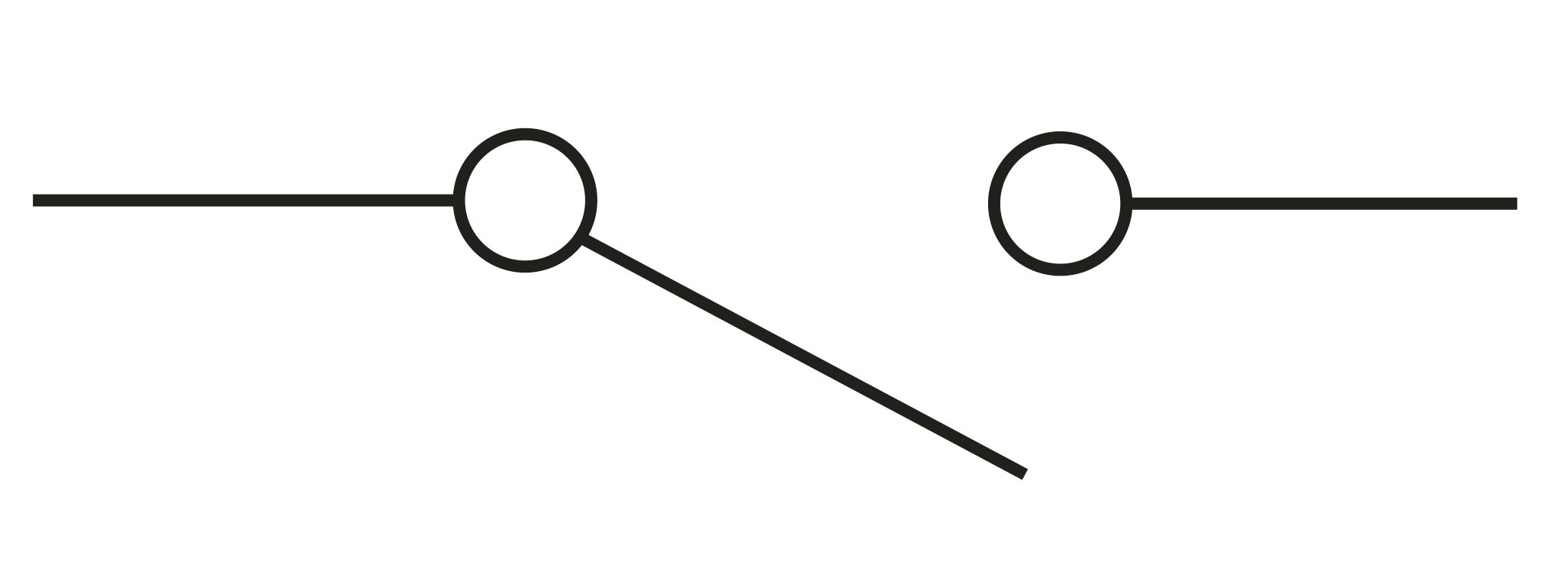
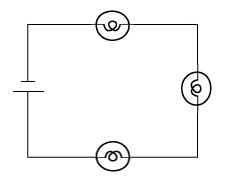
An electric circuit contains a battery, a switch, and a bulb. Which of the following will MOST LIKELY happen if you add another battery to the circuit?
The bulb will not shine
The bulb will shine brighter than it did with one battery
The bulb will shine the same
The bulb will shine half as bright as it did with one battery
Ohms
Watts
What is a circuit breaker?
A type of light switch.
A switch used in an electrical appliance that uses large current.
Used to turn on or off the electrical supply to the whole house.
Used to switch off the electrical supply to one part of the circuit when current in that part of the circuit is too large.

What is the function of a turbine?
When it spins, it makes sparks, inducting electricity.
It transfers the energy from the flow of steam or water to the generator.
It speeds up the steam or water to keep it at a steady pace.
It controls the steam or water so it can be pumped around in a cycle.

Which one of these electricity sources is nonrenewable?
coal
wind
water
geothermal
The electricity generated from a power plant is
Alternating Current
Direct Current
Delayed Current
Alternating Voltage
An electric car is NOT "green" if the electricity to charge it comes from__________________.
solar cells
wind power
natural gas
water power

Mahra finds that all of the electric cords in her school are covered with plastic. Why is it important to cover the electric cords with plastic?
Plastic is an insulator.
Plastic is a conductor.
Plastic is strong.
Plastic will melt.
Our galaxy is called
Centaurus A
Andromeda
the Milky Way
Triangulum
According to latest theories, the Big Bang happened
3 million years ago
about 13.8 billion years ago
3 billion years ago
4.5 billion years ago
What is the origin of the cosmic background radiation?
it is a remnant of the Big Bang
it is emitted by radio galaxies
it is dark energy
it is emitted by stars
A massive celestial body composed of hot gases is
a galaxy
a star
a comet
a planet
The gaseous planets are those found closest to the Sun
true
false
One astronomical unit (AU) is the average distance between Earth and the Moon.
true
false
Meteoroids are large chunks of ice, dust, and rock that orbit the Sun.
true
false
A comet can be distinguished from a meteor or an asteroid because:
its matter is heated up and gives off light
it develops a gaseous tail that points directly away from the Sun
its orbit never intersects with Earth’s orbit
its origin lies somewhere within the Asteroid Belt
How many planets are there in our solar system?
6
7
8
9

Models of the solar system with Sun at the center are called _____________________ models.
geocentric
heliocentric
terrestrial
none of the above
The asteroid belt is located between the orbits of which two planets?
Earth and Mars
Jupiter and Saturn
Saturn and Uranus
Mars and Jupiter

A glowing cloud of gas and dust in outer space where new stars may form is called a:
Comet
Jovian Planet
Terrestrial Planet
Nebula
Evidence that the universe is expanding is best supported by the observation that the wavelengths of light from distant galaxies are shifted toward the
blue end of the spectrum because they are lengthened
red end of the spectrum because they are lengthened
red end of the spectrum because they are shortened
blue end of the spectrum because they are shortened
Energy is produced within a star's core by the process of
nuclear fusion
convection
nuclear fission
radioactive decay
Which is most responsible for Earth's tides?
the sun
the moon
mars
humans

Why are the locations in high latitudes so much colder than the locations in low latitudes?
They receive less direct sunlight.
They receive more direction sunlight.
The sun never shines there.
The sun doesn't like those areas.
Saturn is the ..... planet from the sun
6th
5th
7th
4th
Which of these is in the correct size order going small to large?
planet, galaxy, star, universe
universe, galaxy, star, planet
planet, star, universe, galaxy
planet, star, galaxy, universe
Which of the following planets in the solar system is between the Sun and Earth?
Neptune
Mercury
Mars
Jupiter
The Sun is composed of which combination of gases?
Hydrogen & Nitrogen
Oxygen & Helium
Helium & Nitrogen
Hydrogen & Helium
At the end of a very large star's life, it becomes an extremely dense quantity of matter from which no light or matter can escape, called a:
Black Hole
White Dwarf
Red Giant
Nebula
Constellations in the night sky appear to move throughout the night because:
Earth is rotating on its axis
the stars actually move together through space
the Moon pulls on the stars with its gravity
Earth is changing its distance from the Sun
During a lunar eclipse
Earth's shadow covers the moon
the sun's shadow covers the moon
the moon covers the sun
Earth's shadow covers the sun
Which of the following is NOT an effect of living in space:
increased exposure to radiation
decreased bone density
superhuman strength
blood pools in upper parts of body

