
 Worksheets
Extra Points Challenge!
Total questions: 70
Worksheet time: 52mins
What lead to the sinking of the Lusitania?
Unrestricted German submarine warfare in the Atlantic.
Americans targeting German U-Boats at sea.
British Navy ships targeting American merchant ships.
German Navy targeting American Navy ships.
What eventually lead to America declaring war on Germany in World War 1?
German attack on America's coastline.
German sinking of American Naval battleships at sea.
The discovery of the Zimmerman Telegram.
German spies infiltrating the White House.
What did the Selective Service Act establish?
Allowed Congress to authorize a draft to select men for war.
Made public service a requirement.
Establish military service to be a requirement for all young men from that point forward.
Authorized soldiers the right to invade personal homes for military use.
Why did Congress feel the need to pass the Espionage Act?
The fear of American rebelling against the government in war.
To create as many spy agencies as possible.
The fear of enemy spies within the U.S. borders.
Which of the following was meant inform the public on America's involvement in World War 1?
Selective Service Act
NAWSA
Congressional War Committee
Committee on Public Information
This was the movement of several minorities, especially African-Americans from the south to the north in search of job opportunities.
Great Migration
Northern Migration
Southern Migration
War Economy Migration.
John J. Pershing was the military commander for which of the following countries.
France
Great Britain
United States
Germany
Germany, Austria-Hungary and the Ottoman Empire made up which alliance.
Central Powers
Allied Powers
Eastern Powers
Axis Powers
Great Britain, France, and Russia made up which alliance?
Axis Powers
Central Powers
Western Powers
Triple Entente
Of Wilson's 14 Points, which did the European leaders eventually agree to establish
International Free Trade
Open Access to Seas
League of Nations
An end to Imperial Powers
The first red scare in America was in response to the fear of what?
Communist ideals would spread into the U.S. government and society
America would be attacked along the coastlines.
German-Americans would rise up against the government.
There would be a bloody revolution due to our involvement in the war.
Which is NOT a reason for the Dust Bowl to happen?
overspeculating on stocks
drought
overgrazing livestock
overplowing fields
What happened on October 29, 1929?
stock market crashed
WWI ended
Franklin Roosevelt was elected
stock market reached an all-time high
What was the primary way flappers of the 1920s challenged the traditional role of women?
fought for increased job opportunities
pressured colleges and universities to accept female students
displayed fashions and behaviors that shocked mainstream society
helped female politicians win campaigns
What was a immediate effect of the radio?
help with finances
mobility for the working class
improved access to information
helped women get away from traditional roles
The Ku Klux Klan was most closely associated with
nativism
education
helping immigrants
assembly line
Who did the Palmer Raids target?
anti-imperialists
progressives
communists
fascists
Why was the Sacco-Vanzetti case significant during the 1920s?
involved the arrest and conviction of two immigrants - a sign of nativism that was huge during this time
led to the Tennessee law that bans the teaching of evolution in schools
it ended Prohibition
it led to the conviction of Al Capone
What amendment gave women the right to vote?
16
18
19
21
What amendment banned alcohol (Prohibition)?
16
18
19
21
What was the "noble experiment?"
outlawing alcohol
spreading awareness for Black American culture
fight for women's right to vote
getting rid of big business
Amendment that ended prohibition
16
18
19
21
What was one of the biggest reasons why the American economy boomed in the 1920s?
mass production led to goods being made faster and an increase in supply
the arrest of criminals who wouldn't stop killing people
the banning of alcohol
giving women the right to vote
What Civil Rights leader of the 20s believed in a separatist approach to race relations and promoted going back to Africa?
Marcus Garvey
William DuBois
Booket T. Washington
Martin Luther King Jr.

Smugglers who brought alcohol into the United States when it was illegal were called?
Flappers
Bootleggers
Anarchists
Communists

What are speakeasies?
Illegal bars and clubs
Jazz musicians
Communication that reaches many people
Powerful gangsters
An economic system that allows PRIVATE property and personal ownership of businesses.
Capitalism
Theocracy
Oligarchy
Dictatorship
This economic system promotes equality and allows the people to own parts of major industries in a nation.
Capitalism
Confederacy
Socialism
Oligarchy
This is an extreme form of socialism that forbids private ownership and abolishes social classes.
Anarchy
Communism
Capitalism
Socialism
False and exaggerated news stories that helped spark the Spanish American war were known as:
Imperialism
Yellow Journalism
Muckrakers
Tabloids
This event was the most immediate cause of the Spanish American War:
The sinking of the USS Maine
The election of Francisco Franco
Yellow Journalism
The Cuban Revolution
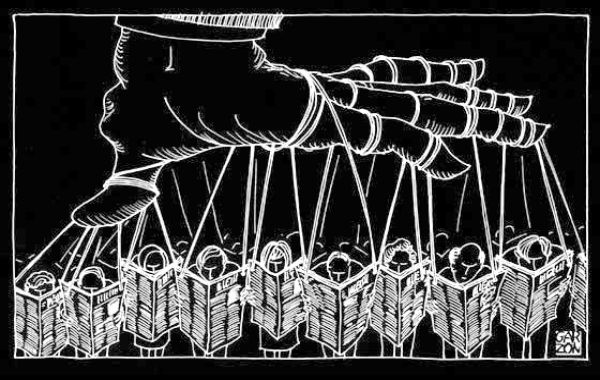


What were the 3 fascist countries during WWII?
Italy
Great Britain
Japan
Germany
Which political ideology do fascist hate the most?
Capitalism
Socialism
Communisim
Zaoism


In this New Deal program, workers constructed things like roads, bridges, public buildings and parks but it also employed artists and performers...
Public Works Administration (PWA)
Agricultural Adjustment Act (AAA)
National Youth Administration (NYA)
Works Progress Administration (WPA)

Created government jobs for young, single men that focused on natural resource protection, park creation, and bridge building/
National Recovery Administration (NRA)
Federal Emergency Relief Administration (FERA)
Works Progress Administration (WPA)
Civilian Conservation Corps (CCC)

Permanent Agency designed to insure depositors money in savings banks. Originally insured up to $5,000 per depositor today it has increased to $100,000.
Securities Exchange Commission
Federal Deposit Insurance Corporation
Social Security Administration
National Labor Relations Act
Soil Conservation Act
Otherwise known as the Wagner Act it helped unions and thus helped workers. This acted created the NLRB (National Labor Relations Board) which enforced labor law and made sure that fair business practices where upheld.
Securities Exchange Commission
Federal Deposit Insurance Corporation
Social Security Administration
National Labor Relations Act
Soil Conservation Act
Permanent agency designed to ensure that the older segment of society always would have enough money to survive. The key here is that they would then also be able to spend throughout their lives.
Securities Exchange Commission
Federal Deposit Insurance Corporation
Social Security Administration
National Labor Relations Act
Soil Conservation Act

