
Font size
 Worksheets
Genetics Final Exam Review
Total questions: 45
Worksheet time: 36mins
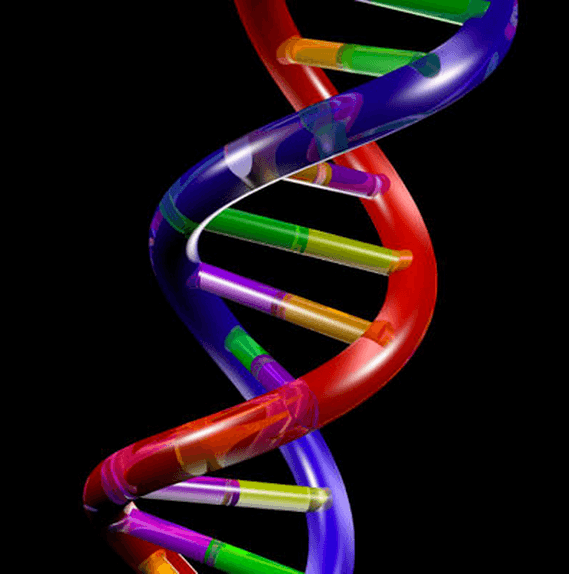
STRUCTURE: One difference between RNA and DNA is -
RNA has thymine where DNA has ademine
DNA is single stranded where RNA is double stranded
DNA is made in the nucleus where RNA is made in the ribosomes
RNA is single stranded where DNA is double stranded
STRUCTURE: What Nitrogenous Base does RNA contain that DNA does not?
Thymine
Uracil
Adenine
Love

STRUCTURE: In the DNA double helix, the bases (AtoT and CtoG) are held together by:
polar bonds
ionic bonds
covalent bonds
hydrogen bonds

TRANSLATION:
This is
tRNA
mRNA
DNA
a ribosome
HISTORY: Discovered Bacterial Transformation
Fredrick Griffeth
Erwin Chargaff
Rosalind Franklin
Martha Chase
HISTORY: Performed an experiment with Bacteriophage viruses that proved DNA was the genetic material
Maurice Wilkens and Rosalind Franklin
James Watson and Francis Crick
Alfred Hershey and Martha Chase
Peanut butter and Jelly
What is added to the 3' end of an mRNA transcript?
a modified guanine nucleotide
a series of adenine nucleotides
intron
exon
A single gene has 3 or more alternative forms. These are called
heterozygotes
multiple alleles
epistatic
polygenic
Law of independent assortment states:
the two alleles for each trait separate during meiosis
the two alleles for each trait separate during mitosis
a random distribution of alleles occur during gamete formation
a ordered distribution of alleles occur during gamete formation
A cell has a diploid number of 12. How many chromosomes in a gamete
24
12
6
varies
what is the order of the cell cycle
G1, S, G2, interphase, M phase, cytokinesis, mitosis
G1, G2, S, mitosis, cytokinesis
G1, S, G2, mitosis, cytokinesis
S, G1, G2, mitosis, cytokinesis


What occurs when a single gene affects more than one trait?
codominant
pleiotropy
polygenic
epistasis
What occurs when one gene masks the effects another gene?
codominant
pleiotropy
polygenic
epistasis
Oncogenes
are mutated forms of tumor suppressor genes
are mutated forms of genes that code for proteins that normally assist in apoptosis
are mutated genes the inhibit the cell cycle
are mutated genes that code for proteins which activate cell division too often or at the improper time
In the Sanger sequencing method, what causes the termination of each chain of DNA?
The incorporation of a deoxynucleotide
When the DNA polymerase encounters a stop codon
The incorporation of a dideoxynucleotide
Denaturation of the double strand
A student researcher overexpresses an exogenous protein in cell culture and wants to determine if that protein, is in fact, overexpressed. What technique would best demonstrate that this protein is expressed in these cells?
Northern blot
Southern blot
Western blot
Eastern blot
CRISPR can edit DNA. What organisms naturally has CRISPR?
Viruses
Humans
Plants
Bacteria
CRISPR-Cas9 is a type of ________ system found in bacteria.
digestive
endocrine
circulatory
immune
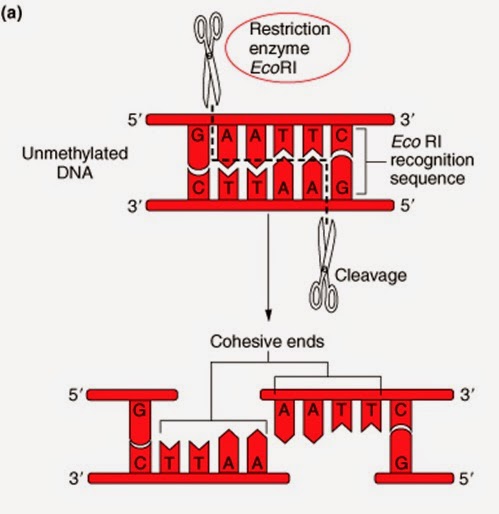
The recognition sites for restriction enzymes are :
a).Tautomer
b). Pallindrome
c).Metamere
d).Acronym
These chemical tags inactivate or silence a gene.
acetyl groups
methyl groups
histones
genes
1. What does acetyl do for gene expression
constricts the nucleosome and allows for the gene to be read
constricts the nucleosome and inhibits the gene to be read
opens the nucleosome and inhibits the gene to be read
opens the nucleosome and allows the gene to be read
MicroRNAs have the power to
bind to mRNA and stop translation.
bind to mRNA and degrade it.
silence a gene from being expressed.
stop the protein from being created.
Transcriptionally active chromatin is called
Euchromatin
Heterochromatin
Chromatonema
Xist is
a protein
a protein coding gene
functional RNA
none of the above
The role Xist playes in X inactivation is to
inactivate the X chromosome
activate the X chromosome
All of the following are uses of RNAi except
sequence specific gene silencing
used to research the function of genes
therapeutic approach for diseases like paralysis and nerve diseases
therapeutic approach to treat undesirable activity of a gene
Chromosomal disorder where a male has an extra X chromosome(3.2.2)
Down syndrome
Turners
Jacobs
Klinefelter's
(a) is when a dominant allele is not completely expressed hence a third phenotype is expressed when an organism is heterozygous.
HISTORY: Discovered that A and T bond together and C and G bond together...
Watson and Crick
Rosalind Franklin
Fredrick Griffeth
Erwin Chargaff

