wayground logo

Free Printable Worksheets

Font size

S
M
L
XL
Worksheets

Digestive System REVIEW

Total questions: 61

Worksheet time: 30mins
Name
Class
Date
1.
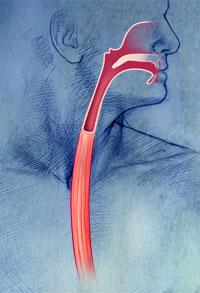
This is an image of the
a)
stomach
b)
small intestine
c)
esophagus
d)
large intestine
2.
What is the function of the digestive system?
a)
to break down and absorb nutrients
b)
to support and protect our bodies
c)
to produce vitamin D
d)
to help us move
3.
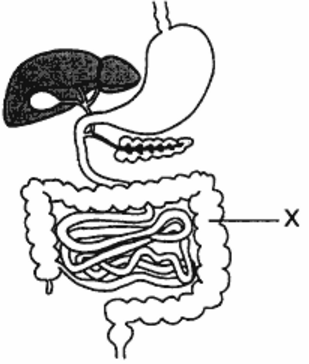
The diagram represents a portion of a human body. The principal function of structure X  is to
a)
produce salivary enzyme
b)
produce sex hormone
c)
absorb water
d)
absorb nutrients
4.

What is the function of a liver?

a)

To call Raegan a gweeb

b)

to transfer foods

c)

to produce enzymes

d)

to produce bile

5.

What is the function of a small intestine

a)

to crunch the food

b)

To add enzymes

c)

Contains hydrochloric acid

d)

To absorb nutrients and water

6.

What is the function of pancreas

a)

To produce insulin and other important enzymes

b)

To produce bile

c)

To produce the next Albert Enstine

d)

To produce saliva

7.
The majority of digestion occurs in the:
a)
large intestine
b)
small intestine
c)
ulcer
d)
rectum
8.
When many large carbohydrates are chemically digested they are broken into many smaller _____
a)
proteins
b)
amino acids
c)
simple sugars
d)
enzymes
9.

The main function of the stomach is to:

a)

Store food

b)

Produce hydrochloric acid

c)

Break down food

d)

All the above

10.

Digestion begins in the where?

a)

Mouth

b)

Stomach

c)

Pancreas

d)

Gallbladder

11.
Where does chemical digestion begin?
a)
mouth
b)
esophagus
c)
stomach
d)
small intestine
12.

Large food molecules need to be broken down to be small enough to pass through cell membranes.

a)

True

b)

False

13.

Which enzyme does the stomach produce?

a)

amylase

b)

lipase

c)

maltase

d)

protease

14.

Why is the esophagus muscular?

a)

To break the food into even smaller pieces

b)

To produce enzymes to digest food

c)

To push food from the mouth into the stomach

d)

To move the food back and forth in two directions

15.

The breaks down the food we eat.

a)

respiratory system

b)

digestive system

c)

skeletal system

16.

Digestion begins in the when you chew and swallow food.

a)

stomach

b)

esophagus

c)

mouth

17.

A watery liquid called makes the food wet and soft, and it has a chemical that helps digest the food.

a)

blood

b)

urine

c)

saliva

18.

The connects the bottom of your throat to your stomach.

a)

mouth

b)

oesophagus

c)

small intestine

19.
Which type of digestion produces physical change to the food by breaking food into smaller pieces?
a)
chemical
b)
peristalsis
c)
mechanical
d)
saliva
20.
What happens to unused food materials in the digestive system?
a)
They are stored in the rectum and released through the anus
b)
They are recycled back to the stomach to get reprocessed
c)
There are no unused materials, the digestive system absorbs all food nutrients
d)
They are stored in the large intestine until we need them
21.
This is where food is reduced to a liquid form.
a)
large intestine
b)
small intestine
c)
stomach
d)
rectum
22.
Where are nutrients absorbed and waste forms?
a)
small intestine
b)
large intestine
c)
small and large intestine
d)
none of the above
23.
What organ is this?
a)
stomach
b)
large intestine
c)
small intestine
d)
esophagus
24.
What organ is this?
a)
stomach
b)
small intestine
c)
large intestine
d)
esophagus
25.
What organ is this?
a)
stomach
b)
small intestine
c)
large intestine
d)
esophagus
26.
The digestive system absorbs nutrients and creates waste.
a)
True
b)
False
27.
What helps to lubricate your food so that it can go down your esophagus?
a)
mouth
b)
teeth
c)
saliva
d)
none of the above
28.

Chemical used to digest food

a)

enzyme

b)

saliva

29.

The PROCESS by which food is broken down

a)

digestion

b)

enzyme

30.

LIQUIDS that help soften and BREAK DOWN food

a)

digestive juices

b)

enzyme

31.

The longest part of the digestive system is the …………………..

a)

esophagus

b)

small intestine

c)

stomach

d)

large intestine

32.

……………….. Secretes gastric juice that changes protein into a semi-liquid substances

a)

large intestine

b)

stomach

c)

mouth

d)

small intestine

33.

the undigested food is assembled in the ………………..

a)

Stomach

b)

Duodenum

c)

Small intestine

d)

large intestine

34.

bile juice is secreted by ……………………

a)

liver

b)

Stomach

c)

Salivary glands

d)

Pancreas

35.

........... is the process of changing food from complex form into simple to get benefit from it

a)

Respiration

b)

Digestion

c)

Absorption

d)

Sensation

36.
When you eat a cheeseburger, your digestive _______ digests the cheeseburger.
a)
glands
b)
organ
c)
system
d)
tissue
37.
Which organ system includes the esophagus, pancreas, and large intestine?
a)
digestive
b)
excretory
c)
integumentary
d)
lymphatic
38.
Which organ is part of the digestive system?
a)
blood
b)
brain
c)
pancreas
d)
spleen
39.
Which organ is a secondary organ that stores bile?
a)
stomach
b)
gallbladder
c)
pancreas
d)
liver
40.
What is the short tube that stores solid waste until it is eliminated from the body through the anus?
a)
rectum
b)
liver
c)
esophagus
d)
stomach
41.

The teeth and tongue of the oral cavity break foodstuff down physically. This is an example of

a)

mechanical digestion

b)

chemical digestion

c)

absorption

d)

peristalsis

42.

Which of the following is an accessory organ of the digestive system?

a)

stomach

b)

small intestine

c)

esophagus

d)

liver

43.

Which of the following answers correctly sequences the pathway food takes from the beginning to end?

a)

mouth, esophagus, stomach, small intestine, large intestine

b)

mouth, esophagus, stomach, large intestine, small intestine

c)

mouth, stomach, esophagus, small intestine, large intestine

d)

mouth, stomach, esophagus, large intestine, small intestine

44.

Structure 12 is the

a)

pancreas

b)

salivary glands

c)

mouth

d)

esophagus

45.

Structure 16 is the

a)

pancreas

b)

salivary glands

c)

larynx

d)

esophagus

46.

Structure 4 is the

a)

pancreas

b)

liver

c)

stomach

d)

gall bladder

47.

Structure 17 is the

a)

pancreas

b)

liver

c)

stomach

d)

gall bladder

48.

Structure 5 is the

a)

pancreas

b)

appendix

c)

salivary gland

d)

gall bladder

49.

Structure 20 is the

a)

pancreas

b)

stomach

c)

large intestine

d)

small intestine

50.

Structure 8 is the

a)

pancreas

b)

stomach

c)

large intestine

d)

small intestine

51.

Structure 11 is the

a)

gall bladder

b)

appendix

c)

large intestine

d)

small intestine

52.

Structure 22 is the

a)

anus

b)

rectum

c)

large intestine

d)

small intestine

53.

Structure 23 is the

a)

anus

b)

rectum

c)

large intestine

d)

small intestine

54.
A fluid in the mouth that helps digest food.
a)
pepsin
b)
pepsi
c)
saliva
d)
salty
55.
Gastric juices in the stomach digest food into a thick liquid.  This is...
a)
Mechanical digestion
b)
Chemical digestion
56.
A series of wave-like muscle contractions that moves food to different processing stations in the digestive tract.
a)
adduction
b)
primary wave
c)
peristalsis
d)
inversion
57.

Solid waste eliminated by the body, specifically the digestive system.

a)

feces

b)

chyme

c)

bolus

d)

bile

58.

Soup-like mixture found in the stomach made up of food and digestive juices

a)

chyme

b)

bolus

c)

feces

d)

bile

59.

Ball-like mixture of food and saliva formed by the mouth before swallowing.

a)

bolus

b)

chyme

c)

bile

d)

feces

60.

Which of the following is NOT a step in the digestion of food?

a)

absorption

b)

expiration

c)

ingestion

d)

secretion

61.

Which of the following is NOT part of the digestive system?

a)

gall bladder

b)

pancreas

c)

spleen

d)

liver