
NEW
Font size
 Worksheets
Cells
Total questions: 68
Worksheet time: 50mins
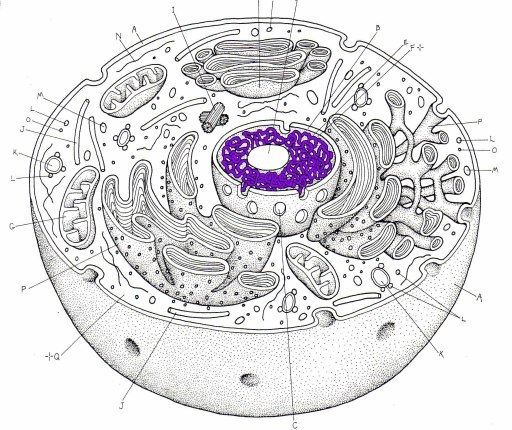


"Small organs" of the cell that carry out specific functions
Organelles
Organs
Cell Wall
Cell

protective barrier that encloses all cells
controls the movement of materials into and out of the cell
cell membrane
cell wall
endoplasmic reticulum
golgi body

What is the nucleus?
A part of the cell that tells everything else what to do.
An organ that makes you healthy.
A wall that protects everything in the cell.
Multicellular means...
made of one cell
made of many cells

contains DNA, which has the information on how to make the cell's proteins control center for the cell. Sometimes called the brain of the cell.
Nucleus
Lysosome
Mitochondria
Endoplasmic reticulum

Controls what enters/leaves a cell
Cell membrane
Ribosomes
Cell Wall
Cytoplasm

Which organelle uses energy from sunlight to make sugar?
Mitochondria
Nucleus
Chloroplasts
Vacuoles

jello-like material, fills the space between cell organelles, is where many chemical reactions occur
Cytoplasm
Chlorophyll
Chloroplast
Cell Membrane

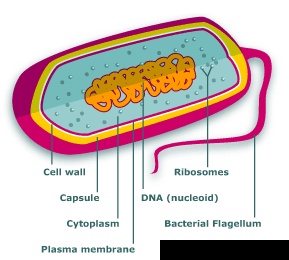
What type of cell is shown?
Prokaryotic (Bacteria)
Eukaryotic (Plant or Animal)

“Powerhouse” of the cell, breaks food down into energy for the cell
Vacuole
Chloroplast
Nucleus
Mitochondria

Makes proteins, works like a “contractor”, building more cell parts
Endoplasmic reticulum
Mitochondria
Chloroplast
Ribosome

Break down molecules and dead organelles, works like a “garbage disposal”
Mitochondria
Vacuole
Lysosome
Ribosome

Students use a microscope to look for structures present in four different cells. The students placed an X for each structure that was viewed for each cell on the table shown.
Which cell that was viewed is most likely a prokaryote?
Cell W
Cell X
Cell Y
Cell Z

Stores food and water like a refrigerator for the cell
Chloroplast
Vacuole
Lysosome
Cytoplasm

Organelle that links amino acids together to make proteins.
ribosome
endoplasmic reticulum
vacuole
nucleus

Layered stack of flat membrane-enclosed spaces containing enzymes that process, sort, and deliver proteins.
Golgi apparatus
vacuole
cell wall
none of these

Fluid filled sac for storage of materials; stores food, water, and enzymes.
vacuole
centrosome
nucleus
chloroplast

This organelle is found only in plants; it takes up a lot of space and strengthens cells and helps to support the entire plant.
central vacuole
chloroplast
mitochondroa
nucleus

Dense area of the nucleus that is essential for making proteins.
nucleolus
ribosome
lysosome
cytoskeleton

Organelle composed of many membranes used to convert solar energy into chemical energy; contains chlorophyll and is where photosynthesis occurs.
chloroplast
smooth endoplasmic reticulum
nucleus
vesicle

A rigid structure that gives protection, support, and shape to plants, algae, fungi and some bacteria.
cell wall
cell membrane
cytoskeleton
cytoplasm

A network of proteins such as microfilaments, microtubules, that are inside of eukaryotic cells that support it and gives cells their shape.
cytoskeleton
cell wall
nucleus
ribosome

A double-layer of phospholipids that forms a boundary between the cell and surrounding environment and controls the passage of materials into and out of the cell.
cell membrane
cell wall
cytoplasm
lysosome

An interconnected network of thin, folded membranes that produce, process, and distribute proteins. Is covered in ribosomes.
rough endoplasmic reticulum
cell wall
smooth endoplasmic reticulum
centriole

An interconnected network of thin, folded membranes that produce, process, and distribute proteins. Is NOT covered in ribosomes.
smooth endoplasmic reticulum
nucleus
ribsome
Golgi apparatus


Cell Wall

Which table headings should the student use for the two groups?


A collection of different eukaryotic and prokaryotic cells are viewed through a microscope, as shown in the image. (click on it to view)
Which of the following correctly matches the type of cell with its label?
Cells B and D are eukaryotic because they are round in shape and have flagella.
Cells A,C, and E are prokaryotic because they are less than 2 micrometers in diameter.
Cells B and D are prokaryotic because they are greater than 10 micrometers in diameter.
Cells A, C, and E are eukaryotic because they are chained or rod shaped.
Prokaryotic cells differ from eukaryotic cells in that...
Eukaryotic cells contain DNA that is composed of RNA, and prokaryotic cells contain DNA that is composed of nitrogenous bases.
Eukaryotic cells contain DNA that is found in the cytoplasm, and prokaryotic cells contain DNA that is found in in the nucleus.
Eukaryotic cells contain DNA, and prokaryotic cells do not contain DNA.
Eukaryotic cells contain linear DNA, and prokaryotic cells contain circular DNA.
The diagram below shows muscle tissue in a human skeleton. This muscle tissue is full of protein. Though proteins are energy-rich they are not the first thing that the body breaks down, unless a person is doing heavy exercise.
When these proteins are broken down, they -
form simpler amino acid molecules for the body to use.
turn directly into more complex starch molecules.
form simpler fatty acid molecules for combustion.
turn directly into minerals for the body's electrical conductivity.
During photosynthesis, in addition to producing oxygen molecules for animals to breathe, plants also produce glucose. What purpose does glucose serve in an ecosystem?
Glucose is used as a long term storage source of proteins.
Glucose is the main source of energy for consumers.
Glucose acts as an integral part of genetic transfer between herbivores and carnivores.
Glucose acts as a building block for glycogen and fatty acid structures in the secondary consumers.
An advertisement for a health supplement for dogs claims to build lean muscle and strengthen tendons and ligaments, as well as provide energy. Which two biomolecules must the supplement contain to provide these benefits?
Carbohydrates and lipids
Proteins and carbohydrates
Nucleic acids and carbohydrates
Lipids and nucleic acids

Taq polymerase is an enzyme used in the polymerase chain reaction (PCR) to replicate fragments of DNA. A study published in 1976 examined the properties of Taq polymerase after the enzyme was isolated from Thermus aquaticus, a thermophilic bacterium that lives in the hot springs of Yellowstone National Park. The graph shows one of the results of the study.
Which statement about enzyme activity is best supported by this graph?
An enzyme must be composed of multiple polypeptides, or subunits, to be active
An enzyme’s rate of activity increases with time until it becomes inactive
An enzyme functions best under specific temperature conditions
An enzyme works equally well in bacteria that are adapted to high temperatures and in eukaryotic cells such as human cells
Which graph represents the effect that enzymes have on the activation energy of a chemical reaction?


Enzymes are molecules that help speed up reactions in your body. The graphs show the reaction rate for an enzyme across a range of temperatures and pH.Based on these data, this enzyme functions best at what temperature and pH?
Temperature of 10 C and a Ph of 1
Temperature of 37°C and a pH of 6
Temperature of 40°C and a pH of 8
Temperature of 50°C and a pH of 10
A student preparing for a hike wants to pack a snack that has biomolecules
that provide quickly available energy but few excess calories. Which nutrition
label lists the best combination of biomolecules that provide quickly available
energy while providing the fewest calories from other types of biomolecules?


Proteins and carbohydrates have many functions in the body of an organism. Specific proteins and carbohydrates perform specific tasks. Information about a protein and a carbohydrate is given below. How are Ferritin and Glycogen similar in their primary functions for an organism?
both store materials needed by the organism
both store energy used by the organism
both support the structure of the organism
both store information for the organism

