
Font size
 Worksheets
biology - 8th
Total questions: 113
Worksheet time: 1hrs 23mins
This gland is a link between the nervous and endocrine systems and releases antidiuretic hormone and oxytocin.
Adrenal
Hypothalamus
Pituitary
Thyroid
The pituitary gland releases these hormones.
Adrenaline
Insulin
Growth Hormone
Thyroid Stimulating Hormone

Identify this gland.
Adrenal
Thyroid
Pancreas
Testes
The thyroid produces thyroid hormone called
thyroxine.
parathyroid hormone.
insulin.
thyroid stimulating hormone.
The thyroid controls
respiration.
growth.
all metabolic processes.
locomotion.
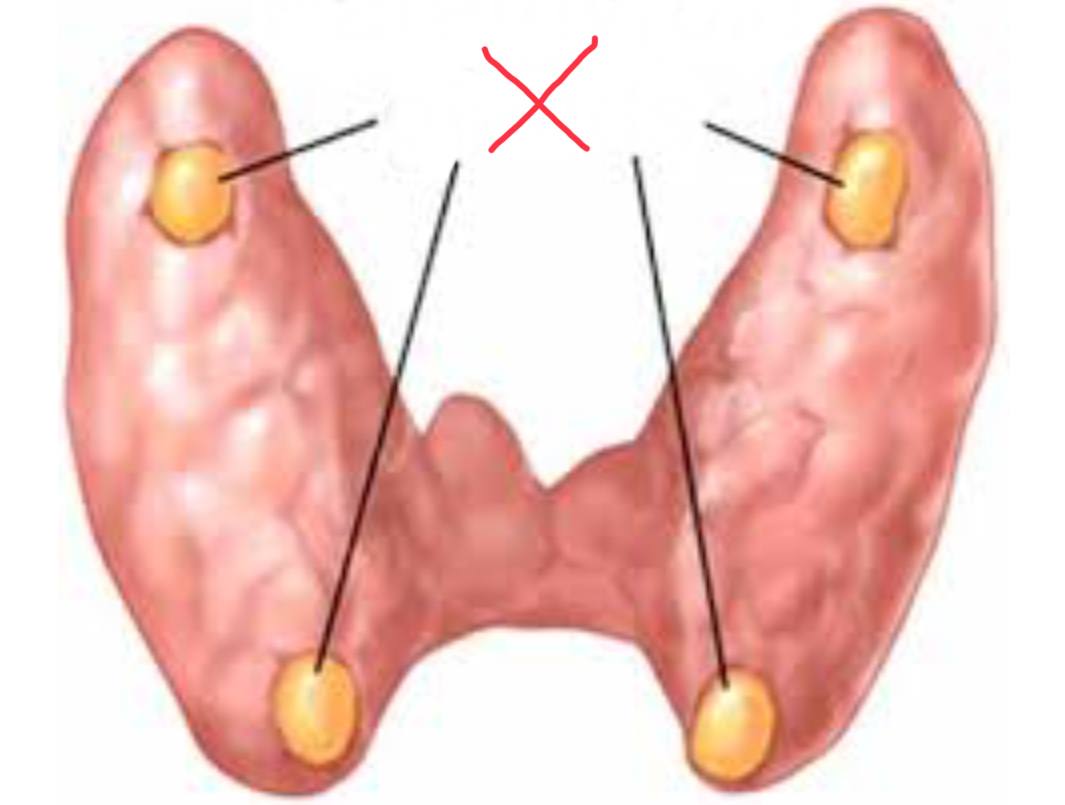
Identify the glands labeled “X.”
Pancreas
Testes
Tyroid
Parathyroid
These hormones are produced by the pancreas.
Thyroxine
Insulin
Adrenaline
Glucagon
Testosterone

Insulin and glucagon are produced by
the liver
the pancreas
the kidneys
Which one here reduces the amount of glucose in the blood?
Glucagon
Insulin
Glycogen
ADH
A hormone is
a chemical substance produced by a gland and carried by the lymph.
an enzyme produced by a gland and carried by the blood.
a chemical substance produced by a gland and carried by the blood.
This disorder is caused by abnormal insulin receptors usually due to too much carbs in your diet over long term
Type 1 Diabetes
Type 2 Diabetes
Hypoglycemia
A deficiency of growth hormone during adulthood.
Grave's Disease
Addison's Disease
Dwarfism
Acromegaly
Hyposecretion of cortisol, autoimmune disease of the adrenal glands, leads to anxiety, nausea, muscle weakness, changes in mood, among other things.
Grave's Disease
Cushing Syndrome
Addison's Disease
Hypothyroidism
Hypersecretion of cortisol, often due to adrenal tumor, can lead to "moon face" feature and "buffalo hump". Elevated blood sugar is another sign.
Goiter
Grave's Disease
Cushing Syndrome
Addison's Disease

Identify gland 3
Pituitary
Thyroid
Adrenal
Hypothalamus

What hormone is produced by 1?
FSH
Melatonin
Oxytocin
T3 and T4

What hormones are produced by 6? Mark all that apply.
Glucocorticoids
Glucagon
Adrenaline
Insulin
Which endocrine glands are found in the brain?
Pituitary
Pancreas
Thryroid
Adrenal
Which of the following is rich in organic nutrients?
Potash
Ammonium Sulphate
Urea
Compost

THIS INSTRUMENT IS USED FOR
HARVESTING
CUTTING
IRRIGATION
TILLING
SPECIFY THE PICTURE WHICH HELPS IN SOWING OF SEEDS


WHEN YOU WILL PUT SEEDS IN WATER ,WHAT IS TRUE ABOUT DAMAGED SEEDS?
THEY WILL SINK
THEY WILL FLOAT
THEY ARE HEAVIER
ALL OF THESE
Rabi Crops are grown in _______ season
Summer
Spring
Winter
rainy
The process of loosening and turning the soil is called
Broadcasting
Irrigation
Ploughing
Levelling
What are the advantages of preparing the soil?
Allows roots to penetrate the soil easily
Makes the top soil nutrient rich
Makes decomposition by microbes easier
All of these
Arrange the following agricultural practices in the order in which they are followed.
A. Storage
B. Harvesting
C. Irrigation
D.Sowing
E. Preparation of soil
A-B-C-D-E
E-D-C-B-A
The organic substance obtained from dead plants and animal wastes is
Manure
Fertilizer
Irrigation
Agriculture
VERMICOMPOST IS A
FERTILISER
PESTICIDE
MANURE
NONE OF THESE
The science of agriculture includes
Management of plants and animals
Management of plants
Management of animals
Management of humans.
Transplantation is done in the case of
Wheat
Paddy
Maize
Barley
_________________ does not include Agricultural practices.
Irrigation
Marketing
Harvesting
Multiple cropping
What is a crop ?
plants of the some kind grown at a farm on a large scale
cutting the crop
Name two common examples of agricultural crop.
wheat
rice
barley
all of these
Name some animals which provide food.
fish
hen
cow
buffalo
all of these
Science of practicing farming is called ______________.
Agriculture
Cropping
Pisciculture
Horticulture
THIS INSTRUMENT IS USED FOR
HARVESTING
CUTTING
IRRIGATION
TILLING

Function of the cell membrane to block the movement of certain sizes, shapes and kinds of particles from entering the cell.
permeable
impermeable
semi-permeable
Function of the cell membrane to not allow the substance or substances to pass through the membrane.
permeable
impermeable
semi-permeable
An organelle involved in breaking down lipids, proteins, carbohydrates, damage organelles, and bacteria are ___
Golgi Appaparatus
Vesicles
Vacule
Lysosomes
True or False. Prokaryotes contain cytoplasm.
True
False
Cells only come ___
from prokaryotes
from other cells dividing
from fungi
from eukaryotes
The cell semipermeable membrane governs what comes in and out of the cell through
Diffusion
Osmosis
Facilitated Diffusion
Protein Pumps
Tadpole is the developing stage of which of these
Dogs
Cats
Frogs
Humans
The cell formed after fertilization is called
Foetus
Zygote
Embryo
None of these
What organelle is used as storage? Hint: plants have a large one that filled with water.
Vacuole
Cell
Cell Wall
Ribosome
Where does photosynthesis occur?
Chloroplast
Glucose
Nucleus
Mitochondria

Which cell relays messages from one tissue to another?
Red Blood Cell-RBC
White Blood Cell-WBC
Neuron
Tissue
The brain has 3 major sections that send and receive signals to control all the activities that keep a person functioning efficiently. Which major section controls breathing and heart beat?
cerebellum
cerebrum
brain stem
cortex
All parts of the nervous system except for the brain and spinal cord
nerves
neuron
central nervous system
peripheral nervous system
A bundle of nerves that go to and from the brain.
spinal cord
medulla
neuron
vertebrae
Protective bones which surround and protect the spinal cord.
vertebrae
brain
central nervous system
peripheral nervous system
The largest part of your brain
medulla
cerebrum
cerebellum
neuron
This part of the brain processes sensory information
cerebellum
cerebrum
medulla
nerves
The part of the brain that controls involuntary processes
medulla
cerebrum
cerebellum
spinal cord
Actions which are NOT under your control
voluntary
involuntary
vertebrae
brain
Actions which are under your control
involuntary
voluntary
brain
vertebrae
The part of the brain in charge of involuntary actions such as breathing and heartbeat.
cerebrum
medulla
cerebellum
neuron
The part of the brain in charge of thinking and memory.
cerebrum
medulla
cerebellum
neuron
Any change in the environment
Stimulus
Receptor
Effector
Impulse
Action under the control of spinal cord.
Impulse
Reflex action
Effector
Receptor
The pathway impulse takes in reflex action
Reflex action
Effector
Response
Reflex arc

True or false:
A reflex signal must travel to the brain before a response to the stimulus can occur.
True
False

Physical injuries, like a major car accident, can be very dangerous to nervous system health. How?
the nerves will communicate slower
pain receptors activate during physical injuries
damaged nerves cannot send or receive signals
the driver will be very upset about their destroyed car

What is a reflex?
an automatic movement in response to a stimulus
the gap between neurons where chemical reactions occur
the part of the brain responsible for involuntary movements
a muscle memory

Jubjib loves to dance during Quizlet live. Which part of her brain stores the memories for her dance techniques?
cerebellum
cerebrum
brain stem
medulla

Cover dancing requires a lot of coordination, but which part of your brain coordinates your muscle movements?
cerebellum
cerebrum
brain stem
hypocampus

Even though Khing loves to sleep, her heart still beats and lungs still breathe. Which part of her brain controls this?
cerebellum
cerebrum
brain stem
optical nerve

This organ is like the messaging app the brain and body use to communicate with each other. What is it?
PNS
cortical nerve
vocal cord
spinal cord

Two neurons connect at a place called a _______.
synapse
stimulus
cerebrum
cell body

Which is NOT a function of the nervous system?
gathering information
responding to a stimulus
maintaining homeostasis
collecting waste

A spider feels a fly land on its web. This is an example of:
gathering information
responding to a stimulus
maintaining homeostasis
collecting waste

After seeing a moth, a frog uses its tongue to catch it. This is an example of:
gathering information
responding to a stimulus
maintaining homeostasis
collecting waste

An impala's heart rate and adrenalin levels increase when trying to escape a cheetah. This is an example of:
gathering information
responding to a stimulus
maintaining homeostasis
collecting waste

