
 Worksheets
Heredity
Total questions: 111
Worksheet time: 5hrs 0mins
Which of the following is when there is a change in the DNA sequence?
Replication
Mutation
Transcription
Translation
Which of following matches with Cytosine?
Adenine
Thymine
Guanine
Uracil
Which of the following is NOT a base in RNA?
Adenine
Thymine
Uracil
Cytosine
What does the ribosome create right after getting the code from the mRNA?
Proteins
Cell Organelles
DNA
Amino Acids
ATG TGA CAG

When one parent organism produces offspring without meiosis and fertilization:
asexual reproduction
sexual reproduction
What organism reproduces using regeneration?
coral
strawberries
bacteria
sea star
What is an disadvantage of asexual reproduction?
An organism can reproduce without a mate
Some organisms can quickly produce a large number of offspring
There is little genetic variation within a population
Cells that have pairs of chromosomes:
haploid cells
diploid cells
Cells that have only one chromosome from each pair:
haploid cells
diploid cells
A type of reproduction in which the genetic materials from two different cells combine, producing offspring:
asexual reproduction
sexual reproduction
Pairs of chromosomes that have genes for the same traits arranged in the same order:
haploid cells
diploid cells
homologous chromosomes
How many pairs of chromosomes do humans have?
18
23
26
46
What is a disadvantage of sexual reproduction?
Genetic variation
Organisms must grow and develop until they are mature enough to reproduce
Selective breeding
Some advantages of sexual reproduction include: (select all that apply)
genetic variation
improves chances of adapting to the environment
helps species survive catastrophes
it doesn't take as much energy as asexual reproduction
What are some disadvantages to sexual reproduction? (select all that apply)
it takes a lot of energy to find a mate
you don't need another mate
it requires a male and a female
more genetic errors can occur
What are some advantages of asexual reproduction are: (select all that apply)
it only requires one organism
it takes less energy than sexual reproduction
offspring are already well-adapted for the environment
there is a lot of genetic variety
Male and female reproductive cells are collectively known as:
spores
pollen
gametes
offspring
____________________ occurs when a male gamete (sperm) combines with a female gamete (egg).
sporulation
fertilization
fission
regeneration
How many parents are required for sexual reproduction?
0
1
2
3
If a sex cell has 10 chromosomes, how many chromosomes will there be after fertilization?
5
10
15
20

Which of the following is not a benefit of asexual reproduction?
Offspring will be successful in an unchanged environment.
Good at adapting to changing environments.
Only requires one parent to produce offspring.
Can reproduce rapidly.
An organism that has been reproduced by asexual means receives ______________ of its chromosomes from its one parent.
3
25%
50%
100%
In asexual reproduction, all of the offspring are:
Physically Identical
Genetically Identical
Physically and Genetically Identical
Not Identical
What is the big advantage of sexual reproduction?
Can quickly grow the population
Offspring are guaranteed to be successful in an unchanged environment.
Only one parent is required to reproduce.
Can adapt to changing environments
An organism that has been reproduced by sexual reproduction received ____________ of its chromosomes from the male parent.
4
25%
50%
100%

These are long strands of DNA in the nucleus that controls the traits of an organism.
Gene
Allele
Chromosomes
Meiosis produces sex cells that have half the number of chromosomes as the parent cell. Select all that are examples of sex cells.
Sperm Cell
Skin Cell
Egg Cell
Pollen
Somatic Cell

If a cow has 60 chromosomes in a somatic cell how many chromosomes would be in a cow's sex cell?
60
120
30
90

The specific section of DNA that carries the code to control the specific characteristic or trait.
Nucleus
Chromosome
Gene
Allele
The different variations of the same trait or characteristic.
Gene
Chromosome
Allele
DNA
What is the type of reproduction that only requires one parent?
Asexual
Sexual
Which type of reproduction results in diversity because the offspring are a combination of the parents and genetically different?
Asexual
Sexual

In the punnett square below, what belongs in the missing square


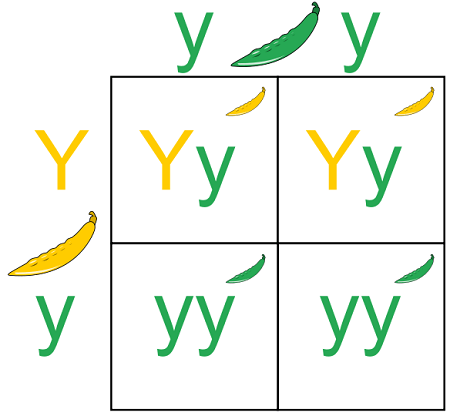
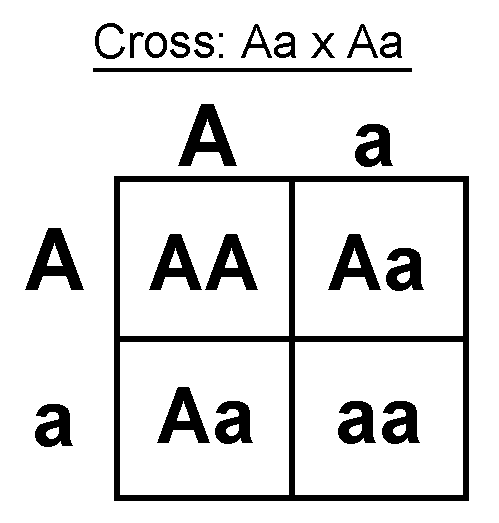

Short = S
Short = t
Short = T
Short = tt


Who wins the bet?

What is the scientific name for a sex cell?
Gromets
Embryo
Gamete
Stem cell

What is the name of the male gamete in humans?
Sperm
Ovum
Testis
Pollen

What is the name of the female gamete in humans?
Sperm
Zygote
Ovary
Ovum

What is the role of gametes?
To restore the half set of chromosomes when the gametes fuse in fertilisation
To restore the quarter set of chromosomes when the gametes fuse in fertilisation
To restore the full set of chromosomes when the gametes fuse in pollination
To restore the full set of chromosomes when the gametes fuse in fertilisation

What is the main advantage of sexual reproduction?
Clones being produced
The offspring being genetically identical to the parents
Genetic variation allowing adaptation if there is an environment change
Having two parents

What is the main disadvantage of sexual reproduction?
Clones being produced
The offspring being genetically identical to the parents
Genetic variation
Having two parents because a mate must be found requires energy

What is the main disadvantage of asexual reproduction?
Clones being produced
No genetic variation so no chance of withstanding an environment change due to adaptation
Genetic variation
Only one parent needed so no need to put energy into finding a mate
Two __________ make up a gene.
chromosomes
alleles
eggs
sperm
This type of reproduction involves two parents.
Asexual reproduction
Sexual reproduction
Which answer choice is NOT a type of asexual reproduction?
budding
fragmentation
fertilization
binary fission
Which type of reproduction produces an identical copy of the parent?
Sexual reproduction
Asexual reproduction
What is the purpose of MITOSIS?
to create sex cells
to kill off body cells
to repair or replace body cells
Which statement does NOT describe asexual reproduction?
takes a short amount of time
provides genetic variation - all offspring are different
no mate required in order to reproduce
provides no genetic variation - all offspring are the same

What is a GMO?
An organism that has had its DNA modified by humans
An organism missing a chromosome
Epigenetics
A genetically identical organism

Selective breeding is...
a process to create an organism with desired traits from parents with those desired traits
natural method of producing offspring with desired traits
creating a new species
making organisms reproduce during times of stress
An example of selective breeding is
a dog breeder mating 2 dogs to make more dogs
a farmer grows bees to pollinate the plants on his farm
a person pollinates 2 white rose plants to only create white roses
One problem with selective breeding is
creating a new species
gene variety is lost
new food sources

Which is NOT a result of selective breeding?
Large seedless watermelons that consumer demand
Bright oranges that are all about the same size
An insect that matches the color of the environment
A dog that has been bred to have short hair
The process of manipulating an organism's DNA for the benefit of humankind and society is called...
chemical engineering
civil engineering
genetic engineering
electrical engineering
A DNA molecule produced by combining DNA from different sources is known as...
a mutant
a hybrid
replicated DNA
recombinant DNA
Organisms that contain genes from other organisms are called...
polygenic
transgenic
mutagenic
donors
Rice modified to have more Vitamin A is an example of
Genetic engineering
Cloning
Gene mutation
Artificial selection

The DNA is tightly wrapped around the histone proteins and the gene is methylated.
The gene is silenced.
The gene is active.
It is impossible to tell.
The gene is on and off at various times.
This term refers to the chemical tags that affect gene function and may be passed on through generations.
genome
methylation
epigenome
autosomes
Why do identical twins begin to look different as they age?
Their environment causes mutation of the MAOA gene.
Mutations accumulate which deactivates histone proteins.
Exposure to different environments causes the addition of epigenetic tags that result in changes in gene function.
The DMNT gene is silenced.
Which of the genes below would you want to have demethylated in your body? Select all that apply.
Cancer causing genes
Genes associated with anxiety.
tumor suppressor genes
genes related to immune system function
What is true of an active gene?
The DNA is so compact that it can leave the nucleus and travel to the ribosome.
It is hyper-methylated.
The DNA is tightly coiled around the histones and accessible by RNA.
The DNA is more relaxed and can be transcribed by RNA.
What role do cell signals play in cell specialization?
Cell signals encourage DNA replication at the promoter.
Cell signals silence genes unrelated to the cell's purpose.
Cell signals are influenced by temperature changes.
None of the above.

These two mice are genetically identical. How do you explain the difference in their coat colors?
The brown mouse has a different form of the agouti gene.
The brown mouse has been fed a diet that donated methyl groups that inactivated the agouti gene.
The mice come from two different families.
The brown mouse was fed a diet that donated acetyl groups and inactivated the agouti gene.

