

wayground logo

Free Printable Worksheets

Font size

S
M
L
XL
Worksheets

vocabulary review for STAAR

Total questions: 94

Worksheet time: 54mins

Name
Class
Date
1.

Which most often occurs when a pot of water boils?

a)

Condensation

b)

freezing

c)

melting

d)

evaporation

2.

Which best explains why a wooden spoon can be used to stir hot soup on the stove?

a)

Wood is a good conductor of heat and transfers energy to the spoon.

b)

Wood is a poor conductor of heat and transfers energy to the spoon.

c)

Wood is a good conductor of heat and does not allow the transfer of energy to the spoon.

d)

Wood is a poor conductor of heat and does not allow the transfer of energy to the spoon.

3.

Which substance will conduct the least amount of heat?

a)

glass

b)

copper

c)

plastic

d)

aluminum

4.

Why does an ice cube melt when dropped into hot liquid?

a)

The liquid absorbs heat from the ice.

b)

Heat from the liquid transfers to the ice.

c)

Heat from the ice transfers to the liquid.

d)

Cold from the ice transfers into the liquid.

5.

Which best explains why metal is a good material to make frying pans?

a)

Metal is a good conductor of heat and transfers heat from the stove to the food.

b)

Metal is a good conductor of heat and does not transfer heat from the stove to the food.

c)

Metal is a poor conductor of heat and transfers heat from the stove to the food.

d)

Metal is a poor conductor of heat and does not transfer heat from the stove to the food.

6.
If you wanted to measure the mass of an object what would you use?
a)
pan balance
b)
triple beam balance
c)
spring scale
d)
graduated cylinder
7.
What would you use to see very distant objects?
a)
Binoculars
b)
hand lens
c)
microscope
d)
telescope
8.
If you wanted to see bacteria, what would you use?
a)
microscope
b)
hand lens
c)
petri dish
d)
telescope
9.
What tool is this?
a)
barometer 
b)
compass 
c)
test tube
d)
thermometer 
10.
What tool is this?
a)
triple beam balance
b)
binoculars 
c)
compass
d)
barometer
11.
What does a meter stick measure in?
a)
yards
b)
centimeters
c)
feet
d)
inches
12.
What would you use to see birds?
a)
microscope
b)
hand lens
c)
telescope 
d)
binoculars 
13.
What would you use to measure the pressure in the atmosphere?
a)
meter stick
b)
barometer
c)
thermometer
d)
compass
14.
What would you use to measure the width of a computer screen?
a)
meter stick
b)
compass
c)
barometer
d)
compass rose
15.
What is this tool?
a)
meter stick
b)
hammer
c)
spring scale
d)
thermometer
16.
What tool is used to measure temperature?
a)
meter stick
b)
thermometer
c)
balance
d)
spring scale
17.
What tool is used to measure the volume of a liquid?
a)
thermometer
b)
hand lens
c)
graduated cylinder
d)
ruler
18.
Name the tool.
a)
spring scale
b)
hand lens
c)
graduated cylinder
d)
ruler
19.
Which of the following statements is an inference about the picture
a)
The vase is broken.
b)
The girls' bow is blue and purple.
c)
The girl broke the vase.
d)
The girl has blonde hair.
20.

Information gathered using your 5 senses is called an

a)

Observation

b)

Inference

21.
What is an inference? 
a)
Just a guess.
b)
A statement based off of your observations. 
c)
The same as an observation. 
d)
Examples of something. 
22.
Using the 5 senses to understand what is happening around you is called
a)
experimenting
b)
observing
c)
hypothesizing
d)
sensing
23.
Which of the following is an observation about this picture?
a)
The boy has fallen off his bike.
b)
The boy is in a lot of pain.
c)
The boy has injuries to his knees
d)
The boy learned his lesson about wheelies
24.
What are the states of matter?
a)
solid, liquid, and juice
b)
solid and liquid
c)
solid and gas
d)
solid, liquid, and gas
25.

A type of matter that can be found on earth as a solid, liquid, and gas

a)
gold
b)
water
c)
oxygen
d)
rock
26.
A description of objects that can be measured and observed.
a)
gas
b)
mustangs
c)
physical properties
d)
melting point
27.
Which of the following is a part of the water cycle?
a)
evaporation
b)
condensation
c)
precipitation
d)
all of the above
28.
If you saw a glass of water and later the water was gone what happened to the water? Remember that your in the science lab.
a)

Ms. Hall was very thirsty and drank the water.

b)
evaporation
c)
precipitation
d)
solubility
29.
A physical property can be observed with your
a)
Eyes
b)
Ears
c)
Tastes
d)
All of the above
30.
An example of a physical property is 
a)
flammability
b)
acidic
c)
color
d)
ability to rust
31.
What causes a change in the state of matter?
a)
physical properties
b)
chemical energy
c)
temperature
32.
Which term means "the ability to cause change?"
a)
Matter
b)
Heat
c)
Energy
d)
physical change
33.
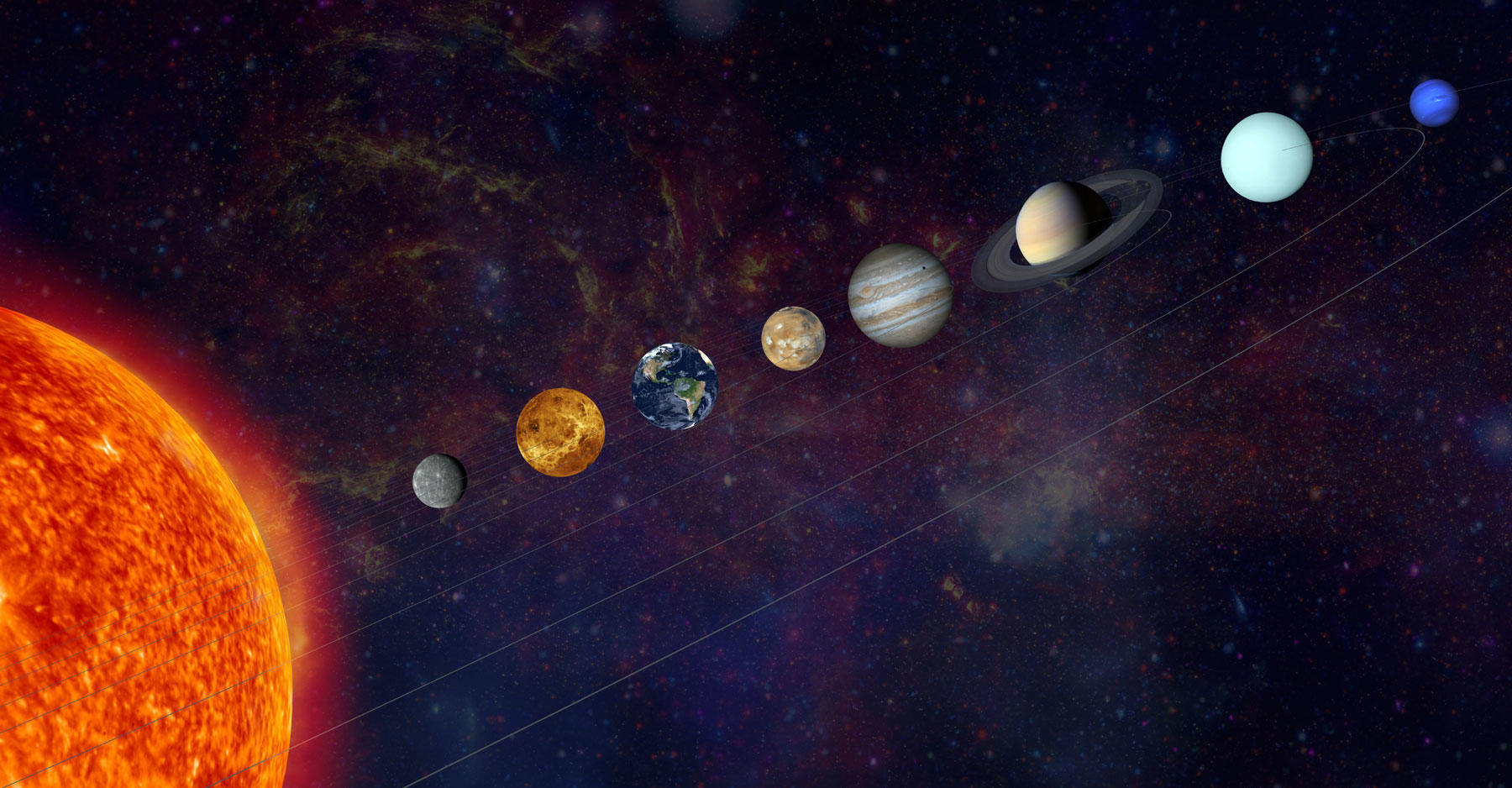
Which is the largest object in our solar system?
a)
Sun
b)
Jupiter
c)
Earth
d)
Pluto
34.
Which of the following is an accurate model of how the Sun, Earth, and Moon move?
a)
Sun and moon orbit Earth
b)
Earth and moon orbit Sun
c)

Earth orbits the Sun and the moon orbits Earth
d)
Earth and sun orbit moon
35.
True or False
The planets are all equally distanced from each other.
a)
True
b)
False
36.
What is the group of stages that a living thing goes through from the beginning of its life until the end, called? 
a)
life history
b)
life cycle
c)
growing season
d)
I do not know
37.
A plant begins its life as a? 
a)
seed
b)
petal
c)
flower
d)

water drop

38.
The second stage of an insect is a worm-like stage called ________.
a)
tadpole
b)
larva
c)
offspring
39.
Butterflies form a case called a _____________.
a)
pupa
b)
seedling
c)
chrysallis
40.
Complete the life cycle.  1. Seed 2. Seedling 3. ________ 4.  Flower 5.  Fruit
a)
larva
b)
sapling
c)
pollen
41.
After a frog hatches from an egg it looks just like an adult frog.
a)
True
b)
False
42.
What part of a plant helps it get the most light?
a)
fruit
b)
stem
c)
wide, long leaves
d)
flowers
43.
What part of a plant takes in the most water?
a)
leaf
b)
flowers
c)
roots
d)
stem
44.
What part of a plant helps it to stay upright?
a)
leaf
b)
flower
c)
roots
d)
stem
45.
What is the beginning stage of a butterfly's life cycle?
a)
larva
b)
nymph
c)
pupa
d)
egg
46.
What is the main purpose of flowers?
a)
To attract bees for pollination
b)
create flower arrangements
c)
protect the tree from disease
d)
feed birds
47.

Decomposers such as fungi, insects, and molds get their energy from __________.

a)

Water

b)

Decaying plants and animals

c)

Fertilizer

d)

All of the above

48.

The student draws a diagram to show the roles of the producers, consumers, and decomposers in the rainforest. How is the role of the decomposers different from the role of the producers?

a)

The decomposers eat the plants to get energy.

b)

The decomposers make food using energy from the sun

c)

The decomposers provide nutrients for the atmosphere.

d)

They decomposers break down dead organisms.

49.

A student is developing a model of an ecosystem. Why does she want to include the sun in her model?

a)

The sun is needed to make the seasons on Earth.

b)

The sun keeps everything warm on Earth.

c)

The sun allows plants and animals to be part of the same ecosystem.

d)

The sun provides the energy for the production of food in the ecosystem.

50.

Which of the following statements about producers is CORRECT?

a)

they make their own food

b)

they eat other organisms

c)

they make things other than food

d)

they obtain food by breaking down the remains of other living things

51.

Which of the following statements about consumers is CORRECT?

a)

they make their own food

b)

they eat other organisms

c)

they make things other than food

d)

they obtain food by breaking down the remains of other living things

52.

Which of the following human activities has a positive effect on the environment?

a)

planting new forests

b)

recycling paper and plastic

c)

protecting endangered species

d)

All of the above

53.

How does an increase in the number of people on Earth negatively affect the environment?

a)

more water is used causing draughts and affecting habitats

b)

more fossil fuels are burned

c)

habitats are destroyed because more space is needed

d)

All of the above

54.

All animals in an ecosystem depend on __________ for energy.

a)

Decomposers

b)

Producers

c)

Consumers

d)

Herbivores

55.

A student wants to build a model of a grasslands food chain that includes a frog, grasshopper, snake, and grass. Which organism belongs in this food chain immediately after the Sun?

a)

Grass

b)

Frog

c)

Snake

d)

Mosquito

56.

Use the food chain below to answer the following question:


Forest food chain


trees → bugs→ birds → fox


If the trees are destroyed in a forest fire, what could happen to the rest of the food chain?

a)

there will be no change in the food chain

b)

the population of the primary producers will increase

c)

the population of the consumers will increase

d)

the population of the consumers will decrease

57.

What is missing in this simple food chain?

a)

Consumer

b)

Producer

c)

Decomposer

d)

Herbivore

58.

What energy form is being used?

a)

Sound

b)

Thermal

c)

Light

d)

Mechanical

59.

What energy form is being used for us to hear the bird?

a)

Light

b)

Thermal

c)

Sound

d)

Electrical

60.

What energy form is being used for the boy to eat?

a)

Mechanical

b)

Thermal

c)

Light

d)

Sound

61.
What energy form is this? 
a)
Mechanical
b)
Light
c)
Sound
d)
Electrical
62.
What energy form is this? 
a)
Light, Thermal, Sound
b)
Electrical
c)
Light
63.

What energy form is being used to help the girl win the race?

a)

Sound

b)

Electrical

c)

Light

d)

Mechanical

64.

What energy form is being used for the concert?

a)

Sound

b)

Light

c)

Electrical

65.

What energy form is used to cook with?

a)

Sound

b)

Electrical

c)

Thermal

d)

Mechanical

66.

A flashlight uses what type of energy to help you see in the dark?

a)

Mechanical

b)

Sound

c)

Light

d)

Thermal

67.

What type of energy is NOT needed for our class to take a test?

a)

Sound

b)

Electrical

c)

Light

d)

Mechanical

68.

When I bake cookies, what types of energy do I need to use?

a)

Electrical, Thermal, Light

b)

Thermal, Electrical

c)

Sound, Light, Mechanical

69.

Which type of energy can travel without matter?

a)

sound

b)

light

c)

thermal

d)

mechanical

70.

Which of the following uses electricity for energy?

a)

a windmill

b)

a street light

c)

a solar cooker

d)

a wind-up toy

71.

why do we use plastic or rubber as materials to cover electric plugs and outlets?

a)

these forms of matter conduct electrical energy

b)

these forms of matter insulate electrical energy

c)

these forms of matter produce electric energy

d)

these forms of matter produce light and heat energy

72.
The ultimate source of energy is:
a)
The sky
b)
The sun
c)
Plants
d)
Movement
73.
Which type of energy is formed by vibrating objects?
a)
thermal energy
b)
electrical energy
c)
sound energy
d)
light energy
74.
What energy is caused by the movement of electrically charged particles?
a)
electrical energy
b)
kinetic energy
c)
thermal energy
d)
potential energy
75.
What is an example of thermal energy?
a)
A can
b)
A heater 
c)
A bed
d)
A girl
76.
Which type of energy is produced when the handle of a pencil sharpener turns?
a)
Light Energy
b)
Magnetic Energy
c)
Electrical Energy
d)
Mechanical Energy
77.
What is mechanical energy?
a)
The energy of movement
b)
The energy of making things warmer
c)
The energy that is stored in an object
d)
The energy that comes from electricity
78.
What object can change electrical energy into light energy?
a)
A candle
b)
A fire
c)
A lamp
d)
A radio
79.
The condition of the atmosphere, such as temperature, cloud cover, wind speed and rainfall
a)
climate
b)
weather
c)
trend
d)
season
80.
Several months during the year that have similar temperatures 
a)
Season
b)
climate
c)
weather
d)
Summer
81.
Pieces of information used to analyze information
a)
experiment
b)
Conclusion
c)
Questions
d)
Data
82.
An instrument used to measure the amount of rainfall
a)
barometer
b)
thermometer
c)
rain guage
d)
wind sock
83.
A force applied by the weight of air
a)
cold front
b)
air pressure
c)
barometer
d)
humidity
84.
An instrument used to show the direction of wind and measure the speed
a)
rain guage
b)
Thermometer
c)
barometer
d)
wind sock
85.
the amount of water vapor in the air
a)
warm front
b)
precipitation
c)
humidity
d)
air pressure
86.
An instrument used to measure how hot or cold something is
a)
barometer
b)
thermometer
c)
wind sock
d)
rain guage
87.
Rain, snow sleet, or hail that falls from the clouds in the sky
a)
humidity
b)
liquid
c)
precipitation
d)
weather
88.
Average weather conditions of a region year after year
a)
weather
b)
season
c)
cold front
d)
climate
89.

Which describes the air mass approaching City B?

a)

Warm Front and temperatures will increase

b)

Warm Front and temperatures will decrease

c)

Cold Front and temperatures will increase

d)

Cold Front and temperatures will decrease

90.

What can be measured in degrees Celsius?

a)

Temperature

b)

Precipitation

c)

Weight

d)

Wind Direction

91.

What part of the water cycle helps wet clothes dry quickly?

a)

Condensation

b)

Evaporation

c)

Run Off

d)

Precipitation

92.

What must happen to water vapor before it can rain?

a)

Water vapor must freeze

b)

Water vapor must evaporate

c)

Water vapor must condense

d)

Water vapor must run off

93.

What is the primary source of energy for the Water Cycle?

a)

Sun

b)

Fossil Fuels

c)

Water

d)

Wind Currents

94.

What can be concluded about the climate of Binghamton from 1951 to 1956?

a)

Both temperature and precipitation increased in Binghamton.

b)

Both temperature and precipitation decreased in Binghamton.

c)

The temperature in Binghamton decreased, and the precipitation increased.

d)

The temperature in Binghamton increased, and the precipitation decreased.
