wayground logo

Free Printable Worksheets

Font size

S
M
L
XL
Worksheets

Bonding Test Review

Total questions: 107

Worksheet time: 4hrs 50mins
Name
Class
Date
1.
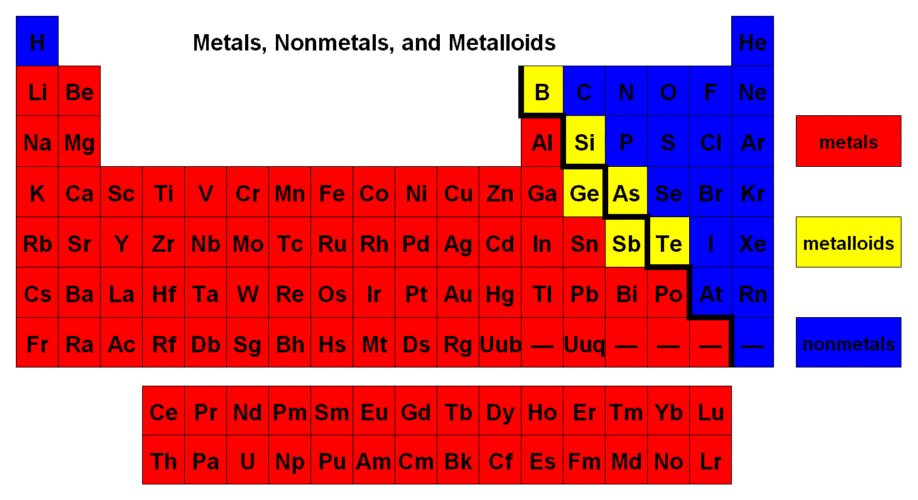
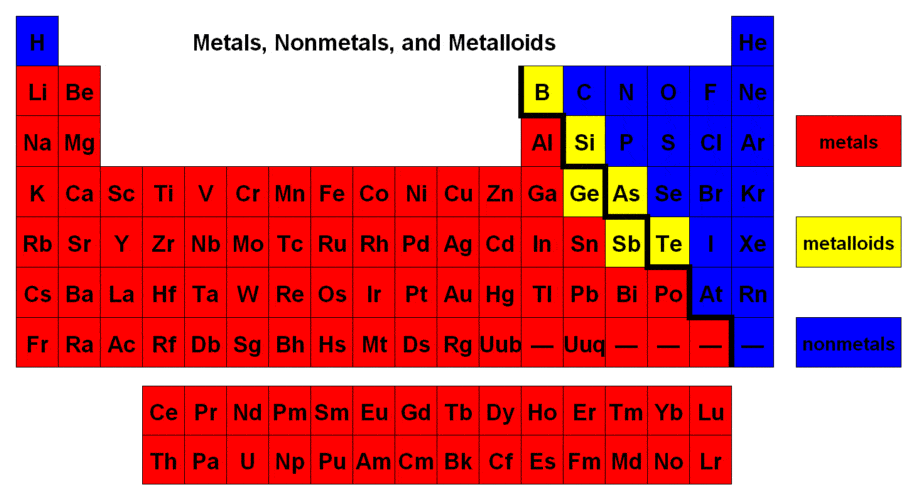
What elements generally make an ionic bond?
a)
metal and nonmetal
b)
2 or more nonmetals
c)
metal
d)
none of the above
2.
What elements generally make a covalent bond?
a)
metal and nonmetal
b)
2 or more nonmetals
c)
metal
d)
none of the above
3.
Predict the bond that will form between Sr and S.
a)
Ionic
b)
Covalent
4.
A chemical bond between oppositely charged ions.
a)
compound
b)
ion
c)
covalent bond
d)
ionic bond
5.
In this type of bond, electrons are delocalized in a "sea"
a)
Ionic
b)
Covalent
c)
Metallic
d)
Nonpolar
6.

What is made when an atom gain an electron?

a)

Neutral(no charge)

b)

Positive ion

c)

Negative ion

7.

Which type of bond transfers electrons

a)

covalent bonds

b)

ionic bonds

c)

hydrogen bonds

8.

Identify the type of bonding between the oxygen and hydrogens in one water molecule.

a)

covalent bonding

b)

hydrogen bonding

c)

ionic bonding

9.

MgO is bonded together with what type of bond?

a)

ionic

b)

covalent

c)

metallic

d)

hydrogen

10.

C6H12O6 has what type of bond holding the atoms together?

a)

ionic

b)

covalent

c)

metallic

d)

Hydrogen

11.

Multiple Zn atoms are bonded together by what type of bond?

a)

ionic

b)

covalent

c)

metallic

d)

hydrogen

12.
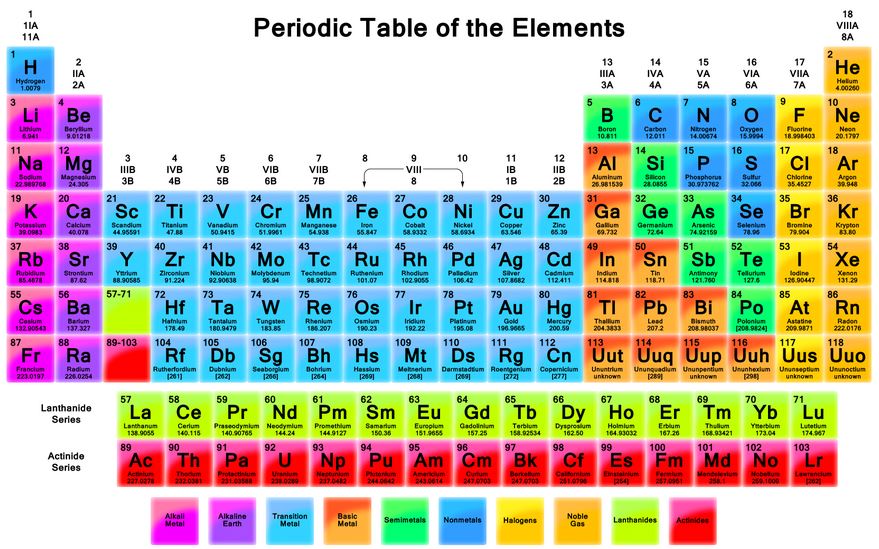
Elements on the LEFT side of the periodic table will most likely form:
a)
Positive ions
b)
Negative ions
c)
Neutral Ions
d)
None of these
13.
Which substance contains bonds that involve a transfer of electrons from one atom to another?
a)
CO2
b)
NH3
c)
KBr
d)
Cl2
14.
Which type of bond forms between two or more metals?
a)
Ionic
b)
Covalent
c)
Metallic
d)
Ironic
15.
Which of the following is an example of a COVALENT COMPOUND?
a)
H2S
b)
KI
c)
CaCl2
d)
MgO
16.

Electronegativity is...

a)

how good an atom is at attracting electrons

b)

the energy required to remove an electron from a specific atom

c)

how easy it is to make friends

17.
According to the octet rule most elements need _______ valence electrons.
a)
2
b)
8
c)
6
d)
18
18.

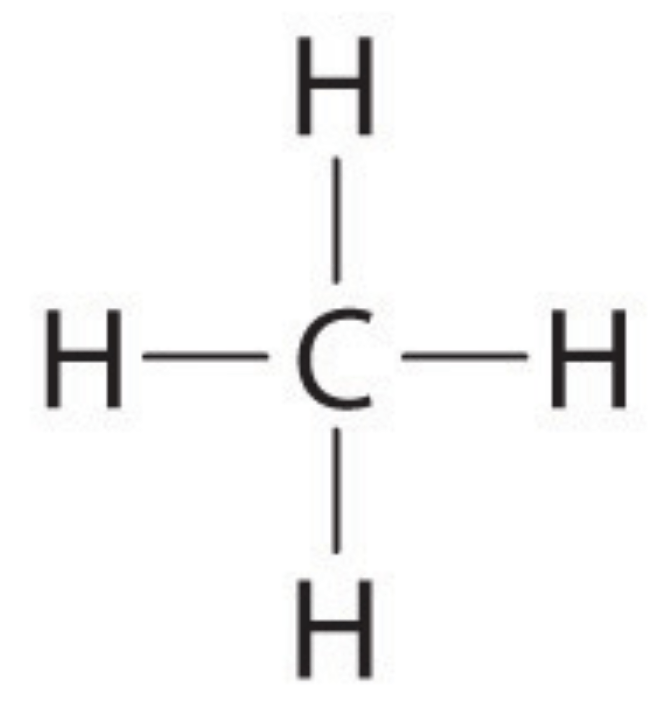
Classify the following molecule.

a)

polar

b)

nonpolar

19.

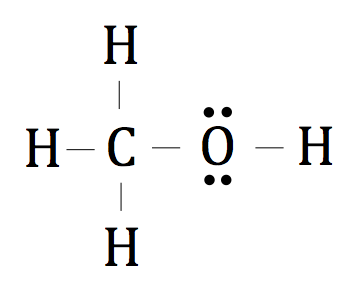
Classify the following molecule.

a)

polar

b)

nonpolar

20.

Is the following molecule polar or nonpolar?

a)

polar

b)

nonpolar

21.
What is the VSEPR theory used to predict?
a)
Bond Strength
b)
Polarity
c)
Molecular Shape
d)
Electronegativity
22.
HCl
a)
Polar 
b)
Nonpolar 
23.
F2
a)
Polar 
b)
Nonpolar 
24.
H2O
a)
Polar 
b)
Nonpolar 
25.
How do covalent bonds form?
a)
Donating & receiving valence e- between atoms.
b)
Opposite slight charges attract each other between compounds.
c)
Scientists are still not sure how they form.
d)
Sharing valence e- between atoms.
26.

Is the following molecule polar or nonpolar?

a)

polar

b)

nonpolar

27.

Is the following molecule polar or nonpolar?

a)

polar

b)

nonpolar

28.

Is the following molecule polar or nonpolar?

a)

polar

b)

nonpolar

29.

Is the following molecule polar or nonpolar?

a)

polar

b)

nonpolar

30.

Is the following molecule polar or nonpolar?

a)

polar

b)

nonpolar

31.

Why is the molecule polar?

a)

There is a nonbonding pair on the central atom.

b)

There are different types of elements bonded to the central atom.

c)

There are no nonbonding pairs on the central atom and all of the atoms bonded to the central atom are the same.

32.

Classify the following molecule.

a)

bent

b)

tetrahedral

c)

trigonal pyramidal

d)

linear

33.

Classify the following molecule.

a)

trigonal pyramidal

b)

bent

c)

tetrahedral

d)

trigonal planar

34.

Classify the following molecule.

a)

trigonal pyramidal

b)

trigonal planer

c)

tetrahedral

d)

bent

35.

Classify the following molecule.

a)

linear

b)

trigonal pyramidal

c)

trigonal planer

d)

tetrahedral

36.

What molecular geometry would PH3 have?

a)

Trigonal Pyramidal

b)

Trigonal Bipyramidal

c)

Bent

d)

Linear

37.
What molecular shape is the structure shown here? (H2O)
a)
tetrahedral
b)
trigonal planar
c)
bent
d)
trigonal pyramidal
38.

What is the correct Lewis Dot Structure for ammonia NH3

a)
b)
c)
d)
39.

Which is the correct molecular structure for carbon dioxide?

a)
b)
c)
d)
40.

SiCl4 has what shape?

a)

trigonal planar

b)

pyramidal

c)

tetrahedral

d)

trigonal pyramidal

41.

Which formula is for hydrochloric acid

a)

HCl

b)

H2Cl

c)

H2SO4

d)

HNO3

42.

What is the name for this acid H2SO4

a)

hydrochloric acid

b)

phosphorus acid

c)

sulfuric acid

d)

nitric acid

43.

What is the name for this acid HNO2

a)

hydronitric acid

b)

nitrous acid

c)

nitric acid

d)

nitrate acid

44.

what is the name for this acid HF

a)

fluoric acid

b)

hydrofluoric acid

c)

fluorous acid

45.

The correct formula for hydrobromic acid is

a)

HCl

b)

HBe

c)

HBr

d)

H2Br

46.

The correct formula for carbonic acid is

a)

HCl

b)

H2CO2

c)

HCO3

d)

H2CO3

47.

The correct name for this acid H2SO3 is

a)

Hydrosulfiric acid

b)

Sulfurous acid

c)

Sulfiric acid

d)

Sulfate acid

48.

The correct formula for phosphoric acid

a)

HPO4

b)

H3PO4

c)

H2PO4

d)

HPO3

49.
phosphorus trichloride
a)
KCl3
b)
PCl3
c)
K3Cl
d)
P3Cl
50.
silicon dioxide
a)
SO2
b)
NaO2
c)
SiO2
d)
SiO
51.

dinitrogen pentoxide

a)

N2O5

b)

NO5

c)

N5O2

d)

N2O6

52.
SiCl4
a)
silicon tetrachloride
b)
silicon quadchloride
c)
monosilicon tetrachloride
d)
silicon chloride
53.

P₄S₁₀

a)

tetrapotassium decasulfide

b)

phosphorus decasulfide

c)

tetraphosphorus decasulfide

d)

phosphorus (X) sulfide

54.

SO₃

a)

sulfate

b)

sulfur oxide

c)

sulfur trioxide

d)

monosulfur trioxide

55.

tetraphosphorus heptoxide

a)

K₄O₁₀

b)

P₄O7

c)

KO

d)

P₁₀O₄

56.

hexaboron monosilicide

a)

B6Si

b)

BSi

c)

BSi6

d)

B6Si6

57.
As4O10
a)
arsenic oxide
b)
quadarsenic decoxide
c)
tetraarsenic decoxide
d)
arsenic decoxide
58.
Disulfur trioxide
a)
S3O2
b)
SO
c)
S2O3
d)
S2O
59.
Bromine monofluoride
a)
Br1F1
b)
BrF
c)
Br2F
d)
BrF2
60.
PBr5
a)
Phosphorus Bromide
b)
Phosphorus Pentabromide
c)
Pentaphosphorus bromide
d)
Phosphorus Bromine
61.
P2O5
a)
Phosphorus Oxide
b)
Pentaphosphorus Dioxide
c)
Diphosphorous pentoxide
d)
Phosphoric Oxygen
62.
Phosphorous trichloride
a)
PCl3
b)
P3Cl
c)
P3Cl3
d)
PCL
63.
What is Sulfur Trichloride?
a)
SCl3
b)
SiCl3
c)
SCl4
d)
Si3Cl
64.

What is the name of the following compound: NaCl

a)

sodium chloride

b)

sodium (I) chloride

c)

sodium chlorine

d)

sodium (I) chlorine

65.

What is the name of the following compound: CuBr2

a)

copper bromine

b)

copper bromide

c)

copper (I) bromide

d)

copper (II) bromide

66.

What is the name of the following compound: K2SO4

a)

potassium sulfur

b)

potassium sulfate

c)

potassium (I) sulfate

d)

potassium (II) sulfide

67.

What is the name of the following compound: Mn2O3

a)

manganese oxide

b)

manganese (II) oxide

c)

manganese (III) oxide

d)

magnesium oxide

68.

What is the what charge of lead in the compound: lead (IV) iodide

a)

+1

b)

+4

c)

+6

d)

-1

69.

Which is the correct formula for the compound: Calcium Oxide

a)

CaO

b)

CaO2

c)

Ca2O

70.

Which is the correct formula for the compound: Barium Hydroxide

a)

BaOH

b)

Ba(OH)2

c)

BaOH2

d)

Ba2OH

71.

Which is the correct formula for the compound: lead (II) fluoride

a)

Pb2F

b)

PbF2

c)

PbF

d)

PbF7

72.

The name of FeCl₂ is

a)

iron chloride

b)

iron (II) chloride

c)

iron (I) chloride

d)

iron dichloride

73.

Name the following compound: NaNO3

a)

Sodium Nitrogen Oxide

b)

Sodium nitrate

c)

Sodium nitrite

d)

Sodium nitride

74.
What is the name of NH4Cl?
a)
nitrogen tetrahydrogen chloride
b)
ammonium chlorine
c)
ammonium chloride
d)
ammonium chlorate
75.
What is the name of K3PO4?
a)
Tripotassium Phosphate
b)
Tripotassium Phosphite
c)
Potassium phosphide
d)
Potassium phosphate
76.
What is the name of Al(NO3)3?
a)
Aluminum trinitrate
b)
Monoaluminum nitrate
c)
Aluminum (III) nitrate
d)
Aluminum Nitrate
77.
What's the name of the compound NH4NO?
a)
nitrogen hydrogen oxygen
b)
ammonium nitrite
c)
nitrogenous water
d)
ammonium nitrate
78.
Name the following ionic compound: MgSO4
a)
magnesium sulfoxide
b)
magnesium sulfide
c)
magnesium sulfate
d)
magnesium oxide
79.
Name the following ionic compound: LiNO3
a)
lithium nitrate
b)
lithium III nitrate
c)
lithium nitride
d)
lithium oxide
80.
KNO3 is used in fertilizers as a source of potassium and nitrogen. If you want to buy fertilizer with this compound, what chemical name should you look for?
a)
potassium nitrate
b)
potassium nitrite
c)
potassium nitride
d)
potassium nitrogen
81.

An -ate or -ite at the end of a compound name usually indicates that the compound contains _____________.

a)

fewer electrons than protons

b)

neutral molecules

c)

only two elements

d)

a polyatomic anion

82.
What is the name of Al(NO3)3?
a)
Aluminum trinitrate
b)
Monoaluminum nitrate
c)
Aluminum (III) nitrate
d)
Aluminum Nitrate
83.

What is the name of AlPO4?

a)

Aluminum phosphoxie

b)

Monoaluminum tetraphosphate

c)

Aluminum (III) phosphate

d)

Aluminum phosphate

84.
Name this compound: 
NH4F
a)
Ammonia fluoride
b)
Ammonium fluorite
c)
Ammonia fluorate
d)
Ammonium fluoride
85.
What is the name of Mg(OH)2?
a)
Magnesium Hydride
b)
Magnesium Dihydride
c)
Magnesium Dihydroxide
d)
Magnesium Hydroxide
86.
 Li2O
a)
Dilithium oxideDilithium oxide
b)
Lithium oxide
c)
Lithium dioxide
87.
Na2S
a)

Disodium sulfide

Disodium sulfide

b)
Sodium sulfide
c)
Sodium monosulfide
88.
Al2S3
a)
Dialuminum Trisulfide
b)
Aluminum sulfide
89.
What is the formula for magnesium phosphide?
a)
Mg3P2
b)
Mg2P3
c)
Mg2PO3
d)
Mg3(PO3)2
90.
Prefixes are NOT included when naming ionic compounds
a)
true
b)
false
91.
Do ionic compounds have prefixes in the name?
a)
Yes
b)
No
92.

Cs3N

a)

cesium nitride

b)

cerium nitride

c)

cesium nitrogenide

d)

cerium nitrogenide

93.

Why are cords for toasters, televisions, and phone chargers made of metal wires?

a)

metals are shiny

b)

metals are good conductors of heat

c)

metals are good conductors of electricity

d)

metals are magnetic

94.

Able to be beaten or hammered into shapes

a)

luster

b)

malleable

c)

brittle

d)

insulator

95.

Which of the following characteristics belong to pure metals?

I. Ductile

II. Malleable

III. Brittle

IV. Good conductor of electricity

a)

I and II

b)

I and IV

c)

I, II and IV

d)

I, II, III and IV

96.

Diagram above shows the arrangement of atoms in brass. Which of the following could be atoms X and Y?

a)

X : Copper Y: Tin

b)

X: Zinc Y: Copper

c)

X: Iron Y: Carbon

d)

X: Copper Y: Zinc

97.

Brass is an alloy consisting of a mixture of

a)

copper and zinc

b)

copper and lead

c)

copper and tin

d)

tin and lead

98.

Aluminium and Copper is mixed together to make Duralumin which is used for making aeroplane bodies. This is an example of a

a)

Alloy

b)

Bronze

c)

pure metal

d)

A plane crash

99.

Which of the following is MOST reactive?

a)

Magnesium

b)

Lead

c)

Tin

d)

Copper

e)

Zinc

100.

Which metal is more reactive than calcium?

a)

magnesium

b)

potassium

c)

silver

d)

aluminum

101.

Choose the least reactive metal

a)

calcium

b)

magnesium

c)

iron

d)

copper

102.

Magnesium chloride + Sodium → ?

a)

Sodium chloride + Magnesium

b)

Magnesium chloride + Sodium (No change)

c)

Sodium magnesium + Chlorine

103.

Lithium chloride + Iron → ?

a)

Lithium chloride + Iron (No change)

b)

Iron chloride + Lithium

c)

Lithium oxide + hydrogen

104.

Zinc sulphate + Magnesium → ?

a)

Magnesium + Sulphur + Hydrogen

b)

Zinc sulphate + Magnesium

c)

Magnesium sulphate + Zinc

105.
When scrap iron is added to blue copper sulphate solution, a pinky-brown deposit is formed and a pale green solution is left above it. The pale green solution is of?
a)
 iron oxide
b)
copper chloride
c)
sulphuric acid
d)
iron sulphate
106.
If the metal is more reactive than the metal in the compound it completes with the less reactive metal. Therefore, it can concluded that ...
a)
The less reactive metal repel the more reactive metal from its compound
b)
The more reactive metal bonded with  the less reactive metal from its compound
c)
The less reactive metal pushes out or displaces the more reactive metal from its compound
d)
The more reactive metal pushes out or displaces the less reactive metal from its compound
107.
Which of the following will not undergo reaction?
a)
zinc metal  +  zinc oxide 
b)
iron metal  +  copper oxide
c)
zinc metal +  iron oxide
d)
magnesium  +  iron oxide