
 Worksheets
5th Grade SSA Review_Mr. Hite
Total questions: 118
Worksheet time: 2hrs 41mins
Buried remains of ancient plants and animals that we now use as fuel.
hydrocarbons
alternative energy
fossil fuels
sediment
Breaking down earth's materials at or near the surface.
erosion
weathering
cementation
deposition
Wind or water carrying away weathered pieces of sediment.
deposition
weathering
erosion
cementation
Orbit or movement around the sun.
rotation
revolution
phase
comet
Spinning of a planet on its axis.
rotation
revolution
orbit
phase
Earth rotates on this imaginary line.
diagonal
axis
radius
diameter

Which of the following is not an example of mechanical energy?
a mirror reflects light
a car moves
a windmill spins
a wheel turns


they produce food in their leaves
they consume other plants
they absorb nutrients from decomposing pants and animals
they receive energy from their roots


A boy pushes a cart across the floor. What is the push most likely to change?
A. The mass of the cart
B. The shape of the cart
C. The position of the cart
D. All of the above

16. The diagram shows light when it hits an object. Which of the following would be the best title for the diagram?
The force needed to use a pulley
The path light takes when it is refracted
The flow of an electrical current
The path light takes when it is reflected


The motion of one object around another.
A cycle of space..
The sun orbiting a planet.
The motion of an object on its axis.
What is a comet?
Dust and ice orbiting in space.
A small rocky body orbiting in space.
a type of star
A dwarf planet

Which of the following is a producer?
Apple tree
Tiger
Lion
Shark
A rock floating around in space
a collection of ice and dust that travels through the solar system
The flash of light made by an object burning up in Earth's atmosphere (A "shooting star")
A rock found on the beach that came from space
Solar System
Milky Way
Barred Spiral
Snickers
Some constellations or patterns of stars are visible from different places on Earth only during a part of the year. Why are certain patterns of stars not visible everywhere on Earth all year long?
Sun's rotation
Earth's rotation
Sun's revolution
Earth's revolution
Which of the following explains why we have night and day?
the phase of the moon
the rotation of Earth on its axis
the revolution of Earth around the sun
the alignment of planets
Sheila is classifying the rocks in her collection. She knows that limestone often contains fossils. In which category of rock should she classify these rocks?
igneous
granite
metamorphic
sedimentary
Bethany and Ian are each given a sample of the mineral quartz and asked to compare their samples. Bethany is given a sample of smoky quartz, and Ian is given a sample of rose quartz. Which property is least likely to be the same for the two samples?
cleavage
color
hardness
streak

The picture shows coal, one of Earth's energy resources.
Why is coal a nonrenewable resource?
It is difficult to mine because it is deep inside Earth.
It is a resource that can easily be replaced as it is used.
It is a resource that cannot be replaced as fast as people use it.
It is the resource that fuels many power plants that make electricity.
Wind, water, and ice are involved in both weathering and erosion. However, weathering and erosion are two different processes. Which sentence below states a difference between weathering and erosion?
Erosion moves rocks to a new location.
Weathering moves rocks from place to place.
Erosion breaks down rocks but doesn't move them.
Weathering moves rocks without breaking them down.
Florida has many resources used by people.
Which of the items below is not a renewable resource found in Florida?
wind
sunlight
water
phosphate
Plants need many things in order to make their own food. Which of the following best describes what plants need to make their own food?
a plant uses soil, sunlight and oxygen
a plant uses sunlight, carbon dioxide and water
a plant uses sunlight, carbon dioxide and oxygen
a plant uses soil, sunlight and water

Kofi wants to know how two magnets behave when they are together. The magnets below show her experiment.
What must be true of the magnets shown?
The poles of the magnet attract each other
The poles of the magnet repel each other
The two poles are opposites, south and north.
The two poles are opposites, north and south.
Lu Chen is comparing the physical properties of water as a gas and as a solid. Which of the statements best describes how these two are different?
Solid water is much warmer than water vapor.
Solid water has its particles farther apart than water vapor.
Solid water has a definite shape and water vapor does not.
Solid water has the same mass as the same volume of water vapor.
Substances can change in different ways. Sometimes they produce new substances. This is called a chemical change. Which is an example of a chemical change?
an ice cube melting
a pencil snapping in two
an eraser getting smaller
a cake baking in an oven
Pete likes to play the drums. When he strikes the drum with a drumstick, a sound is made. Which of these explains why sound is produced?
The drumstick vibrates the air.
The drum absorbs energy from the air.
The drum transfers vibrations into the air.
The drum releases potential energy into the air.
Christina knows that wind and water are two sources of energy. Which of the following statements can Christina say is true about both wind and water?
They are limited in supply on Earth.
They can be used to generate electricity.
They can replace all other energy sources.
They can be used to produce solar energy.

Dan fills a bowl with hot water. He places four different objects in the bowl. Then he smears a bit of butter on each object, just above the water's surface. The picture below shows Dan's experiment.
On which object will Dan first see butter melting?
plastic ruler
wood spoon
metal spoon
rubber spatula
Tyler does a report about objects in motion for science class. He gives examples of animals, people, cars, and airplanes as objects that can be in motion. Which of the following statements can Tyler include in his report about motion?
All objects in motion are accelerating.
Gravity has no effect on objects in motion.
Motion is the change of position of an object.
Objects in motion always change their direction.

The silk tree that grows in Florida can grow as high as 15 meters (about 50 feet). This tree also produces colorful flowers in fall and winter. Look at the parts of the flower. Think about the part of the flower that is identified in the illustration.
What process does the identified part of the plant play a role in?
germination
transpiration
seed dispersal
reproduction
Two flowering rose bushes of the same type grow in two different large pots next to each other in a yard. One is pink and the other is yellow. What is the most likely cause of the difference in color?
effect of an inherited characteristic
effect of the amount of rain
effect of the sunlight
effect of the amount of fertilizer


Which type of clouds are thin and wispy, forming high in the sky and made out of ice crystals?
Cirrus
Cumulus
Cumulonimbus
Stratus
Which statement best describes how a cloud is formed?
The formation of clouds happens when water vapor in the air rises, cools, and condenses.
The formation of clouds happens when water vapor in the air rises, warms, and condenses.
The formation of clouds happens when water vapor in the air rises, warms, and evaporates.
The formation of clouds happens when water vapor in the air rises, cools, and evaporates.
Which weather tools allow Matthew to make this observation, "This morning, winds are blowing at 25mph toward the North."
Rain Gauge and Anemometer
Wind Vane and Thermometer
Anemometer and Wind Vane
Compass and Rain Gague
What part of the water cycle helps wet clothes dry quickly?
Condensation
Evaporation
Run Off
Precipitation
What must happen to water vapor before it can rain?
Water vapor must freeze
Water vapor must evaporate
Water vapor must condense
Water vapor must run off
What is the primary source of energy for the Water Cycle?
Sun
Fossil Fuels
Water
Wind Currents
Where do Hurricanes form?
Over warm ocean water
Over cold ocean water
Over dry land
Over wet land

What can be concluded about the climate of Binghamton from 1951 to 1956?
Both temperature and precipitation increased in Binghamton.
Both temperature and precipitation decreased in Binghamton.
The temperature in Binghamton decreased, and the precipitation increased.
The temperature in Binghamton increased, and the precipitation decreased.
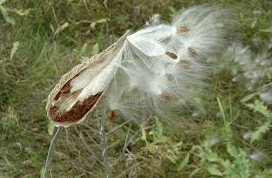
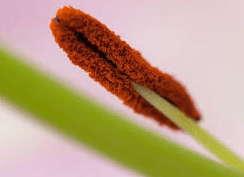
To provide food for the flower
To attract pollinators
To attract animals to disperse the fruits
To spread seeds


Fertilization is the process by which an....
egg and pollen combine
embryo grows into a plant
animal carries pollen between plants
seeds are dispersed
What is the reproductive part of the plant is?
Stem
Root
Flower
Leaf
What is the female part of the flower called?
Stamen
Pistil
Flower
Fruit
what is the male part of the flower called?
Pistil
Stamen
Leaf
Seed
Part of the plant that absorbs water.
Roots
Flowers
Petals
Leaves
Part of the plant that is long, transport nutrients, water and keep the plant stable in the ground.
Roots
Stem
Petals
Leaves
The flowers from plants turn into _________.
Fruits
Trees
Leaves
Vegtables
Pollination is the way plants_____________.
make food
absorb minerals
absorb sunlight
create new seeds


Plants need ________ for food producion.
oxygen
soil
carbon dioxide
sugar
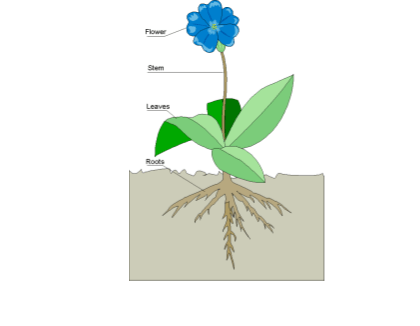
Where do plants get the energy for food production to take place?
nutrients in the soil
the sun
chlorophyll
bee pollination
What are the 3 key ingredients needed for food production in plants?
glucose, oxygen, carbon dioxide
carbon dioxide, water, glucose
water, soil, sunlight
sunlight, water, carbon dioxide
Jenny measures the outside temperature as 16 degrees Celsius (°C), 61 degrees Fahrenheit (°F). She observes precipitation falling from the clouds in a solid form. What type of precipitation is Jenny most likely observing?
hail
rain
sleet
snow

spore-producing plants with many leaves
plants that produce fruit on their leaves
plants that carry seeds on their leaves
flowering plants with many leaves
Erosion and weathering can both cause changes to the surface of Earth. Which of the following happens only because of erosion and NOT because of weathering?
Rocks form deep underground.
Rocks become smooth and round.
Rocks are broken apart into small pieces.
Rocks are moved from one place to another.
Astronomers study many different kinds of objects in our Solar System. Which of the following best describes a difference between comets and asteroids?
Comets orbit planets, and most asteroids orbit the Sun.
Comets are hot balls of gas, and asteroids are made mostly of ice
Comets are made mostly of ice, and asteroids are made mostly of rocks.
Comets orbit the Sun between Mars and Jupiter, and asteroids form patterns in the sky.
Scientists want to determine whether watching television affects a child’s ability to learn to read. The experimental group watches television for 2 hours a day. What should the control group do?
Watch television 2 hours a day
Watch no television
Watch television whenever they want
Watch more than two hours of television per day.
Bela is picking tomatoes from her garden. She finds a tomato on the ground that is soft and runny. Which claim is best supported by the evidence?
The tomato is decomposing (rotting), which is a chemical change.
The tomato moved, which is a chemical change.
The tomato ignited like a firecracker, which is a chemical change.
The tomato deflated like a flat tire, which is a physical change.
Jacob woke up early to watch the sunrise. He observed it in the eastern sky in the morning. At lunchtime, he noticed the Sun was now high in the sky. After dinner, he sees that it is now in the western sky. What causes the change in the Sun’s position in the sky?
The Earth’s revolution around the Sun
The Moon’s rotation around the Earth
The Sun’s revolution around the Earth
The rotation of the Earth on its axis
Which of these statements best describes the oceans’ role in the water cycle?
The oceans are a key source and a storage unit of water.
The oceans are not as important as glaciers and ice sheets.
The oceans are not very important because of their salt content.
The oceans are not as important as lakes that store fresh water.

A
B
C
D

A
B
C
D

A
B
C
D
One Moon's revolution takes
28 days
365 days
24 hours
60 seconds
The changes of the moon are called
calendar
days
phases
phrases
What causes the moon's phases
Where you are standing on Earth
the amount of sunlight reflected onto the moon from the sun
The tilt of Earth
how fast the moon is moving
The path of an object in space around another object is a(n)
orbit.
axis.
rotation.
revolution.


