
 Worksheets
1/2 Chem Review
Total questions: 47
Worksheet time: 1hrs 9mins
Anything that has mass and takes up space is ___________.
matter
density
volume
mass
The amount of matter in an object is ________.
matter
density
volume
mass
The amout of matter in a space is __________
matter
density
volume
mass
The amount of space an object takes up is ___________.
matter
density
volume
mass
clouds
matter
Not Matter
thoughts
matter
Not Matter
Measurements with a Scale/Balance; Unit is Grams
mass
volume
density
Measurement with formula (lxwxh), Water Displacement, Graduated Cylinder. Units are cubic centimeters or mL
mass
volume
density
Formula is mass/volume; units are g/cu cm OR g/mL
mass
volume
density
Best way to measure an earring
l x w x h
graduated cylinder
water displacment
Best way to measure a book
l x w x h
graduated cylinder
water displacment
Best way to measure olive oil
l x w x h
graduated cylinder
water displacment
Sink or Float- why? An object with a density of 0.97 g/mL
Float because it is less dense than water (1)
Float because it is more dense than water (1)
Sink because it is less dense than water (1)
Sink because it is less dense than water (1)
Water has a denisty of 1 g/mL. What is the mass of the water if it fills a 10 mL container?
1 g
10 g
100 g
10 mL
A solid is 5 cm tall, 3 cm wide, and 2 cm thick. It has a mass of 129 g. What is its density?
4.3 g/cu cm
1.7 g/cu cm
4.3 grams
1.7 cu cm
If a substance is more dense that the substance it is in it will __________
Sink
Float
If a substance is less dense that the substance it is in it will __________
Sink
Float
Click all the ones that are chemical properties. The rest on the list are physical.
flammability
pH
reactivity
solubility
ductility
Click the Physical Changes:
chopping wood
cutting hair
melting ice cream
boiling water
frying an egg
Click the chemical changes
rusting iron
rotting apple
digestion
frying an egg
fireworks combusting
True or false: Odor and color are good properties to identify an unknown substance.
True
false
What is one example that would be good to identify an unknown substance?
density
color
odor
texture
Which one is an energy?
clouds
electricity
water
Gas

In a cup you have 50g of water. This means you have how many mL's of water?
Remember: water has a density of 1g/mL.
10mL
74mL
100mL
50mL
What is the unit of measurement for mass?
grams
liters
meters
seconds
Which property determines whether an object will float or sink in water?
mass
volume
density
color
True or false: Volume is the amount of matter in an object.
True
False
Water being heated and changing to steam is an example of
physical change.
chemical change.
decomposition reaction.
replacement reaction.
What is true of the Metric System? Mark all that apply.
A measurement System based on the number 10.
It is used to measure mass, length and volume.
It is used throughout Science and in all other countries other than the US.
It includes inches, feet and pounds.

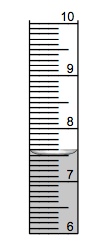

In iceberg floats in the ocean. The ice must be ________ than the liquid water.
less dense
more dense
What will happen to an object that is more dense than the water?
It will sink.
It will float.
it will decay.
It will disappear
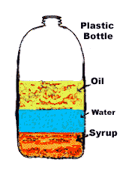
Two samples have the same color, same reaction to vinegar, same solubility, same flammability, and different densities.
they are likely the same substance
there is a 50/50 change they are the same substance
more tests should be done in order to determine if they are the same substance
they are not the same substance

What property would work best to identify this substance?
measure its temperature
measure its mass and volume
measure its length, width, and height
observe how it burns
Which property could you test without changing the original substance?
melting point
boiling point
solubility
density
you could test all of these properties without changing the substance
Testing the chemical properties of a substance...
changes it into a different substance
has no affect on the matter
makes it look different but it's still the same thing
What is the best comparison of density currents and upwelling in the ocean?
Density currents are caused by the pushing of water; upwelling is caused by El Niño.
Density currents are caused by El Niño; upwelling is caused by the pushing of water.
Density currents are caused by differences in salinity and temperature; upwelling is caused when wind causes surface water to move away from shore.

Thin Wires
density
solubility
metalloids
ductility

Transfer Electric current
electrical conductivity
hardness
nonmetals
thermal conductivity

Hammered or beaten into thin sheets
malleability
luster
ductility
solubility



