wayground logo

Free Printable Worksheets

Font size

S
M
L
XL
Worksheets

Chemistry Mini Test #4

Total questions: 113

Worksheet time: 2hrs 55mins

Name
Class
Date
1.

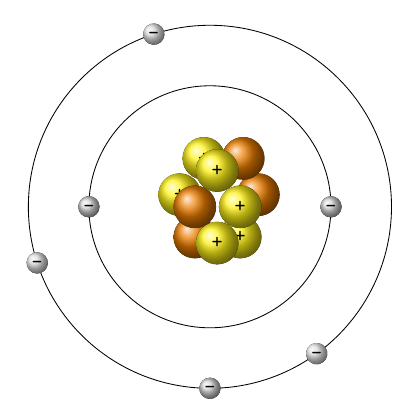
How many electrons does this oxygen atom have?

a)

16

b)

8

c)

24

d)

6

2.

How many energy levels does Oxygen have?

a)

16

b)

8

c)

2

d)

6

3.

How many electrons does the first shell hold?

a)

1

b)

2

c)

4

d)

8

4.

How many electrons can be in the 2nd energy level hold?

a)

1

b)

2

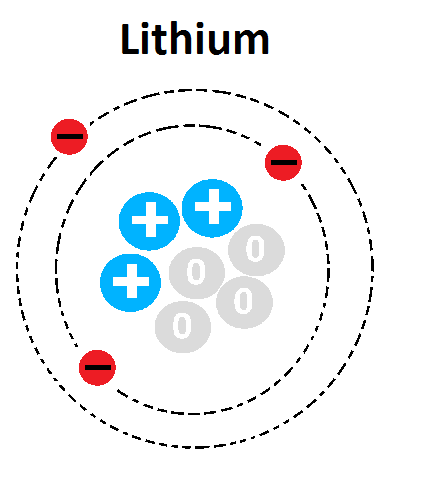
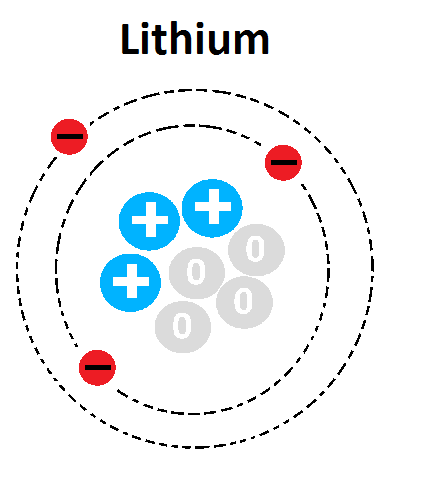
c)

4

d)

8

5.

If both protons and neutrons are found in the nucleus, why is it positive?

a)

The reason it is positive is because neutrons have a positive charge and protons have a negative charge.

b)

The reason it is positive is because neutrons have a negative charge and protons have a positive charge

c)

The reason it is positive is because neutrons have no charge and protons have a positive charge.

d)

The reason it is positive is because neutrons have no charge and protons have a negative charge

6.

It is a region of space about a nucleus that contains electrons that have approximately the same energy.

a)

Orbital

b)

Electron subshell

c)

Energy level

d)

Nucleus

7.

What is the maximum number of electrons in the second energy level?

a)

18

b)

8

c)

32

d)

2

8.

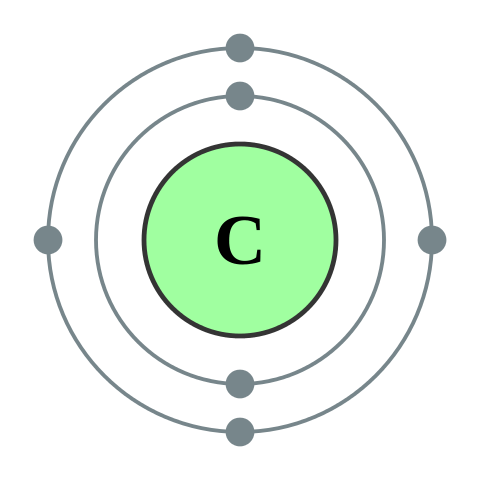
What are valence electrons?

a)

The total number of electrons in an atom

b)

The number of electrons in the outermost shell

c)

The number of electrons in the second shell

d)

The number of protons in the outermost shell
9.

How many valence electrons does carbon have?

a)

4

b)

5

c)

6

d)

7

10.

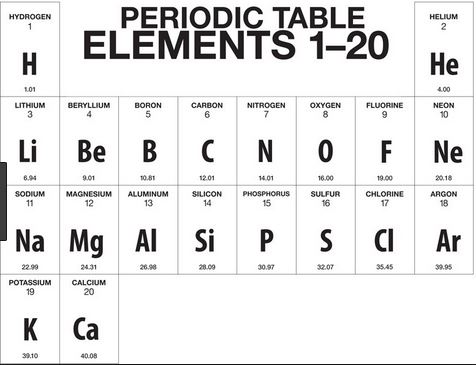
USE THE PERIODIC TABLE

How many valence electrons does Phosphorus have?

a)

31

b)

5

c)

15

d)

4

11.

Hydrogen needs _____ electrons in its valence shell to be stable.

a)

4

b)

6

c)

8

d)

2

12.
How many valence electrons are found in atoms of group 1?
a)
7
b)
6
c)
4
d)
1
13.

How many valence electrons does Aluminum Have?

a)

1 Valence electron

b)

2 Valence electron

c)

3 Valence electron

d)

4 Valence electron

e)

5 Valence electron

14.

How many valence electrons does Neon Have?

a)

4 Valence electron

b)

5 Valence electron

c)

6 Valence electron

d)

7 Valence electron

e)

8 Valence electron

15.

All atoms are most stable with (or would "prefer") how many electrons in their valence shell?

a)

1

b)

2

c)

8

d)

18

16.
The energy of an electron __________ as it moves further away from the nucleus
a)
increases
b)
decreases
c)
remains the same
17.
How many valence electrons does Si contain? 
a)
14
b)
28
c)
2
d)
4
18.
How many valence electrons are in Phosphorus?
a)
15
b)
4
c)
5
d)
31
19.
How many electrons are in the outer shell of Sodium (Na)?
a)
3
b)
1
c)
2
d)
4
20.
What is the electron configuration of sodium?
a)
2.8
b)
2.8.2
c)
2.8.1
d)
11
21.
What is the electron configuration of calcium?
a)
2.8.8.2
b)
2.8.10
c)
20
d)
2.18.2
22.
Which element has an electron configuration of 2.5?
a)
Oxygen
b)
Nitrogen
c)
Phosphorus
d)
Carbon
23.
Which element has an electron configuration of 2.8.8?
a)
Lead
b)
Flourine
c)
Neon
d)
Argon
24.
What is the electron configuration of Aluminium?
a)
2.8.3
b)
2.11
c)
13
d)
2.8.2
25.
What is the electron configuration of chlorine?
a)
17
b)
2.7
c)
2.8.7
d)
2.8.4
26.
Which element has the electron configuration of 2.8.2?
a)
Magnesium
b)
Sodium
c)
Sulfur
d)
Arsenic
27.
Which element has the electron configuration of 2.8.4?
a)
Neon
b)
Boron
c)
Gallium
d)
Silicon
28.
What is the electron configuration of beryllium?
a)
2.2
b)
2.4
c)
4
d)
6
29.
Which element has the electron configuration of 2.7?
a)
Krypton
b)
Iodine
c)
Flourine
d)
Barium
30.

How many electrons in the second energy shell?

a)

2

b)

8

c)

10

d)

12

e)

14

31.

How many electrons in the innermost energy shell?

a)

2

b)

8

c)

10

d)

12

e)

14

32.

Which of the following has a positive charge?

a)

proton

b)

neutron

c)

electron

d)

atom

33.

The neutral atoms of all of the isotopes of the same element have

a)

different numbers of protons

b)

equal numbers of neutrons

c)

the same number of protons

d)

the same mass numbers

34.

An element’s atomic number is equal to its number of

a)

protons

b)

neutrons

c)

valence electrons

d)

protons and neutrons

35.

What is the mass number of an element that has 19 protons, 19 electrons, and 20 neutrons?

a)

19

b)

20

c)

39

d)

58

36.

A certain atom has 26 protons, 26 electrons, and 30 neutrons. Its mass number is?

a)

26

b)

30

c)

52

d)

56

37.

Oxygen’s atomic number is 8. This means that an oxygen atom has

a)

eight neutrons in its nucleus

b)

a total of eight protons and neutrons

c)

eight protons in its nucleus

d)

a total of eight neutrons and electrons

38.

Which is NOT found in the nucleus of an atom?

a)

electron

b)

neutron

c)

proton

d)

quark

39.

Atoms that gain or lose electrons are called

a)

metals

b)

non metals

c)

ions

d)

isotopes

40.

Atoms of different elements are different because they have different numbers of what type of particle?

a)

electrons

b)

photons

c)

protons

d)

neutrons

41.

The 3 basic components of an atom are

a)

quarks, neutrons and electrons

b)

protons, neutrons and ions

c)

protons, neutrons and electrons

d)

protons, neutrinos and ions

42.

Which particles have approximately the same size and mass as each other?

a)

neutrons and electrons

b)

none - they are all very different in size and mass

c)

electrons and protons

d)

protons and neutrons

43.

Which two particles would be attracted to each other?

a)

protons and neutrons

b)

electrons and neutrons

c)

protons and electrons

d)

neutrons and photons

44.

Changing the number of neutrons in an atom causes it to be a?

a)

charge

b)

element

c)

ion

d)

isotope

45.

According to atomic theory, electrons are usually found

a)

outside the nucleus, in stationary positions

b)

in the atomic nucleus

c)

outside the nucleus in energy levels, also known as the electron cloud

d)

next to the protons

46.

Mass number =

a)

number of electrons plus neutrons

b)

number of protons only

c)

number of protons plus neutrons

d)

number of protons plus electrons

47.

An atom has a mass number of 37 and atomic number 17. How many protons does it have?

a)

20

b)

17

c)

54

d)

21

48.

Which of the following determines the chemical properties of an element?

a)

Number of electrons

b)

Number of neutrons

c)

Number of protons

d)

All of the above

49.

Which element is a metal in the same group of the periodic table as element A?

a)

B

b)

C

c)

D

d)

E

50.

What is the atomic number of this atom?

a)

1

b)

3

c)

4

d)

7

51.

What is the mass number of this atom?

a)

1

b)

3

c)

4

d)

7

52.

What does the 6 represent?

a)

Atomic mass

b)

atomic number

c)

chemical symbol

d)

element name

53.
How is the number of neutrons in the nucleus of an atom calculated?
a)
Add the number of e- and p+ together
b)
Subtract the number of e- from p+
c)
Subtract the number of p+ from the mass number
d)
Add the mass number to the number of e-
54.

How many electrons does this atom have?

a)

2

b)

4

c)

6

d)

10

55.
What is the atomic number of the atom pictured? 
a)
9
b)
10
c)
18
d)
19
56.
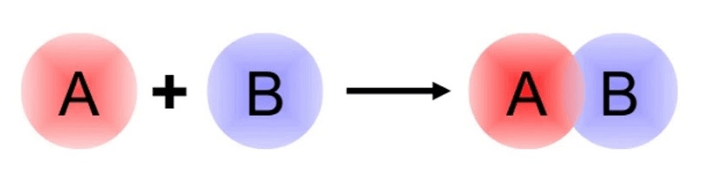
Two Reactants and One Product
a)
Decomposition
b)
Synthesis
c)
Combustion
d)
Single Replacement
57.
Always starts with a Hydrocarbon that reacts with oxygen and produces carbon dioxide and water. 
a)
Decomposition
b)
Synthesis
c)
Combustion
d)
Single Replacement
58.
One element replaces another in a compound.
a)
Synthesis
b)
Combustion
c)
Single Replacement
d)
Double Replacement
59.
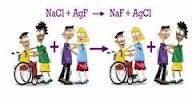
Ions in two compounds switch. 
a)
Synthesis
b)
Combustion
c)
Single Replacement
d)
Double Replacement
60.
This pictures simulates what type of reaction?
a)
Synthesis
b)
Decomposition
c)
Single Replacement
d)
Double Replacement
61.
What type a reaction is taking place in this picture?
a)
Synthesis
b)
Decomposition
c)
Single Replacement
d)
Double Replacement
62.

In a ___________change, a substance changes into a different substance.

a)

Physical

b)

Chemical

63.

What are reactants?

a)

The chemicals that start the reaction.

b)

The chemicals that the reaction produced.

c)

The chemicals that are on the right side of the arrow.

64.

What are products?

a)

The chemicals that start the reaction.

b)

The chemicals that the reaction produced.

c)

The chemicals that are on the left side of the arrow.
65.

What is the type of reaction shown above?

a)

Synthesis

b)

Decomposition

c)

Single Replacement

d)

Double Replacement

66.

Identify the reaction type:

C2H6 + O2 --> CO2 + H2O

a)

Double replacement

b)

Synthesis

c)

Acid base

d)

Combustion

67.

Identify the reaction type for the following equation:

K + F2 --> KF

a)

Double replacement

b)

Single Replacement

c)

Synthesis

d)

Decomposition

68.

Identify the type of reaction:

ZnCl2 + Mg --> Zn + MgCl2

a)

Precipitate

b)

Single Replacement

c)

Double Replacement

d)

Decomposition

69.

Identify the reaction type:

NaCl + KOH --> KCl + NaOH

a)

Double replacement

b)

Combustion

c)

Synthesis

d)

Decomposition

70.

Identify the reaction type:

H2O2 --> H2O + O2

a)

Decomposition

b)

Synthesis

c)

Combustion

d)

Acid Base

71.
Mg2+ and Cl- create...
a)
Mg2Cl
b)
MgCl2
c)
Mg2Cl2
d)
MgCl
72.
Ca2+ and N3- create...
a)
Ca2N3
b)
Ca3N2
c)
CaN3
d)
Ca2N
73.

Na+ and Cl- create...

a)

Na2Cl

b)

NaCl2

c)

Na2Cl2

d)

NaCl

74.

Potassium and Sulfur create...

a)

KS

b)

KS2

c)

K2S

d)

K2S2

75.

The chemical formula of Iron (III) and bromine is

a)

FeBr

b)

Fe(III)Br

c)

FeBr₃

d)

Fe₂Br₃

76.

Zinc Oxide

a)

ZnO2

b)

Zn2O

c)

Zn4O

d)

ZnO

77.

The combination of Fe2+ ion and Cl- ion produce

a)

FeCl4

b)

FeCl

c)

FeCl2

d)

FeCl3

78.
What is the correct formula for the compound, lithium oxide?
a)
LiO
b)
Li2O
c)
LiO2
d)
Li2O2
79.
How do the following two elements bond together?
Na1+  F1-         
a)
NaF
b)
NaF3
c)
Na3F
d)
Na1F2
80.
How do the following two elements bond together?
K1+  S2- 
a)
KS
b)
K8S
c)
K6S3
d)
K2S
81.
How do the following two elements bond together?
Al3+  O2-         
a)
AlO
b)
Al2O3
c)
Al3O6
d)
Al3O2
82.
The formula of this atom when it becomes an ion would be
a)
N-2
b)
N+3
c)
N-3
d)
N+2
83.
An atom that has lost or gained electrons; an atom with a charge.
a)
cation
b)
anion
c)
isotope
d)
ion
84.
Na +  and  S -2
a)
Na2S
b)
NaS2
c)
Na2S2
d)
NaS
85.
+  and  N-3
a)
KN
b)
KN3
c)
K3N3
d)
K3N
86.
The chemical formula for an ionic compound of potassium and oxygen is
a)
KO.
b)
K2O.
c)
K2O2.
d)
KO2.
87.
How many valence electrons does a bromine atom have?
a)
1
b)
2
c)
6
d)
7
88.
What is the charge of an atom that has lost one electron?
a)
-1
b)
-2
c)
+1
d)
+2
89.
Which of the following will form an ion with a 2- charge?
a)
Ca
b)
Se
c)
Ge
d)
N
90.
How do the following two elements bond together?
Al3+  O2-         
a)
AlO
b)
Al2O3
c)
Al3O6
d)
Al3O2
91.
What charge does a calcium (Ca) ion have?
a)
+1
b)
+2
c)
+3
d)
+4
92.
What are the electrons in the highest energy level of an atom called?
a)
orbital electrons
b)
valence electrons
c)
anions
d)
cations
93.
A phosphorus atom needs to gain ___ electrons to achieve a full octet.
a)
3
b)
4
c)
6
d)
5
94.
If an element has 3 valence electrons, what charge will likely form on its ion ?
a)
+3
b)
+5
c)
-3
d)
-5
95.
What would be the proper chemical formula for combining Al3+ and l- :
a)
Al l3
b)
Al3l
c)
Al l
d)
All3
96.
What formula results when Ca+2  and  Br- ions bond?
a)
Ca2Br2
b)
CaBr
c)
Ca(br)2
d)
CaBr2
97.
Which is most likely to form a negative ion?
a)
an element from group 17
b)
a metal
c)
an element from group 1
d)
an element with atoms that have eight valence electrons
98.
Which is the charge that results when oxygen becomes an ion?
a)
+3
b)
+2
c)
-2
d)
-3
99.
Name the following ionic compound: BeCl2
a)
beryllium chlorine
b)
beryllium II chloride
c)
beryllium chloride
d)
beryllium dichloride
100.
What is the correct formula for Sodium Oxide?
a)
NaO
b)
NaO2
c)
Na2O
d)
Na2O2
101.
What is the charge on an Aluminium ion?
a)
3
b)
+3
c)
+2
d)
+1
102.
What is the charge on a chloride ion?
a)
-1
b)
1
c)
+2
d)
+1
103.
When an atom loses an electron, it becomes a:
a)
positive ion
b)
negative ion
c)
neutral ion
d)
neutral atom
104.

Name this compound:

AgF

a)

Silver (I) Fluoride

b)

Silver Fluorine

c)

Silver Fluoride

d)

Silver (I) Fluorine

105.

The first step in naming an ionic compound is always...

a)

Naming the anion (non-metal)

b)

Changing the ending to -ide

c)

Naming the cation (metal)

d)

Writing the cation charge

106.
Li+ and P3- create...
a)
Li3P
b)
LiP3
c)
LiP
d)
Li2P
107.
What is the NAME of....
Na2S
a)
sodium (II) sulfide
b)
sodium sulfide
c)
disodium sulfide
d)
sodium sulfur
108.
Which of these combinations is an ionic compound made of?
a)
Metal and Metal
b)
Nonmetal and Nonmetal
c)
Metal and Nonmetal
d)
Cation and Cation
109.

Name this compound: KF

a)

Potassium fluoride

b)

Potassium fluorite

c)

Fluorine potasside

d)

Potassium fluorate

110.
Magnesium bromide is an ionic compound with the chemical formula MgBr₂.  What does the "2" tell you?
a)
There are 2 bromide ions for every magnesium ion
b)
Bromide has a 2- charge
c)
Bromide has a 2+ charge
d)
There are 2 magnesium ions to every bromide ion
111.

Metals tend to _____ electrons to form cations; nonmetals tend to _____ electrons to form anions.

a)

lose ; lose

b)

gain; lose

c)

gain ; gain

d)

lose; gain

112.
Beryllium will ____ valence electrons when forming an ionic bond.
a)
lose 4
b)
gain 4
c)
lose 2
d)
gain 2
113.

In an ionic bond, the ions are held together because...

a)

the positive nucleus of each ion attracts the other ion's negatively charged electrons

b)

the ions have opposite charges

c)

as the electron moved from one atom to another it pulled the atom along with it

d)

electrons are being shared