wayground logo

Free Printable Worksheets

Font size

S
M
L
XL
Worksheets

HAP 3.1&3.3 Epithelial, Muscle, Nervous

Total questions: 38

Worksheet time: 24mins

Name
Class
Date
1.

Flattened cells

a)

Squamous

b)

Cuboidal

c)

Columnar

2.

Absorb nutrients in the digestive tract

a)

Columnar

b)

Cuboidal

c)

Simple Squamous

d)

Pseudostratified

3.

Used in places where diffusion needs to occur, such as blood vessels and air sacs in the lungs

a)

Cuboidal

b)

Columnar

c)

Simple Squamous

d)

Stratified Squamous

4.
Used in places needing protection from scrapes and abrasions such as the skin and esophagus
a)
Cuboidal
b)
Pseudostratified
c)
Simple Squamous
d)
Stratified Squamous
5.
Name the tissue
a)
Areolar
b)
Smooth Muscle
c)
Transitional
d)
Simple Squamous
6.

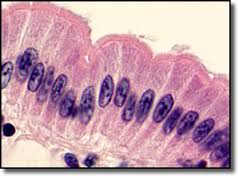
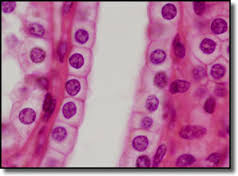
Name the tissue

a)

Simple Columnar

b)

Simple Cuboidal

c)

Transitional

d)

Simple Squamous

e)

Stratified Cuboidal

7.

Name the tissue

a)

Stratified Columnar

b)

Simple Columnar

c)

Transitional

d)

Pseudostratified

e)

Simple Cuboidal

8.

Name the tissue

a)

Pseudostratified

b)

Stratified Squamous

c)

Transitional

d)

Simple Columnar

e)

Simple Columnar

9.

What are the 3 basic shapes of Epithelial Cells? (Select all that apply)

a)

Cuboidal

b)

Columnar

c)

Orbital

d)

Squamous

10.

Epithelial tissue regenerates quickly

a)

True

b)

False

11.

Not having direct blood flow classifies a tissue as

a)

Vascular

b)

Avascular

c)

Regnerative

d)

Amitotic

12.

According to the picture, where is the basement membrane?

a)

Apical Side

b)

Columnar Cells

c)

Avascular tissue

d)

Basal Side

13.

Which of the following is not one of the four major tissue types?

a)

Blood

b)

Connective

c)

Epithelial

d)

Nervous

e)

Muscle

14.

Where is epithelial tissue found?

a)

in/on glands

b)

covering body surfaces

c)

lining hollow organs

d)

all of the above

15.

Identify:

a)

Simple Columnar

b)

Simple Cuboidal

c)

Pseudostratified

d)

Transitional

e)

Stratifies Columnar

16.

Identify:

a)

Stratified Columnar

b)

Simple Columnar

c)

Transitional

d)

Pseudostratified

e)

Stratified Squamous

17.
Identify:
a)
Pseudostratified
b)
Simple cuboidal
c)
Transitional
d)
Simple Squamous
18.
Epithelium with more than one layer of cells
a)
Stratified epithelium
b)
Simple epithelium
19.

Which of the following locations would be LEAST LIKELY to contain epithelial tissue?

a)

the lining of the bladder

b)

the skin on your elbow

c)

the inside of sweat glands

d)

the ligaments that hold the knee together

20.

Which of the following structures is NOT lined with epithelial tissue?

a)

bladder

b)

heart

c)

blood vessels

d)

intestines

e)

muscles

21.

Name this tissue type

a)

Skeletal Muscle

b)

Cardiac Muscle

c)

Smooth Muscle

d)

Nervous Tissue

22.

Name this tissue

a)

Skeletal Muscle

b)

Cardiac Muscle

c)

Smooth Muscle

d)

Nervous Tissue

23.

Name the tissue type

a)

Skeletal Muscle

b)

Cardiac Muscle

c)

Smooth Muscle

d)

Nervous Tissue

24.
This type of muscle tissue is found only in the heart
a)
Skeletal
b)
Cardiac
c)
Smooth
25.
This type of muscle tissue is found in the walls of hollow organs such as the stomach 
a)
Skeletal
b)
Cardiac
c)
Smooth
26.

This type of muscle tissue is attached to bones and helps control voluntary movement

a)

Skeletal

b)

Cardiac

c)

Smooth

27.
Which of the following is a type of muscle tissue
a)
Skeletal 
b)
Cardiac
c)
Smooth
d)
All of the above
28.
Muscle tissue
a)
Is tissue that functions in lining, covering, and glandular tissue
b)
Is tissue involved in protecting, supporting, and binding together other body tissues
c)
Is tissue that contracts and shortens to produce movement 
d)
Tissue that receives and conducts electrochemical impulses from one part of the body to another
29.
Which types of muscle tissue are voluntary
a)
Cardiac Muscle
b)
Smooth Muscle
c)
Skeletal Muscle
d)
Skeletal Muscle and Smooth Muscle
30.
Skeletal muscle is identifiable because it's the only one with....
a)

Multiple Nuclei per cell

b)
Striations
c)
Intercalated Discs
d)
Branching Cells
31.
Which type(s) of muscle tissue have visible striations
a)
Only Cardiac Muscle
b)
Only Skeletal Muscle
c)
Only Smooth Muscle
d)
Skeletal and Cardiac Muscle
32.
Nervous tissue
a)
Tissue that is responsible for lining, covering, and glandular tissue
b)
Tissue responsible for protecting, supporting, and binding together other body tissues
c)
Tissues that contracts and shortens to produce movement
d)
Tissue that receives and conducts electrochemical impulses from one part of the body to another
33.
What is this?
a)
Blood
b)
Bone
c)
Neuron
d)
Adipose
34.

This type of muscle tissue moves food through the digestive tract

a)

Skeletal

b)

Cardiac

c)

Smooth

35.
This type of tissue is located in the brain and spinal column
a)
smooth muscle
b)
skeletal muscle
c)
cardiac muscle
d)

nervous

36.

What is the purpose of nervous tissue?

a)

send electrical signals

b)

strengthen muscle

c)

make blood cells

37.

What is the function of the nerve cells?

a)

They are responsable of your defense mechanism.

b)

They transmit signals or messages to other neurons, organs or glands.

c)

They transmit substances to your endocrine system to produce hormones.

38.

Nervous tissue is made of neurons alone

a)

True

b)

False