
 Worksheets
Air Quality Review
Total questions: 60
Worksheet time: 26mins
What is the % of nitrogen in air?
75%
71%
78%
60%
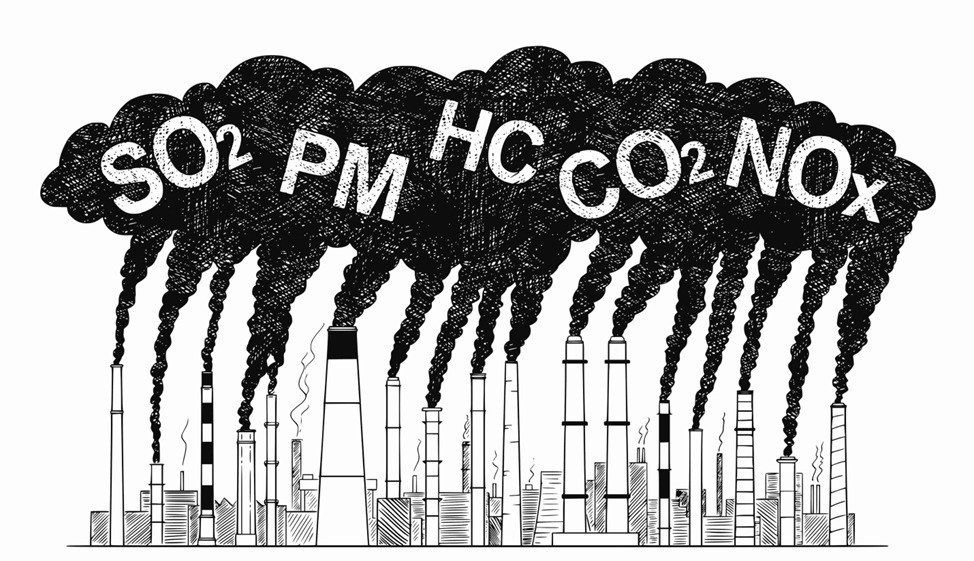
Motor vehicles are the major source of which pollutants? Select all that apply.
VOCs
oxides of nitrogen
carbon monoxide
particulate matter
Which reduces the amount of oxygen that red blood cells can carry?
Nitrogen oxides
Carbon monoxide
Sulfur dioxide
Lead compounds

Which pollutants can be harmful to human respiratory systems? Select all that apply.
Sulfur Dioxides
Nitrogen Oxides
Particulate Matter
Stratospheric Ozone
Volatile Organic Compounds
Which pollutants are associated with the formation of smog? Select all that apply.
SOx
VOC
O3
NOx
PM
What are some natural sources of NOX emissions? Select all that apply.
Forest fires
Lighting
Gas stoves
Bacterian action in soil
Electricity generation (coal-fired power stations)

What are the main air pollutants generated as a result of industrial agriculture?
VOCs
NOx
O3
PM
SOx
What is a metallic element that can produce brain damage? It used to be found in gasoline.
Dust, ash and pollen are examples of what air pollutant?
Produced by burning fossil fuels
Carbon Dioxide
Sulfur Dioxide
Nitrogen Dioxide
Phytochemical Oxidant
One of the main causes of climate change is what?
Concentration of oxygen in the atmosphere
15%
21%
78%
95%
What is a pollutant that forms from volcanoes (natural) and burning coal (anthropogenic)?
Anthropogenic: originating with human activity
Methane (CH4)
Lead (Pb)
Tropospheric Ozone (O3)
Sulfur Dioxide (SO2)
Carbon monoxide is considered a...
Primary Pollutant
Secondary Pollutant
Please select the EPA Criteria Pollutants below.
Volatile Organic Compounds (VOCs)
Tropospheric Ozone (O3)
Carbon Monoxide (CO)
Lead (Pb)
Methane (CH4)
This primary pollutant creates a reddish brown gas creating photochemical smog and tropospheric ozone.
sulfuric acid
VOC
nitrogen dioxide
particulate matter
Identify the following as a primary or secondary air pollutant: carbon monoxide
primary air pollutant
secondary air pollutant
Identify the following as a primary or secondary air pollutant: nitric acid
primary air pollutant
secondary air pollutant
Identify the following as a primary or secondary air pollutant: carbon monoxide
primary air pollutant
secondary air pollutant
Identify the following as a primary or secondary air pollutant: nitric acid
primary air pollutant
secondary air pollutant
Identify the following as a primary or secondary air pollutant: sulfuric acid
primary air pollutant
secondary air pollutant
Identify the following as a primary or secondary air pollutant: VOCs
primary air pollutant
secondary air pollutant
Identify the following as a primary or secondary air pollutant: particulate matter
primary air pollutant
secondary air pollutant
Identify the following as a primary or secondary air pollutant: nitrogen oxides
primary air pollutant
secondary air pollutant
Ozone is considered a pollutant in the stratosphere, but not the troposphere.
True
False
Which type of air pollutant is emitted directly?
Secondary air pollutants
Primary air pollutants
Ozone
Water
Which type of air pollution is formed when pollutants react with sunlight and each other?
primary air pollutants
secondary air pollutants
VOCs
hydrocarbons
Which type of pollutants are chemical compounds that can cause harm to human health or damage the environment?
Organic Air Pollutants
Inorganic Air Pollutants
Nonatmospheric Air Pollutants
Hazardous Air Pollutants
Which layer of the atmosphere has weather?
troposphere
stratosphere
mesosphere
thermosphere
Which layer of the atmosphere contains the ozone?
troposphere
stratosphere
mesosphere
thermosphere
Temperature increases with height in the ______ due to solar radiation.
troposphere
stratosphere
mesosphere
thermosphere
Temperature increases with height in the ______ due to the ozone trapping heat.
troposphere
stratosphere
mesosphere
thermosphere
Which gas makes up the largest portion of air?
oxygen
nitrogen
carbon dioxide
methane
What do you call the part of the atmosphere where molecules escape into space?
doldrums
ionosphere
exosphere
dead zone
What protects the earth from harmful UV rays from the sun?
clouds
ionosphere
nitrogen gases
the ozone
The layer of the atmosphere where meteors (shooting stars) burn up
mesosphere
thermosphere
troposphere
stratosphere

A mixture of gases that surrounds the Earth like a blanket.
atmosphere
troposphere
ozone
nitrogen
Which layer of the atmosphere do we live in?
troposhphere
mesosphere
stratosphere
exosphere
Airplanes fly in the
troposhphere
mesosphere
stratosphere
exosphere
Satellites orbit in the
troposhphere
thermosphere
stratosphere
exosphere
Put the following sources of air pollution into groups: natural or made by humans
volcanoes
forest fires
pollen
dust
factory emmissions
combustion of fossil fuels
car emmissions
mining
Match the following
A layer of cool air becomes trapped below a layer of warmer air
Thermal Inversion
The 6 pollutants originally identified by the Clean Air Act
Criteria Pollutants
Released directly into the atmosphere
Primary Pollutant
Forms as a result of a chemical reaction between a primary pollutant and something else in the atmosphere.
Secondary Pollutant
Rain or snowfall that has a lower than normal pH.
Acid Precipitation
Ground-level ozone in most major United States cities results primarily from
motor-vehicle exhaust
producing electric power
burning coal
burning fuel for cooking

Which of the following best explains the cause of the trend shown in the graph for lead emissions in the United States from 1970 to 2011 ?
Unleaded gasoline was first introduced in 1974, and amendments to the Clean Air Act required cars with the model year 1975 or later to use only unleaded gasoline.
New air-scrubber technologies were introduced in the late 1970s that effectively removed lead in the air and converted it into water vapor.
Beginning in 1975, The Clean Air Act required new cars to have catalytic converters, which effectively converted the lead found in gasoline to water vapor.
By 1990, all new model cars were equipped with internal fabric filters that effectively filtered car exhaust and reduced lead emissions.
Which of the following describes a potential human health effect most likely to be associated with a thermal inversion?
Increase in heart attacks due to increased barometric pressure
Increase in respiratory irritation due to increased levels of fine airborne particulates
Increase in skin cancer due to increased ozone levels
Increase in allergies due to increased household mold
The three main anthropogenic sources of gaseous air pollutants in the United States are
soil erosion, volcanoes, and forest fires
soil erosion, volcanoes, and energy production
industry, construction, and agriculture
industry, transportation, and energy production
industry, transportation, and agriculture
What was the first federal law that regulated air pollution?
The National Environmental Policy Act
The Clean Air Act
The Endangered Species Act
The Clean Water Act
What does the Clean Air Act require from state governments, private actors, and federal agencies?
To focus solely on endangered species protection
To ignore air quality standards
To reduce water pollution
To work together to develop and enforce technology-based standards
What scandal involved a company using technology to cheat environmental testing?
The Chernobyl disaster
The BP oil disaster
The Volkswagen emissions scandal
The Exxon Valdez oil spill

