wayground logo

Free Printable Worksheets

NEW

Font size

S
M
L
XL
Worksheets

DNA Replication and Protein Synthesis

Total questions: 65

Worksheet time: 1hrs 28mins

Name
Class
Date
1.
Which sequence of DNA bases would pair with this partial strand
ATG TGA CAG
a)
ATG TGA CAG
b)
TAC ACT GTC
c)
GTA AGT GAC
d)
CAT TCA CTG
2.
Which of the following best describes a DNA molecule?
a)
double helix
b)
contains ribose
c)
made of amino acids
d)
contains Uracil
3.
Which of the following units are repeatedly joined together to form a strand of DNA?
a)
amino acids
b)
nucleotides
c)
fatty acids
d)
polysaccharides
4.
In a molecule of double-stranded DNA, the amount of Adenine present is always equal to the amount of
a)
cytosine
b)
guanine
c)
thymine
d)
uracil
5.
Guanine bonds with ______________.
a)
Adenine
b)
Guanine
c)
Cytosine
d)
Thymine
6.
Which 2 molecules form the sides (backbone) of the DNA ladder?
a)
deoxyribose sugar and adenine
b)
deoxyribose sugar and a hydrogen bond
c)
deoxyribose sugar and the nucleus
d)
deoxyribose sugar and phosphate
7.
Watson and Crick were the first to suggest that DNA is _____
a)
a short molecule
b)
the shape of a double helix
c)
a protein molecule
d)
the genetic material
8.
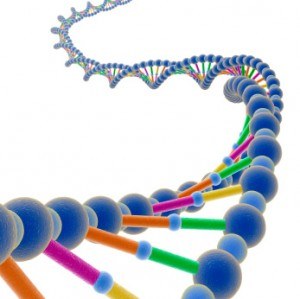
Name this structure
a)
double helix
b)
nucelotide
c)
twisted ladder
d)
hydrogen bond
9.
Nitrogenous bases are joined by which type of bond?
a)
polar bonds
b)
ionic bonds
c)
covalent bonds
d)
hydrogen bonds
10.
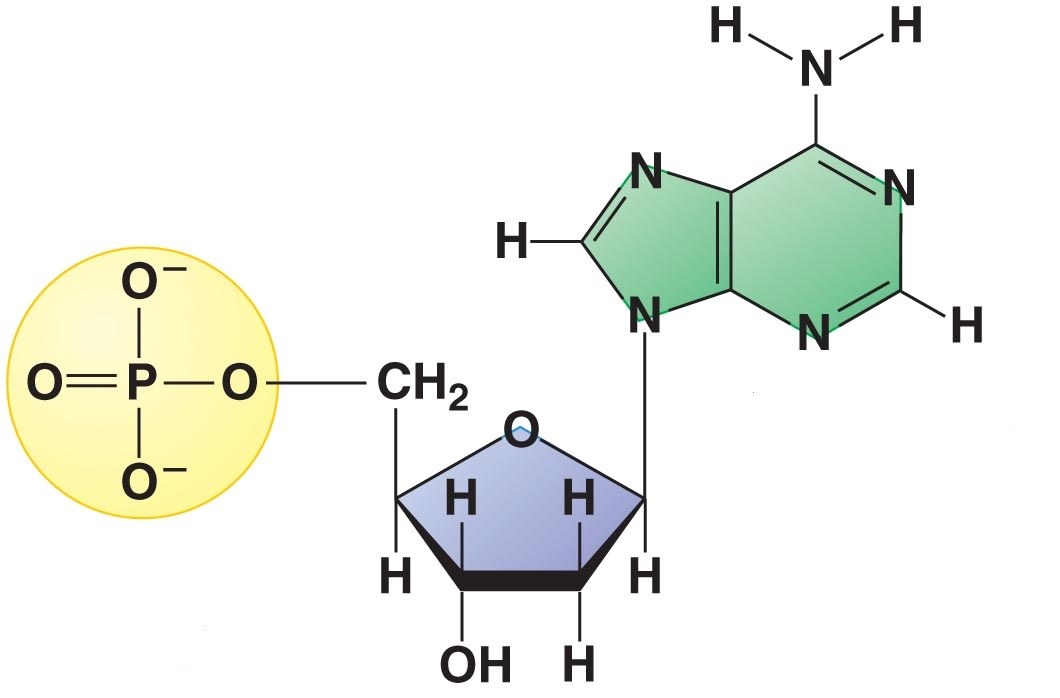
Nucleotides are made up of a sugar, phosphate, and..?
a)
nitrogenous base
b)
nucleic acid
c)
cholesterol
d)
fatty acid
11.
What does DNA stand for?
a)
Deoxyribonucleic acid
b)
Denitrogenous acid
c)
Deribonucleic acid
d)
Diribonucleic acid
12.
Who is responsible for producing this image (taken by X-ray chrystallography)?
a)
Francis Crick
b)
James Watson
c)
Rosalind Franklin
d)
Watson and Crick
13.
What part of DNA is different between individuals?
a)
Sugar
b)
Phosphate
c)
Order of nitrogen bases
14.
The enzyme that unwinds the DNA to prepare for replication
a)
helicase
b)
replicase
c)
polymerase
d)
synthase
15.
DNA replication results in two DNA molecules,
a)
each one with two original strands
b)
each one with two new strands
c)
each one with one new strand and one original strand
d)
one with two new strands and the other with two original strands
16.
In what phase of the cell cycle does DNA replication take place?
a)
G1
b)
S
c)
G2
d)
M
17.
Which enzyme is responsible for adding nucleotides?
a)
Topoisomerase
b)
DNA Polymerase
c)
Ligase
d)
Primase
18.
The process of DNA replication is called semi conservative because it results in
a)
none of these
b)
Two DNA molecules.  One original molecule and one with two new strands
c)
two exact copies with new strands
d)
two identical molecules, each with 1 original strand and one new.
19.
Seals the Okazaki fragments together
a)
DNA Polymerase
b)
ligase
c)
helicase
d)
primase
20.
synthesizes a short fragment of RNA that allows DNA polymerase III to bind
a)
ligase
b)
DNA polymerase I
c)
primase
d)
helicase
21.

direction new nucleotides are synthesized on the new strand

a)

5' to 3' (new nucleotides added to the 3' end)

b)

3' to 5' (new nucleotides added to the 5' end)

c)

3' to 5' (new nucleotides added to the 3' end)

d)

5' to 3' (new nucleotides added to the 5' end)

22.
If a DNA molecule is 18% Guanine which of the following is correct
a)
18% cytosine, 32% adenine, 32% thymine
b)
32% cytosine, 18% adenine, 32% thymine
c)
18% cytosine, 64% adenine, 64% thymine
d)
32% cytosine, 32% adenine, 18% thymine
23.

The picture below shows the steps of DNA replication beginning with step one and ending with step three.


​Because you are reusing the old, or parent, DNA strand DNA replication is said to be

a)

Semi- Conservative

b)

Semi-discontinuous

c)

Continuous

d)

Fully-Conserveative

24.

Which is the second step in DNA Replication?

a)

DNA Helicase unwinds original DNA strand

b)

RNA Primase lays down RNA primer for new nucleotide bases.

c)

DNA polymerase builds new strands by bring in new nucleotide bases.

d)

Ligase knits together fragments on lagging strand

25.

Which letter in the picture below depicts the leading strand in DNA replication?

a)

A

b)

C

c)

B

d)

None of the above

26.

Which letter in the picture below depicts the lagging strand in DNA replication?

a)

A

b)

C

c)

B

d)

None of the above

27.

Which letter in the picture below depicts the replication fork in DNA replication?

a)

A

b)

C

c)

B

d)

None of the above

28.

DNA replication runs from ______' to _____' and is said to be ______________________

a)

5, 3, antiparallel

b)

3, 5, antiparallel

c)

5, 3, parallel

d)

3, 5, parallel

29.

Okazaki fragments appear on which strand of DNA during DNA replication?

a)

lagging

b)

leading

30.

The directionality of DNA is said to be ___________, because it is side by side by goes in opposite directions.

a)

Anti-directional

b)

Parallel

c)

Anti-parallel

d)

Anti-uniform

31.

In what process is mRNA synthesized?

a)

Transcription

b)

Translation

c)

DNA Replication

d)

Mitosis

32.

Where does TRANSCRIPTION occur?

a)

Nucleus

b)

Ribosome

c)

Cytoplasm

d)

Mitochondria

33.

Why must transcription occur where DNA can be found?

a)

because DNA can't leave

b)

because ribosomes are in the nucleus

c)

because DNA polymerase is found there

d)

because helicase unzips the DNA

34.

How many codons equals 1 amino acid?

a)

1

b)

2

c)

3

d)

4

35.

How many nucleotides equal 1 amino acid?

a)

1

b)

2

c)

3

d)

4

36.

TRANSCRIBE this DNA sequence: TACGTTACT

a)

AUGCAAUGA

b)

ATGCAATGA

c)

AUGGATUGA

d)

TACGTTACT

37.

Which organelle is the location where protein is made?

a)

Ribosome

b)

Nucleus

c)

Cytoplasm

d)

Nucleotide

38.

When these bond together, they form a protein

a)

Amino Acids

b)

Peptide Bonds

c)

Ribose

d)

Nucleotides

39.
What is the term for a three-nucleotide sequence that codes for an amino acid?
a)
base
b)
codon
c)
amine
d)
serine
40.
The process to go from mRNA to a protein is called ____
a)
transcription
b)
rRNA
c)
replication
d)
translation
41.
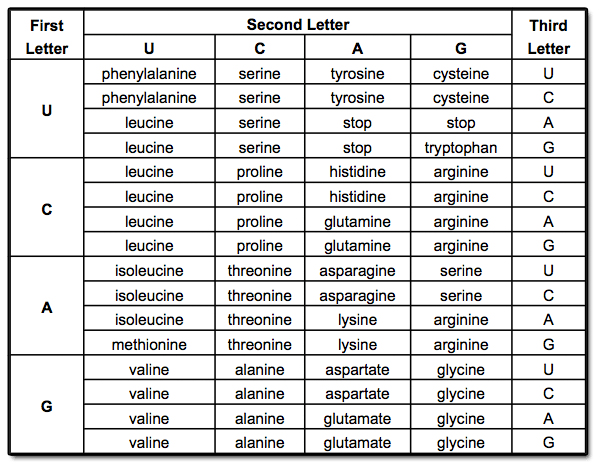
What amino acid is represented by the codon UUA?
a)
Phenylalanine
b)
Tyrosine
c)
Leucine
d)
Stop codon
42.
Does the order of amino acids in a protein matter?
a)
YES!
b)
NO!
43.
How many base pairs would be needed to chain together 3 amino acids?
a)
3
b)
6
c)
9
d)
12
44.
which process is shown?
a)
diffusion
b)
repiration
c)
recombination
d)
translation
45.
When an extra base is inserted into the DNA sequence of a gene, the protein doesn't work. Which explains why?
a)
the base increases rate of translation
b)
the base causes DNA to be transcribed in opposite direction
c)
the inserted base causes the codons in the sequence to be incorrect for the desired protein
d)
the base signals enzymes to translate DNA rather than RNA
46.
The DNA sequence ATCAGCGCTGGC is part of a gene. how many amino acids are coded for by this message?
a)
4
b)
8
c)
12
d)
20
47.
A scientist puts nucleotide chains of UUUUUU in a test tube under conditions allowing protein synthesis. Soon they are only amino acids chains of phenylalinine. What does the experiment indicate?
a)
phenylalanine is composed of uracil
b)
UUU codes for phenylalanine
c)
protein synthesis malfunctions in test tubes
d)
proteins contain one kind of amino acids
48.
One human disease is caused by a change in one codon in a gene from GAA to GUA. The disease is a result of 
a)
a mutation
b)
crossing-over
c)
a meiosis error
d)
polyploidy
49.
What is the relationship between a protein, the cell, and DNA?
a)
DNA is produced by protein which is produced in the cell
b)
Protein is composed of DNA which is produced in the cell
c)
DNA controls the production of protein in the cell
d)
A cell is composed of DNA and protein
50.
Genetic info flows in one direction. Which best represents this flow?
a)
DNA-protein-RNA
b)
Protein-RNA-DNA
c)
RNA-protein-DNA
d)
DNA-RNA-protein
51.
Which process?
a)
mutation
b)
transcription
c)
respiration
d)
translation
52.
This type of substitution codes for a stop codon
a)
Missense
b)
Nonsense
c)
Silent
d)
Deletion
53.
If you are missing or have an extra base  at the end of your mutated DNA . What type of mutation occurred?
a)
Substitution
b)
Frameshift
c)
Duplication 
d)
Insertion
54.
A type of substitution in which no  amino acids change is called 
a)
Missense
b)
Nonsense
c)
Silent
d)
Deletion
55.
Which of the following would result in a frameshift mutation?
a)
Insertions only
b)
Substitution only
c)
Deletion only
d)
Insertions and Deletions
56.
DNA molecule segment is : TTACGCAAG
The mutated DNA segment is TTCGCAAG. This is an example of ___ mutation.
a)
Substitution
b)
Deletion
c)
Insertion
d)
Inversion
57.
What is a Gene?
a)
A segment of RNA that encodes for a protein
b)
A chromosome
c)
A segment of DNA that encodes for a protein
d)
Your genome
58.
Normal-
GAG-CTC-GAC-AGA
Mutant
GAG CTC-CAC-AGA
a)
no mutation
b)
substitution
c)
insertion
d)
deletion
59.
What mutation has occurred here? 
T-G-A-C-C-A
T-G-A-G-C-A
a)
Substitution
b)
Deletion
c)
Insertion
d)
Frameshift 
60.
Are all mutations bad?
a)
Yes
b)
No
61.

How can a person's muscle cells have the same exact DNA sequences as their nerve cells even though the look and perform completely different?

a)

The two different cells become mutated

b)

The proteins expressed in each cell are different

c)

They actually have different DNA in the two types of cells.

d)

The genome of the different cells changes

62.
Activation or deactivation of genes by environmental experiences throughout development
a)
turn on genes
b)
gene expression
c)
environmental factors
d)
gene markers
63.
The difference between DNA code and the epigenome is that the DNA code is
a)
flexible, while the epigenome is fixed for life
b)
fixed for life, while the epigenome is flexible
c)
determined by the environment, while the epigenome is not
d)
determined by one's stress level, while the epigenome is not
64.
At what stage in the life of identical twins is the epigenome expected to be most similar?
a)
Age 6 months
b)
Age 21
c)
Age 55
d)
Trick quesiton; the epigenome never changes
65.
Which factor can affect the epigenome?
a)
nutrition
b)
exercise
c)
stress 
d)
all of these factors can affect the epigenome