Wayground logo

Free Printable Worksheets

Font size

S
M
L
XL
Worksheets

Q3 Benchmark Review

Total questions: 80

Worksheet time: 57mins

Name
Class
Date
1.

Increases and decreases blood sugar level

a)

parathyroid

b)

pancreas

c)

pituitary

d)

adrenal

2.

Increases heart rate and breathing rate;increases blood pressure

a)

adrenals

b)

thyroid

c)

parathyroid

d)

pancreas

3.

Stimulates skeletal growth; stimulates development of male and female sex organs

a)

pancreas

b)

adrenals

c)

pituitary

d)

hypothalamus

4.

Development of immune system

a)

adrenals

b)

parathyroid

c)

thymus

d)

testes

5.

Regulates the level of calcium and phosphorous; increases rate of metabolism

a)

thyroid

b)

pancreas

c)

pituitary

d)

testes

6.

How do the hormones get around the body?

a)

Through the circulatory system

b)

Through the skeletal system

c)

Through the digestive system

d)

Through the respiratory system

7.

Hormone regulation operates under which type of feedback mechanism?

a)

positive feedback

b)

negative feedback

c)

zero feedback

d)

Hormones are not regulated

8.

Which of the following is a function of the endocrine system?

a)

maintain homeostasis through regulation of growth, metabolism, and sexual development

b)

provide the body with defense mechanisms to protect against pathogens

c)

provide boundaries and protective surfaces to lubricate and line vital organs

d)

propagate electrical impulses to communicate information between brain, spinal cord, muscles, and sensory organs

9.

Which hormone induces a positive feedback mechanism by causing increasing frequency of contractions during childbirth

a)

prolactin

b)

progesterone

c)

oxytocin

d)

estrogen

10.

Which hormone regulates water balance by reducing the amount of water leaving the body

a)

aldosterone

b)

antidiuretic hormone

c)

growth hormone

d)

thyroxine

11.

A hormone antagonist is one that has the opposite function. The hormone antagonist of insulin is _________

a)

glucagon

b)

gastrin

c)

secretin

d)

calcitonin

12.
Which condition results from abnormally high concentrations of calcium in the blood?
a)
Cushing’s syndrome
b)
hypercalcemia
c)
hypocalcemia
13.

This hormone maintains circadian rhythms and is most active during sleep

a)

melanin

b)

melatonin

c)

Thymic factor hormone

d)

Thyroid stimulating hormone

14.
Which hormone stimulates milk production?
a)
Prolactin
b)
Oxytocin
c)
Antidiruetic Hormone
d)
Parathyroid Hormone
15.
Which hormone promotes retention of water by the kidneys?
a)
Parathyroid Hormone
b)
Follicle Stimulating Hormone
c)
Antidiruetic Hormone
d)
Calcitonin
16.
Which hormone stimulates growth (especially in bones and muscles) and metabolism?
a)
Epinephrine
b)
Norepinephrine
c)
Growth Hormone
d)
Mineralocorticoid
17.
What hormones are produced by the pancreas?
a)
Testosterone
b)
Insulin and Glucagon 
c)
Epinephrine 
d)
Calctonin 
18.
What is this gland?
a)
Pancreas
b)
Pituitary
c)
Hypothalamus
d)
Thyroid
19.
causes contractions of the uterus during childbirth
a)
growth hormone
b)
oxycotin
c)
oxytocin
d)
oxyclean
20.
targets most organs and promotes metabolism (the chemical reactions in your body)
a)
T3 and T4
b)
calcitonin
c)
ADH
d)
metabolite
21.

If you are blood O you can only get blood from

a)

AB

b)

A

c)

B

d)

O

22.

what are Erythrocytes?

a)

metabolic waste

b)

red blood cells

c)

globulin

d)

white blood cells

23.

type A blood can not receive type AB

a)

true

b)

false

24.

Erythrocytes

a)

are the least numerous formed element in the body

b)

are cylindrically shaped cells

c)

are produced in yellow bone marrow

d)

do not have a nucleus

25.

Doctors can say that a patient has an infection, if there are a lot of _________ in his blood.

a)

erythrocytes

b)

leukocytes

c)

thrombocytes

d)

plasma

e)

oxygen

26.
What is the oxygen carrying pigment in blood?
a)
hematocrit
b)
hemopoesis
c)
hemoglobin
d)
hemostasis
27.

The main function of a white blood cell is:

a)

carry oxygen

b)

clotting

c)

remove waste

d)

protection

28.

Which part of human blood carries hormones and nutrients?

a)

plasma

b)

platelets

c)

red blood cells

d)

white blood cells

29.

The most common type of leukocyte, which functions to phagocytize microorganisms and other substances?

a)

lymphocyte

b)

macrophage

c)

neutrophil

d)

thrombocyte

30.

Monocytes

a)

are the smallest sized leukocytes

b)

give rise to macrophages

c)

are a type of granulocyte

d)

all of the above

31.

Given the following events:

  1. Fibrinogen forms bridges between fibrinogen receptors
  2. platelets stick to collagen
  3. platelets release ADP and thromboxane


Choose the arrangement that lists the events in the order they occur during platelet plug formation

a)

2,1,3

b)

2,3,1

c)

3,2,1

d)

3,1,2

32.

Given the following events:

  1. fibrin
  2. prothrombinase
  3. thrombin


Choose the arrangement that lists the chemicals in the order they are formed during clot formation

a)

1,2,3

b)

1,3,2

c)

2,1,3

d)

2,3,1

e)

3,2,1

33.
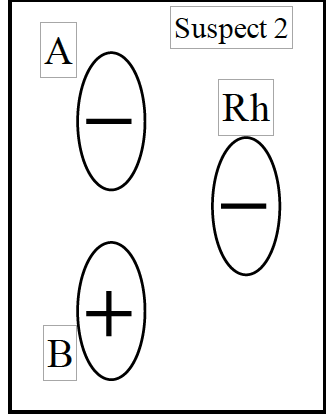
What is suspect 2's Blood Type?
a)
A-
b)
B-
c)
A+
d)
B+
34.

Mackenzie has blood type B+, she can receive blood from which blood donors?

a)

B+, B-, O+, O-

b)

B+, A-, O+, O-

c)

B+

d)

O-

35.

Which cells make blood clotting?

a)

thrombocytes

b)

leukocytes

c)

erythrocytes

d)

clotting cells

36.
WBC that serves as an anticoagulant and intensifies inflammatory response
a)
neutrophil
b)
monocyte
c)
eosinophil
d)
basophil
37.
WBC that phagocytizes allergens and parasitic worms.
a)
lymphocyte
b)
eosinophil
c)
monocyte
d)
neutrophil
38.

What are Antigens?

a)

The markers that white blood cells release to mark foreign invaders for destruction.

b)

The factor that determines if you are "Positive" or "Negative" blood type.

c)

Proteins located on your blood cells that determine your blood type.

d)

The liquid medium that your blood cells travel through.

39.

What are Antibodies?

a)

The markers that white blood cells release to mark foreign invaders for destruction.

b)

The factor that determines if you are "Positive" or "Negative" blood type.

c)

Proteins located on your blood cells that determine your blood type.

d)

The liquid medium that your blood cells travel through.

40.
Using the table, under which conditions would agglutination most likely occur?
a)
Row 1
b)
Row 2
c)
Row 3
d)
Row 4
41.

The middle, muscular layer of the heart responsible for the pumping action of the heart is

a)

epicardium

b)

myocardium

c)

endocardium

42.

The four veins that bring oxygenated blood from the lungs into the left atrium are called

a)

superior vena cava

b)

pulmonary artery

c)

inferior vena cava

d)

pulmonary veins

e)

aorta

43.

Which of the following valves is located between the right atrium and the right ventricle

a)

aortic

b)

pulmonic

c)

tricuspid

d)

bicuspid (mitral)

44.

An accumulation of specialized conductive cells in the right atrium responsible for delaying the electrical impulse is called

a)

AV node

b)

SA node

c)

AV (His) bundle

d)

Purkinjee fibers

45.
What is the main pathway of blood in the body?
a)
Heart -> Veins -> Venules -> Capillaries -> Arterioles -> Arteries -> back to heart
b)
Heart -> Arterioles -> Arteries -> Capillaries -> Veins -> Venules -> back to heart
c)
Heart -> Arteries -> arterioles -> Capillaries -> venules -> Veins -> back to heart 
d)
Heart -> Venules -> Veins -> Capillaries -> Arterioles -> Arteries-> back to heart
46.

What is the sequence of events in the transmission of an impulse through the heart muscle?

a: AV node

b: AV bundle (bundle of His)

c: SA node

d: Through the atria (junctional fibers)

e: Through the ventricles

f: Bundle branches

g: Purkinje fibers

a)

d, b, a, c, f, g, e

b)

c, d, a, b, f, g, e

c)

b, a, d, c, f, g, e

d)

f, g, d, c, b, a, e

47.
The QRS-wave correlates with which event?
a)
atrium contraction /signals moving from SA node to AV node
b)
ventricle contraction
c)
ventricle repolarization
d)
both atrial and ventricle contraction
48.
The p-wave correlates with which event?
a)
atrium contraction /signals moving from SA node to AV node
b)
ventricle contraction
c)
ventricle repolarization
d)
both atrial and ventricle contraction
49.

Where are the Purkinje Fibers located?

a)

A

b)

B

c)

C

d)

D

50.
Why does the heart (and veins) contain valves?
a)
To allow the blood to flow fast
b)
To allow the blood to get oxygenated
c)
To stop blood flowing backwards
51.

Vessels with narrow lumens

a)

arteries

b)

capillaries

c)

veins

52.

The bicuspid (mitral) valve prevents blood from flowing from the:

a)

right ventricle to the right atrium

b)

left ventricle to the left atrium

c)

left atrium to the right atrium

d)

right atrium to the left atrium

53.

What is a sphygmomanometer used for?

a)

auscultation

b)

measuring blood pressure

c)

recording heart rhythm

d)

viewing blood flow

54.
Which of the following is NOT a characteristic of veins?
a)
brings blood back to the heart
b)
have valves
c)
the smallest are called venules
d)
gas exchange occurs in them
55.
What is a function of capillaries?
a)
move blood throughout the body
b)
nutrient and gas exchange
c)
produce antibodies
d)
all of the above
56.

The correct blood flow through the heart is:

a)

Body - RA - RV - lungs - LA - LV - body

b)

Body - LA - LV - lungs - RA - RV - body

c)

Body - RV - RA - lungs - LV - LA - body

d)

Body - LV - LA - lungs - RV - RA - body

57.
What is going on in the heart during the T-wave
a)
SA node triggers depolarization in atria
b)
AV node triggers depolarization in ventricle, the main pumpung action
c)
Delay caused by the SA node
d)
Repolarization of the ventricle 
58.

plaque formation in coronary ateries causing ischemia (reduced blood suppy) resulting in hypoxemia (reduced O2 suppy)

a)

Atherosclerosis

b)

Coronary Artery Disease (CAD)

c)

Angina pectoris

d)

Myocardial infarction

e)

Cardiomegaly

59.

Faulty production/conduction of electrical impulses causing irregular heartbeat and can lead to cardiac arrest

a)

Bundle branch block

b)

Arrhythmias

c)

Flutter

d)

Fibrillation

e)

Ectopic pacemaker

60.
An electrocardiogram measures what?
a)
The amount of pressure exerted on blood vessels.
b)
The electrical activity of the heart.
c)
How many times the heart contracts over time.
d)
The body's temperature caused by friction of blood in vessel.
61.
The two main branches from the trachea is (one to each lung) ___________?
a)
Bronchi
b)
Alveoli
c)
Capillaries
d)
Bronchioles
62.
The air sacs that are covered with capillaries where gas exchange takes place is _________?
a)
Bronchi
b)
Trachea 
c)
Oxygen
d)
Alveoli
63.
What is the tube that is also known as your windpipe?
a)
Esophagus
b)
Bronchi
c)
Trachea
d)
Alveoli
64.
When the diapragm relaxes and moves back up, the lungs are...
a)
expanding with air
b)
shrinking - pushing air out
65.

What is contained in the larynx?

a)

vocal chords

b)

microscopic sacs

c)

air sacs

d)

food

66.
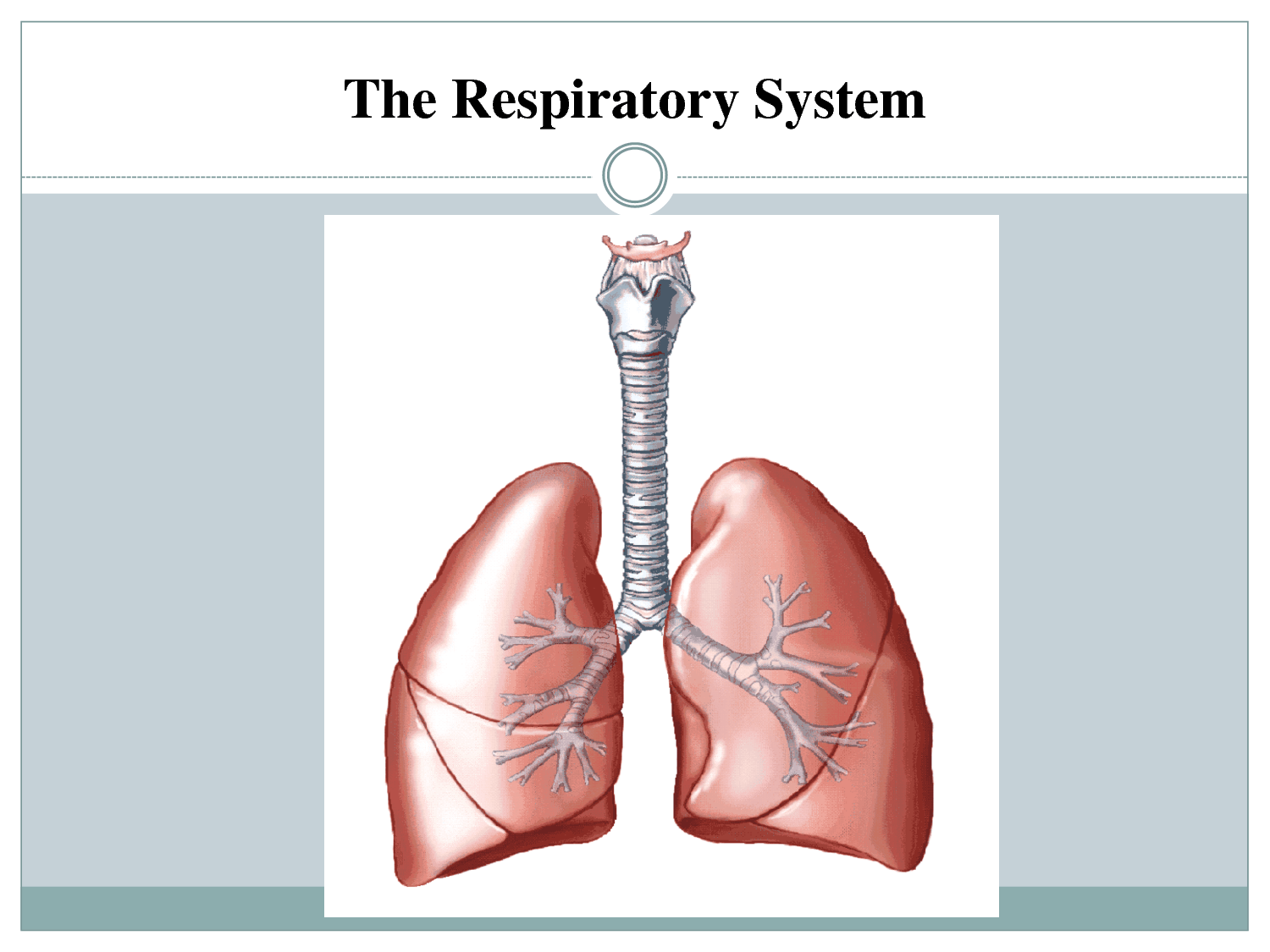
What is the main function of the respiratory system?
a)
to provide oxygen and remove carbon dioxide from the body
b)
to bring oxygen to the body
c)
to break down food and absorb nutrients
d)
to remove oxygen from the body and deliver carbon dioxide
67.
The passageway that is shared by both the digestive and respiratory system is the....
a)
larynx
b)
pharynx
c)
trachea
d)
nose
68.
Given the following structures:
1. larynx
2. nasal cavity
3. pharynx
4. trachea
Which of the following is the correct order that air would flow during inhalation. 
a)
1,2,3,4
b)
2,3,1,4
c)
2,1,3,4
d)
4,2,3,1 
69.
Flap of skin that covers the opening to the windpipe during swallowing
a)
Stomach
b)
Trachea
c)
Pancreas
d)
Epiglottis
70.
What does the cilia do in the respiratory syestem ?
a)
The cilia carries food and air through the respiratory system. 
b)
The cilia is known to be part of a cell. 
c)
Cilia filters particles that enter the nose. 
d)
Cilia contains the vocal chords. 
71.
The movement of oxygen from the alveoli to the blood and from the blood to the tissues is due to the process of... 
a)
osmosis
b)
diffusion
c)
cytokinesis
d)
phagocytosis
72.
exchange of oxygen and carbon dioxide between the lungs and bloodstream
a)
external respiration
b)
internal respiration
c)
cellular respiration
73.
When the diaphragm contracts...
a)
the volume of the thoracic cavity increases and the pressure decreases, causing air to rush into the lungs.
b)
the volume of the thoracic cavity decreases and the pressure increases causing air to rush out of the lungs. 
74.
When you inspire the ribs move....
a)
Up and out
b)
Up and in
c)
Down and out
d)
Down and in
75.
Surfactant...
a)
decreases the surface tension of fluid in the alveoli
b)
increases the energy required to keep the lungs inflated
c)
makes the lungs tend to collapse
d)
traps foreign particles that enter the lungs
76.

The volume of air exchange during normal breathing is called

a)

vital capacity

b)

inspiratory reserve capacity

c)

total lung capacity

d)

tidal volume

77.
What muscles are used in breathing in and breathing out?
a)
diaphragm and intercostals
b)
diaphragm and lungs
c)
lungs and ribs
d)
lungs and diaphragm
78.
What is the volume that remains in the lungs even after a forceful exhale
a)
expiratory reserve
b)
residual volume
c)
inspiratory reserve
d)
total lung capacity
79.

Pressure in the alveoli is called...

a)

intrapulmonary pressure

b)

intraplueral pressure

c)

transpulmonary pressure

d)

atmospheric pressure

80.

What is one of the ways carbon dioxide is carried in the blood?

a)

by bicarbonate ion

b)

dissolved in albumin

c)

by oxyhemoglobin

d)

by carbaminohemoglobin