
 Worksheets
sience revision
Total questions: 71
Worksheet time: 1hrs 5mins
The moment of a force causes an object to
move forward
move backward
stop moving
turn about a fixed point
A nut can be loosen more easily with
A short spanner because a large turning effect can be produced
A short spanner because a larger force can be produced.
A heavy spanner because a larger force can be produced.
long spanner because a large turning effect can be produced.
A force of 120 N is applied perpendicularly on a spanner at a distance of 9 cm from a nut. The torque produced by the force will be
12 Nm
10.8 Nm
15 Nm
12.59 Nm
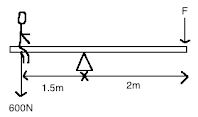
A boy of weight 600N sits on the see-saw as shown at a distance of 1.5m from the pivot. What is the force F required at the other end to balance the see-saw?
450 N
350 N
4.5 N
200 N
The SI unit of moment of force is –
m
N
kgf
Nm
Jack has a weight of 300 N and sits 2.0 m from the pivot of see-saw. Jill has a weight of 450 N and sits 1.5 m from pivot. Who will move down?
Jack
Jill
Both of them
None of them

Which diagram best demonstrates the use of the moment of a force?
A
B
C
D

The figure below shows a man lifting a heavy rock using a steel bar. He pushes downwards on the end of the bar with a force F.
Which pivot positions allows the force F to be as small as possible?
A
B
C
D
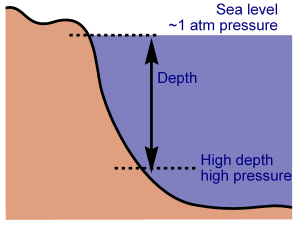
When you increase your depth under water, the water pressure on your body
increases
decreases
stays the same
How do you Calculate Pressure
Force(N)/Area(m2)
Force(kg)/Area(mi2)
Area(m2)/Force(N)
Why won't you sink in mud if you wear boots?
Because the surface area is larger creating less pressure.
Has air in it to keep you floating.
Because the mud won't want you.
What is pressure?
The amount of force exerted on a surface
The surface area of an object
The weight of an object
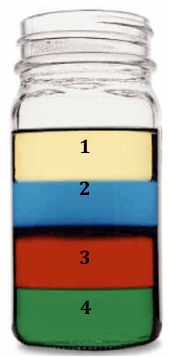
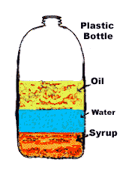

Which of the following is MOST reactive?
Magnesium
Lead
Tin
Copper
Zinc
Which metal is more reactive than calcium?
magnesium
potassium
silver
aluminum
Choose the least reactive metal
calcium
magnesium
iron
copper

In this reactivity series, which of the following is the least reactive element?
Gold
Calcium
Zinc
Potassium

True or False:
Magnesium is more reactive than silver.
True
False
True or False:
Lead is more reactive than iron.
True
False
A segment of DNA that codes for a trait
gene
allele
chromosome
chromatid
Human gametes contain how many chromosomes?
46
23
12
28
Which term refers to physical characteristics that are studied in genetics?
offspring
traits
generations
hybrids
Factors that control traits are called
parents
genes
purebreds
recessives
When gametes cells combine to produce offspring, each gametes cell will contribute
twice the number of chromosomes in body cells.
the normal number of chromosomes in body cells.
half the number of chromosomes in body cells.
one fourth the number of chromosomes in body cells.
A heterozygous organism has
three different alleles for a trait.
two identical alleles for a trait.
only one allele for a trait.
two different alleles for a trait.
Factors that control traits are called
parents
genes
purebreds
recessives
What is a natural resource?
Material from the Earth that people use for their needs.
A place hidden in the mountains.
An object made from natural things.
__________ is an energy resource that WILL NOT run out in the next several hundred years.
Renewable Energy Resource
Non-Renewable Energy Resource
__________ is an energy resource that WILL run out in the next several hundred years.
Renewable Energy Resource
Non-renewable Energy Resource
Which of the following is a renewable resource?
Oil
Solar
Coal
Natural Gas
Which of the following is a non-renewable resource?
Water
Sun
Coal
Win
What are the 3 fossil fuels?
coal, oil, uranium
coal, hydroelectric, oil
natural gas, oil, coal
Wind is a __________ energy resource.
Renewable
Non-renewable
Geothermal Power is a __________ energy resource
Renewable
Non-renewable
Fossil Fuel are?
A group of energy resources that were formed from ancient plants and organisms
A group of dinosaur fossils
A type of gas used for planes

Energy created by the Earth's heat.
Biomass
Solar
Geothermal
Wind

Energy created by burning organic waste material.
Geothermal
Wind
Biomass
Water

Energy created by moving water.
Solar
Wind
Geothermal
Hydropower
A machine with blades that turns because of wind or water.
Turbine
Power plant
Lawnmower

For the images above, which of the following line segments represent a phase change?
A to B
B to C
C to D
E to F

On a hot, humid summer day drops of water form on a can of cold soda. What process caused this to happen?
condensation
freezing
vaporization
deposition
Selective breeding is...
a process to create an organism with desired traits from parents with those desired traits
natural method of producing offspring with desired traits
creating a new species
making organisms reproduce during times of stress
One problem with selective breeding is
creating a new species
gene variety is lost
new food sources
The purpose of selective breeding is to
get bigger animals
get smaller animals
create animals with desirable traits
create animals with bad traits

When selective breeding food crops what might a farmer select for? (Select all that apply.)
The plant the produced the most grain
The plant the produced the largest sized grain
The plant that was the most disease resistant
The plant that was the smallest
The smelliest plant

