
 Worksheets
BENCHMARK #3 REVIEw
Total questions: 69
Worksheet time: 6hrs 45mins
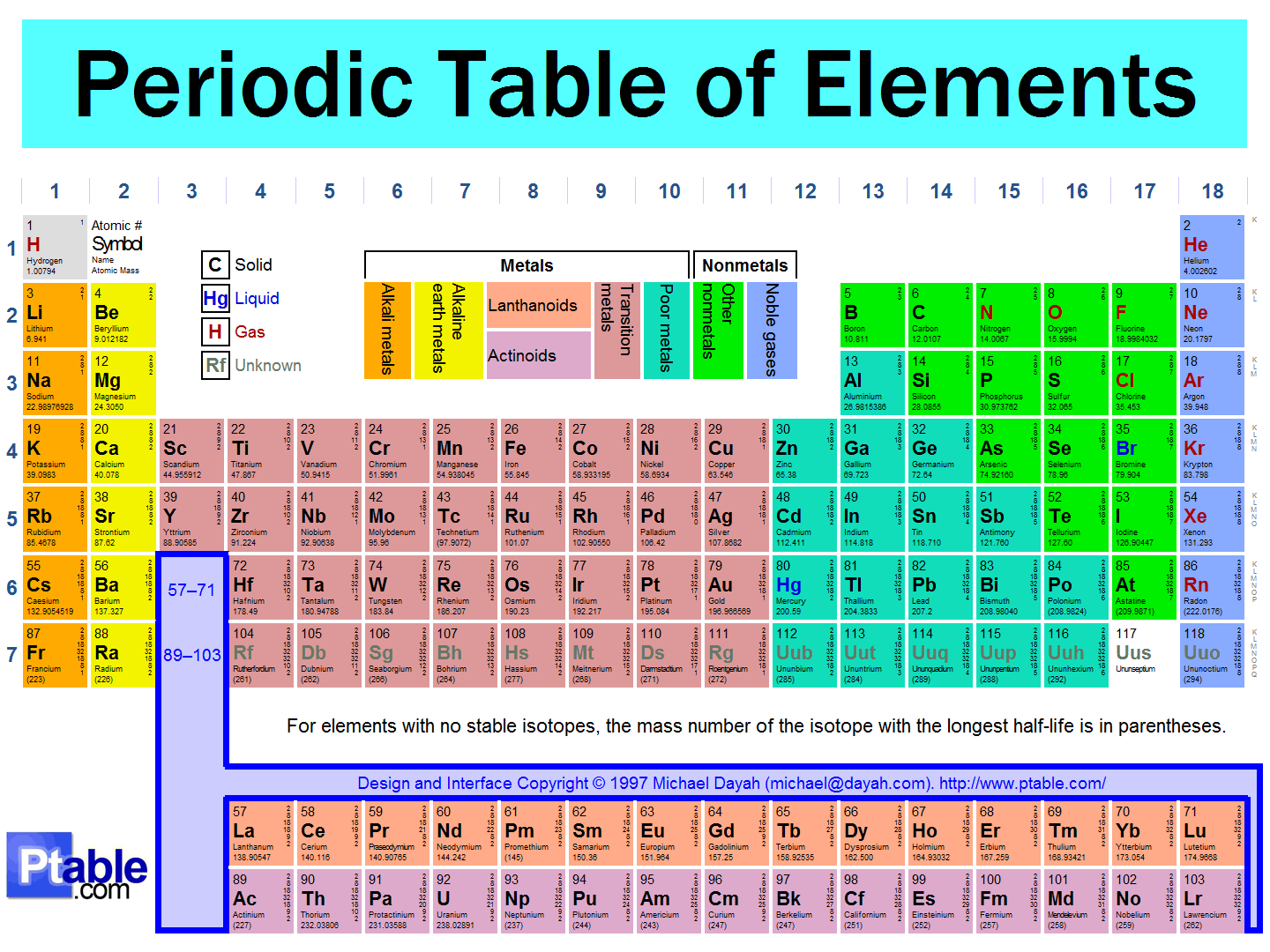
A substance that contains only one type of atom is a(n)
compound
heterogeneous mixture
element
homogeneous mixture
Which statement is true?
In a compound, all atoms are exactly the same.
In an element, all atoms are exactly the same.
In a mixture, all compounds are exactly the same.
The atomic number tells us
What the element is
Number of Protons
Number of Electrons
ALL of the above
The smallest piece of an element:
Proton
Atom
Neutron
Electrons
An element's identity is determined by which of the following? (May be more than 1)
Protons
Atomic Mass
Neutrons
Atomic Number
A mixture that does NOT appear to be evenly mixed throughout is ______.
an atom
a compound
a homogeneous mixture
a heterogeneous mixture
_______ is used to separate a solid from a liquid in which it is suspended.
filtration
distillation
suspension
colloid
_______ is in a heterogenous mixture in which particles do not dissolve.
suspension
colloid
compound
solvent

Element
Compound
Homogeneous Mixture
Heterogeneous MIxture
When there is 2 or more atoms combined together
Element
Compound
Homogeneous Mixture
Heterogeneous Mixture


A chemical change is different than a physical change because in a chemical change...
Chemicals are used
Molecules do not physically touch
A new substance is formed and in a physical change no new substance is formed
The change can be seen but in a physical change it cannot
The law of conservation of mass states
matter can not be created or destroyed
matter can be created and destroyed
matter can be changed and created
matter can be rearranged and destroyed

Energy stored in the earth in the form of heat.
GEOTHERMAL
SOLAR ENERGY
WIND ENERGY
NUCLEAR ENERGY
The use of flowing water from waterfalls and dams to produce electricity.
HYDRO & TIDAL POWER
SOLAR ENERGY
WIND ENERGY
NUCLEAR ENERGY
What drives the water cycle?
Evaporation
Flowing Water
The Sun
To say the amount of water in the water cycle never changes would be
accurate
inaccurate
When water as a liquid turns into a gas it is known as
vaporization
condensation
sublimation
precipitation
Upwelling is the process where cold, nutrient rich water from deep in the ocean rises to the surface.
A mix of saltwater and freshwater is called?
Dirty water
Brackish
An estuary
B and C
An estuary is a good place for organisms to hide since not all predators can survive in freshwater and saltwater.
True
False
How does temperature relate to turbidity levels?
Lower turbidity leads to higher temperatures.
Lower turbidity leads to lower temperatures
Temperature and turbidity do not relate.
Surface Run-off from a storm will cause this in the river.
Low levels of water
High Turbidity
Low pH levels
None of the above
You like to breathe? More than half of Earth's oxygen is created by ______________in the ocean, but their levels are declining because oceans are warming up.... 😠
Agricultural plants
Phytoplankton
Chemosynthesis

Using the pH what is considered midly acidic?
Coffee
Battery Acid
Baking soda
Lemon
Commercial developments (like golf courses) use fertilizer to keep their landscape looking beautiful, how does this effect the nearby river regarding surface runoff?
Runoff of animal waste, algae increases.
Runoff of gasoline causes nitrates, algae increases.
Runoff of fertilizer will cause increase in nitrates, algae increases.
None of the above
Which of the following statements best explains why nonpoint pollution is so difficult to prevent?
Because nonpoint pollution can be traced to only one source.
Because the source of nonpoint pollution is difficult to identify.
Because the source of nonpoint pollution may be a factory that can afford large fines.
Because nonpoint pollution is mainly from high temperature, which is impossible for us to affect.
The amount of energy required to raise the temperature 1ºC for every kilogram is called____?
Thermal Energy
Temperature
Specific Heat
Kinetic Energy
On the ocean floor, bacteria near hydrothermal vents use sulfur molecules to produce their own ________. Producing energy-rich nutrient molecules from chemicals is called ________.

This type of fossil forms when minerals soak into the buried remains, replacing the remains, and changing them into stone.
Cast
Mold
Petrified
Trace
Which type of rock are most fossils found?
sedimentary rock
metamorphic rock
igneous rock
fossils
Scientists use radiometric dating (radioactive decay) to measure...
relative time (dating)
absolute time (dating)
half-lives
time of day
The original element that undergoes radioactive decay is known as the...
daughter element
half-life
parent element
radioactive decay
humankind is currently living in this era
paleozoic
mesozoic
cenozoic
This is a surface where the rock has eroded away, producing a break, or gap, in the rock record.
unfonformity
inconsistancy
uniformity
correlation
These are the longest units of geologic time.
eons
era
period
epoch
These are the second longest units of geologic time. Eons are divided up into these.
eras
periods
epochs
unconformities
What can scientists use to study how Earth's climate and atmosphere have changed over time?
Ice cores
Index fossils
Law of Superposition
Radioactive dating


What type of boundary is this?
convergent
divergent
transform
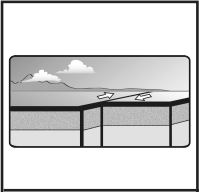
What type of boundary is this?
convergent
divergent
transform

What type of boundary is this?
convergent
divergent
transform

