
 Worksheets
Year Review
Total questions: 67
Worksheet time: 38mins

Thermal Energy
The total kinetic and potential energy of all the particles in an object.
Energy that is transferred from a warmer object to a cooler object.
A measure of the average kinetic energy of the particles in a substance.
The heating of a substance that causes its particles to move more quickly.

Temperature
The total kinetic and potential energy of all the particles in an object.
Energy that is transferred from a warmer object to a cooler object.
A measure of the average kinetic energy of the particles in a substance.
The heating of a substance that causes its particles to move more quickly.

Heat
The total kinetic and potential energy of all the particles in an object.
Energy that is transferred from a warmer object to a cooler object.
A measure of the average kinetic energy of the particles in a substance.
The heating of a substance that causes its particles to move more quickly.

Convection
The transfer of energy by electromagnetic waves.
A circular motion of air that causes wind and changes in weather
A type of heat transfer that occurs through the movement of fluids.
The transfer of energy from one particle of matter to another within an object or between two objects that are in direct contact.

Convection Current
A circular motion of air that causes wind and changes in weather
The transfer of energy by electromagnetic waves.
A type of heat transfer that occurs through the movement of fluids.
The transfer of energy from one particle of matter to another within an object or between two objects that are in direct contact.

Radiation
A circular motion of air that causes wind and changes in weather
The transfer of energy by electromagnetic waves.
A type of heat transfer that occurs through the movement of fluids.
The transfer of energy from one particle of matter to another within an object or between two objects that are in direct contact.

Specific Heat
Materials that do not conduct heat well.
A material that conducts heat well,
The amount of energy required to raise the temperature of 1 kilogram of a material by 1 kelvin.
The expansion of matter when it is heated.

Thermal Expansion
Materials that do not conduct heat well.
A material that conducts heat well,
The amount of energy required to raise the temperature of 1 kilogram of a material by 1 kelvin.
The expansion of matter when it is heated.
Kinetic Energy is the energy of _________
thermal
movement
potential
atoms
Which has more thermal energy?
teaspoon of boiling water
bowl of boiling water
bathtub of boiling water
The number one thing hurricanes need is...
warm water
cold air from cold fronts
cold water
strong warm front
Where do warm ocean currents come from
the poles
near the land
the equator
middle of the oceans

What city will experience decreasing temperatures in the next day?
Denver
El Paso
Memphis
Los Angeles

What does this symbol represent?
Cold Front
Warm Front
Stationary Front
Occluded Front

What does this symbol represent?
Cold Front
Warm Front
Stationary Front
Occluded Front

What does this symbol represent?
Cold Front
Warm Front
Stationary Front
Occluded Front
Low Pressures are associated with what type of weather
fair weather
cold weather
warm weather
rainy weather


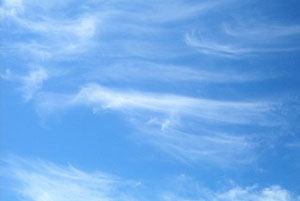

A front is
where warm air is cooling at earth's surface
a boundary where hot and cold air are separating
a boundary where two different air masses meet
where cold air is rising and forming rain clouds

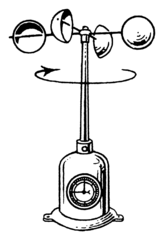
What is the purpose of a barometer?
Tells you that it is going to rain.
Measures the amount of wind.
Measusres the amount of clouds in the sky.
It measure the amount of pressure in the air.



Which is one of the five characteristics of animals?
Reproduction and Development
ability to hunt
to have fur
learn tricks
Which is one of the five characteristics of animals?
ability to growl
ability to hunt
Multicellular
have scales
Which is one of the five characteristics of animals?
ability to create oxygen
ability to be pets
have one cell
movement
Which is one of the five characteristics of animals?
live in zoos
Consuming
Live in groups
reproduce through binary fission
What is the biggest group of animals
amphibians and reptiles
fish
lions, tigers, and bears...oh my
insects, snails, jellyfish, and other invertebrates
Kingdom, (a) , Class, Order, Family, Genus, Species
Ectothermic (cold-blooded)
Mammalia
Reptilia

Why would you group a crab, fish, and clam together?
presence of an exoskeleton for structure
presence of a shell for protection
presence of jointed limbs to move
presence of gills to obtain oxygen
What type of behavior is inherited rather than learned?
Instinct
Innate behavior
Imprinting
Society
This would be considered a complex pattern of innate behaviors.
Behavior
Conditioning
Instinct
Imprinting
A group of animals move from one place to another to find food or to mate. What is this behavior called?
Migration
Hibernation
Conditioning
Territory
What is the best definition of hibernation?
Is the way an organism reacts to other organism.
a behavior is modified so that a response to one stimulus becomes associated with different stimulus
a response in which an animal's body temperature, activity, heart rate, and breathing rate decrease during periods of cold weather.
The instinctive, seasonal movement of animals from one place to another.
This behavior happens when an animal forms an attachment to a place or an organism within a specific time period after birth or hatching.
Migration
Instinct
conditioning
imprinting
If a dog starts salivating when a bell is rung, because he associates the bell with receiving a treat, this behavior is called __________________?
Imprinting
Instinct
Innate Behavior
Conditioning
What is the chemical that is produced by one animal and influences the behavior of another animal of the same species?
Instinct
Aggression
Pheromone
Submission
What are some of the ways animals communicate with other animals?
Sound
Light
Body language
All of the above
The genetic material from two different cells - sperm and eggs- combine, producing an offspring
Asexual Reproduction
Gestation
Sexual reproduction
Metamorphosis

