wayground logo

Free Printable Worksheets

Font size

S
M
L
XL
Worksheets

Comprehensive Test

Total questions: 111

Worksheet time: 10hrs 51mins

Name
Class
Date
1.
Valence electrons are: 
a)
Electrons farthest away from the nucleus
b)
Electrons closest to the nucleus
c)
Electrons that just come and go - they don't stay with the atom
d)
Electrons in the second shell
2.

Ionic compounds are formed between ________ and _________.

a)

metals and metals

b)

nonmetals and nonmetals

c)

metals and nonmetals

3.

In ionic compounds electrons are

a)

transferred

b)

shared

c)

lost

d)

no clue

4.
Elements in the same column of the periodic table always have the same # of _______ as one another.
a)
Protons
b)
Neutrons
c)
Electrons
d)
Valence Electrons
5.
Valence electrons are the...
a)
Innermost electrons
b)
Middle electrons
c)
Outermost electrons
d)
Any electrons
6.
When an ionic compound is formed, its charge is 
a)
negative
b)
neutral (no charge)
c)
positive
7.

In ionic compounds electrons are

a)

transferred

b)

shared

c)

lost

d)

both shared and exchanged

8.
A charged particle that has gained or lost electrons is called a _____.
a)
molecule
b)
ion
c)
isotope
d)
element
9.

What happens when two negatively charged ions are pushed together?

a)

they will repel (move apart)

b)

they will be attracted to each other (move together)

10.

What happens when two oppositely charged ions are pushed together?

a)

they will repel (move apart)

b)

they will be attracted to each other (move together)

11.
If I gain electrons I become
a)
Positive because I've added to my atom
b)
negative because I've added electrons
c)
same because i'm balanced
d)
equal because now I have electrons
12.
Metals tend to 
a)
gain electrons
b)
lose electrons
13.
Nonmetals tend to 
a)
gain electrons
b)
lose electrons
14.
When an ionic compound is formed, its charge is 
a)
negative
b)
neutral (no charge)
c)
positive
15.
Valence electrons are: 
a)
Electrons farthest away from the nucleus
b)
Electrons closest to the nucleus
c)
Electrons that just come and go - they don't stay with the atom
d)
Electrons in the second shell
16.

What is the name of the family that is highlighted?

a)

Alkali Metal Family

b)

Halogen Family

c)

Noble Gas Family

d)

Transition Metal Family

17.
Which element has a full valence shell?
a)
F
b)
D
c)
C
d)
E
18.

Which element has 3 valence electrons?

a)

A

b)

B

c)

E

d)

C

19.
Which elements have the same number of valence electrons?
a)
A & C
b)
E & C
c)
F & A
d)
F & B
20.
Which elements are in the same period?
a)
A & F
b)
F, B & D
c)
E & D
d)
F & B
21.
How many valence electrons does an atom of oxygen have?
a)
2
b)
5
c)
6
d)
16
22.
List the two most reactive families on the periodic table.
a)
Alkali metals & Transition Metals
b)
Noble gases & Oxygen Family
c)
Halogens & Alkali metals
d)
Halogens & Noble gases
23.

How many valence electrons do the atoms of elements in group 13 have (the Boron Group)?

a)

3

b)

5

c)

8

d)

13

24.
a)
Periods
b)
Groups
25.
a)
Periods
b)
Groups
26.
a)
energy levels
b)
valence electrons
c)
protons
d)
neutrons
27.
a)
energy levels
b)
valence electrons
c)
protons
d)
neutrons
28.
a)
Same group
b)
Same period
29.
a)
Group 1
b)
Group 17
c)
Group 2
d)
Group 18
30.
a)
Group 1
b)
Group 17
c)
Group 18
d)
Group 2
31.
a)
Group 1
b)
Group 17
c)
Group 18
d)
Group 2
32.
a)
Metals
b)
Nonmetals
c)
Metalloids
33.
a)
Metals
b)
Nonmetals
c)
Metalloids
34.
a)
Metals
b)
Nonmetals
c)
Metalloids
35.
a)
Metals
b)
Nonmetals
c)
Metalloids
36.
Electronegativity is...
a)
how good an atom is at attracting electrons
b)
the ability of an atom to lose electrons
c)
the energy required to remove an electron from a specific atom
d)
how easy it is to make friends. 
37.
The element with the largest electronegativity in the halogens is - 
a)
At
b)
F
c)
Cl
d)
Br
38.
What is ionization energy?
a)
Energy needed to destroy an atom
b)
Energy required to remove an electron
c)
Energy needed to split an electron
d)
Energy required to add an electron
39.
a)
metric ruler
b)
Celsius thermometer
c)
graduated cylinders
d)
pan balances
40.

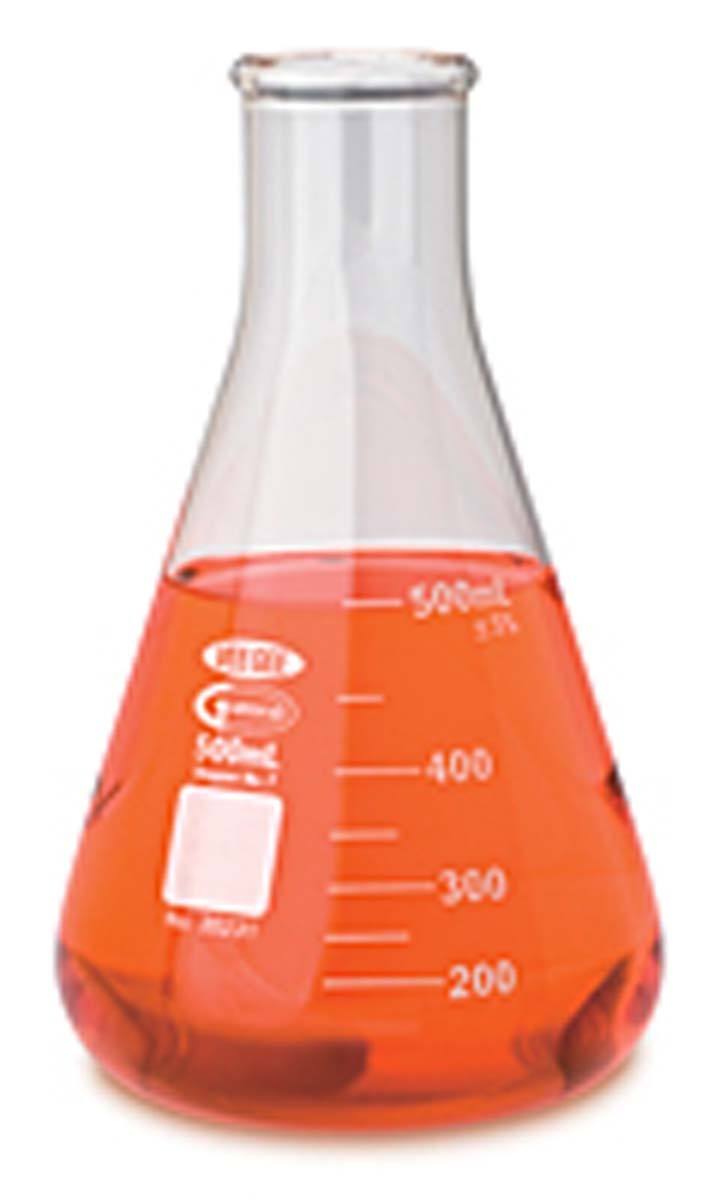
What is used to swirl, mix, or store chemicals?

a)

Beaker

b)

Flask

c)

Test Tube

d)

Graduated Cylinder

41.
This item is used to simply hold or approximately measure a liquid.
a)
beaker
b)
flask
c)
graduated cylinder
d)
test tube
42.

All matter is made of what

a)

energy

b)

atoms

c)

electrons

d)

compounds

43.

The positive particles of an atom are

a)

electrons

b)

positrons

c)

neutrons

d)

protons

44.

The central region of an atom where its neutrons and protons are is its

a)

nucleus

b)

electron cloud

c)

core

d)

center

45.

An atom with atomic number 6 would have how many protons

a)

6

b)

12

c)

3

d)

cannot be determined

46.

Particles in an atom that are neutral and have no charge are

a)

negatrons

b)

electrons

c)

neutrons

d)

protons

47.

A particle that moves around the nucleus is a(n)...

a)

Proton

b)

Neutron

c)

Electron

d)

Quark

48.

In the modern periodic table, elements are arranged by:

a)

atomic mass

b)

atomic number

c)

valence electrons

d)

number of isotopes

49.

What particle uniquely identifies an element?

a)

Number of Valence Electrons

b)

Number of Protons

c)

Number of Electrons

d)

Atomic Mass

50.

Electrons are___________

a)

Extremely small even in comparison to protons.

b)

part of the nuclues.

c)

Super Positive, like cheerleaders!

d)

very large

51.
electrons have this type of charge?
a)
negative
b)
positive
c)
neutral
52.
An atom's mass number equals the number of...
a)
protons plus the number of electrons
b)
protons plus the number of neutrons
c)
protons
d)
neutrons
53.

Which group is referred to as Alkali Metals?

a)

3

b)

1

c)

7

d)

17

54.
The majority of elements on the periodic table are
a)
man made.
b)
nonmetals.
c)
metals.
d)
gases.
55.

Name group 1A on the periodic table.

a)

alkali metals

b)

alkaline earth metals

c)

noble gases

noble gases

d)

halogens

56.
Name group 2A on the periodic table.
a)
alkali metals
b)
alkaline earth metals
c)
noble gases
d)
transition metals
57.

Name group 18 on the periodic table.

a)

alkali metals

b)

alkaline earth metals

c)

transition metals

d)

noble gases

58.
Name groups 3B - 12B on the periodic table.
a)
noble gases
b)
halogens
c)
metalloids
d)
transition metals
59.

Name group 17 on the periodic table.

a)

transition metals

b)

metalloids

c)

halogens

d)

alkali metals

60.

What are the vertical columns on the periodic called?

a)

groups

b)

periods

c)

nonmetals

d)

metals

e)

metalloids

61.
How many electrons does Oxygen need to fill its outer shell?
a)
3
b)
4
c)
1
d)
2
62.
How many valence electrons are found in atoms of group 1?
a)
7
b)
6
c)
4
d)
1
63.

What is the charge (oxidation number) of Magnesium (Mg)?

a)

+2

b)

-2

c)

+4

d)

-4

64.

What is the charge of ( oxidation number) for Flourine (F)?

a)

+1

b)

-1

c)

17

d)

7

65.

All matter is made of what

a)

energy

b)

atoms

c)

electrons

d)

compounds

66.
What is mass?
a)
How much MATTER makes up an object.
b)
How much GRAVITY is pulling an object.
67.
The force of gravity acting on an object is the object's ______.
a)
mass
b)
matter
c)
weight 
d)
friction 
68.

This subatomic particle holds the atom together

a)

proton

b)

electron

c)

neutron

d)

plasma

69.

Who is buried in Grant's tomb?

a)

Grant

b)

Coach Reid

70.

What class does Coach Reid teach?

a)

Orchestra

b)

Chemistry

c)

Band

71.

When was the war of 1812?

a)

1812

b)

1999

72.
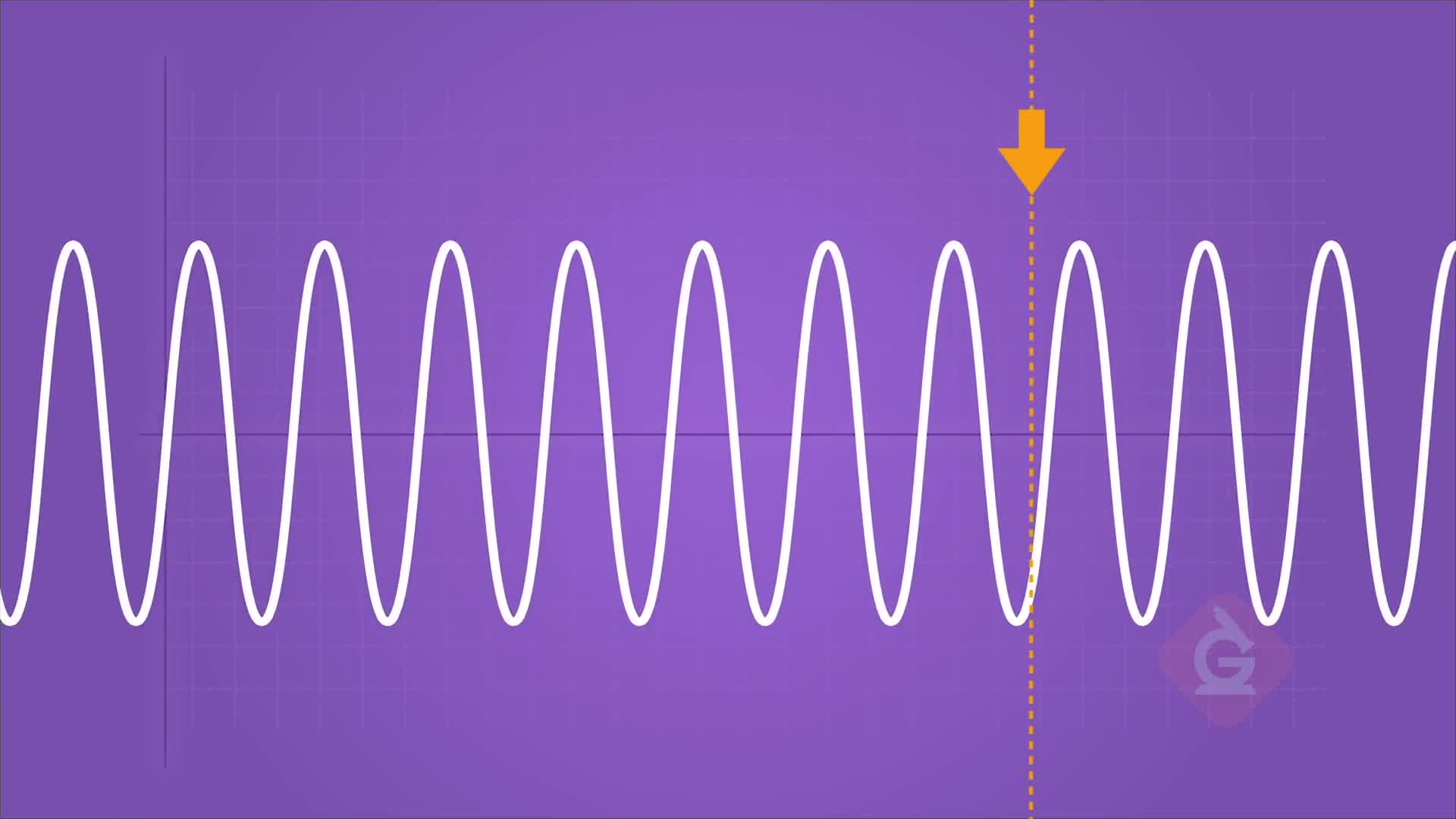
The energy of waves _______ as the wavelength gets shorter.
a)
increases
b)
decreases
c)
stays the same
73.

The energy of waves _______ as the wavelength gets shorter, making the waves closer together.

a)

increases

b)

decreases

c)

doesn't change

74.

What charge does an atom have when it GAINS electrons?

a)

Positive

b)

Negative

c)

Neutral

75.

What is a representation of an ion?

a)

Li

b)

Na-22

c)

O-2

76.

What does it change in an ion?

a)

The number of electrons

b)

The number of protons

c)

The number of neutrons

77.
N2 +  3H2 → 2NH3 
How many moles of hydrogen are needed to react with 2 moles of nitrogen?
a)
6
b)
2
c)
3
d)
1
78.
2H2   +   O2  →  2H2O
How many moles of water can be produced if 8 moles H2 are used?
a)
4 moles
b)
8 moles
c)
16 moles
d)
2 moles
79.
For the Balanced Reaction: 3 Mg + 1 Fe2O3 → 3 MgO + 2 Fe; What is the Ratio of moles of MgO to moles Fe?
a)
3mol Mg / 2 mol Fe
b)
2 mol Mg/ 3 mol Fe
c)
1 mol Fe/ 2 mol Fe
d)
3 mol MgO / 2 mol Fe
80.
Cl2 + 2KBr → Br2 + 2KCl
How many grams of potassium chloride (KCl) can be produced from 356 g of potassium bromide (KBr)?
a)
749 g
b)
223 g
c)
479 g
d)
814 g
81.
CH4 + 2 O2 → CO2 + 2 H2O
How many moles of carbon dioxide are produced from the combustion of 110 g of CH4?
a)
13.7 mol
b)
2.75 mol
c)
6.11 mol
d)
6.85 mol
82.
B2H6 + 3O2 -->2 HBO2 + 2 H2O
 What mass of O2 will be needed to burn 36.1 g of B2H6?
a)
13.8 g O2
b)
3.86 mol of O2
c)
125.2 g O2
83.
Balance the following reaction :
 
CaC₂(s)   +   H₂O(l)   -->   C₂H₂(g)   +   Ca(OH)₂(aq)
a)
1,2,2,2
b)
1,2,1,1
c)
2,1,1,1
d)
2,1,2,1
84.
Using the following equation:
Fe2O3(s) + 3H2(g) → 2Fe(s) + 3H2O(l)
How many moles of iron can be made from 3 moles of Fe2O3?
a)
6 moles Fe
b)
4 moles Fe
c)
2 moles Fe
d)
1 moles Fe
85.

4 Al + 3 O2 –> 2 Al2O3 How much aluminum would be needed to completely react with 45 grams of O2?

a)

1.05 moles

b)

3.75 moles

c)

0.875 grams

d)

1.875 moles

86.
2Al + 3H2SO4 -> Al2(SO4)3 + 3H2
How many grams of aluminum sulfate would be formed if 250g H2SO4 completely reacted with aluminum?
a)
0.85 g
b)
290 g
c)
450 g
d)
870 g
87.

2 KClO3 → 2 KCl + 3 O2

How many moles of oxygen are produced when 6.7 moles of KClO3 decompose completely? - Use mole ratio from balanced equation to calculate 6.7( 3O2/2KClO3)

a)

6.7 mol

b)

1.0 mol

c)

10.1 mol

d)

4.5 mol

88.

N2 + 3H2 --> 2NH3

What is the total number of moles of NH3 produced when 10 moles of H2 reacts completely with N2? (mole ratio)

a)

6.7

b)

2.0

c)

3.0

d)

15.0

89.

N2 + 3H2 --> 2NH3

How many moles of N2 is needed to react with 6 moles of H2?(mole ratio from balanced equation 6 molH2(1 mole N2/3 moleH2)

a)

6.7

b)

2.0

c)

3.0

d)

15.0

90.

The abbreviation STP stands for______________.

a)

Stoichiometry Temperature Probability

b)

Solid Temperature Practice

c)

Standard Temperature Pressure

91.

Temperature at STP is

a)

0 celsius

b)

100 celsius

c)

0 Kelvin

d)

212 F

92.

Pressure at STP is

a)

1 atmosphere

b)

1 Torr

c)

100 atmosphere

d)

6.02 hexallion

93.

In the reaction 6CO2 + 6H20 → C6H12O6 + 602, how many moles of H2O do we have?

a)

6

b)

25

c)

2

d)

6666

94.
Which of the following represent a mole ratio between silver nitrate and copper(II) nitrate in the following reaction:
2AgNO3 + Cu --> Cu(NO3)2 + 2Ag
a)
2 mol AgNO3 / 2 mol Ag
b)
2 mol Ag / 2 mol AgNO3 
c)
2 mol AgNO3 / 2 mol Cu(NO3)2
d)
2 mol AgNO3 / 1 mol Cu(NO3)2
95.

2 C2H6 + 7 O2 → 4 CO2 + 6 H2O

New problem: If 16 moles of carbon dioxide are formed by this reaction, how many moles of water were also produced?

a)

4 mol H2O

b)

6 mol H2O

c)

24 mol H2O

d)

96 mol H2O

96.

Which atom has the largest atomic radius?

a)

potassium

b)

rubidium

c)

francium

d)

cesium

97.
As you move down the periodic table atoms get bigger.  This is because ____________.
a)
The atoms have more mass.
b)
The atoms have more protons.
c)
The atoms have more energy levels
d)
The atoms have more nuetrons
98.
As you move across the periodic table atoms tend to get smaller because, ______________.
a)
the atoms have more mass.
b)
the atoms have less mass
c)
the atoms have more protons.
d)
the atoms have less electrons.
99.
Atomic radius generally increases as we move __________.  
a)
down a group and from right to left across a period 
b)
up a group and from left to right across a period 
c)
down a group and from left to right across a period 
d)
up a group and from right to left across a period 
100.

An atom with atomic number 6 would have how many protons

a)

6

b)

12

c)

3

d)

cannot be determined

101.

In the modern periodic table, elements are arranged by:

a)

atomic mass

b)

atomic number

c)

valence electrons

d)

number of isotopes

102.
What is the mass of one mole of aluminum?
a)
27 g
b)
13 g
c)
54 g
d)
14 g
103.
What is the molar mass of NaOH?
a)
40 g/mol
b)
38.989 g/mol
c)
23.998 g/mol
d)
57.004 g/mol
104.
CH4 + 2O2 --> 2H2O + CO2
What is the mass of CO2 produced when 35g of O2 reacts? 
a)
1.09 g
b)
24.1 g
c)
28.2 g
d)
44.0 g
105.

What is the first thing you must do to solve a stoichiometry problem?

a)

Write a Balanced Equation

b)

Panic

c)

Write an Unbalanced Equation

d)

Ask for help

106.

2H2 + O2 → 2H2O

How many moles of water can be produced if 8 moles H2 are used?

a)

4 moles

b)

8 moles

c)

16 moles

d)

2 moles

107.
Which of the following will have a larger radius than Zinc?
a)
Gallium
b)
Aluminum
c)
Magnesium
d)
Strontium
108.
As atoms of elements in group 16 are considered in order from top to bottom, the electronegativity of each successive element....
a)
decreases
b)
increases
c)
remains the same
d)
none of the above
109.
As you move down the periodic table atoms get bigger.  This is because ____________.
a)
The atoms have more mass.
b)
The atoms have more protons.
c)
The atoms have more energy levels
d)
The atoms have more neutrons
110.
Electronegativity is...
a)
the ability of an atom to attract/ accept electrons
b)
the ability of an atom to lose electrons
c)
the energy required to remove an electron from a specific atom
d)
how easy it is to make friends. 
111.
Ionization energy is...
a)
the energy required to add an electron to a specific atom
b)
how much energy it takes to remove an electron from an atom
c)
the energy required to shield the outer electrons from the nucleus
d)
a measure of the ability of an atom to attract electrons