
NEW
Font size
 Worksheets
Plate Motion Exam Review
Total questions: 45
Worksheet time: 27mins
Which statement best describes Earth's outer layer?
Earth's outer layer is made up of a soft solid material.
Earth's outer layer is made up of hard, solid rock.
Earth's outer layer is a combination of hard, solid rock and a soft, solid material.
Earth's outer layer is made up of hard, solid rock or water; it depends on where you go.
Which is the best definition of a "plate" in this unit?
The parts of Earth's outer layer that rise up above the ocean water.
The small pieces of solid rock that float in the ocean, forming islands and continents.
The single, undivided sheet of hard, solid rock that covers the planet.
One of the large sections of hard, solid rock that make up Earth's outer layer.
Earth's plates are a __________ solid material. Earth's mantle is a ________ solid material.
Soft; hard
Hard; soft
Soft; soft
Hard; hard

One of the very large sections of hard, solid rock making up Earth's outer layer?
Mantle
Pattern
Inner core
Plate
What is a plate boundary?
The single point where Earth's plates have motion.
The place along which two plates meet.
Long lines on the ground that cause the plates to move.
The only location on Earth where earthquakes are possible.
An earthquake is…
the slow plate motion that is constantly happening to the plates.
the sudden shaking of Earth's surface.
the reason that plates have any motion.
a mild geologic hazard.
Plate motion is caused by earthquakes that push the plates around.
True
False

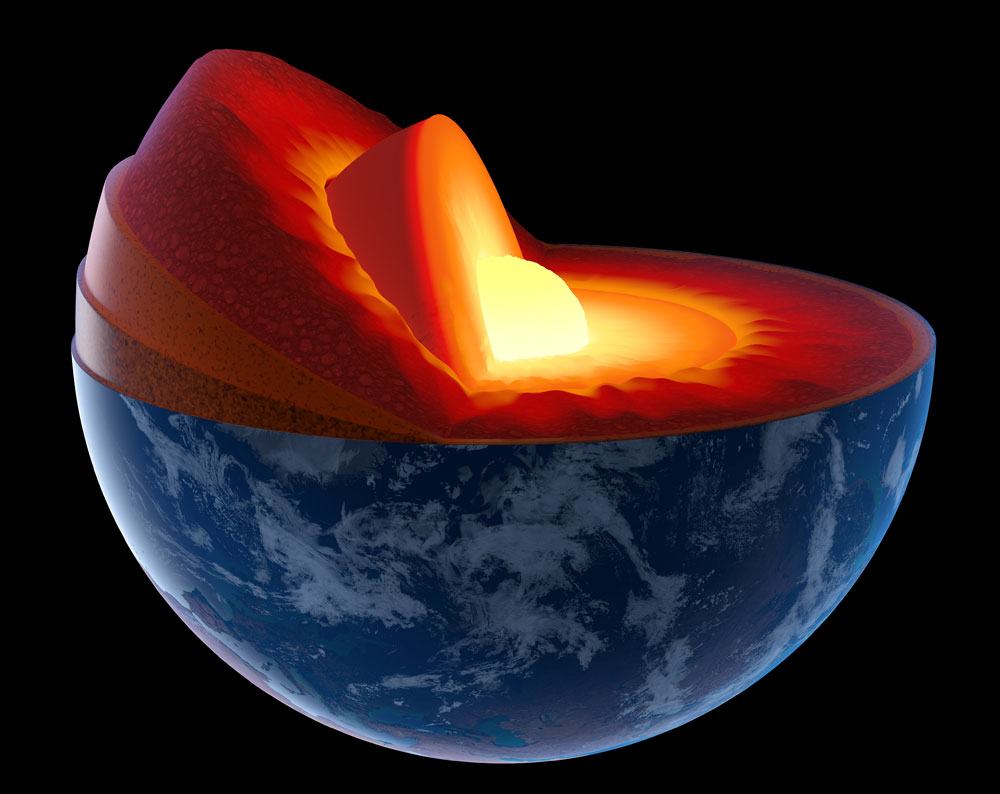
What best describes Earth's mantle?
Liquid, melted rock below the outer layer.
The hard, solid rock beneath the plates.
Liquid, melted rock on which the plates move.
The soft, solid rock on which the plates move.


Mid-Ocean Ridge?
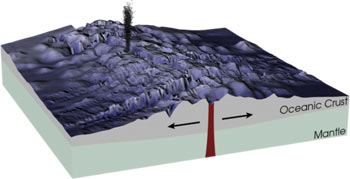
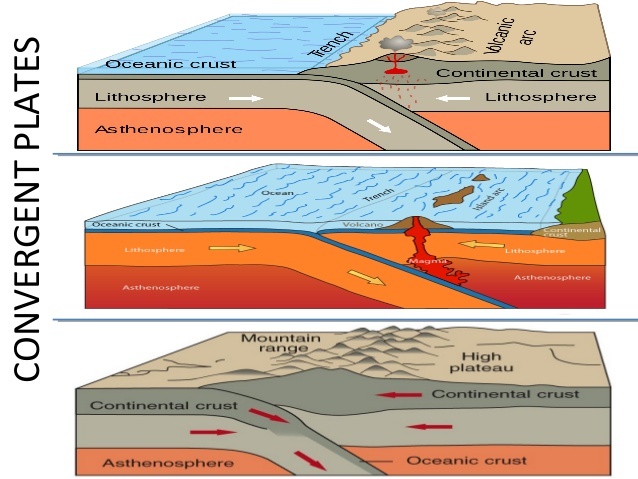
"Converge" means...
To drift apart
To move towards each other
To slip by each other
To stop


Scientists think that the continents once formed a giant landmass that broke apart, and then slowly drifted apart. What is the name given to this hypothesis?
sea-floor Spreading
plate tectonics
continental drift
Pangaea

What are the three types of Evidence that supports Alfred Wegener's Theory?
Fossils, Fish, and Land
Sedimentary, Magma, and Climate
Fossils, Land forms, and Climate
Climate, Land forms, and Metamorphic rock

What is the force that moves the continents?
Conduction
Convection
Radiation
Conveyor belts

What evidence did Wegener use to support his theory?
Continents and fossils fitting together/matching-up like puzzle pieces
glacier scars and other climate evidence from temperature
mountain ranges and rocks line up across continents
all of the above

Why did no one believe Wegener's thoery?
He could not explain HOW the continents moved
He didn't have evidence
His data was wrong
He didn't use the right technology to gather data

How long ago is Pangaea believed to have existed?
200-300 million years ago
1000-2000 years ago
10,000-20,000 years ago
20-30 billion years ago

What are the two types of crust?
continental and oceanic
ocean and basin
lower and upper
thick and thin

What type of plate is thicker?
continental
oceanic

According to the continental drift hypothesis, the presence of similar fossils in South America and Africa supports which scientific idea?
Animals easily and frequently travel from Africa to South America.
Species of animals probably traveled between continents on natural rafts (such as trees destroyed in tsunamis).
Land bridges once existed that connected the continents.
South America and Africa were once connected together.

Glossopteris grew in warm, swampy areas, proving Antarctica used to have a ________________climate.
warm and wet
hot and dry
cold and icy
temperate

Most geologists think that the movement of Earth's tectonic plates is caused by
the rotation of the Earth.
the Earth's magnetic field.
subduction.
convection currents.

The youngest rocks on the ocean floor are located ____.
near continents
at mid-ocean ridges
far from mid-ocean ridges
near Asia
Seafloor spreading occurs because ____.
new material is being added to the asthenosphere
earthquakes break apart the ocean floor
sediments accumulate at the area of spreading
molten material beneath Earth's crust rises to the surface

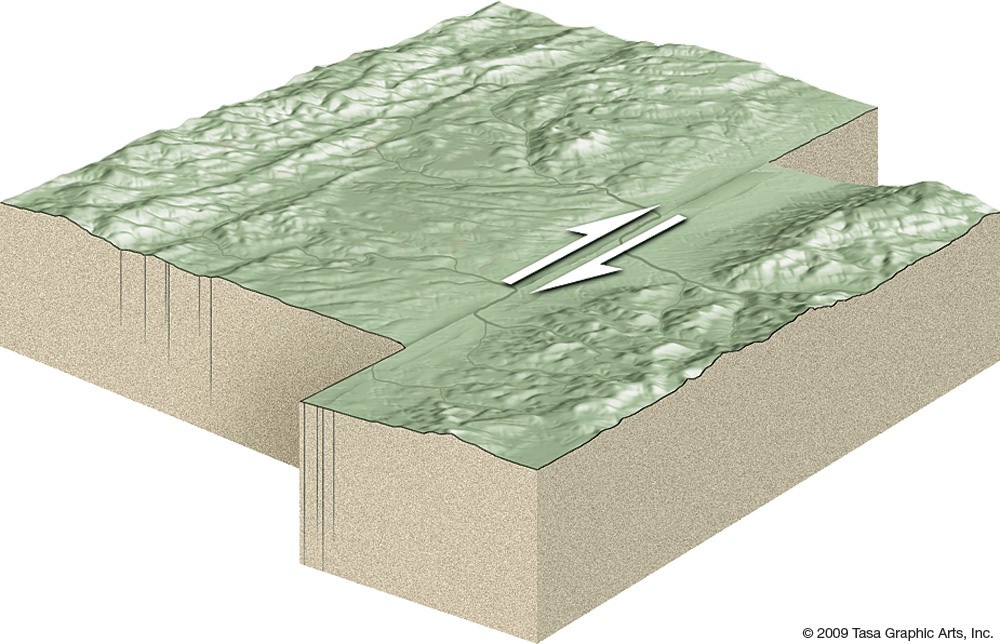
What particular event is shown on the picture?
mid-ocean ridge
subduction zone
transform boundary
divergent boundary
The process by which the ocean floor sinks beneath an deep-ocean trench and back into the mantle is known as
continental drift
subduction
conduction
convection
Process by which new ocean crust forms.
Seafloor spreading
Continental drift
Mid-ocean ridge
Rift
The ocean floor is made up of what kind of 'new' rock?
Granite
Basalt
Sulfur
Calcite
Definition of a volcano
an opening in the Earth's crust
crater
vent
mantle

