wayground logo

Free Printable Worksheets

NEW

Font size

S
M
L
XL
Worksheets

Yr 10 Advanced Science Remote Motion Test

Total questions: 70

Worksheet time: 2hrs 33mins

Name
Class
Date
1.
During which interval is the object not moving?
a)
B to C
b)
C to D
c)
D to E
d)
only at point A
2.
During which interval is the object traveling at a constant velocity?
a)
B to C
b)
D to E
c)
F to G
d)
it traveling at a constant velocity during all of the intervals shown.
3.
During which interval is the object speeding up?
a)
A to B
b)
B to C
c)
D to E
d)
E to F
4.
During which interval is the object slowing down?
a)
A to B
b)
D to E
c)
E to F
d)
G to H
5.
Acceleration occurs when an object changes its speed or ______.
a)
direction
b)
force
c)
inertia
d)
mass
6.
Which runner stopped for a rest?
a)
Albert
b)
Bob
c)
Charlie
7.
Which runner won the race?
a)
Albert
b)
Bob
c)
Charlie
8.
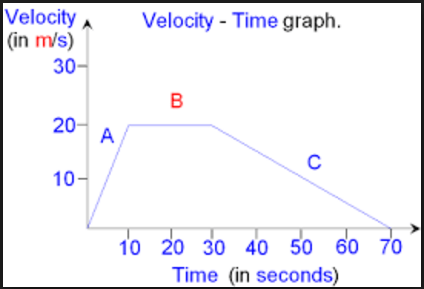
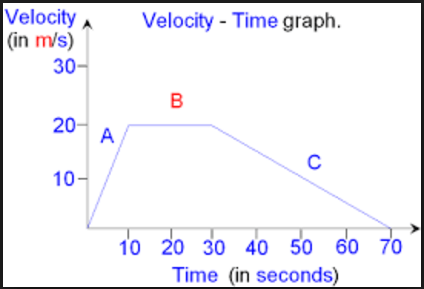
This is a velocity-time graph.  What is the object doing in segment A?
a)
Positive acceleration
b)
Negative acceleration
c)
Constant Velocity
d)
Not moving
9.
This is a velocity-time graph.  What is the object doing in segment C?
a)
Positive acceleration
b)
Negative acceleration
c)
Constant Velocity
d)
Not moving
10.
Calculate the acceleration for segment A.
a)
2 m/s2
b)
20 m/s2
c)
-2 m/s2
d)
0 m/s2
11.
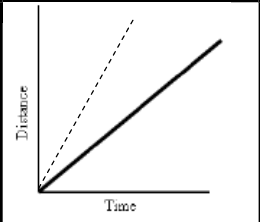
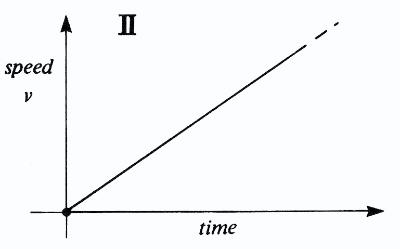
What does this graph represent?
a)
Constant speed
b)
Acceleration
c)
Not moving
12.
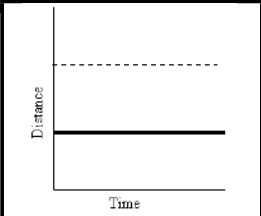
What does this graph represent?
a)
Constant Speed
b)
Acceleration
c)
Not moving
13.
What does this graph represent?
a)
Constant speed
b)
Acceleration
c)
Not moving
14.
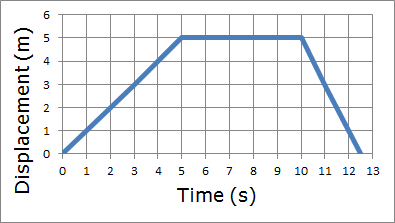
According to the graph how fast does the person travel in the first 5 seconds?
a)
2 m/s
b)
10 m/s
c)
12.5 m/s
d)
1 m/s
15.
The speed of the vehicle between points A-B is...
a)
12m/s
b)
8m/s
c)
10m/s
d)
16m/s
16.
Acceleration of an object happens when things ________
a)
slow down
b)
go faster
c)
change direction (turn)
d)
All of the above
17.
The SI unit for acceleration is
a)
mph
b)
m/s
c)
m/s2
18.
Acceleration: is the rate of change in ___________.
a)
speed
b)
distance
c)
velocity 
d)
displacement 
19.

Distance and direction of an object's change in position from a starting point

a)

displacement

b)

distance

c)

motion

d)

reference point

20.

David walks 3 km north, and then turns east and walks 4 km. What is the distance?

a)

7 km

b)

3 km

c)

4 km

d)

1 km

21.
Two skaters begin at rest. Skater 1 has a smaller mass than Skater 2. After they push off each other,...
a)
Skater 1 experiences a greater change in momentum
b)
Skater 2 experiences a greater change in momentum
c)
Skater 1 has a greater velocity than Skater 2
d)
Skater 1 experiences a greater force
22.
Which has more momentum: a car stopped at a red light or a bike moving at 15 mph?
a)
car
b)
bike
c)
they are equal
d)
cannot determine using the info provided
23.

According to Newton's Laws, for every action there is an ....

a)

equal and opposite reaction.

b)

equal and parallel reaction.

c)

unequal and opposite reaction.

d)

unequal and unrelated reaction.

24.
If net force acting on object is 0, then the force is considered to be..
a)
Balanced
b)
Unbalanced
c)
Equal in Direction
d)
Distance/Time
25.
What is Newton's First Law known as? The Law of
a)
Friction
b)
Mass
c)
Inertia
d)
Gravity
26.
Which type of force(s) will cause a change in an object's motion?
a)
gravity
b)
zero net force
c)
balanced forces
d)
unbalanced forces
27.
What is Newton's First Law
a)
F=ma
b)
Every action has an equal and opposite reaction
c)
An object at rest stays at rest, an object in motion stays in motion. 
d)
Friction 
28.
A person is pushed forward into their seat belt when a car stops.  Which law is this?
a)
1st
b)
 2nd
c)
2 and 3
d)
3rd 
29.
When a cannon fires a cannonball we observe Newton's third law. Which force is the reaction force?
a)
The cannon moving forward
b)
The cannonball moving forward
c)
The cannon moving backward
d)
The cannonball moving backward
30.
If a force of 50 Newton's was applied to an object with a mass of 500 grams, what will the object's acceleration be?
a)
10 m/s^2
b)
.1 m/s^2
c)
100 m/s^2
d)
1 m/s^2
31.

What is Newton's 3rd Law?

a)

For every action there is an equal and opposite reaction.

b)

Acceleration depends on two variables, the mass of the object and the amount of force.

32.

Looking at the image. Decide if this is balanced or unbalanced.

a)

Unbalanced

b)

Balanced

33.

Friction at rest is...

a)

sliding

b)

rolling

c)

fluid

d)

static

34.
Bill runs 400 meters to Andy's house, turns around, and runs 400 meters back home.  What is Bill's distance?
a)
0 meters
b)
400 meters
c)
800 meters
d)
1600 meters
35.
Vector quantities need both a magnitude and a _____.
a)
distance
b)
displacement
c)
direction
d)
velocity
36.
After completing one trip on a roller coaster, the roller coaster's ________ is zero.
a)
displacement
b)
reference point
c)
length
d)
distance
37.
A person walks 50 meters directly north, stops, and then travels 32 meters directly south.  What is their displacement?
a)
82 meters
b)
18 meters
c)
28 meters
38.

A vehicle travels 2345 m in 315 s toward the evening sun. What is its speed?

a)

7.44 m/s

b)

0.13 m/s

c)

738,675 m/s

d)

7.44m

39.

What distance will a car traveling 65 km/hr travel in 180 min?

a)

11,700 m

b)

195 m

c)

21.7 m

d)

2.77 m

40.

A car travels 240 km in 2 hours and a sprinter travels 100 m in 9.5 sec. Who is traveling faster?

a)

the car

b)

the sprinter

c)

they are traveling the same speed

d)

not enough information to answer this question

41.

A train travels 120 km in 2 hours and 30 minutes. What is its average speed?

a)

60 km/hr

b)

240 km/hr

c)

48 km/hr

d)

300 km/hr

42.
What two measurements are necessary for calculating speed?
a)
Mass and time
b)
Temperature and mass
c)
Mass and distance
d)
Distance and time
43.
What two measurements are necessary for calculating speed?
a)
Mass and time
b)
Temperature and mass
c)
Mass and distance
d)
Distance and time
44.
What is this graph showing?
a)
Constant Speed
b)
Acceleration (speeding up)
c)
Deceleration (slowing down)
d)
No motion
45.
What is the formula to calculate speed?
a)
S = t/d
b)
S = d/t
c)
S = d x t
d)
S = t x d
46.

An old lady rolls down a hill at 3 meters/second. The hill is 36 meters long. How many seconds does it take the old lady to reach the bottom of the hill?

a)

39 seconds

b)

12 seconds

c)

15 seconds

d)

33 seconds

47.
A place or object used for comparison to determine if another object is in motion is called a
a)
comparison point
b)
reference point
c)
point of view
d)
motion detector
48.

Choose the answer that best fits: Acceleration is the...

a)

change of speed and/or direction over time

b)

change of speed over time

c)

change of direction over time

d)

increase of speed

49.

What is the unit for acceleration?

a)

feet (ft)

b)

meters (m)

c)

meters per second (m/s)

d)

meters per second per second (m/s/s or m/s2)

50.

What is the unit for velocity?

a)

feet (ft)

b)

meters (m)

c)

meters per second (m/s)

d)

meters per second per second (m/s/s or m/s2)

51.
What is the speed of a car that travels a distance of 79 m in 8 seconds.
a)
5 m/s
b)
79 m/s
c)
9.87 m/s
d)
8 m/s
52.
This driver just experienced which one of newton's laws?
a)
First law
b)
Second law
c)
Third law
d)
Fourth law
53.
Which of the following represents the equation for acceleration?
a)
a = ƒt/v
b)
a = Δt/f
c)
A = Λd/t
d)
a = Δv/t
54.
A force that opposes motion between two surfaces that are in contact.
a)
Speed
b)
Velocity
c)
Friction
d)
Force
55.
A measure of how much matter an object has is--
a)
weight
b)
gravity
c)
mass
d)
volume
56.
The force that pulls objects towards Earth.
a)
Gravity
b)
Friction
c)
Inertia
d)
Force
57.
How much force is needed to accelerate a 3kg skateboard at 5m/s2. 
a)
8N
b)
1.6N
c)
0.6N
d)
15N
58.
How much force is needed to accelerate a 25kg bowling ball at 2m/s2
a)
50N
b)
5N
c)
12.5N
d)
100N
59.

If a car passes you in the left lane going 90 km/hr north while you are driving 80 km/hr north, how fast is the car moving relative to your car?

a)

170 km/hr

b)

90 km/hr

c)

80 km/hr

d)

10 km/hr

60.

A woman on a bicycle travels at 9 m/s relative to the ground as she passes a little boy on a tricycle going in the opposite direction. If the boy is traveling at 1 m/s relative to the ground, how fast does the boy appear to be moving relative to the woman?

a)

9 m/s

b)

8 m/s

c)

0 m/s

d)

10 m/s

61.

A passenger at the rear of a train traveling at 15 m/s relative to the ground throws a baseball with a speed of 15 m/s in the direction opposite the motion of the train. What is the velocity of the baseball relative to the ground as it leaves the thrower’s hand? In other words: how fast does a person on the ground see the ball move?

a)

30 m/s

b)

15 m/s

c)

0 m/s

d)

20 m/s

62.

A boat heading north crosses a wide river with a velocity of 10.00 km/h relative to the water. The river has a uniform velocity of 5.00 km/h due east. Determine the boat’s speed with respect to an observer on shore. (Hint: draw vector arrows - you should get a right triangle)

a)

11.18 km/hr

b)

15 km/hr

c)

5 km/hr

d)

30 km/hr

63.

Force = ma is the formula from

a)

Newton's 1st Law

b)

Newton's 2nd Law

c)

Newton's 3rd Law

64.
Which runner had a head start?
a)
A
b)
B
c)
C
65.
How long did it take this object to travel 10 m?
a)
0 s
b)
10 s
c)
15 s
d)
20 s
66.
At 60 seconds, how far had this object traveled? 
a)
0 m
b)
10 m
c)
20 m
d)
40 m
67.

What is represented by this graph?

a)

constant speed

b)

not moving

c)

speed increasing

d)

speed increasing at a constant rate

68.

what is the motion described in the graph

a)

all of above

b)

constant speed

c)

acceleration

d)

constant position

69.

What does this graph represent?

a)

Constant speed

b)

Acceleration

c)

Stationary object

70.

What is happening at E?

a)

Stationary

b)

Accelerating

c)

Constant speed; moving away from the starting position

d)

Constant speed; returning to start position