
 Worksheets
Earth Science Quiz Bank
Total questions: 152
Worksheet time: 3hrs 45mins
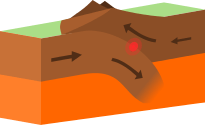
The “Ring of Fire” is an area along the edge of the Pacific Ocean with many volcanoes. Most of the volcanoes are formed as a result of one tectonic plate. Which of these geological areas is where rock is recycled by one tectonic plate sliding underneath another tectonic plate?
Rift Valley
Strike-slip fault
Subduction Zone
Divergent Boundary
If the locations of earthquakes over the past 10 years were plotted on a world map, which of the following would be observed?
Earthquakes occur with the same frequency everywhere on Earth.
Earthquakes generally occur along the edges of tectonic plates.
Earthquakes most frequently occur near the middle of continents.
Earthquakes do not seem to occur in any consistent pattern.
The Himalayan Mountains are a result of ...
A divergent plate boundary
A transform fault
A subduction zone
A convergent plate boundary
If an oceanic plate and a continental plate collide, the dense ocean plate sinks, or is subducted, beneath the continental plate. Which of these is formed when the subducted plate melts?
Folded mountains and glaciers
Magma and volcanic mountains
Earthquakes and volcanoes
New seafloor and sediments
The surface of the Earth is made of several tectonic plates that move at a very slow rate. What causes the plates to move?
explosions within the
Earth's mantle
convection currents within the Earth's mantle
expansion of the
Earth's core pushing on the tectonic plates
contraction of the Earth's core pulling on the tectonic plates
The Earth is made up of several different layers, and each layer has different properties. Which layer of the Earth is the least dense?
the mantle
the crust
the molten core
the solid core
The Earth is made up of several large, slow-moving tectonic plates that sometimes cause earthquakes. Which layer of the Earth contains these large plates?
lithosphere
mantle
molten core
solid core
The oldest rocks on Earth are found in Canada near the center of the North American Plate. Where would be the most likely place to find very young rocks?
in Northern India,
where the plates are colliding
in the Hawaiian Islands, where a plate passes over a hot spot
in Southern
California, where two plates are sliding past each other
in the middle of the South American Plate, where there is no plate boundary
The tectonic plates that make up the surface of the Earth slowly move and interact with each other. Which of the following is NOT a result of tectonic plates moving on the surface of the Earth?
earthquakes
volcanoes
mountain ranges
erosion
Where are the oceans located?
on top of the oceanic plates
on top of continental plates
in holes in the crust
none of these


Which rock is formed form the cooling of volcanic ash on Earth's surface?
intrusive igneous
foliated metamorphic
extrusive igneous
organic sedimentary
Rocks that form from colling magma inside Earth?
Igneous intrusive
Igneous extrusive
Metamorphic foliated
Metamorphic nonfoliated
Any rock that forms from another rock as a result of changes in heat or pressure (or both) is a:
chemical rock
igneous rock
sedimentary rock
metamorphic rock
This is a natural solid that is made of one or more minerals.
Mineral
Fossil
Rock
Sediment
This is the continuous process of rock changing from one type to another.
Igneous rocks
Sedimentary rocks
Metamorphic rocks
Rock Cycle
What type of rock might contain evidence of past life?
Sedimentary Rock
Igneous Rock
Metamorphic Rock

Which type of rock was MOST LIKELY formed by the Tennessee River over the last 100 million years?
Igneous
Sedimentary
Mountainous
Metamorphic
Which kind of rock is produced by deposition compaction and cementation?
Igneous
Sedimentary
Mountainous
Metamorphic
__________________rock forms when rock particles get pressed and cemented together.
Igneous
Sedimentary
Mountainous
Metamorphic
Erosion and weathering can both cause changes to the surface of Earth. Which of the following happens only because of erosion and NOT because of weathering?
Rocks form deep underground.
Rocks become smooth and round.
Rocks are broken apart into small pieces.
Rocks are moved from one place to another.

Earth's plates meet at ____________.
plate tectonics
plate boundaries
continental drift
oceans
Breaks in the crust called __________ form where plates meet.
mountains
rift valleys
faults
trenches
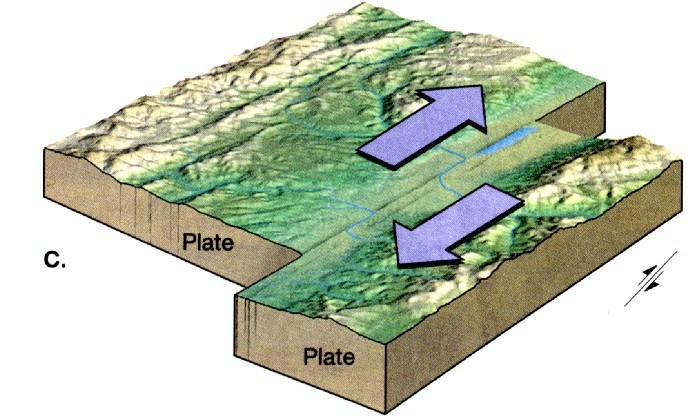
Plates slide past each other at _________________ boundaries.
divergent
convergent
transform
universal
A __________ forms where plates diverge on land.
rift valley
mid-ocean ridge
mountain
trench
________________ currents drive Earth's plate movement.
ocean
atmosphere
wind
convection
Plates slide apart along _____________ boundaries.
convergent
divergent
transform
universal
Which theory describes the motion of the force driving Earth's Plates?
continental drift
plate tectonics
first law of motion
third law of motion
What is the motion of Earth's plates like?
fast and in stages
slow and in stages
fast and constant
slow and constant
The San Andreas fault is an example of which type of boundary?
transform
divergent
convergent
universal
Which feature forms at convergent boundaries?
trench
rift valley
mountain range
mid-ocean ridge



Which of these is NOT an evidence of Pangaea?
similar landforms across continents
similar fossils on widespread continents
similar current climate
evidence of a similar climate millions of years ago
At this type of boundary, plates collide with each other
convergent
divergent
transform
This causes plate tectonics
conduction in the mantle
radiation from the Sun
convection in the outer core
convection in the mantle


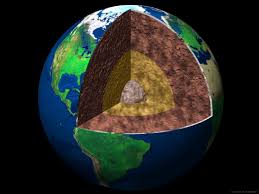
What are convection currents?
the cycle of heated rock or metal rising, and cooling rock or metal falling.
the cycle of cooling rock or metal rising, and heated rock or metal falling.
an electric current found in the mantle.
and electric current found in the outer core.
If we can't travel to the center of the Earth, how do we know so much about it?
Seismic waves, made by earthquakes and man-made explosions
special camera scopes sent through all the layers of the earth
very long thermometers that can reach to the inner core
super powerful x-rays
Which layer can be described as either Oceanic or Continental?
crust
mantle
outer core
inner core
Which layer is responsible for creating Earth's magnetic field?
crust
mantle
outer core
inner core
The movement of continents over millions of years was first called ____.
Continental Drift
Island Formation
Continent Building
Volcanic Eruptions
Fossils of the fern-like, tropical plant, Glossopteris have been found on the continents of Africa, South America, and Antarctica. How have scientists explained this observation?
The wind blew the plant's seed across the ocean from continent to continent.
The fern developed on each continent.
The continents were once joined together and later moved apart.
The fern had adaptations to survive in different climates.
Mid-ocean ridges can be found ___.
winding through all oceans
only in the Arctic and Southern Oceans
only near the coastlines along continents
nowhere - they all disappeared many years ago




Which correctly shows the 4 most abundant gasses in order from most abundant to least abundant?
Nitrogen, Oxygen Argon, Carbon Dioxide, Ozone
Oxygen, Nitrogen, Ozone, Carbon Dioxide, Argon
Ozone, Nitrogen, Oxygen, Carbon Dioxide, Argon
Oxygen, Ozone, Nitrogen, Argon, Carbon Dioxide


Minus the air in this picture, this image best describes which connection?
Atmosphere-Biosphere
Hydrosphere-Atmosphere
Hydrosphere-Geosphere
Geosphere-Biosphere
The biosphere includes which of the following?
Trees/Flowers
Bacteria/Protists
Water/Clouds
Rocks/Minerals
Insects/Arachnids
A volcano erupts, sending ash and gases into the air and sending lava into a surrounding forest. What spheres are affected by this natural disaster?
Geosphere
Atmosphere
Biosphere
Hydrosphere
Snow is an example of what sphere?
Atmosphere
Hydrosphere
Biosphere
Geosphere
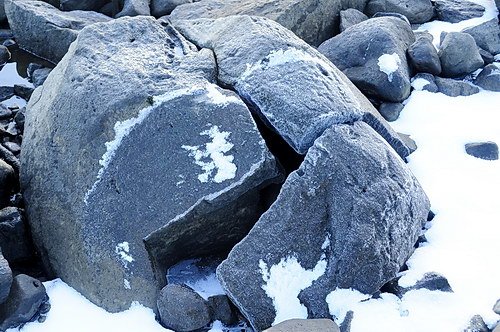
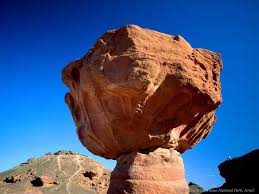

A delta is an example of
Erosion
Weathering
Sediment
Deposition


Sand dunes are example of
dryness
wind
weathering
deposition


The process by which rocks are broken down
Weathering
Deposition
Erosion
Sedimentation

The process in which wind, water, ice or gravity transport rock fragments from one location to another
Weathering
Sedimentation
Erosion
Deposition

The process in which sediment settles out (drops to the bottom) of the water or wind that is carrying it
Weathering
Erosion
Sedimentation
Deposition

Fragments of weathered rocks are known as ____.
sediments
deposits
limestones
sandstones

The MECHANICAL breaking down of rocks into smaller pieces is...
Physical weathering
Chemical weathering

The breakdown and decomposition of rocks as a result of chemical reactions and processes
Physical weathering
Chemical weathering

Water gradually wearing down and smoothing rocks over a long period of time is an example of...
physical weathering
chemical weathering
deposition
erosion

When iron in rocks reacts with oxygen, it forms iron oxide (rust), which weakens rocks and causes them to break apart. This is an example of...
physical weathering
chemical weathering
erosion
deposition

Rain washing away soil from a hillside is an example of...
physical weathering
erosion
deposition
chemical weathering

Waves dropping sand onto land until a beach is formed is an example of...
physical weathering
erosion
deposition
chemical weathering

Acid rain slowly wearing away rock over time is an example of...
chemical weathering
physical weathering
erosion
deposition

Water getting into cracks, freezing, and breaking rocks or pavement apart is an example of...
chemical weathering
physical weathering
deposition
erosion

An avalanche is an example of...
physical weathering
chemical weathering
erosion
deposition
The process by which rock and soil are moved from one place to another is called-
Chemical weatherin
Erosion
Mechanical weathering
Deosition
The breaking down of rocks and other materials on the Earth's surface.
Weathering
Erosion
Deposition
Exfoliation
This type of weathering in which rock is physically broken into smaller pieces.
Chemical weathering
Erosion
Mechanical weathering
Deposition
What do we call the process in which rock is broken down by changes in its chemical makeup.
Chemical weathering
Mechanical weathering
Erosion
Deposition
What are naturally occurring features on Earth’s surface?
erosion
geographic
Landforms
What is the of Erosion
Movements of sediment or soil from one location to another by means of water, ice, or wind
Landforms
Deposition
What is Deposition
The opposite of Erosion; deposits in a different location
Rivers
Bays
What is built through Erosion and deposition?
buttes and Plateaus
Rivers and deltas
Coastlines and bays
Wha is an example of Deposition
Saltwater marshes, barrier islands and beaches
Coastlines, bays, and cliffs
What is a delta?
a triangle-shaped deposit of sand and sediment that occurs where a river flows into the ocean.
A narrow strip of land

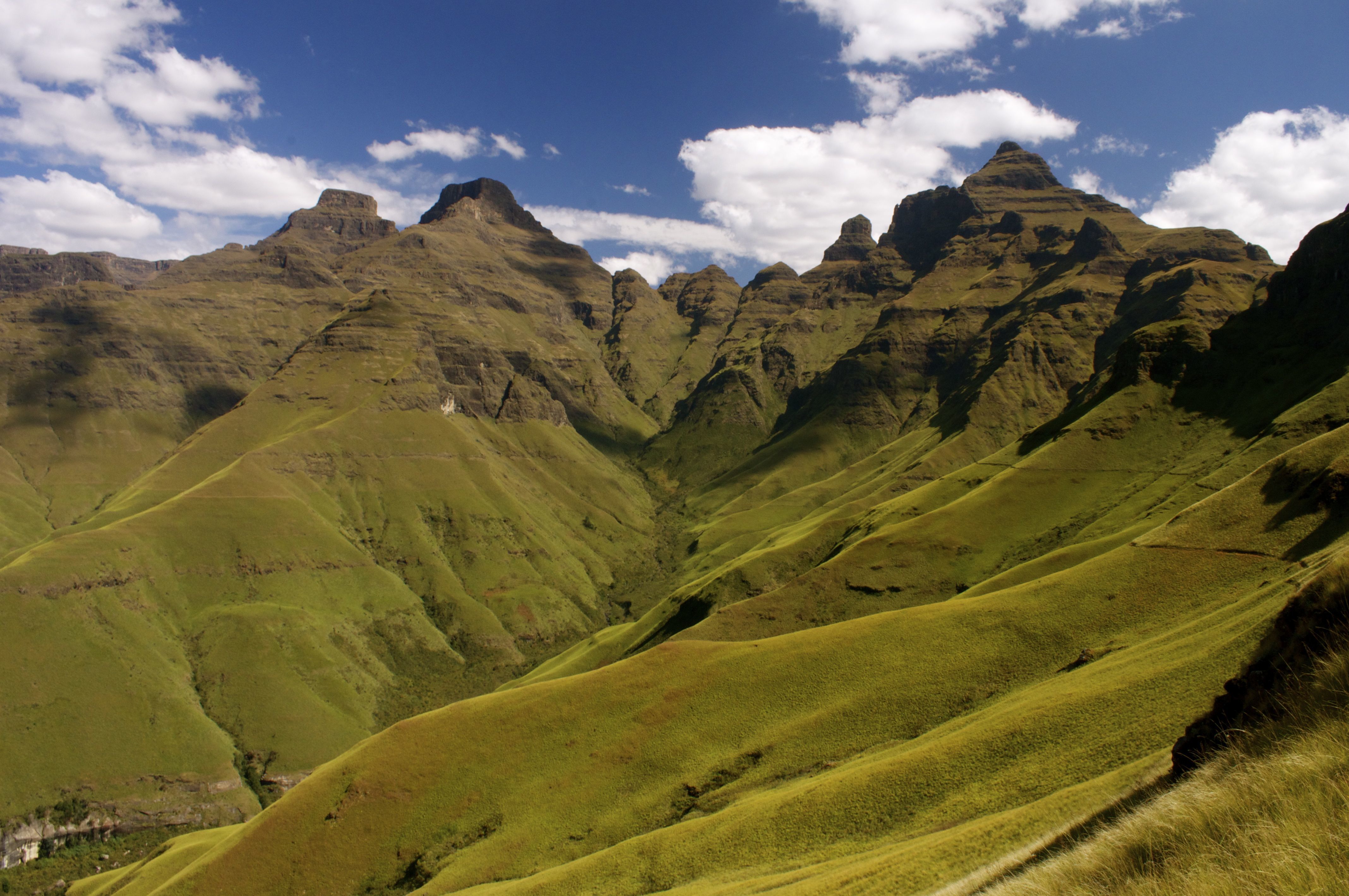
How is the mountain in the picture formed?
accumulation of magma, ash and cinder
formation of cracks and fissures
when land between two fault lines subsides
wrapping of Earth's crust
Strong waves can erode coastlines like the Gulf Coast of Florida. Which is most likely the result of erosion by strong waves?
deltas
sand dunes
cliffs and bluffs
flat, sandy beaches
Lake Eola is a sinkhole lake. What reasoning best describes how it formed?
An underground cave collapsed, and the sediment plug opened.
An underground cave collapsed and became plugged by sediment.
A cut-off meander of a stream formed a crescent-shaped lake.
A chunk of ice deposited by a glacier melted, and the glacial drift around the former ice block held the water in place.
Dunes form in any place where there is a lot of sand and prevailing winds, such as in a desert. However, Florida does not have any deserts. Based on the evidence, which claim best describes most of Florida’s dunes?
dunes formed by sediment from mountains
dunes formed by sediment carried by rivers
coastal dunes behind rocky cliffs
coastal dunes behind sandy beaches
Which of the following is a delta?


Jane was looking at a cliff made up of several layers of different kinds of rock. Near the top of the cliff, she found a fossilized bone. Near the middle, she found the fossil of a fern. At the bottom, she found a fossilized shell.
What process was critical in the formation and preservation of the fossils?
plate tectonics
deposition
chemical weathering
abrasion
Many processes help to shape Earth’s surface. Starting with a rock, in what order would you expect the following Earth processes to occur?
deposition, eruption, weathering
erosion, weathering, deposition
eruption, erosion, weathering
weathering, erosion, deposition

Water is found in many places on Earth. Consider the rivers, streams, and ocean in the illustration.
What landform will be created when sediments carried by the river are deposited near the river’s mouth?
an alluvial fan
delta
a sea cave
a sea cliff
Many thousands of years ago, glaciers covered large areas of Earth’s surface. Glaciers are large blocks of ice that flow slowly over the land. Portions of the ice melted and refroze many times over the years. Which explanation best describes how glaciers contributed to the formation of coastal plains?
Water from the melting ice elevated the shoreline, forming plateaus.
Water from the melting ice flooded the plains, causing plants to die
Water from the melting ice smoothed sediments along the shore.
Water from the melting ice deposited sand on the ocean floor.

Many mountains are formed when...
large plates collide and land is forced upward.
large bowls fall and mountains fall out and land on the Earth.
huge hands in the sky comes down and moves the Earth around like a kid making sandcastles.
One mountain started cloning itself in different locations across the globe.
Wind and water are constantly changing what our planet's surface looks like by
Weathering
Erosion
Erasure
Withering

A low area of land between two hills or mountains.
Valley
Baby Mountains
Lowlands
Half-Pipe

Plateaus are like mountains with ____.
flat tops
peaks
lava
Play-dough
An area of land that loses more water to the air than it gets through precipitation.
dessert
desert
rainforest
dezert

