
 Worksheets
Second Semester Review TEKS Science
Total questions: 151
Worksheet time: 3hrs 50mins
The cell membrane is a flexible covering that...
creates structure and support for plant cells
protects the cell from the environment outside of the cell
directs the cells activities
How is a cell membrane like a mesh screen?
it is metal and has holes in it
it allows big things to come through but keeps small things out
it allows small things to come through but keeps big things out
This is the fluid inside a cell that contains salts and other molecules.
cell membrane
chloroplasts
mitochondria
cytoplasm
Which type of cell has a cell wall?
plant cell
animal cell
both plant and animal cells
A cell wall helps the cell to keep its _____and gives it _____.
shape, support
fluid, nutrients
structure, nutrients
Which part of the cell directs cell activities?
cytoplasm
mitochondria
cell membrane
nucleus
Which organelle makes proteins?
chloroplasts
golgi bodies
ribosomes
endoplasmic reticulum
Which organelle turns food energy into ATP energy?
mitochondria
chloroplast
ribosomes
nucleus
Which organelle converts sunlight into glucose?
mitochondria
chloroplast
nucleus
golgi body
Where are proteins packaged in a cell?
ribosomes
lysosomes
nucleus
golgi bodies
Which organelle breaks down food and waste in animal cells?
golgi body
ribosomes
lysosomes
mitochondrias
Which two organelles are found ONLY in plant cells?
chloroplast and mitochondria
chloroplast and cell wall
cell wall and mitochondria
cell wall and lysosomes
Which organelle is found ONLY in an animal cell?
chloroplast
cell wall
cytoplasm
flagella

In the animal cell shown, structure A is the site where glucose is turned into ATP energy. What is this organelle called?
chloroplast
mitochondria
nucleus
Golgi Body

In the animal cell shown, structure C is the ________________, the organelle that directs the cells activities.
nucleus
endoplasmic reticulum
cell membrane
ribosomes

In the animal cell shown, structure E is the __________, which controls what enters and leaves the cell.
nucleus
cell wall
endoplasmic reticulum
cell membrane
Which organelle stores water and waste?
golgi body
vacuole
lysosome
cytoplasm

In the plant cell diagram, the part labeled "5" offers structure and support. What is it called?
cell membrane
cell wall
cytoplasm
mitochondria

In plant cells, there are green structures (labeled 7) that capture sunlight energy and convert it to glucose. What are they?
mitochondria
cell membranes
ribosomes
chloroplasts

Which cellular structure is represented by the number 1 on this diagram?
cytoplasm
ribosomes
cell membranes
cell wall
Gets materials from the endoplasmic reticulum and packages them
Nucleus
Golgi apparatus
Ribosomes
Cytoplasm
Gel-like substance between organelles
Chloroplast
Cell wall
Cytoplasm
Cell membrane
Provides energy for the cell through cellular respiration
Chloroplast
Mitochondria
Ribosomes
Endoplasmic reticulum
Stores water and food for the cell. Very large in a plant.
Cytoplasm
Cell wall
Vacuole
Chloroplast
Produces proteins
Endoplasmic reticulum
Ribosomes
Golgi apparatus
Mitochondria
Rigid layer around plant cells that protects cell.
Cell membrane
Cell wall
Chloroplast
Cytoplasm
Where photosynthesis happens in a plant cell
Cell wall
Chloroplast
Mitochondria
Cytoplasm
Breaks down materials into smaller pieces
Lysosomes
Nucleus
Endoplasmic reticulum
Vacuole
Network of membranes that materials travel through
Endoplasmic reticulum
Ribosomes
Golgi apparatus
Chloroplast
Controls what goes in and out of a cell
Cell wall
Cell membrane
Cytoplasm
Centrioles
Directs all cell activities
Mitochondria
Nucleus
Cytoplasm
Chloroplast

What is the function of chloroplasts?
stores proteins needed for the cell
uses energy from the sun to make food
uses proteins to make food for the cell

What is the function of the mitochondria?
uses energy from the sun to make food
makes energy available to the cell
makes proteins
removes waste out of the cell
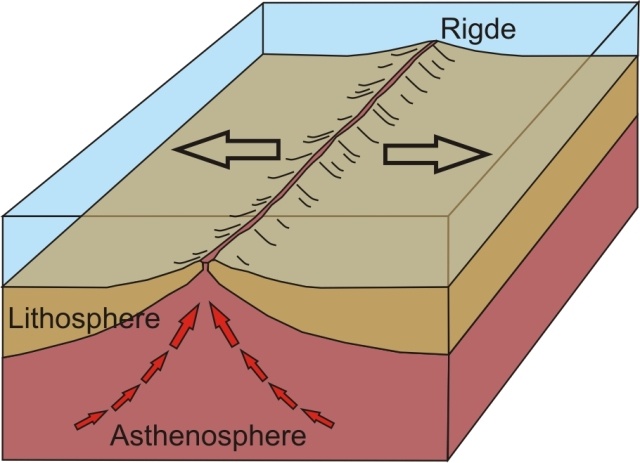
Which crustal feature forms at convergent boundaries because of subduction?
Folded Mountains
Faults
Rift Valley
Deep Sea Trench



Who proposed the Continental Drift Theory?
Harry Hess
Alfred Wegener
Alfred Hess
None of the above
What is the name of the single large continent, from which the other continents were formed?
Avatar
Pandora
Pangaea
Amazon
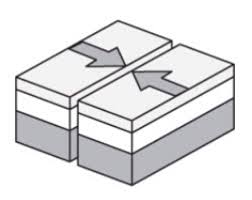
What type of crustal features form at a convergent boundary?
salt flats
folded mountains
earthquakes
lakes
Ocean plate collides with ocean plate creates
mid- ocean ridge
sea floor spreading
earthquakes
volcanic ark of islands
Which of these describe interactions between tectonic plates? (Choose 3)
plates collide
plates explode
plates spread apart
plates slide past each other
What are three ways plates interact with each other?
Plates do not interact with each other.
Plates can only move away from each other.
Plates can move away from each other, move towards each other, and slide pass one another.
Plates can shake in their places, move up and down, and slide pass each other.

What is the "magic" that is happening in the mantle that helps move the lithospheric plates?
Convection
Radiation
Condensation
Conduction

The diagram shows a landform on Earth. How did the movement of Earth’s plates form the landform?
Two oceanic plates slid past each other.
Two continental plates collided.
One continental plate slid past an oceanic plate.
One continental plate subducted beneath an oceanic plate.
A large, giant supercontinent land mass is called
continental drift
plate tectonics
pangaea
oceanic crust
After a volcano destroys the land, ________________ succession takes place.
Secondary
Primary
Tertiary
Important
After a volcano destroys the land, ________________ succession takes place.
Secondary
Primary
Tertiary
Important


T or F: Succession increases biodiversity.
true
false

Primary or secondary ecological succession?


After a volcanic eruption, volcanic rock is present (but no soil). Which of the following states the most likely order of succession that would be seen?
Lichens → Shrubs → Grasses → Trees
Lichens → tree → shrubs→Grasses
Grasses → Lichens → Shrubs → Trees
Lichens → Grasses → Shrubs → Trees
What is an example of an area that is likely to undergo primary succession?
Glaciers melt and leave exposed rock
Plants die from drought and decompose
Land is bulldozed and soil remains
The first species to populate an area during succession.
Keystone species
Pioneer species
Foundation species
Invasive species
newly exposed or newly formed rock is colonized by living things for the first time. Certain hardy plants and lichens with few soil requirements, called pioneer species, colonize the area first.
Climax community
Primary succession
Ecological succession
Secondary succession
A series of progressive changes in the composition of an ecological community over time
Climax Community
Primary Succession
Ecological Succession
Species Richness
What are the two types of ecological succession?
Primary and Secondary
Environmental and Natural
Habitat and Community
Population and Community
Which of the following types of organisms would be present during the pioneer community stage of ecological succession?
Lichens and mosses
Grasses and shrubs
Small trees and wildflowers
Tall trees and thick brush
Which
As ecological succession progresses, a pioneer community gradually changes into a climax community. What typically happens during this process?
The number of species increases
The number of species decreases
The organisms in an area decrease in size
The organisms in an area can no longer find food

During a forest fire most vegetation (plants) burn. Which ecological succession will take place after a forest fire?
Primary
Secondary
Primary succession occurs in an area that has:
soil
no soil
some soil
none of these
The first plants to grow on bare rock are:
Pioneer species
large trees
succession community
After an area was cleared for farmland 100 years ago, it has completely regrown large trees. This is an example of:
Evolution
Ecology
Primary Succession
Secondary Succession
Primary succession takes ____________ time than secondary succession.
More
Less
Same
After a volcano destroys the land, ________________ succession takes place.
Secondary
Primary
Tertiary
Important
Pure ________has 2 capital letters. Pure __________ has 2 lowercase letters.
recessive; dominant
dominant; recessive
alleles; genes
chromosomes; genes
Select all that are TRUE
Traits affect the way we look and how our bodies function
Traits are only inherited from your mother
Traits are either dominant or recessive
Examples of traits are hair color, freckles, eye color
Match the terms
Gene
A segment of DNA that codes for a protein
Allele
Different versions of the same gene
Chromosome
A structure within cells that contains DNA
Genotype
The genes that code for certain traits
Phenotype
The observable characteristics of an individual
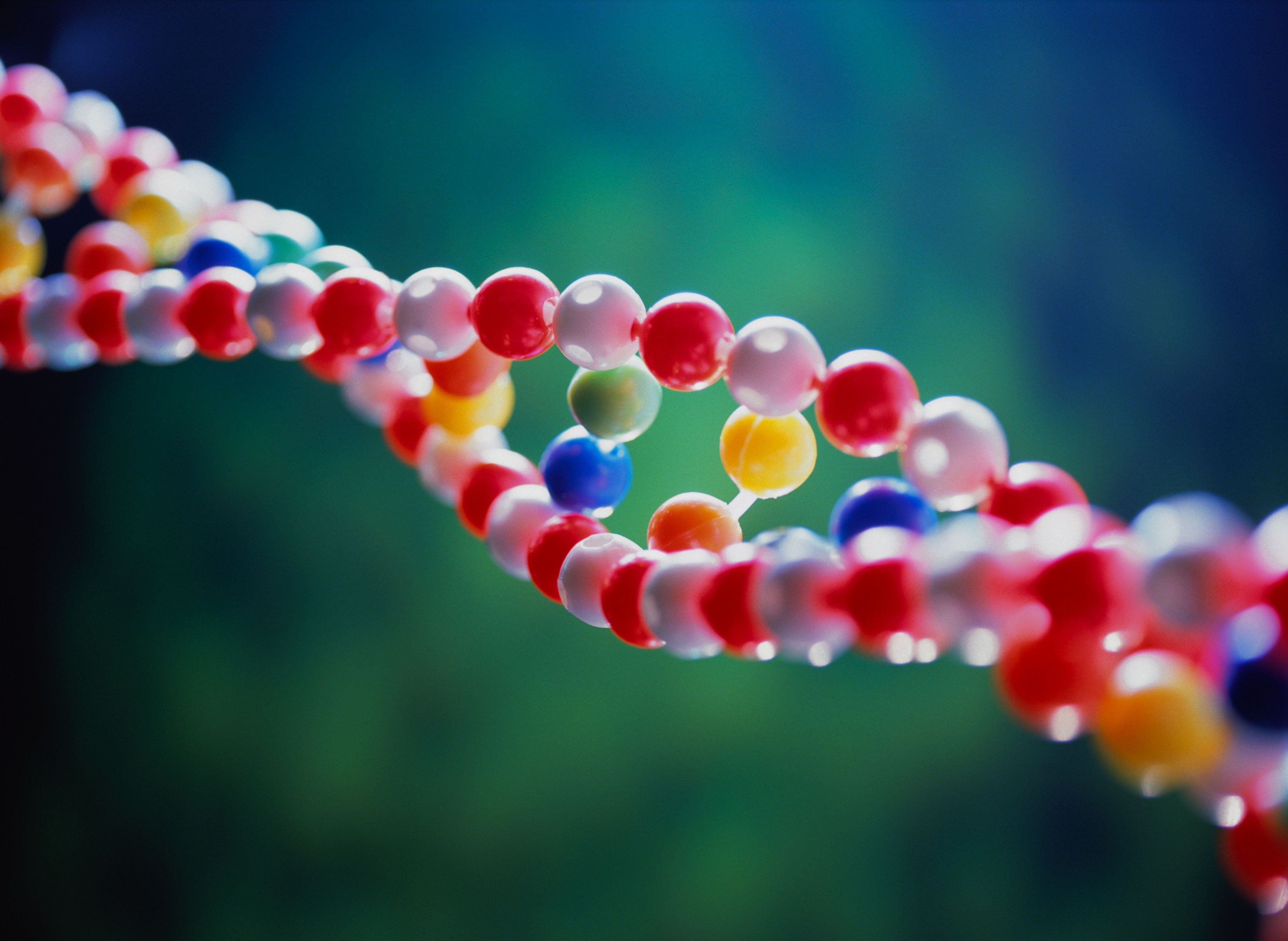
Why is DNA important?
it is very small and very complicated
it's in everything
it serves as the blueprint for traits of all living things
because we eat it every day for energy
Which part of the cell can DNA be found?
nuclear membrane
endoplasmic reticulum
nucleus
ribosomes
Which of the following is a structural adaptation for the underlined animal?
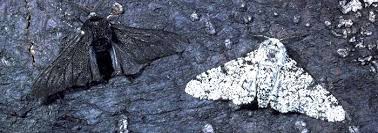
What are the two types of adaptation?
Camouflage
Physical and camouflage
Behavior and camouflage
Physical and behavior adaptation
What is an adaptation?
A behavior that helps an animal survive.
The food that animal eats.
How energy moves in a food web.
How animals evolve throughout time.
A giraffe's long neck - used to reach leaves high in trees - is an example of a
behavior adaptation
physical adaptation
learned behavior
behavior
How does adaptations help animals?
to hide from predators
to hunt for food
to survive in their habitats
All of these are correct

An example of a structual adaptation is...
a turtle hiding inside its shell
The spikes on a porcupine fish
a rabbit burrowing underground
a viper biting when threatened


Plants grow towards sunlight to help them acquire as much sunlight as possible.
behavioral
structural

Bees dance to tell each other where to find food.
Structural/Physical Adaptation
Behavioral Adaptation

A kangaroo has a pouch to protect its young.
Structural/Physical Adaptation
Behavioral Adaptation

A snake's fangs
structural
physiological
behavioral

Gills on a fish
structural
physiological
behavioral

When threatened, some animals make warning sounds to help other animals escape a predator.
Behavioral Adaptation
Structural Adaptation
What adaptation makes the most sense for living in a cold snowy area?
gills
colorful wings
white fur
striped skin
Adapatation are caused by
natural selection
harsh environmets
unique organisms
evolution
All of the carbon in existence is continually recycled in the carbon cycle.
How is the carbon cycle similar to the water cycle?
Both involve liquid substances falling to the Earth from the atmosphere?
Neither process works at low temperature.
Both involve the transfer of substances between animals, plants, and the Earth.
Both involve the transfer of substances between the earth and outer space.
Respiration is the process by which animals take in _____ and release _____ to make energy.
photosynthesis, air
carbon, oxygen
oxygen
oxygen, carbon dioxide
What does NOT produce carbon dioxide?
Photosynthesis
Burning Fossil Fuels
Animal respiration
Plants decaying
When animals eat plants, the carbon that the plant contains is absorbed by the animals.
True
False
What are fossil fuels made from?
Plants and animals that are buried underground for millions of years.
They absorb it from the atmosphere.
Water
Wind
When humans EXHALE, we release __________________.
Oxygen
Carbon Dioxide
Nitrogen
Water
What is CO2?
Carbon Monoxide
Carbon Trioxide
Carbon Dioxide
Oxygen
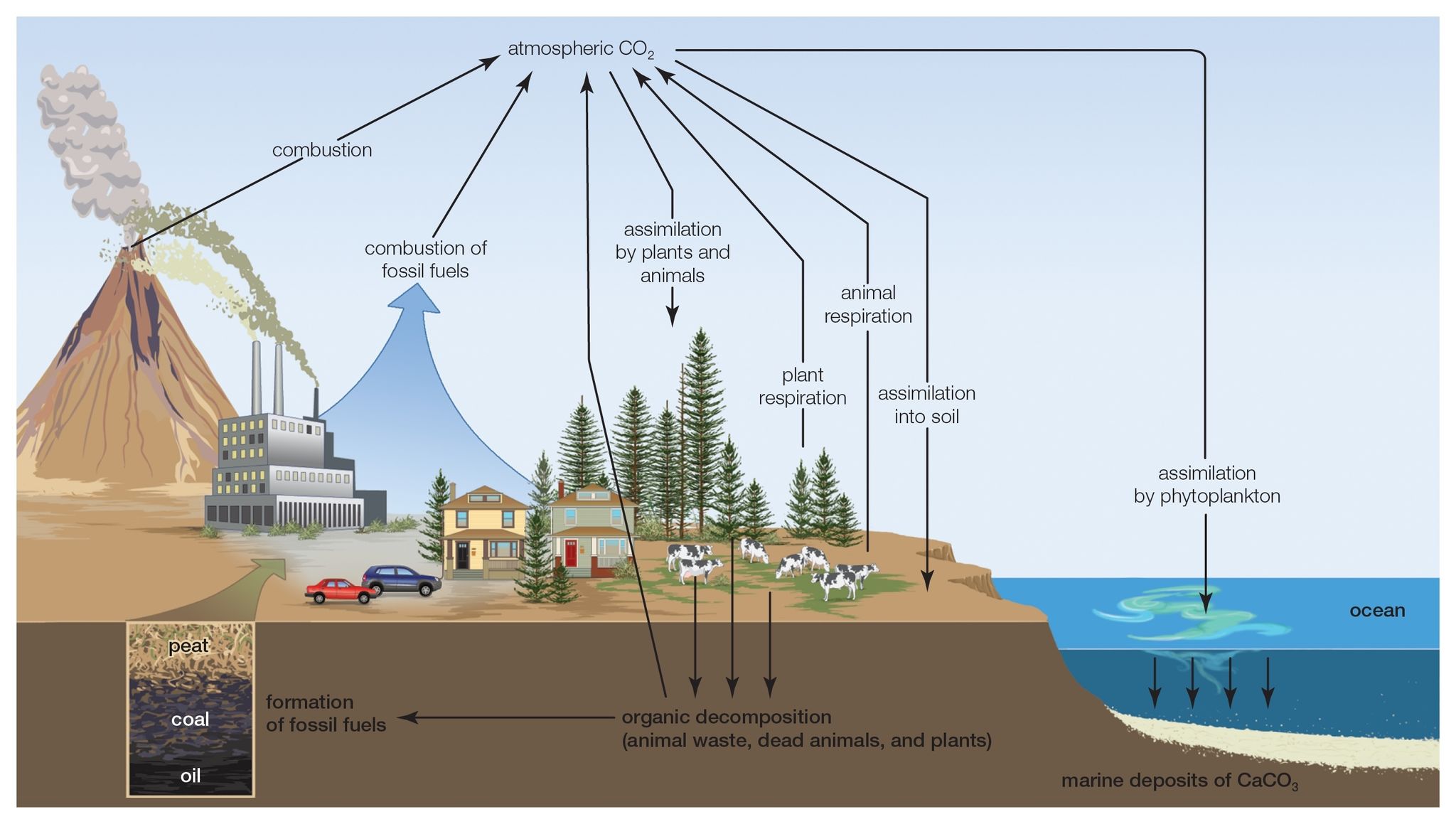
Which of the following add carbon dioxide to the atmosphere?
volcanoes
combustion of fossil fuels
animal and plant respiration
all of these
Organisms that do not decompose can be buried and become what?
water
nutrients
air
fossil fuels
The average temperature of the surface of Earth has increased approximately 1°C in the past century. Which reason best explains this increase in temperature?
lower levels of ozone in the atmosphere
lower levels of nitrogen in the atmosphere
higher levels of carbon dioxide and other greenhouse gases in the atmosphere
higher levels of oxygen in the atmosphere
With the help of the Sun, through the process of photosynthesis, carbon dioxide is pulled from the air to make plant________
leaves
food
roots
nutrients
Which process contributes carbon dioxide to the atmosphere?
respiration
photosynthesis
tree farms
Which process removes carbon dioxide from the atmosphere?
deforestation
tree farms
burning fossil fuels
cellular respiration
When humans burn fossil fuels, most of the carbon quickly enters the as carbon dioxide.
Water
Atmosphere
Sun
Air
Respiration is the process by which animals take in _____ and release _____ to make energy.
photosynthesis, air
carbon, oxygen
oxygen
oxygen, carbon dioxide
What does NOT produce carbon dioxide?
Photosynthesis
Burning Fossil Fuels
Animal respiration
Plants decaying
Carbon can be found in...
The atmosphere
Soil
Fossil fuels
All of the above
Combustion is another word for __________.
Transportation
Respiration
Fossil Fuels
Burning
What process occurs when coal (fossil fuel) is used for energy?
Decomposition
Combustion
Pressurization
Respiration
C6H12O6 is also known as glucose (sugar). Where is it found?
Plants
Animals
Both plants and animals
Neither plants or animals
When animals eat plants, the carbon that the plant contains is absorbed by the animals.
True
False
What are fossil fuels made from?
Plants and animals that are buried underground for millions of years.
They absorb it from the atmosphere.
Water
Wind
When humans EXHALE, we release __________________.
Oxygen
Carbon Dioxide
Nitrogen
Water
What is CO2?
Carbon Monoxide
Carbon Trioxide
Carbon Dioxide
Oxygen
Which of the following are fossil fuels?
Coal, water, oil
Oxygen, coal, oil
Coal, Oil, Natural Gas
None of the above
Which of the following is correct?
There is as much carbon on earth as when it was formed
Carbon is being created whenever it is recycled
Carbon is lost every time it is recycled
Carbon changes to different forms and is never recovered
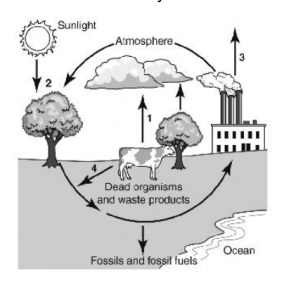
What is happening at 1?
respiration: releasing CO2
decomposing CO2 in the soil
photosynthesis: absorbing CO2
turning CO2 from the atmosphere into organic molecules
The diagram below shows the carbon cycle.
Press the hotspot for where you would find carbon dioxide.
The diagram below shows the carbon cycle.
Press the hotspot for where you would find fossil fuels.

PRE-INDUSTRIAL
Fossil fuels include carbon rich materials such as (a) , (b) , and (c)
The diagram below shows a portion of the carbon cycle,
Select where photosynthesis takes place
What are the main greenhouse gasses? (a) (b) (c)
nitrogen

