wayground logo

Free Printable Worksheets

Font size

S
M
L
XL
Worksheets

Biology Finals Review

Total questions: 136

Worksheet time: 3hrs 57mins

Name
Class
Date
1.

The graph shows the change in average global temperature during the last 100 years. The graph shows both natural and human contributions to climate change. Which of these statements is supported by the graph?

a)

A. Human activities have caused most of the change in Earth’s increased temperatures.

b)

B. Earth’s surface is becoming warmer mostly because of an increase in the sun’s energy.

c)

C. Natural factors have been the main factor in causing Earth’s climate to become warmer.

d)

D. Driving vehicles every day in crowded cities is the main contributor to increasing temperatures.

2.

Which of these is a consequence of deforestation?

a)

increased oxygen in the atmosphere

b)

decreased biodiversity and soil erosion

c)

decreased availability of sunlight and vitamin D

d)

increased annual precipitation and acid rain

3.

Often times a developers often will create a “green space” after he/she has developed a subdivision. A green space is and area with trees and grass to provide an alternate to the trees that were removed. What happens to the birds if the developer does not create the green space?

a)

increase in nesting sites

b)

increase in available food

c)

loss of habitat

d)

decrease in number of predators

4.

The terms deforestation, urbanization, desertification, and erosion are ways humans negatively impact the Earth. Which statement below best identifies the relationship between these terms?

a)

Both deforestation and urbanization can lead to desertification and erosion.

b)

Both erosion and desertification can lead to deforestation and urbanization.

c)

Both urbanization and erosion can lead to deforestation and desertification.

d)

Both deforestation and erosion can lead to urbanization and desertification.

5.

The following are Abiotic Factors, EXCEPT...

a)

Caribou

b)

Soil

c)

Air

d)

Volcano

e)

seasonal Variations

6.
Algae, grasses and trees are all __________. 
a)
decomposers
b)
consumers
c)
autotrophs/producers
d)
pyramids
7.
Sea otters move into the ocean bay. They eat all of the sea urchins. This will cause a change in the 
a)
kelp to have less food
b)
crabs to have more food
c)
sea ducks to have less food
d)
arctic foxes to have more food
8.
Approximately how much energy is available to the secondary consumers in this pyramid?
a)
10 kcal/m2/year
b)
100 kcal/m2/year
c)
1,000 kcal/m2/year
d)
5,000 kcal/m2/year
9.
What is a producer?
a)
Organism that makes its own energy
b)
Organism that breaks down dead organisms
c)
Organism that eats other organisms for food & energy
10.
What are "trophic levels"?
a)
Levels in a food web/food chain
b)
Levels of land in a mountain
c)
Animal diets
11.

Which of the following organisms is a primary consumer?

a)

grass

b)

rabbit

c)

fox

d)

snake

12.

Arrows in a food web represent...

a)

eating

b)

sunlight

c)

energy

d)

matter

13.

The energy in most ecosystems comes from what?

a)

green plants

b)

the sun

c)

wind

d)

the soil

14.

At what population was carrying capacity met?

a)

250

b)

1000

c)

400

d)

720

15.

Logistic population growth can be described as

a)

growth when resources are limited

b)

a s-shaped curve

c)

reaching carrying capacity

d)

all of the above

16.

Exponential population growth can be described as

a)

growth when resources are limited

b)

a j-shaped curve

c)

a s-shaped curve

d)

growth that reaches carrying capacity

17.

As resources become less available the growth of a population

a)

slows or stops

b)

decreases or increases

c)

up or down

d)

in or out

18.

What three factors can affect population size

a)

births, deaths, and emigration/immigration

b)

deaths, birth, and buildings

c)

photosynthesis, weather, and deaths

d)

houses, weather, and heath

19.
Cattle egrets forage (feed) in fields among cattle. The egret gets easy access to flying insects stirred up by the cattle, and the cattle don't care if they are there or not.
a)
mutualism
b)
commensalism
c)
competition
d)
parasitism
20.
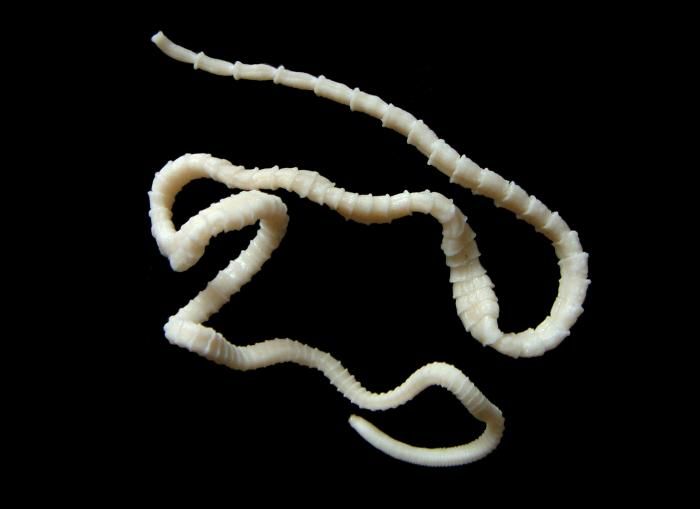
A tapeworm and a cat have this type of relationship.
a)
mutualism
b)
parasitism
c)
commensalism
d)
competition
21.
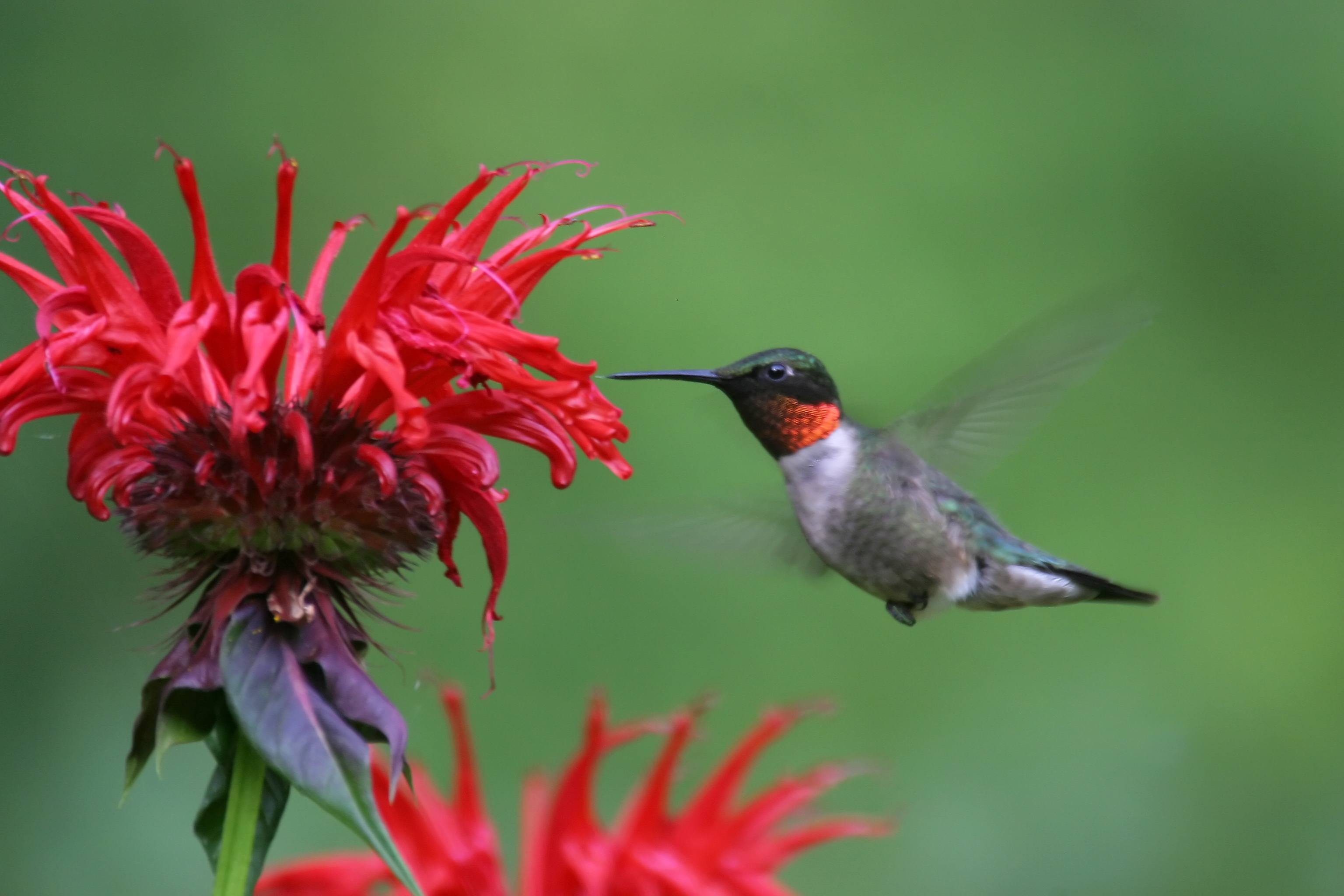
What type of symbiosis?  Hummingbirds feed on nectar from flowers.  The flowers are pollinated by hummingbirds as they move from flower to flower.
a)
commensalism
b)
mutualism
c)
parasitism
d)
predation
22.
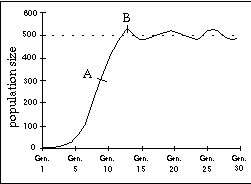
What is the carrying capacity of the graph?
a)
around 500
b)
more than 500
c)
less than 500
d)
around 600
23.
The total number of individuals a habitat can survive with the resources it has available.
a)
Carrying capacity
b)
Limiting factors
c)
Resources
d)
Population
24.

Biodiversity refers to ---

a)

extinct species.

b)

the variety of species on Earth.

c)

nonrenewable resources.

d)

the rate of species decline.

25.
When there is higher biodiversity
a)
more organisms are likely to die because they can't adapt to environmental changes.
b)
there is less diversity.
c)
there is more diversity and higher sustainability of life.
d)
there is more diversity and lower sustainability of life
26.
High biodiversity is 
a)
having a lot of the same organism.
b)
having a few of the same organism.
c)
having a lot of variety of different organisms.
d)
only having one of each organism. 
27.
What is the difference between biotic and abiotic?
a)
Biotic are non-living things
b)
Abiotic are living organisms
c)
Biotic is life,
Abiotic is non-living
d)
Biotic is non-living, Abiotic is living
28.

Which ecosystem would be more resilient?

a)
b)
29.

What is a cactus?

a)

autotoph

b)

heterotroph

30.

What is a key stone species?

a)

A species that all other species rely on

b)

A species that does not interact with other species

c)

Species that live underground

d)

A species that will soon be extinct

31.

Natural Selection

a)

The process by which individuals that are better suited to their environment survive and reproduce most successfully; also called survival of the fittest

b)

Inherited characteristic that increase an organisms chance of survival

c)

A theory that life come from life

d)

A theory that life comes from non-living objects

32.

Evolution is

a)

A theory that life comes from non-living objects

b)

a change in a species over time; process by which modern organisms have descended from ancient organisms

c)

A theory that life come from life

d)

The species from whom a current one has descended

33.

Microevolution refers to the small changes in an organism while macroevolution refers to the cumulative changes in an organism that lead to speciation.

a)

True

b)

False

34.

During microevolution, a(n) __________________ will become more or less common within a population.

a)

species

b)

allele

c)

ribosome

d)

fossil

35.

This diagram of forelimbs of various of various mammals and birds is an example of:

a)

analogous structures

b)

homologous structures

36.

The large-scale events of speciation are called...

a)

macroevolution

b)

simplification

c)

adaptation

d)

microevolution

37.
Flying fish, flying birds, and bats are examples of which of the following?
a)
convergent evolution & homologous structures
b)
convergent evolution & analogous structures
c)
divergent evolution & homologous structures
d)
divergent evolution & analogous structures
38.
Structures that have the same function but different structures are...
a)
homologous structures
b)
analogous structures
c)
vestigial structures
d)
embryology 
39.

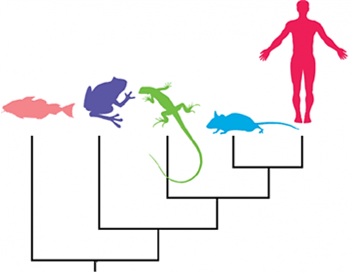
According to this phylogenetic tree, which creature is the least related out of all pictured?

a)

Fish

b)

Frog

c)

Salamander

d)

Human

40.

What number is the most recent common ancestor of C and D

a)

1

b)

2

c)

3

d)

4

41.
Since the 1800s humans have stopped burning coal, and the trees have returned to their original color. Which moth will be more successful in this environment?
a)
Dark moth
b)
Light moth
c)
Both will be equally successful
d)
Neither will be successful
42.
Robins typically lay fours eggs. If more then four eggs are produced then the baby chicks are malnourished while smaller egg numbers result in no viable (able to live) baby chicks. This is an example of
a)
stabalizing
b)
disruptive
c)
direction
d)
none of the above
43.
Which of the three graphs shows stabilizing selection?
a)
A
b)
B
c)
C
44.
If finches with large beaks and finches with small beaks increase in a population while finches with average sized beaks decreases, which pattern of natural selection has occurred?
a)
Directional selection
b)
Disruptive selection 
c)
Stabilizing selection
45.

structures that have lost their original function through evolution

a)

homologous structure

b)

analogous structure

c)

comparative anatomy

d)

vestigial structure

46.
Vertebrate embryos pass through similar stages of development is evidence for
a)
use and disuse
b)
homologous structures
c)
common ancestry
d)
acquired characteristics
47.

During what phase of Mitosis do the chromosomes line up in the Middle

a)

Metaphase

b)

Prophase

c)

Telophase

d)

Anaphase

48.

Which stage of the Life Cycle of the cell is this cell in (look close-the DNA hasn't formed Chromosomes (X) yet)

a)

Interphase

b)

Prophase

c)

Anaphase

d)

Telophase

49.

Which of the following is the correct order of the Cell Cycle?

a)

Interphase, Mitosis, Cytokinesis

b)

Mitosis, Cytokinesis, Mitosis, Interphase

c)

Prophase, Metaphase, Anaphase, Telophase

d)

Interphase, Prohase, Cytokinesis

50.

In which phase of Mitosis do the Chromosomes pull Apart

a)

Metaphase

b)

Prophase

c)

Anaphase

d)

Telophase

51.

How many chromosomes to do most human cells have?

a)

2

b)

46

c)

92

d)

Identical to your age

52.
Before cells can divide, what must be copied?
a)
mitochondria
b)
cytoplasm
c)
DNA
d)
Cell Wall
53.
In which phase does the cell spend most of it's life?
a)
Interphase
b)
Nuclear Division
c)
Telophase
d)
Mitosis
54.
Which is Metaphase?
a)
A
b)
E
c)
C
d)
F
55.

DURING WHICH PHASE OF MEIOSIS DOES GENETIC VARIATION INCREASE

a)

PROPHASE II

b)

PROPHASE I

c)

ANAPHASE I

d)

ANAPHASE II

56.

MEIOSIS PRODUCES 4 CELLS-THE CHROMOSOME NUMBER IS ...

a)

DIPLOID

b)

HAPLOID

57.

NORMAL HUMANS HAVE 46 CHROMOSOMES, HOW MANY WILL THE GERM CELLS HAVE AFTER MEIOSIS?

a)

46

b)

23

c)

12

d)

92

58.
Which process and type of resulting cells are represented?
a)
mitosis, gametes
b)
mitosis, body cells
c)
meiosis, gametes
d)
meiosis, body cells
59.
What causes genetic variation in meiosis?
a)
chromosomes lining up
b)
crossing over of chromosomes
c)
separation of chromosomes
d)
chromosomes pulling apart
60.
Which of the following cells is a gamete?
a)
egg
b)
bone
c)
heart
d)
muscle
61.
In mitosis cells are genetically _______, but in meiosis cells are genetically ______.
a)
diverse, identical
b)
identical, diverse/different
62.

Mitosis makes sure that all daughter cells are _____.

a)

genetically identical, diploid

b)

genetically identical, haploid

c)

genetically diverse, diploid

d)

genetically diverse, haploid

63.

DD would look

a)

Dominant

b)

Recessive

c)

Both

d)

None

64.

TT and Tt are both

a)

Dominant

b)

Recessive

c)

Both

d)

None

65.

Select the recessive genotype

a)

TT

b)

Tt

c)

tt

d)

None

66.
Which of the following is heterozygous
a)
FF
b)
tt
c)
Gg
d)
RR
67.
The physical appearance of a trait is known as the-
a)
genotype
b)
phenotype
c)
characteristics
d)
intelligence
68.
How many letters does a genotype contain?
a)
1
b)
2
c)
3
d)
4
69.

How do you classify the following genotype : AA

a)

Homozygous Dominant

b)

Homozygous Recessive

c)

Heterozygous

70.
What allele combination should go in the missing box?
a)
AA
b)
Aa
c)
aa
d)
none of these
71.
What type of inheritance do two alleles have if their traits blend together? 
a)
Incomplete Dominance
b)
Co-Dominance
c)
Mendelian Inheritance
d)
Homozygous Inheritance
72.
This type of inheritance pattern is a MIXTURE of both traits.
a)
incomplete dominance
b)
co-dominance
c)
complete dominance
d)
recessive pattern
73.
This type of inheritance pattern shows BOTH traits in possible offspring
a)
complete dominance
b)
incomplete dominance
c)
co-dominance
d)
dominant pattern
74.
Snap dragon color is a incomplete dominant trait.  A red flower (RR) is crossed with white flower (rr)? What color are flowers that are Rr?
a)
Red
b)
Red and White
c)
White
d)
Pink
75.
This is an example of ___________?
a)
Incomplete dominance
b)
Co-Dominance
76.
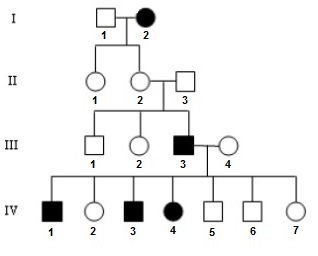
How many generations are shown in this pedigree?
a)
1
b)
2
c)
3
d)
4
77.
How many kids did the mother and father from the first generation have?
a)
2
b)
4
c)
5
d)
6
78.
This pedigree represents the inheritance of hemophilia in this family. How many of the females have the hemophilia trait?
a)
8
b)
5
c)
2
d)
3
79.
What does an open circle represent?
a)
Not Affected Male
b)
Not Affected Female
c)
Affected Male
d)
Affected Female
80.
In the second generation-how many people are carriers of the trait?
a)
2
b)
3
c)
5
d)
6
81.

Huntington's Disease is a dominant trait.

What is the correct genotype for individual I-2?

a)

HH

b)

Hh

c)

hh

d)

H?

82.

What type of inheritance pattern is shown here?

a)

Codominance

b)

Incomplete dominance

83.
the base that pairs with Thymine in DNA
a)
adenine
b)
guanine
c)
helicase
d)
nucleotide
84.
nitrogen base that pairs with guanine
a)
adenine
b)
cytosine
c)
nucloetide
d)
deoxyribose
85.
the process of making a copy of DNA
a)
transcription
b)
double helix
c)
DNA replication
d)
replication fork
86.
The shape of DNA.
a)
double helix
b)
nucleotide
c)
DNA polymerase
d)
single stranded
87.
Which shows the correct complementary base pairing for DNA?
a)
C-A, T-G
b)
A-G, C-T
c)
C-G, U-A
d)
T-A, G-C
88.
I am arranged as a double helix or "twisted ladder".
a)
DNA
b)
RNA
89.
I include the bases Guanine, Cytosine, Adenine and Uracil .
a)
DNA
b)
RNA
90.
I travel outside of the nucleus.
a)
DNA
b)
RNA
91.
I have the sugar ribose.
a)
DNA
b)
RNA
92.
I have the sugar dioxyribose.
a)
DNA
b)
RNA
93.
The sugar in DNA is ____________________.
a)
deoxyribose
b)
ribose
94.
The sugar in RNA is ____________________.
a)
deoxyribose
b)
ribose
95.
The following picture must be
a)
DNA because it's double stranded
b)
RNA because it's single stranded
c)
DNA because it's single stranded
d)
RNA because it's double stranded
96.
What are the three components of a nucleotide?
a)
sugar, hydrogen, nitrogen base
b)
sugar, oxygen, nitrogen base
c)
sugar, phosphate, nitrogen base
d)
sugar, phosphate, protein
97.
How does RNA differ from DNA?
a)
RNA contains uracil and deoxyribose
b)
RNA contains ribose and thymine
c)
RNA contains uracil and ribose
d)
RNA contains adenine and ribose
98.
The process by which the genetic code of DNA is copied into a strand of RNA is called
a)
translation
b)
transcription
c)
transformation
d)
replication
99.

What is the correct order to make a protein?

a)

Protein, DNA, RNA

b)

RNA, DNA, Protein

c)

DNA, RNA, Protein

d)

Protein, RNA, DNA

100.

Which RNA carries the message?

a)

mRNA

b)

rRNA

c)

tRNA

101.
Where does transcription take place?
a)
nucleus
b)
cytoplasm
c)
ribosome
102.

WHAT does transcription produce?

a)

DNA

b)

RNA

c)

proteins

d)

amino acids

103.

WHAT does translation produce?

a)

proteins

b)

DNA

c)

RNA

d)

carbohydrates

104.

WHERE in the cell does translation occur?

a)

nucleus

b)

cell membrane

c)

golgi apparatus

d)

cytoplasm

105.

What molecules are involved in protein synthesis?

a)

tRNA, introns, mutagens

b)

mRNA, introns, rRNA

c)

rRNA, tRNA, mutagens

d)

mRNA, rRNA, tRNA

106.

What is a codon?

a)

A group of 3 nucleotides

b)

A form of RNA

c)

The replicated strand of DNA

d)

A group of introns

107.
Which process occurs in the ribosome?
a)
Transcription
b)
Translation
c)
Replication
d)
All of these
108.
What is photosynthesis?
a)
The process in which humans eat their food
b)
When a photographer takes a photo.
c)
To get your pictures from the photo lab.
d)
The process in which plants make their food.
109.
Which organisms perform Photosynthesis?
a)
Only Autotrophs
b)
Only Heterotrophs
c)
Autotrophs and Heterotrophs
110.
Which organelle performs PHOTOSYNTHESIS?
a)
Chloroplast
b)
Mitochondria
111.
What is the pigment in chloroplasts that performs photosynthesis?
a)
Chlorosynthesis
b)
Chlorophyll
c)
ADP
d)
Electron Transport
112.
What is the ultimate ORIGINAL source of energy for living things
a)
Sugar
b)
Sun
c)
Moon
d)
Carbon Dioxide
113.
What do plants need for the photosynthesis process?
a)
a camera and tripod
b)
light, carbon dioxide, and water
c)
roots, flowers, and bees
d)
soil, air, and oxygen
114.
What are the reactants of photosynthesis?
a)
carbon dioxide and oxygen
b)
water and oxygen
c)
carbon dioxide and water
d)
water and glucose
115.
What are the products of photosynthesis?
a)
water and carbon dioxide
b)
oxygen and glucose
c)
oxygen and carbon dioxide
d)
oxygen and water
116.
How does carbon dioxide get into the leaves of a plant?
a)
It's absorbed by the roots
b)
It's made in a chemical reaction in the stem
c)
It enters through the stomata
d)
It goes through the flowers
117.
What is the main purpose of the light reactions?
a)
To provide the energy and electrons for the calvin cycle
b)
To capture energy and make sugar
c)
To reflect green light
d)
To make sugars
118.
What is the function of NADPH and ATP?
a)
They absorb light
b)
They power the light-dependent reactions
c)
They are light-reflecting pigments
d)
They are short term energy carriers
119.
What are the two products of the light reactions that are needed for the calvin cycle?
a)
NAD and NADPH
b)
NADP + and Glucose
c)
NADPH and ATP
d)
Oxygen and NADPH
120.
After photosynthesis, plants store their energy as _________ .
a)
chlorophyll
b)
pigment
c)
glucose (sugar)
d)
Oxygen
121.

What are the reactants (taken into) of cellular respiration? (Mark all of them!)

a)

oxygen

b)

glucose

c)

carbon dioxide

d)

water

e)

energy

122.

Which of the following structure is where cellular respiration (Kreb's Cycle and Electron Transport Chain) occurs in the cell?

a)

nucleus

b)

cytoplasm

c)

mitochondria

d)

vacuoles

123.

What is the correct equation for cellular respiration?

a)

6O2 + C6H12O6 -> 6CO2 + 6H2O + Energy

b)

6O2 + C6H12O6 + Energy -> 6CO2 + 6H2O

c)

6CO2 + 6H2O -> 6O2 + C6H12O6 + Energy

d)

6CO2 + 6H2O + Energy -> 6O2 + C6H12O6

124.

Cellular Respiration's goal is to

a)

make water

b)

make ATP

c)

make glucose

d)

make oxygen

125.
Where does the Krebs Cycle take place?
a)
mitochondria
b)
chloroplast
c)
cytoplasm
d)
nucleus
126.

What is the name of the energy produced during cellular respiration?

a)

ATP

b)

NADH

c)

FADH2

d)

glucose

127.

What are the products (what is released) of cellular respiration? (Mark all of them!)

a)

oxygen

b)

glucose

c)

carbon dioxide

d)

water

e)

ATP (energy)

128.

Which stage of the cellular respiration process produces the most ATP?

a)

Glycolysis

b)

Acetyl CoA

c)

Kreb's Cycle

d)

Electron Transport Chain

129.
What main food group do we get most of our energy from?
a)
proteins
b)
carbs
c)
meats
d)
nucleic acids
130.
What is the name of the 1st step of cellular respiration?
a)
Glycolysis
b)
Kreb's Cycle
c)
ETC
d)
Anaerobic respiration
131.
Where does glycolysis take place?
a)
Cytoplasm
b)
Stroma
c)
Thylakoid
d)
Mitochondria
132.
This process releases chemical energy from sugars and other carbon-based molecules to make ATP when oxygen is present.
a)
photosynthesis
b)
light-independent reaction
c)
cellular respiration
d)
light-dependent reaction
133.
What is cellular respiration?
a)
the breakdown of glucose  to release ATP
b)
the breakdown of glucose to release NADH
c)
the breakdown of glucose to release FADH
d)
the breakdown of glucose to release carbon
134.

In which way are photosynthesis and cellular respiration similar?

a)

Both processes destroy energy.

b)

Both create energy.

c)

Photosynthesis breaks down sugar while cellular respiration produces sugar.

d)

Both processes transfer energy from one form to another.

135.

What's the chemical formula for glucose?

a)

6C6H12O6

b)

C12H6O12

c)

C6H12O6

d)

CHO

136.
In which way are photosynthesis and cellular respiration different?
a)
Cellular respiration stores ATP, while photosynthesis releases ATP.
b)
Cellular respiration produces oxygen, while photosynthesis uses oxygen.
c)
Photosynthesis releases energy, while cellular respiration stores energy.
d)
Photosynthesis used carbon dioxide, while cellular respiration produces carbon dioxide.