
 Worksheets
Bio Final Review
Total questions: 138
Worksheet time: 2hrs 49mins
Name
Class
Date
1.
______% of the trophic energy is passed on.
a)
90
b)
10
c)
25
d)
50
2.
What type of transport requires energy?
a)
Active Transport
b)
Facilitated Diffusion
c)
Simple Diffusion
d)
Passive Transport
3.
You put a cell into a solution, the cell grows. Is the solution hypotonic or hypertonic to the cell?
a)
hypertonic
b)
hypotonic
c)
isotonic
d)
not enough information
4.

The cell below is in a _________ solution.
a)
Hypotonic
b)
Hypertonic
c)
Isotonic
5.

The cell below is in a _____________ solution.
a)
Hypertonic
b)
Hypotonic
c)
Isotonic
6.
An ISOTONIC solution has a(n) ______________ concentration of solute (dissolved stuff) than inside the cell.
a)
lower
b)
equal
c)
higher
7.
A HYPOTONIC solution has a ______________ concentration of solute (dissolved stuff) than inside the cell.
a)
lower
b)
equal
c)
higher
8.
If a cell is placed in a HYPOTONIC solution, water will move _________ of the cell, causing it to ___________.
a)
into, swell
b)
out of, shrivel
c)
in and out of the cell, stay the same
9.

What type of solution is this cell in?
a)
Isotonic
b)
Hypertonic
c)
Hypotonic
d)
diffused
10.

What type of solution is this cell in?
a)
Isotonic
b)
Hypertonic
c)
Hypotonic
d)
diffused
11.
Passive transport is called "passive" because it occurs WITHOUT
a)
cause.
b)
energy.
c)
a concentration gradient.
d)
a cell wall.
12.
Osmosis is the diffusion of _____ across a membrane
a)
glucose
b)
NaCl
c)
proteins
d)
water
13.
In an isotonic solution, the NET flow of water is
a)
into the cell.
b)
out of the cell.
c)
there is no net flow of water.
14.
0.9% NaCl is isotonic to red blood cells. Which of these describes what will happen if a technician misplaces a decimal point and makes 9.0% NaCl solution instead and administers it to a patient?
a)
The cells exposed to the solution will burst.
b)
The cells exposed to the solution will shrink.
c)
The cells will remain the same size.
d)
The cells exposed to the solution will expand but not burst.
15.
Before cells can divide, what must be copied?
a)
mitochondria
b)
cytoplasm
c)
DNA
d)
Cell Wall
16.
Humans have ________ pairs of chromosomes.
a)
21
b)
23
c)
46
d)
None of the above
17.
The cell spends most of it's life in ________________.
a)
mitosis
b)
cytokinesis
c)
Interphase
d)
None of the above
18.
A human cell has 46 chromosomes before mitotic division. How many chromosomes will the daughter cells after mitosis.
a)
12
b)
23
c)
46
d)
92
19.
As a cell increases in size, the surface area to volume ratio _________________.
a)
increases
b)
decreases
c)
stays the same
20.
The larger the surface area to volume ratio, the _______________ efficient the cell is in transporting nutrients and waste in and out of the cell.
a)
less
b)
more
21.
A pair of chromosomes that consists of XX is a __________________.
a)
Male
b)
Female
22.
In what organelle is the genetic material found inside?
a)
Endoplasmic Reticulum
b)
Golgi Complex
c)
Nucleolus
d)
Nucleus
23.

This picture shows which process?
a)
cell cycle
b)
meiosis
c)
mitosis
d)
interphase
24.
Put the following in order: G2, G1, S, mitosis, cytokinesis.
a)
G1, G2, S, Mitosis, cytokinesis
b)
G1, S, G2, Mitosis, cytokinesis
c)
G1, G2, S, cytokinesis, mitosis
d)
G1, S, G2, cytokinesis, mitosis
25.
Put the following stages of mitosis in order: anaphase, prophase, metaphase, and telophase.
a)
prophase, metaphase, telophase, anaphase
b)
prophase, anaphase, metaphase, telophase
c)
prophase, metaphase, anaphase, telophase
d)
prophase, telophase, metaphase, anaphase
26.

Cattle egrets forage (feed) in fields among cattle. The egret gets easy access to flying insects stirred up by the cattle, and the cattle don't care if they are there or not.
a)
mutualism
b)
commensalism
c)
competition
d)
parasitism
27.
A relationship between two organisms in which one organism benefits and the other is unharmed...
a)
Mutualism
b)
Competition
c)
Parasitsm
d)
Commensalism
28.
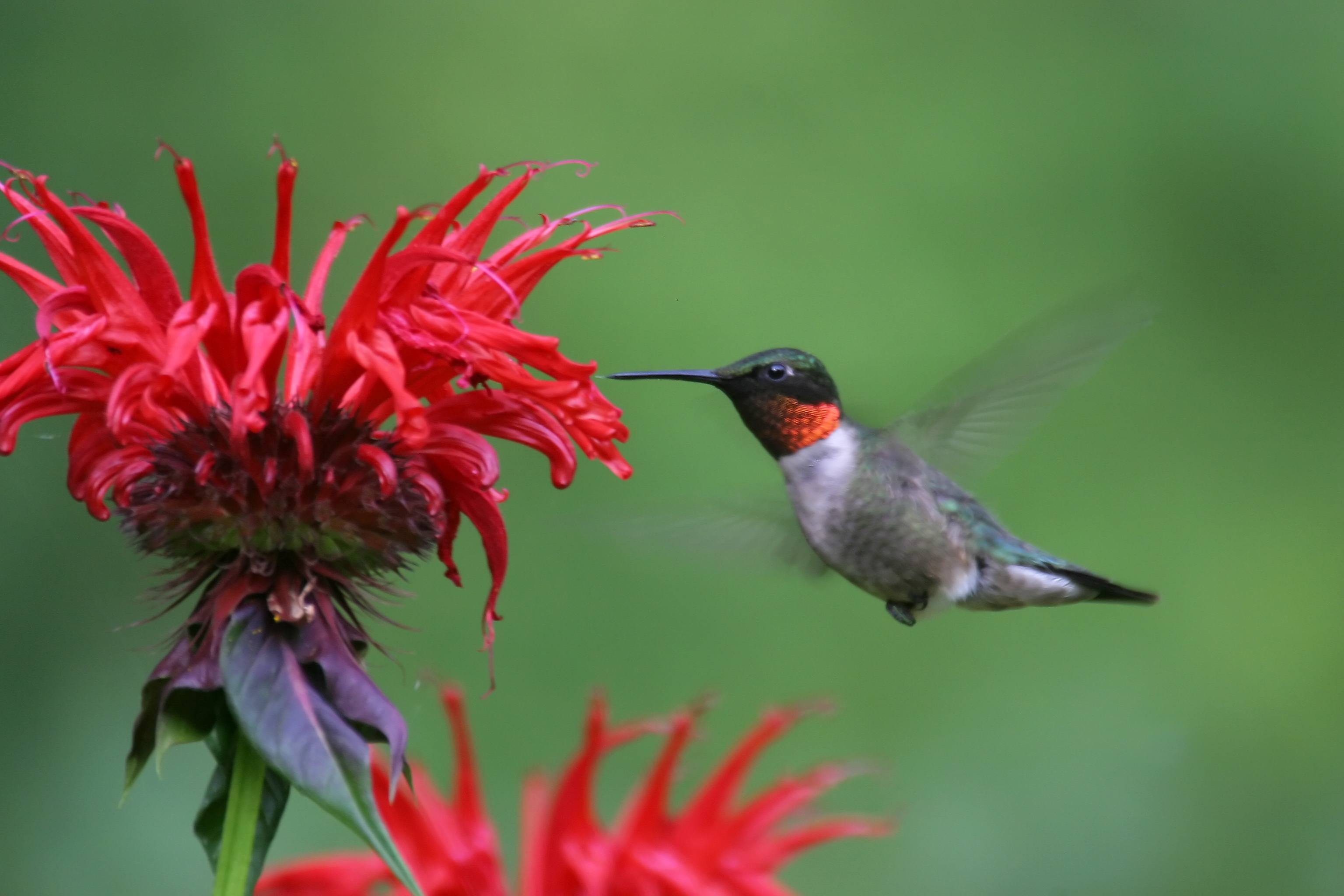
What type of symbiosis? Hummingbirds feed on nectar from flowers. The flowers are pollinated by hummingbirds as they move from flower to flower.
a)
commensalism
b)
mutualism
c)
parasitism
d)
predation
29.
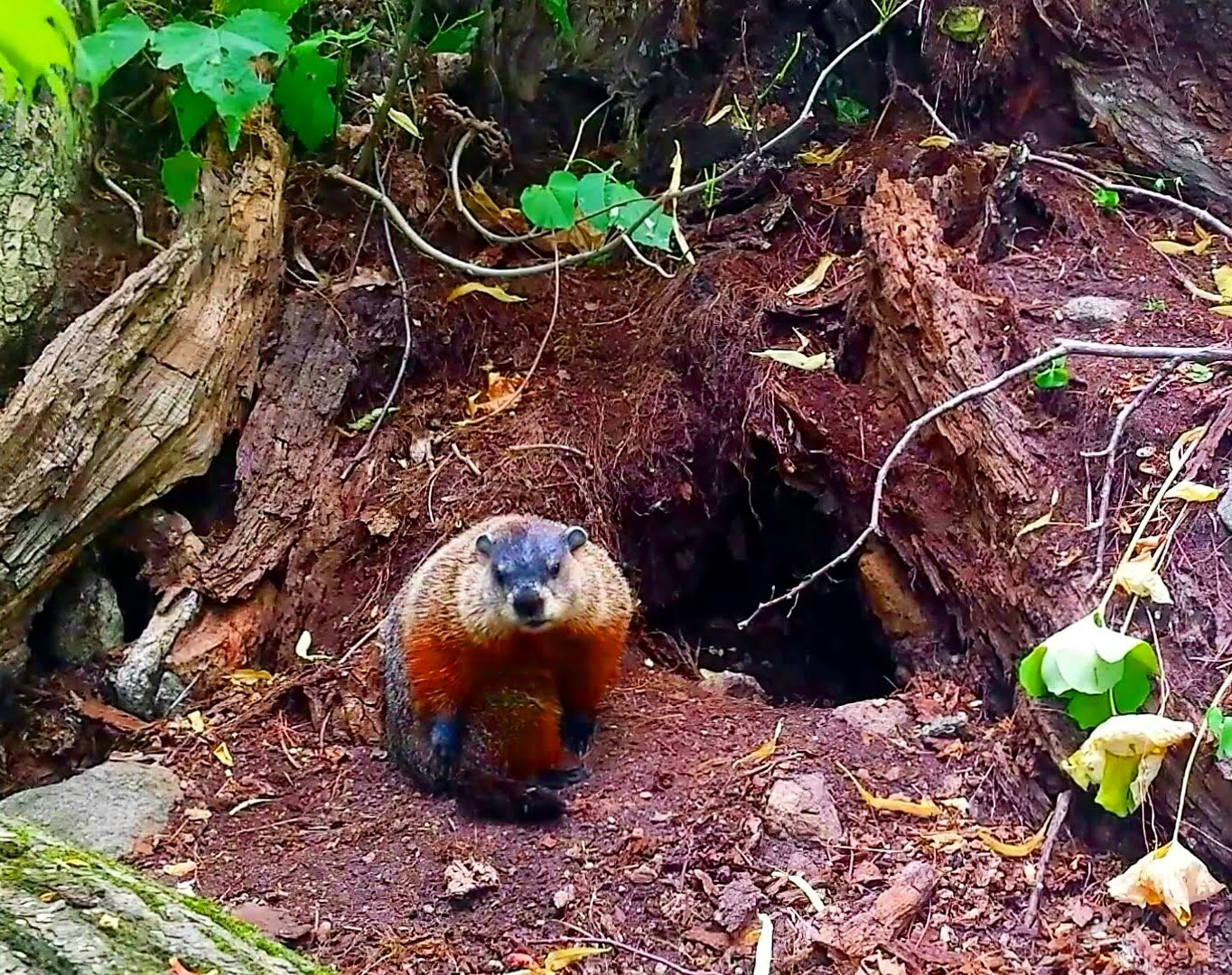
What type of symbiosis? Skunks often live in burrows that have been dug and abandoned by woodchucks.
a)
commensalism
b)
mutualism
c)
parasitism
d)
predation
30.

Aphids are tiny insects that live on and eat the leaves of plants, removing vital nutrients from the plants.
a)
Predation
b)
Parasitism
c)
Commensalism
d)
Mutualism
31.
What type of symbiosis?
* Skunk Cabbage plants attract flies in cool weather by making heat and provide food to the flies that come.
* Flies move from one Skunk Cabbage plant to the next feeding and transferring pollen as they go.
* Skunk Cabbage plants attract flies in cool weather by making heat and provide food to the flies that come.
* Flies move from one Skunk Cabbage plant to the next feeding and transferring pollen as they go.
a)
commensalism
b)
mutualism
c)
parasititsm
d)
predation
32.
What does symbiosis mean?
a)
A.living separately, no relationship between 2 species
b)
A.living together, close relationship between 2 species
c)
A.Living separately, long distance relationship between 2 species
d)
When one species kills and eats another
33.

A PLANT is a
a)
Producer
b)
Consumer
c)
Decomposer
34.

A PLANT EATER is a
a)
Herbivore
b)
Carnivore
c)
Omnivore
d)
Producer
35.

A DECOMPOSER
a)
Makes its own energy
b)
Eats other organisms
c)
Eats DEAD organisms
36.

A MUSHROOM is a
a)
Herbivore
b)
Carnivore
c)
Omnivore
d)
Decomposer
37.

Which is the PRODUCER?
a)
Lettuce
b)
Slug
c)
Bird
d)
Cat
38.

Which is a HERBIVORE?
a)
Lettuce
b)
Slug
c)
Bird
d)
Cat
39.

Which is/are CARNIVORES?
a)
Slug and Bird
b)
Slug and Cat
c)
Bird and Cat
d)
Cat only
40.

Where does the LETTUCE get its energy?
a)
The sun
b)
The slug
c)
The bird
d)
The cat
41.

Where does the BIRD get its energy?
a)
The sun
b)
The slug
c)
The bird
d)
The cat
42.

What is PHOTOSYNTHESIS?
a)
How plants get energy
b)
How animals get energy
c)
How pictures are made
43.

According to this food chain, which is the PRODUCER?
a)
Bee
b)
Flower
c)
Frog
d)
Chicken
44.

According to this food chain, which is the SECONDARY CONSUMER?
a)
Bee
b)
Dog
c)
Frog
d)
Chicken
45.

According to this food chain, which is the TERTIARY CONSUMER?
a)
Bee
b)
Dog
c)
Frog
d)
Chicken
46.

A fox is an example of...
a)
Biotic Factor
b)
Abiotic Factor
47.
Which is a producer?
a)
deer
b)
tall grass
c)
lion
d)
worm
48.
A consumer is a __________.
a)
heterotroph
b)
autotroph
c)
omnitroph
d)
consumotroph
49.
A producer is a(n)____________.
a)
heterotroph
b)
autotroph
c)
omnitroph
d)
consumotroph
50.

In the energy pyramid here, which organisms have the most energy available?
a)
Producers
b)
Carnivores
c)
Herbivores
d)
Top Predator
51.

In the energy pyramid below, which organism has the least amount of energy available?
a)
Producers
b)
Herbivores
c)
Carnivores
d)
Top Predator
52.

If there is 1000 Kcal available in the producers in trophic level 1, how much energy is available in the herbivores in trophic level 2?
a)
10 Kcal
b)
1 Kcal
c)
100 Kcal
d)
1000 Kcal
53.
All food webs and food chains begin with _________________.
a)
primary consumer
b)
producers
c)
secondary consumers
d)
predators
54.
Which organelle performs PHOTOSYNTHESIS?
a)
Chloroplast
b)
Mitochondria
55.
What is the ultimate ORIGINAL source of energy for living things
a)
Sugar
b)
Sun
c)
Moon
d)
Carbon Dioxide
56.

The diagram is intended to show relationships in an ecosystem. What do the arrows represent?
a)
The direction of population migration
b)
Differences in dietary habits
c)
Progressively smaller organisms
d)
The direction of the energy flow
57.

What do you call the tree population of the field 150 years after it was abandoned?
a)
a young forest
b)
primary succession
c)
a climax forest
d)
a prarie community
58.
Temperature, light, air, water, soil and climate are all ______ parts of the environment.
a)
biotic
b)
abiotic
c)
living
d)
boreal
59.
Populations of different organisms living in a defined area
a)
species
b)
community
c)
niche
d)
biome
60.
Which of these is an example of precipitation?
a)
snow
b)
air
c)
clouds
d)
vapor
61.
Snow, sleet, hail, and rain are all examples of ________________.
a)
evaporation
b)
condensation
c)
accumulation
d)
precipitation
62.

Does evaporation happen before or after condensation?
a)
before
b)
after
c)
during
63.

What is it called when plants give off water vapor as a waste product?
a)
condensation
b)
evaporation
c)
sublimation
d)
transpiration
64.
What is the water cycle?
a)
the 3 forms of water
b)
the movement of water on, above, or below the surface of the Earth
c)
when water melts
d)
when clouds form
65.
What is the energy source for the water cycle?
a)
the sun
b)
the earth
c)
water
d)
the moon
66.
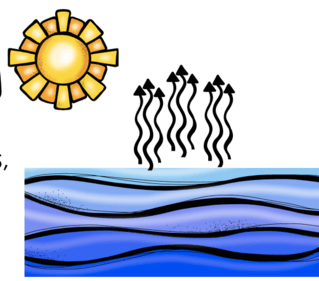
What part of the water cycle does this picture show?
a)
condensation
b)
precipitation
c)
evaporation
67.
What is evaporation?
a)
The part of the water cycle when the sun heats up water, turning it from a liquid into water vapor or steam. It rises from the ground into the air.
b)
The part of the water cycle when the water vapor in the air gets cold. The water turns back into a liquid and forms clouds.
c)
The part of the water cycle when clouds get heavy and can no longer hold the liquid water. This causes the water to fall from the sky to the earth as rain, snow, sleet, or hail.
68.
What is condensation?
a)
The part of the water cycle when the sun heats up water, turning it from a liquid into water vapor or steam. It rises from the ground into the air.
b)
The part of the water cycle when the water vapor in the air gets cold. The water turns back into a liquid and forms clouds.
c)
The part of the water cycle when clouds get heavy and can no longer hold the liquid water. This causes the water to fall from the sky to the earth as rain, snow, sleet, or hail.
69.
What is precipitation?
a)
The part of the water cycle when the sun heats up water, turning it from a liquid into water vapor or steam. It rises from the ground into the air.
b)
The part of the water cycle when the water vapor in the air gets cold. The water turns back into a liquid and forms clouds.
c)
The part of the water cycle when clouds get heavy and can no longer hold the liquid water. This causes the water to fall from the sky to the earth as rain, snow, sleet, or hail.
70.
Organisms use nitrogen to form
a)
carbohydrates and lipids
b)
proteins and lipids
c)
lipids and nucleic acids
d)
proteins and nucleic acids
71.
If the death rate of a population is greater than the birthrate, the population shrinks.
a)
True
b)
False
72.

What type of growth model is this?
a)
exponential growth model
b)
logistic growth model
c)
Type I curve
d)
Type III curve
73.
As resources in a population become less available, population growth
a)
declines rapidly
b)
increases slowly
c)
reaches carrying capacity
d)
enters a phase of exponential growth
74.
Carrying Capacity is
a)
the capacity of what one person can carry per day
b)
how many animals you have in your daily bag limit at the end of the year
c)
wildebeest at a watering hole with zebras
d)
the maximum number of individuals that the environment can support
75.

This graph shows the population growth curve for a sparrows in Forsyth County. What is the carrying capacity?
a)
50
b)
200
c)
280
d)
300
76.
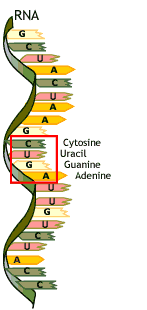
In RNA, Uracil pairs with ______.
a)
cytosine
b)
adenine
c)
guanine
d)
thymine
77.
The process to go from DNA to mRNA is _______
a)
translation
b)
transcription
c)
replication
78.
The process to go from mRNA to a protein is called ____
a)
transcription
b)
rRNA
c)
replication
d)
translation
79.
DNA holds the code for
a)
lipids
b)
carbohydrates
c)
protein
d)
sugar
80.
Choose the nucleotide sequence of the RNA strand that would be complementary to the following strand:
GTAGTCA
GTAGTCA
a)
UATUAGA
b)
ACGACTG
c)
CAUCAGU
d)
CATCAGT
81.
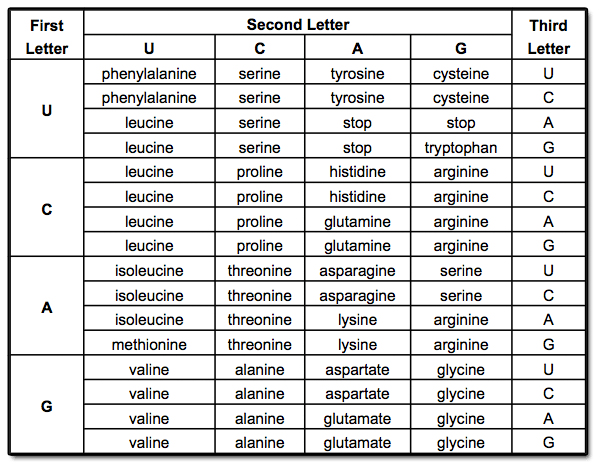
What amino acid is represented by the codon UUA?
a)
Phenylalanine
b)
Tyrosine
c)
Leucine
d)
Stop codon
82.
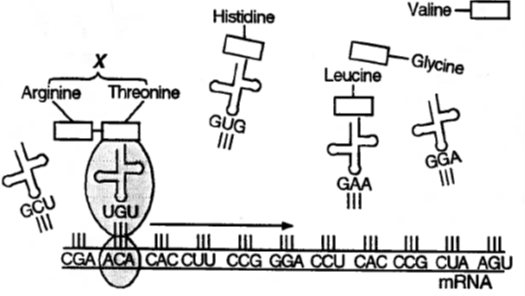
What process is going on in this photo?
a)
Transcription
b)
Translation
c)
Replication
d)
All the above
83.
What is the location in the cell for translation?
a)
nucleus
b)
mitochondria
c)
ribosome
d)
chloroplast
84.
What is the three base sequence of mRNA that codes for a single amino acid?
a)
Anticodon
b)
Codon
c)
Protein
85.
What are the backbones (sides) of the DNA structure made up of?
a)
repeating phosphates and sugars
b)
nitrogen bases
c)
nucleotides
d)
adenine and thymine
86.
What is the location in the cell for transcription?
a)
nucleus
b)
cytoplasm
c)
ribosome
d)
mitochondria
87.
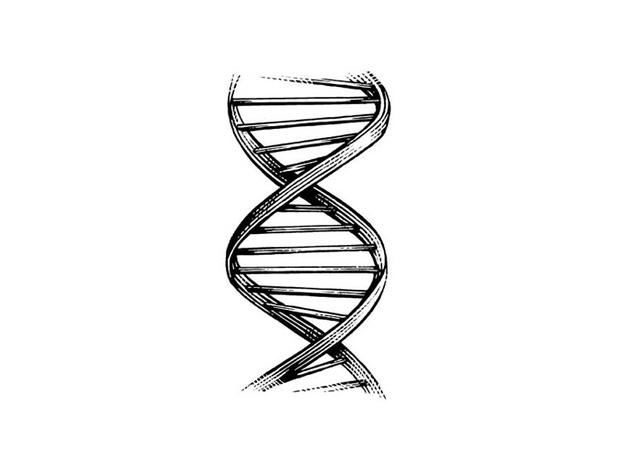
DNA has a _____________ structure.
a)
double helix
b)
single strand
c)
ring
d)
chain
88.
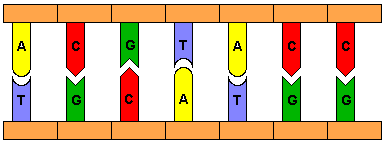
In DNA, Adenine pairs with ___________.
a)
Guanine
b)
Cytosine
c)
Thymine
d)
Uracil
89.
Translation is the process where
a)
mRNA is created in the Nucleus
b)
mRNA is decoded to form a protein
c)
glucose molecules are made
d)
is where lipids are synthesised
90.
Does the order of amino acids in a protein matter?
a)
YES!
b)
NO!
91.
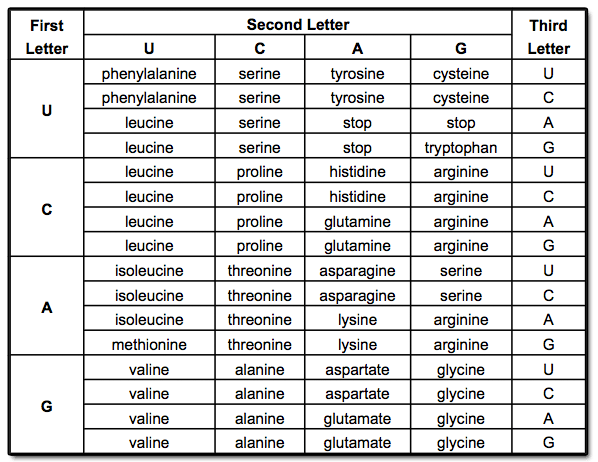
What is the correct amino acid sequence for the mRNA code AUGCCAGUAUGA
a)
Met-Pro-Ala-Val
b)
Met-Pro-Val
c)
Tyr-Gly-His
d)
Tyr-Gly-Arg-His
92.
How many amino acids are coded for by this sequence of nucleotides:
ATG GGA ACT CCA
ATG GGA ACT CCA
a)
4
b)
2
c)
6
d)
12
93.

Transcription is a process that in eukaryotic cells takes place in the:
a)
Nucleus
b)
Cytoplasm
c)
Golgi Apparatus
d)
Rough E.R.
94.

tRNA molecules match the mRNA codons with a(n):
a)
Codon
b)
Anti-Codon
c)
Intron
d)
Methylated Cap
95.
The site of photosynthesis
a)
ribosome
b)
mitochondria
c)
chloroplast
d)
nucleus
96.
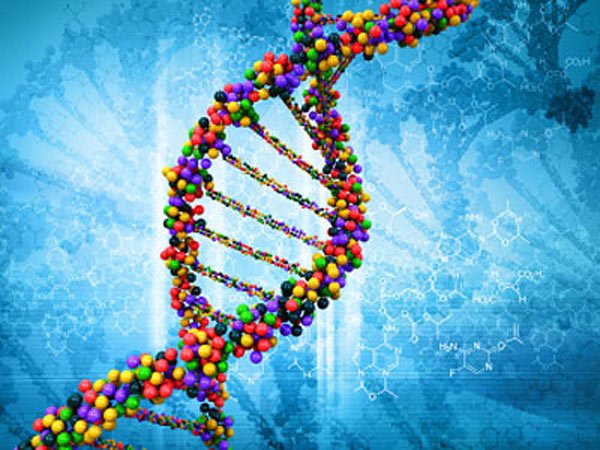
What is the name of the genetic material that is inside the nucleus?
a)
ER
b)
ATP
c)
YOLO
d)
DNA
97.

I am the outer most layer of an animal cell. What am I?
a)
cell wall
b)
nucleus
c)
cell membrane
d)
cell skin
98.
What organelle is called the "powerhouse" of a cell?
a)
Endoplasmic Reticulum
b)
Nucleus
c)
Mitochondria
d)
Nucleolus
99.
What is the pigment in chloroplasts that performs photosynthesis?
a)
Chlorosynthesis
b)
Chlorophyll
c)
ADP
d)
Electron Transport
100.

Charles Darwin came up with this theory
a)
Natural Selection
b)
Mutation
101.
Which of the following is NOT an example of natural selection?
a)
People selectively breeding hamsters.
b)
Insect populations developing resistance to certain pesticides.
c)
Bacteria becoming resistant to antibiotics.
d)
Male birds of certain species developing colorful feathers to attract female mates.
102.
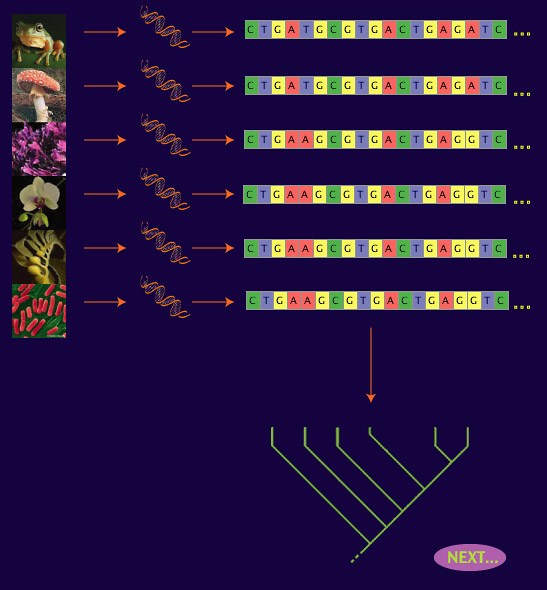
Two organisms that are closely related would have
a)
very similar DNA sequence
b)
exactly the same DNA sequences
c)
no proteins in common
d)
completely different DNA sequence
103.
Which of the following is NOT a factor that affects the process of natural selection?
a)
Overpopulation
b)
Fossils
c)
Competition
d)
Variations
104.
Mutations are important because they bring about
a)
death of the organism in which they develop
b)
genetic variation needed for a population to evolve
c)
benefits for the individual, not for the population
d)
Hardey-Weinberg equilibrium within a population
105.
What is speciation?
a)
combining of tow species to form one with different traits
b)
isolation that affects mating behaviors
c)
timing of mating that prevents normal sexual selection
d)
divergence of two or more species from an existing one
106.
Which of the following is a phenotype?
a)
BB
b)
Bb
c)
bb
d)
Blue eyes
107.
What is a phenotype
a)
The genetic make up (code)
b)
The physical trait
108.
having two of the same genes for the trait (sometimes called purebred).
a)
homozygous
b)
hetrozygous
c)
protein
d)
chromosome
109.
having two different genes for a trait (sometimes called hybrid).
a)
protein
b)
homozygous
c)
heterozygous
d)
genotype
110.
G = green, g = yellow
The genotype for a yellow plant is...
The genotype for a yellow plant is...
a)
GG
b)
Gg
c)
gg
d)
all of the choices result in yellow
111.

What kid of isolation occurs when two populations of birds have different courtship dances?
a)
geographic
b)
sexual
c)
temporal
d)
behavioral
112.

the hind leg bones in a whale are examples of
a)
homologous structures
b)
analogous structures
c)
fossils
d)
vestigals
113.
Natural selection could not occur without
a)
geographic isolation
b)
variation in the population
c)
stable environments
d)
competition for unlimited resources
114.
Natural selection results in change over time by acting on traits that are
a)
heritable
b)
new
c)
mutated
d)
better than the best
115.

Fruit fly body cells have 8 chromosomes. After mitosis, you would expect a resulting fruit fly daughter cell to have ...
a)
16 chromosomes.
b)
46 chromosomes.
c)
8 chromosomes.
d)
4 chromosomes.
116.
What portion of the cell cycle involves the actual dividing?
a)
interphase
b)
mitosis
c)
Gap 1
d)
Gap 2
117.
When a cell divides, what do we call the 2 new cells?
a)
mother cells
b)
father cells
c)
daughter cells
d)
son cells
118.
Before a cell can divide, what must happen?
a)
Nothing, it is always ready to divide
b)
The number of chromosomes must be cut in half
c)
The number of chromosomes must double
d)
The number of chromosomes must triple.
119.
Why don't cells just stretch when you grow, instead of making copies of themselves?
a)
The muscles in the cells can't stretch that far.
b)
The cell won't be able to bring in food fast enough or get waste out fast enough.
c)
The cell membrane doesn't like the feeling of stretching.
d)
The lysosomes don't want to work so hard.
120.
In meiosis, the haploid number of chromosomes in a human sex cell is:
a)
46
b)
92
c)
22
d)
23
121.
What is the diploid number of cells found in a human body cell?
a)
23
b)
46
c)
92
d)
47
122.
When you start with 1 cell, at the end of mitosis, how many identical cells will you have?
a)
1
b)
2
c)
3
d)
4
123.
After meiosis is complete how many cells will there be?
a)
1
b)
2
c)
3
d)
4
124.
Another name for a sex cell is a:
a)
gamete
b)
embryo
c)
bone cell
d)
muscle cell
125.
After meiosis is complete, the new cells:
a)
are all identical
b)
are all different
c)
are half identical and half different
d)
are all stretched out
126.
A(n) ______ is a substance with a pH less than 7
a)
Acid
b)
Alkaline
c)
Base
d)
Buffer
127.
A(n) _______ is a substance with a pH greater than 7.
a)
Base
b)
Acid
c)
Buffer
d)
Water
128.
If an enzyme becomes over heated what effect, if any, will the heat have on the enzymatic activity?
a)
The enzyme will not store much chemical energy.
b)
The enzyme will not be able to catalyze reactions.
c)
The enzyme will lose its net electrical charge.
d)
The enzyme will lose stored genetic information.
129.
What is the primary role of enzymes inside of living cells?
a)
organizing the translation of proteins
b)
allowing cells to be motile
c)
absorbing ultraviolet rays
d)
speeding up chemical reactions
130.

What is structure D?
a)
Substrate
b)
Active site
c)
Enzyme
d)
Products
131.

What is structure A?
a)
Substrate
b)
Active site
c)
Enzyme
d)
Products
132.

What is structure E, F, G?
a)
Substrate
b)
Active site
c)
Enzyme
d)
Products
133.

What is structure C?
a)
Substrate
b)
Active site
c)
Enzyme
d)
Products
134.
Which of the following statements about homologous chromosomes is correct?
a)
Each gene is at the same locus on both chromosomes.
b)
They are two identical copies of a parent chromosome which are attached to one another at the centromere.
c)
They come from the same parent.
d)
They are chromosomes that have identical genes and alleles.
135.
If a diploid cell of a beetle has 10 chromosomes, how many chromosomes will be in one stomach cell from this beetle?
a)
2
b)
5
c)
10
d)
20
136.

The genotype for gene D shown on these chromosomes is
a)
homozygous
b)
heterozygous
c)
homologous
d)
unknown
137.
The _____ number for human beings is 46.
a)
Haploid
b)
Diploid
c)
Polyploid
138.
Chromosomes which came from each parent, that are similar in size and shape are known as
a)
haploid
b)
diploid
c)
homologous
d)
multifactorial
100 %

