wayground logo

Free Printable Worksheets

Font size

S
M
L
XL
Worksheets

Exam Review 2022

Total questions: 153

Worksheet time: 6hrs 17mins

Name
Class
Date
1.

Which scientist discovered the electrons?

a)

Dalton

b)

Thomson

c)

Atristotle

d)

Bohr

2.

Rutherford and his students did experiments that showed

a)

quark

b)

nucleus

c)

proton

d)

electron

3.

Bohr discovered that electrons are located in

a)

the nucleus

b)

inside protons

c)

electron cloud

d)

circular orbits around the nucleus

4.

Which scientist discovered that the nucleus contained neutrons?

a)

bohr

b)

Rutherford

c)

Dalton

d)

Chadwick

5.

What is a particle with one negative charge called?

a)

electron

b)

proton

c)

quark

d)

neutron

6.

The smallest particle of an element that still represents that element.

a)

Nucleus

b)

electron

c)

proton

d)

atom

7.

What is a particle with one positive charge called?

a)

proton

b)

electron

c)

neutron

d)

quark

8.

What is the neutral particle found in the nucleus called?

a)

proton

b)

neutron

c)

electron

d)

quark

9.

What is the center of an atom called?

a)

nucleus

b)

electron cloud

c)

proton center

d)

photon center

10.

Which one of the following is the correct order of scientific contribution of the atom?

a)

Chadwick, Dalton, Bohr, Rutherford, Democritus,Thomson

b)

Thomson, Democritus,Rutherford, Bohr, Dalton ,Chadwick

c)

Dalton, Chadwick ,Bohr, Rutherford, Democritus,Thomson

d)

Democritus, Dalton, Thomson, Rutherford, Bohr, Chadwick

11.
In Dalton's Atomic Theory, all elements consist of __________ that cannot be divided.
a)
Atoms
b)
Parts
c)
Molecules
d)
Hydrogen
12.

Who was the Greek philosopher who called the smallest particle of matter an "atom"?

a)

Democritus

b)

Aristotle

c)

J.J Thompson

d)

Einstein

13.
Who is the scientist who proposed the "solar system" model of an atom where the electrons orbit around the nucleus?
a)
Democritus
b)
Niels Bohr
c)
Ernest Rutherford
d)
Chadwick
14.
What did James Chadwick discover?
a)
neutrons
b)
electrons
c)
the atomic theory
d)
protons
15.

Who was the first person to come up with the Atomic Theory which included four parts.

a)

John Dalton

b)

Democritus

c)

Ernest Rutherford

d)

Niels Bohr

16.
Who developed the Quantum Mechanical Model?
a)
Erwin Schrodinger
b)
Joseph Thomson
c)
James Chadwick
d)
Ernest Rutherford
17.

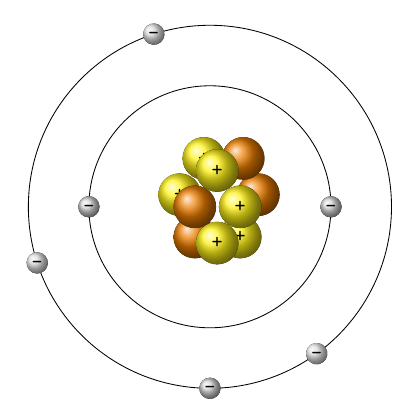
This picture best represents ___________________ atomic model.

a)

Thomson's

b)

Dalton's

c)

Bohr's

d)

Chadwick's

18.

Democritus was known for

a)

discovering the electron

b)

discovering the proton

c)

creating the term atom, meaning indivisible

d)

discovering the nucleus

19.

What did Aristotle say the five main elements were?

a)

Earth, air, fire, water and aether

b)

Ice, Water, Steam, clouds And slush

c)

Dirt, rocks, sand, cement and soil

d)

Silicon, Gold, Silver, Carbon and hydrogen

20.

What did Erwin Schrodinger do to help with atomic theory?

a)

He developed the Electron Cloud Model.

b)

Made the Bohr Model.

c)

Discovered the Protons.

d)

None of the Above.

21.

How are particles usually represented in the particle model?

a)

as small circles

b)

as straight lines

c)

as small squares

d)

as circles that are tightly backed together

22.

The three types of mixtures are..

a)

solutions, solutes, solvents

b)

solutions, colloids, suspensions

c)

solutions, colloids, sediments

d)

concentrates, dilutes, dissolvers

23.

In a gas..

a)

particles are tightly backed

b)

particles vibrate slightly

c)

particles move freely

d)

particles shrink

24.

If a substance is soluble is means...

a)

that it can dissolve into another substance

b)

that it cannot dissolve into another substance

c)

it must be a concentrated substance

d)

it must be a diluted substance

25.

Which is the most common type of mixutre

a)

solutions

b)

solutes

c)

colloids

d)

suspensions

26.

Solutions are made up of..

a)

a soluble and a solvent

b)

a solute and a solvent

c)

a suspension and a sediment

d)

a suspension and a colloid

27.

Some sugar dissolves in water, the solute is...

a)

particles

b)

water

c)

sugar

d)

oxygen

28.

The word concentrated means a mixture is..

a)

weak

b)

strong

c)

disappearing

d)

reappearing

29.

If a mixture is concentrated is means..

a)

there is a large amount of colloid

b)

there is no solute in the mixture

c)

there is a large amount of solvent and a small amount of solute

d)

there is a large amount of solute and a small amount of solvent

30.

If you wish to dilute a mixture you can..

a)

add more solute

b)

add more solution

c)

add more solvent

d)

add more sediment

31.

A suspension is a mixture that has

a)

a solute and a solvent

b)

a sediment

c)

a cloudy appearance

d)

oil in it

32.

Which best describes the word sediment?

a)

a substance that something else can dissolve into

b)

small particles that easily dissolve

c)

medium sized particles that block light

d)

large particles that settle to the bottom of a mixture

33.

A feature of a colloid is that..

a)

they are cloudy

b)

they are transparent

c)

they are colourless

d)

they have a sediment

34.

Solutions has ______________ sized particles, colloids have _________________ sized particles, and suspensions have _________________________ sized particles.

a)

small, medium, large

b)

large, medium, small

c)

medium, small, large

d)

medium, large, small

35.
The parts of a homogeneous mixture are   __________ throughout. 
a)
Same 
b)
Different 
c)
Neutral 
d)
Suspended 
36.
___________ is a combination of substances that can be physically separated. 
a)
Colloid 
b)
Mixture 
c)
Suspension 
d)
Compound 
37.
A mixture in which 2 liquids are mixed so evenly that it is not possible to see the separate particles 
a)
Solute 
b)
Solution
c)
Solvent 
d)
Suspension 
38.

Freshly brewed black coffee

a)

Heterogeneous

b)

Homogeneous

39.

Lucky Charms

a)

Heterogeneous

b)

Homogeneous

40.

Dirt

a)

Heterogeneous

b)

Homogeneous

41.

Sausage and mushroom pizza

a)

Heterogeneous

b)

Homogeneous

42.

Air

a)

Heterogeneous

b)

Homogeneous

43.

Milk

a)

Heterogeneous

b)

Homogeneous

44.

Blood

a)

Heterogeneous

b)

Homogeneous

45.

Chicken noodle soup

a)

Heterogeneous

b)

Homogeneous

46.

A salad with lettuce, cheese, seeds, tomatoes, broccoli, and other vegetables

a)

Heterogeneous

b)

Homogeneous

47.

Coca-Cola

a)

Heterogeneous

b)

Homogeneous

48.

M&Ms

a)

Heterogeneous

b)

Homogeneous

49.

Jello

a)

Heterogeneous

b)

Homogeneous

50.

Fruit salad

a)

Heterogeneous

b)

Homogeneous

51.

Kool-Aid

a)

Heterogeneous

b)

Homogeneous

52.

Glue

a)

Heterogeneous

b)

Homogeneous

53.

Cereal with milk

a)

Heterogeneous

b)

Homogeneous

54.

Oil and vinegar salad dressing

a)

Heterogeneous

b)

Homogeneous

55.

Beach sand

a)

Heterogeneous

b)

Homogeneous

56.

Chocolate chip ice cream

a)

Heterogeneous

b)

Homogeneous

57.

Brass (an alloy of copper and zinc)

a)

Heterogeneous

b)

Homogeneous

58.

Which scientist discovered the electrons?

a)

Dalton

b)

Thomson

c)

Atristotle

d)

Bohr

59.

Rutherford and his students did experiments that showed

a)

quark

b)

nucleus

c)

proton

d)

electron

60.

Bohr discovered that electrons are located in

a)

the nucleus

b)

inside protons

c)

electron cloud

d)

circular orbits around the nucleus

61.

Which scientist discovered that the nucleus contained neutrons?

a)

bohr

b)

Rutherford

c)

Dalton

d)

Chadwick

62.

What is a particle with one negative charge called?

a)

electron

b)

proton

c)

quark

d)

neutron

63.

The smallest particle of an element that still represents that element.

a)

Nucleus

b)

electron

c)

proton

d)

atom

64.

What is a particle with one positive charge called?

a)

proton

b)

electron

c)

neutron

d)

quark

65.

What is the neutral particle found in the nucleus called?

a)

proton

b)

neutron

c)

electron

d)

quark

66.

What is the center of an atom called?

a)

nucleus

b)

electron cloud

c)

proton center

d)

photon center

67.
In Dalton's Atomic Theory, all elements consist of __________ that cannot be divided.
a)
Atoms
b)
Parts
c)
Molecules
d)
Hydrogen
68.

Who was the Greek philosopher who called the smallest particle of matter an "atom"?

a)

Democritus

b)

Aristotle

c)

J.J Thompson

d)

Einstein

69.
Who is the scientist who proposed the "solar system" model of an atom where the electrons orbit around the nucleus?
a)
Democritus
b)
Niels Bohr
c)
Ernest Rutherford
d)
Chadwick
70.
What did James Chadwick discover?
a)
neutrons
b)
electrons
c)
the atomic theory
d)
protons
71.

Who was the first person to come up with the Atomic Theory which included five parts.

a)

John Dalton

b)

Democritus

c)

Ernest Rutherford

d)

Niels Bohr

72.

Democritus was known for

a)

discovering the electron

b)

discovering the proton

c)

creating the term atom, meaning indivisible

d)

discovering the nucleus

73.
4Si + S8 --> 2Si2S4
a)
Synthesis
b)
Decomposition
c)
Single displacement
d)
Double displacement
74.
3Ca + 2AlCl3 --> 3CaCl2 + 2Al
a)
Synthesis
b)
Decomposition
c)
Single diplacement
d)
Double displacement
75.
3KOH + H3PO4 --> K3PO4 + 3H2O
a)
Synthesis 
b)
Decomposition
c)
Single displacement
d)
Double displacement
76.
2Pb(NO3)2 --> 2PbO + 4NO2 + O2
a)
Synthesis 
b)
Decomposition
c)
Single displacement
d)
Combustion
77.
3Mg + N2 --> Mg3N2
a)
Synthesis 
b)
Decomposition
c)
Single displacement
d)
Combustion
78.
2NO2 --> N2 + 2O2
a)
Synthesis
b)
Decomposition
c)
Single displacement
d)
Combustion
79.
P4 + 3O--> 2P2O3
a)
Synthesis 
b)
Decomposition
c)
Single displacement
d)
Combustion
80.
Fe + H2SO4 --> Fe2(SO4)3 + H2
a)
Synthesis (combination)
b)
Decomposition
c)
Single replacement
d)
Combustion
81.
Which reaction type is the following: C5H10O4 + O2 --> CO2 + H2O
a)
Decomposition
b)
Single Replacement
c)
Combustion
d)
Double Replacement
82.
Which of the following is the general formula for a decomposition reaction?
a)
A + B  → AB
b)
AB → A + B
c)
AB + C → AC + B
d)
AB + CD → AC + BD
83.
When balancing equations a ____ can be placed to the left of a formula of a substance to make the equations balanced
a)
charge
b)
subscript
c)
random number
d)
coefficient
84.
What coefficient should be used to make the following equation balanced?
N2+O2--> _NO 
a)
1
b)
2
c)
3
d)
4
85.
Balance this equation:
 __Li + __Cl2 -> __LiCl
a)
2Li + Cl2 -> 4LiCl2
b)
2Li + Cl2 -> LiCl2
c)
2Li +  Cl2 -> 2LiCl
86.
C4H12 + O2 --> CO2 + H2O
a)
Synthesis
b)
Combustion
c)
Single Replacement
d)
Double Replacement
87.
H2SO4 + Fe -->H2 + FeSO4
a)
Synthesis
b)
Decomposition
c)
Single Replacement
d)
Double Replacement
88.
PbCl2 + AgNO3 ---> Pb(NO3)2 + AgCl 
a)
Synthesis
b)
Decomposition
c)
Single Replacement
d)
Double Replacement
89.
NH3 + HCl ---> NH4Cl 
a)
Synthesis
b)
Decomposition
c)
Single Replacement
d)
Double Replacement
90.
Which chemical reaction switches 2 elements?
a)
Double Replacement
b)
Single Replacement
c)
Combustion
d)
Decomposition
91.
Which chemical reaction takes place when 2 substances react to form a single product?
a)
Decomposition
b)
Double Replacement
c)
Single Replacement
d)
Synthesis
92.
At the end of chemical reactions, what is the total mass of the reactants compared to the total mass of the products?
a)
the product is doubled
b)
the product is half the mass of the reactants
c)
the mass is the same
d)
the mass changes depending on the reaction
93.
Who was the first person to study atomic theory?
a)
Dalton
b)
Democritus
c)
Chadwick
d)
Miller
94.
True or False? John Dalton believed that moving electrons exist in electron clouds around the nucleus. 
a)
False
b)
True 
95.
What was the name of J.J Thomsons' model of atomic structure. 
a)
Electron Cloud Model 
b)
Electron Sea Model
c)
Plum Pudding Model 
d)
Bohr Model
96.
Who proposed the idea that electrons are not fixed but constantly move?
a)
Dalton
b)
Bohr
c)
Schrodinger
d)
Chadwick
97.
What was James Chadwicks most notable discovery?
a)
The nucleus contains protons. 
b)
The nucleus contains neutrons.
c)
Electron are not fixed.
d)
Protons are positive.
98.
What does the Bohr model suggest?
a)
Atoms are small, hard, indivisible objects. 
b)
That protons in the nucleus are attracted to electrons in the electron clouds. 
c)
That electrons travel around the nucleus of an atom in orbits or definite paths.
99.
Was John Daltons theory earlier than Niels Bohr?
a)
No
b)
Yes
100.
Who proposed that the atom consists mostly of empty space?
a)
Bohr
b)
Dalton
c)
Rutherford
d)
Chadwick
101.
Which name is incorrect?
a)
Ernest Rutherford
b)
Niels Bohr
c)
James Dolton 
d)
J.J Thomson
102.
Which model suggested that: Atoms mostly consist of positively charged material with negatively charged particles (electrons) located throughout the positive material.
a)
Bohrs Model
b)
Plum Pudding Model 
c)
Democritus Model
d)
Our current model 
103.

Freshly brewed black coffee

a)

Heterogeneous

b)

Homogeneous

104.

Lucky Charms

a)

Heterogeneous

b)

Homogeneous

105.

Dirt

a)

Heterogeneous

b)

Homogeneous

106.

Sausage and mushroom pizza

a)

Heterogeneous

b)

Homogeneous

107.

Air

a)

Heterogeneous

b)

Homogeneous

108.

Milk

a)

Heterogeneous

b)

Homogeneous

109.

Blood

a)

Heterogeneous

b)

Homogeneous

110.

Brass (an alloy of copper and zinc)

a)

Heterogeneous

b)

Homogeneous

111.

Chicken noodle soup

a)

Heterogeneous

b)

Homogeneous

112.

A salad with lettuce, cheese, seeds, tomatoes, broccoli, and other vegetables

a)

Heterogeneous

b)

Homogeneous

113.

Coca-Cola

a)

Heterogeneous

b)

Homogeneous

114.

M&Ms

a)

Heterogeneous

b)

Homogeneous

115.

Jello

a)

Heterogeneous

b)

Homogeneous

116.

Fruit salad

a)

Heterogeneous

b)

Homogeneous

117.

Kool-Aid

a)

Heterogeneous

b)

Homogeneous

118.

Glue

a)

Heterogeneous

b)

Homogeneous

119.

Cereal with milk

a)

Heterogeneous

b)

Homogeneous

120.

Oil and vinegar salad dressing

a)

Heterogeneous

b)

Homogeneous

121.

Beach sand

a)

Heterogeneous

b)

Homogeneous

122.

Chocolate chip ice cream

a)

Heterogeneous

b)

Homogeneous

123.
When is it OK to eat or drink in the lab?
a)
Always
b)
Never
124.
What should you do if you break glass in the lab?
a)
Tell the teacher.
b)
Sweep up the glass.
c)
Pick up the glass with your hands.
d)
Ignore it; the teacher will clean it up when she sees it later.
125.
When should you tie back long hair or baggy clothing?
a)
When working with chemicals
b)
When working with a Bunsen burner
c)
When doing dissections.
d)
Any time you are working in the lab.
126.
I must follow all instructions, written and verbal, about the laboratory procedures given by the teacher.
a)
True
b)
False
127.
I will perform only those activities that have been authorized by the instructor.
a)
True
b)
False
128.
Horseplay, jokes, and pranks are appropriate in the science classroom at any time.
a)
True
b)
False
129.
When in the lab...
a)
long sleeves and loose clothing should be rolled up
b)
closed toe shoes should be worn
c)
long hair should be pulled back
d)
all of the above
130.
It's fine to smell chemicals directly from their containers.
a)
True
b)
False
131.
If you are not sure what to do during a lab activity:
a)
guess
b)
change lab partners
c)
ask a teacher
d)
just sit quietly and do nothing
132.
At the end of the lab you see some leftover chemical that looks just like the stuff you were using.  You should:
a)
put the chemical back in the jar it came from.
b)
sweep it into your hand and throw it out.
c)
tell the teacher so you can dispose of it properly.
d)
tell your classmates that your lab partner is really messy.
133.
Which of the following IS considered safety equipment in our classroom?
a)
Eyewash Station
b)
Emergency Shower
c)
Fire Extinguisher
d)
All of the Above.
134.

What should I always remember when working in the lab?

a)

Be quick!

b)

Be proactive!

c)

Be smart!

d)

Be safe!

135.

You are starting a lab and you notice the cord on the hot plate looks like this...what should you do?

a)

Plug it in and use it since it must have worked before.

b)

Don't use it and tell the teacher immediately.

c)

Plug it in and let the teacher know when they come around during the lab.

d)

Don't plug it in, it is obviously damaged, and share the hot plate with the group beside yours.

136.

You enter the lab to begin your experiment and your lab station looks like this...What is wrong with this lab station?

Select the correct answers (up to all four answers may be selected)

a)

The lab counter is dirty.

b)

The sink is clogged.

c)

There are unknown chemicals spilled on the counter.

d)

The lab station was left dirty by the previous class and was not checked to be clean by the teacher.

137.

Combustible materials should always be kept away from flames and heat. What does combustible mean?

a)

It breaks easily.

b)

It can be used to make your hair look neat and tidy.

c)

It can light on fire and burn easily.

d)

It is located on the vehicle used to transport students to school.

138.
Which subatomic particle has a positive (+) charge?
a)
Neutron
b)
Proton
c)
Electron
139.
True or False - Protons and Neutrons have about the same mass.
a)
True - They have about the same mass
b)
False - They do not have about the same mass
140.
Which subatomic particle has a negative (-) charge?
a)
Proton
b)
Electron
c)
Neutron
141.
Which subatomic particle has a neutral or no charge?
a)
Proton
b)
Electron
c)
Neutron
142.
Where is the nucleus located in an atom?
a)
Near the electron shells/levels
b)
Near the center of an atom
143.
Which two subatomic particles make up the nucleus of an atom?
a)
Protons and Electrons
b)
Neutrons and Electrons
c)
Electrons and Protons
d)
Protons and Neutrons
144.
Where are the Electrons found in the structure of an atom?
a)
In the nucleus
b)
In spaces around the nucleus
145.
The subatomic particles in blue are...
a)
Neutrons
b)
Protons
c)
Electrons
146.
The subatomic particles in green are...
a)
Protons
b)
Neutrons
c)
Electrons
147.
The subatomic particles in red are
a)
Electrons
b)
Neutrons
c)
Protons
148.
How many electron shells/levels does this atom have?
a)
1
b)
2
c)
3
d)
4
149.
How many protons does this atom have?
a)
3
b)
6
c)
4
d)
2
150.
How many electrons does this picture show?
a)
4
b)
5
c)
6
d)
3
151.
How can we see atoms?
a)
With our eyes
b)
With a telescope
c)
With a microscope
152.
In this picture, the Electrons are found in which color?
a)
Blue
b)
Red
c)
Green
153.
How many neutrons does this atom have?
a)
4
b)
5
c)
6
d)
7