
 Worksheets
Combined Science Chemistry Paper 2 KWH Revision
Total questions: 155
Worksheet time: 1hrs 29mins
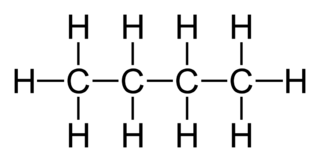
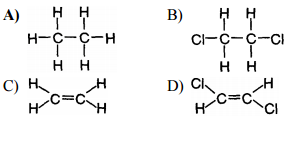

Conditions for cracking is...
High temperature
Low temperature
Catalyst and steam
catalyst or steam
8.7: What liquid is used to detect carbon dioxide?
Water
Alkene Water
Bromine Water
Limewater

What fractions come out at X and Y?
A Vapours condense when they become cool enough.
B This column is hot at the bottom and gets cooler towards the top.
C Vapours from the oil rise through the column.
D Liquids are led out of the column at different heights.
E Crude oil is heated and enters a tall fractionating column.
E B C A D
E B C D A`
B C A D E
Crude oil is made up of:
Only one type of hydrocarbon
Short chain hydrocarbons only
A mixture if different hydrocarbons of different lengths
Long chain hydrocarbons only

Where do short chain hydrocarbons collect?
At the top
In the middle
At the bottom
What type of reaction is cracking?
Addition
Displacement
Thermal decomposition
Neutralisation
What happened to the carbon dioxide that was dissolved in the early oceans?
It evaporated
It turned into sediment
It was changed into oxygen


Which is the correct definition for the term 'polymer'?
a molecule containing only carbon and hydrogen
short molecule made of a few repeating units
long, chain-like molecule made of repeating units
chain-like molecule that contains hydrogen and oxygen
Which of these is untrue about a fractional distillation column
The column is hottest at the top and coolest at the bottom
As the size of the molecules increases their boiling point increases
As the size of the molecules increases the viscosity increases
The column is hottest at the bottom and coolest at the top
The boiling of alkanes increases as they bigger because
the strength of the metallic bonds increases
the strength of the ionic bonds increases
the strength of the covalent bonds increases
the strength of the intermolecular forces increases
The fraction kerosine is used for
Cars
chemical industry
lorries
planes
Distillation is a technique which separates substances based on which physical property?
density
viscosity
boiling point
melting point
When testing for alkenes (unsaturation) bromine water turns from...
orange --> blue/black
colourless --> pink
orange --> colourless
orange --> clear
Molecules collected at the top of the fractionating column tend to be...
more viscous, less flammable and less volatile
less viscous, more flammable and more volatile
more viscous, more flammable and less volatile
less viscous, less flammable and more volatile
Molecules collected at the bottom of the fractionating column tend to be...
more viscous, less flammable and less volatile
less viscous, more flammable and more volatile
more viscous, more flammable and less volatile
less viscous, less flammable and more volatile
What change of states are included in fractional distillation? (Can select two or more answers)
Melting
Evaporation
Condensation
Freezing
What is the most important feature in fractional distillation?
The two component part must have different boiling point
The two component part must have similar boiling point
The two component part must have same boiling point


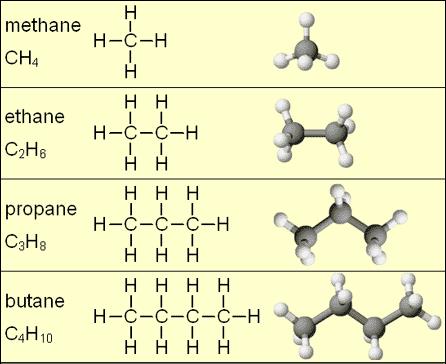
Which of these substances is not a hydrocarbon?
methane
ethane
propane
butane
ammonia
A fraction of crude oil is made up of:
Hydrocarbons of similar chain lengths
Numbers
Large hydrocarbons
Alkenes only
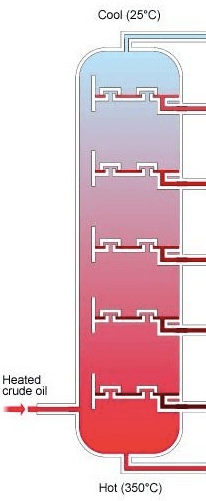
What process happens at each level in the fractionating column?
Evaporation
Condensation
Combustion
Crude oil is known as a finite resource because
It is found underground
It takes millions of years to form
It will run out one day
it is made from dead plants and animals
Which of these is untrue about a fractional distillation column
The column is hottest at the top and coolest at the bottom
As the size of the molecules increases their boiling point increases
As the size of the molecules increases the viscosity increases
The column is hottest at the bottom and coolest at the top
How is distilled water different to sea water?
it's a mixture
it's a formulation
it boils at 100 degrees C
it freezes over a range of temperatures
it is more salty
Give one way that CO2 emissions can be reduced when manufacturing a plastic bottle?
use recycled plastic
recycle the bottle
use thicker plastic
burn it afterwards
sell it locally
What is Le Chatelier's Principle?
If you change the Conditions of a Reversible Reaction at Equilibrium the system will try to Counteract that change
If you change the Conditions of a Reversible Reaction at Equilibrium the system will Accelerate the Change
If a Reversible Reaction is Exothermic one way what will it be the Other way?
Endothermic
Exothermic
What happens to a Reversible Reaction when you increase the Temperature?
It Favours the Endothermic Reaction
It Favours the Exothermic Reaction
What happens to a Reversible Reaction when you increase the Pressure?
It Favours the reaction with Fewer molecules of Gas
It Favours the reaction with More molecules of Gas
What happens to a Reversible Reaction when you Increase the Concentration of the Products
It Produces more Reactants
It Produces more Products
What happens to a Reversible Reaction when you Increase the Concentration of the Reactants
It Produces more Reactants
It Produces more Products
What is the general formula for Alkenes?
CnH2n+2
CnH2n
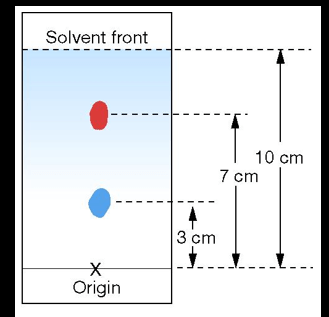
How do you Calculate RF Values?
Distance Travelled by substance/ Distance travelled by solvent
Distance Travelled by Solvent/ Distance travelled by Substance
Which one is the test for Chlorine gas?
Bleaches damp Litmus Paper
Relights a glowing splint
Turns Limewater Cloudy
Creates a Pop when you hold a lit Splint near it
Which one is the test for Hydrogen gas?
Bleaches damp Litmus Paper
Relights a glowing splint
Turns Limewater Cloudy
Creates a Pop when you hold a lit Splint near it
What is a formulation?
Milk
A mixture designed for a purpose
Calculation
A random mixture
Which soluble gas is responsible for acid rain?
Hydrogen
Sulphur dioxide
Methane
Carbon dioxide
Which gas makes up 78% of our atmosphere?
Nitrogen
Oxygen
Carbon dioxide
Argon
Which TWO processes are most responsible for the reduction in carbon dioxide in Earth's early atmosphere?
Respiration
Photosynthesis
Combustion
Formation of the oceans
Which of the following in NOT a property of catalysts.
They speed up reactions
They are expensive
They lower activation energy
They are not used up
They are specific
Which of these substances is NOT a formulation
paint
fertilisers
fuels
diamond
Which of these is NOT a greenhouse gas?
Hydrogen
Water vapour
Methane
Carbon dioxide
Which one is an Alkane?
Has a C--C Single Bond
Has a C==C Double Bond
In Chromatography which is the Moblie Phase?
Where the molecules can move. Always a gas or liquid
Where the molecules can't move. This can be a solid or a thick liquid
In Chromatography which is the Stationary Phase?
Where the molecules can move. Always a gas or liquid
Where the molecules can't move. This can be a solid or a thick liquid
What was the First Phase of the forming of Earth's Atmosphere?
Surface was covered with Volcanoes which released lots of gasses. The Atmosphere was mainly Carbon Dioxide with Little Oxygen. Nitrogen, Methane, Ammonia and Water Vapour were also present
Water Vapour Condensed to form Oceans. A lot of Carbon Dioxide dissolved in the Ocean forming Sediment. Green plants and Algea evolved which also absorbed the CO2 through Photosynthesis
The Algea also produced Oxygen allowing for more Complex Lifeforms to evolve. The atmosphere finally reached a point where it was 80% Nitrogen and 20% Oxygen
What was the Second Phase of the forming of Earth's Atmosphere?
Surface was covered with Volcanoes which released lots of gasses. The Atmosphere was mainly Carbon Dioxide with Little Oxygen. Nitrogen, Methane, Ammonia and Water Vapour were also present
Water Vapour Condensed to form Oceans. A lot of Carbon Dioxide dissolved in the Ocean forming Sediment. Green plants and Algea evolved which also absorbed the CO2 through Photosynthesis
The Algea also produced Oxygen allowing for more Complex Lifeforms to evolve. The atmosphere finally reached a point where it was 80% Nitrogen and 20% Oxygen
What was the Third Phase of the forming of Earth's Atmosphere?
Surface was covered with Volcanoes which released lots of gasses. The Atmosphere was mainly Carbon Dioxide with Little Oxygen. Nitrogen, Methane, Ammonia and Water Vapour were also present
Water Vapour Condensed to form Oceans. A lot of Carbon Dioxide dissolved in the Ocean forming Sediment. Green plants and Algea evolved which also absorbed the CO2 through Photosynthesis
The Algea also produced Oxygen allowing for more Complex Lifeforms to evolve. The atmosphere finally reached a point where it was 80% Nitrogen and 20% Oxygen
What are the 2 processes used in making Potable Water?
Filtration
Sterilisation
Distillation
Which Part of a Graph shows the Rate of the reaction?
Gradient
Y-Intercept


Scientists think Earth formed _____________ ago.
100,000 years
4,600,000 years
4,600 years
4,600,000,000 years


How is water sterilised?
Passing fresh water through filter beds and sterilising
Removal of salt from sea water
Reverse osmosis or distillation
Using chlorine, ozone or ultraviolet light
What is desalination?
Passing fresh water through filter beds and sterilising
Removal of salt from sea water
Reverse osmosis or distillation
Using chlorine, ozone or ultraviolet light
What is the first step in the water treatment process?
coagulation
filtration
sterilisation
concentation
What is the main disadvantage of desalination?
It requires a large amount of energy
It is carried out at a high pressure
A low temperature is used
It has a low atom economy

Which substances would you NOT find in pure water?
Bacteria
Minerals
Dirt
Acids
None of these
In the UK how is potable water produced?
Passing fresh water through filter beds and sterilising
Removal of salt from sea water
Reverse osmosis or distillation
Evaporated from a mixture of impure water
A large amount of aluminium sulfate was accidentally added to the drinking water supply at a water treatment works.
Scientists tested a sample of the drinking water to show that it contained dissolved solids.
Which two methods show the presence of dissolved solids in the sample of drinking water?
Add damp litmus paper to the sample.
Evaporate all water from the sample.
Measure the sample’s boiling point.
Test the sample with a glowing splint.

There are two main steps in producing drinking water from fresh water.
What is the reason for STERILISATION?
Desalination
Improve taste
Increase pH
Kill bacteria
Remove solids
There are two main steps in producing drinking water from fresh water.
What is the reason for FILTRATION?
Desalination
Improve taste
Increase pH
Kill bacteria
Remove solids

Give one disadvantage of recycling this type of ballpoint pen.
Can be refilled and reused
Conserves resources of crude oil and ores
High cost of separating materials
Polymers and alloys are not expensive
Give one advantage of recycling this type of ballpoint pen.
Can be refilled and reused
Conserves resources of crude oil and ores
High cost of separating materials
Polymers and alloys are not expensive
Petrol contains a mixture of compounds, including octane (C8H18).
Complete the word equation for the complete combustion of octane.
octane + oxygen → ________________ + __________________
Water
Carbon monoxide
Carbon dioxide
Sulphur dioxide

What type of reaction is shown by the energy level diagram?
Exothermic
Endothermic
Which arrow, A, B or C, shows the activation energy?
A
B
C
Vehicles produce most of the atmospheric pollution in cities.
How could the atmospheric pollution in cities be reduced? Choose two.
Build more roads in cities
Build new car factories
Develop fuel efficient engines
Make car tax cheaper
Use electric cars
Which two gases are produced when fuels burn in car engines?
Ammonia
Carbon dioxide
Carbon monoxide
Nitrogen
Oxygen
Particulates and sulfur dioxide are pollutants produced when some fuels burn. Give the polluting effect of the pollutant.
Pollutant: Sulfur dioxide
Acid rain
Global dimming
Global warming
Landfill
Sewage sludge
Particulates and sulfur dioxide are pollutants produced when some fuels burn. Give the polluting effect of the pollutant.
Pollutant: Particulates
Acid rain
Global dimming
Global warming
Landfill
Sewage sludge
Plates are made from ceramics, paper or poly(propene).
Paper plates are biodegradable and recyclable.
Which stage of a life cycle assessment (LCA) would contain this information?
Disposal at the end of useful life
Extracting and processing raw materials
Manufacturing and packaging
Use and operation during lifetime
The student concludes that the rate of reaction is greater when the concentration of hydrochloric acid is higher.
Why is the rate of reaction greater when the concentration of hydrochloric acid is higher?
Choose two answers.
The particles are moving faster
The particles have more energy
The surface area of magnesium is smaller
There are more particle collisions each second
There are more particles in the same volume
Hydrogen peroxide molecules collide with manganese dioxide particles during the reaction.
Why does fine manganese dioxide powder produce a higher rate of reaction than coarse manganese dioxide lumps?
Fine manganese dioxide powder has a larger surface area.
Fine manganese dioxide powder has larger particles.
Fine manganese dioxide powder produces less frequent collisions.
Student B used a method which gave repeatable results. How could student B improve the accuracy of these results?
Calculate a mean but do not include any anomalous results.
Calculate a mean but do not include the first set of results.
Record the results in a table and plot the results on a bar chart.
Record the results in a table and plot the results on a line graph.
Student A investigated the effect of the particle size of a manganese dioxide catalyst on the rate of the reaction.
This is the method used.
1. Measure 25 cm3 hydrogen peroxide solution into a conical flask.
2. Add some fine manganese dioxide powder to the conical flask.
3. Measure the volume of oxygen produced every 30 seconds for 10 minutes.
4. Repeat steps 1 to 3 two more times.
5. Repeat steps 1 to 4 with coarse manganese dioxide lumps.
The method student A used did not give repeatable results.
How could student A make the results repeatable?
Student A should make measurements every 2 minutes.
Student A should measure the mass of manganese dioxide.
Student A should use 50 cm3 hydrogen peroxide.
Student A should use a beaker instead of a conical flask.
A nickel catalyst is used in this reaction.
Why is a catalyst used in this reaction?
Choose TWO answers.
To increase the temperature
To produce less carbon monoxide
To reduce costs
To use less energy
To use less methane
The large cube of calcium carbonate was divided into eight smaller cubes.
The eight smaller cubes have a greater total surface area than the one large cube. The rate of reaction of the eight smaller cubes is ____________
Faster
Slower
The same
The balance used to weigh 10.0 g of calcium carbonate lumps caused an error.
The balance always read 0.2 g before being used.
What type of error was caused by the balance?
Human error
Random error
Systematic error
The student used the 50 cm3 line on the conical flask to measure the volume of hydrochloric acid. Suggest a piece of equipment the student could use to make the measurement of volume more accurate.
Measuring cylinder
Beaker
Test-tube

What is represented by label X?
Activation energy with a catalyst
Activation energy without a catalyst
Overall energy change with a catalyst
Overall energy change without a catalyst
What would the rate be if 10g of product are produced in 20 seconds?
5 g/s
0.5 g/s
1.5 g/s
2 g/s
Which of the following would NOT increase the rate of reaction?
Raising the temperature.
Adding a catalyst.
Increasing the concentration of the reactants.
Increasing the volume of the container.
Of the following, which will lower the activation energy for a reaction?
Increasing the concentrations of reactants.
Raising the temperature of the reaction.
Adding a catalyst for the reaction.
Removing products as the reaction proceeds.
A student carries out an experiment to measure accurately the temperature changes when different metals are added to iron(II) sulfate solution. State a suitable container to measure the iron(II) sulfate solution in this experiment.
Beaker
Measuring cylinder
Spatula
Mass balance
Zinc reacts with dilute hydrochloric acid to produce zinc chloride and hydrogen.
When zinc powder is used, instead of larger pieces of zinc, the reaction is faster. Why is this?
The activation energy is lower so a greater proportion of reactions are successful.
The particles have more energy so move around faster and collide more frequently.
Greater surface area means particles collide more frequently.
More particles are in a given volume so the activation energy decreases.

The decomposition of hydrogen peroxide is catalysed by adding a small amount of manganese (IV) oxide. Which of the graphs below shows the mass of the catalyst as the reaction takes place?
A
B
C
D

Look at the graph. Use the tangent to the curve to work out the rate of reaction.
0.5
1
1.5
2

Look at the graph. At what time does the reaction finish?
4 minutes
5 minutes
6 minutes
7 minutes
How can rate of reaction be measured in reactions?
Measure mass lost when gas produced.
Measure volume of gas produced.
Measure colour change or formation of a solid.
Measure time taken for liquid to disappear.

The ______________is required to break the bonds of the reactants.
Carbonic energy
Activation energy
Plutonic energy
Energi Gaib
Why does a higher concentration increase the rate of reaction?
it increases the amount of reactants
it lowers the activation energy
it increases the energy of particle collisions
it increases the frequency of particle collisions
Crude oil is finite because we use it before more can be formed.
How was crude oil formed?
From the remains of an ancient biomass, consisting mainly of plankton, that was buried in mud
Mostly from the remains of dinosaur bones
By fractional distillation
By cracking

