
 Worksheets
Anatomy Final Exam 21-22
Total questions: 150
Worksheet time: 1hrs 22mins

What system allows the body to move and controls movement within the body?
Digestive
Sensory
Muscular
Integumentary

What system coordinates body activity through hormones?
Integumentary
Endocrine
Reproductive
Respiratory

What system covers the body and protects other body system?
Integumentary
Sensory
Skeletal
Cardiovascular

What system exchanges gases between the air and blood?
Circulatory
Respiratory
Urinary
Nervous

What system provides body system support and protection?
Cardiovascular
Skeletal
Digestive
Integumentary

What system processes food and eliminates food waste?
Endocrine
Integumentary
Urinary
Digestive

What system filters the blood and removes liquid waste?
Urinary
Sensory
Digestive
Reproductive

What system regulates the environment and directs the activities of other body system?
Nervous
Integumentary
Circulatory
Endocrine

What system perceives the environment and sends messages to and from the brain?
Nervous
Cardiovascular
Sensory
Integumentary

What system provides for human reproduction
Endocrine
Integumantary
Urinary
Reproductive

What is an organized group of organs that perform a particular function?
Chromosomes
Body systems
Cells
Anatomy & Physiology
Which system fights disease?
excretory or urinary
nervous
immune or lymphatic
digestive
The nose is ________ to the ears.
medial
lateral
posterior
distal
The nose is ______________ to the ears.
anterior
posterior
lateral
distal
The fingers are _____________ to the shoulder.
Distal
Proximal
lateral
medial
The hip is ________ to the toes
proximal
distal
inferior
medial
The spine is ___________ to the heart.
posterior
anterior
deep
lateral
The integument is _____________ to the muscle
superficial
deep
distal
proximal
Which statement below is the MOST accurate?
The umbilicus is superficial, anterior to the spine, inferior to the chest, and superior to the pelvis.
The umbilicus is superior to the knees, inferior to the head and anterior to the ribs
The umbilicus is anterior to the occiput, superior to the feet and inferior to the shoulder.
Towards the head or above.
Superior
Proximal
Inferior
Medial

Position with arms by side, feet and palms forward
Decubitus position
Fowler position
knee-chest
Anatomical position

The plane that passes from front to back and divides the body into right and left portions.
Sagittal (medial)
Transverse (Horizontal)
Frontal (coronal)

The plane that divides the body into anterior and posterior parts:
Sagittal (Medial)
Transverse (Horizontal)
Frontal (Coronal)

The plane that passes horizontally dividing the body into superior and inferior parts:
Sagittal (Medial)
Transverse (Horizontal)
Frontal (Coronal)
Toward the middle/midline of the body:
Medial
Intermediate
Lateral
Ipilateral
AWAY from the middle/midline of the body:
Medial
Lateral
Contralateral
Ipsilateral
Farther into the body, away from the surface:
Superficial
Deep
Inferior
Superior
Feedback that tends to cause the level of a variable to change in the same direction as an initial change.
Negative feedback
Homeostasis
Positive feedback
Physiology
Net effect is that the output of the system shuts off the original stimulus or reduces its intensity.
Negative feedback
Homeostasis
Positive feedback
Physiology
A state of body equilibrium or stable internal environment of the body.
Anatomy
Homeostasis
Physiology
Feedback
A group of organs that work together to perform a vital body function.
Organelle
Organism
Organ system
Organic
A part of the body formed of two or more tissues and adapted to carry out a specific function.
Organ
Organelle
Organ system
Organism
A group of similar cells.
Organelles
Tissues
Organs
Cell groups
Basic structural and functional unit of the body.
Organelle
Organism
Tissue
Cell
Study of the function of the body.
Anatomy
Physiology
Homeostasis
Functionality
Study of the structures of the body
Anatomy
Physiology
Homeostasis
Feedback mechanism


Long bones have a _____ that makes up most of bone's length and is composed of compact bone
epiphyseal plate
yellow marrow
diaphysis
articular cartilage
Which of the following statements about ribs is NOT true?
false ribs are indirectly attached
women have more ribs than men
ribs are attached to the thoracic vertebrae
floating ribs are not attached to the sternum
Which of the following bones is NOT part of the axial skeleton?
clavicle
frontal
vertebrae
sternum
The only freely moveable bone in the skull is the ______.
frontal
maxilla
occipital
mandible
Which of the following statements about cranial bones is NOT correct?
frontal bone makes the forehead
parietal bones are larger than the occipital bone
occipital bone is near the ear canal
bones of the cranium are joined by fibrous joints
Bone cells are known as
Lacunae
Osteocytes
Collagen
Osteon
Osteogensis is known as
Bone growth
Bone development
Bone-forming cells
Muscles contract when
thin filaments slide past thin filaments
thick filaments slide past thick filaments
thin filaments slide past thick filaments

Which type of muscle is this?
Skeletal
Cardiac
Smooth
Which type of muscle cell is striated, voluntary and has multiple nuclei located at the periphery?
Cardiac
Smooth
Skeletal

Muscles found on the back of the upper arm are called
Biceps
Gluteus Maximus
Pectorals
Triceps

Muscle found on upper backside of legs
Quadriceps
Biceps
Triceps
Hamstrings

Muscles found on front of upper leg. Also known as a thigh.
Quadriceps
Hamstrings
Deltoids
Pectorals

Shoulder muscles are called
Deltoids
Pectorals
Abdominals
Gluteus Maximus

Name the highlighted muscle
pectorals
deltoid
trapezius
latissimus dorsi

Name the highlighted muscle
latissimus dorsi
obliques
rhomboids
deltoid

Name the highlighted muscle
rectus abdominals
transverse abdominals
external obliques
internal obliques
Integumentary system includes:
(select all possible answers)
skin
nails
muscles
hair
theet
Some cells in the inner layer of the epidermis provide protection from harmful ultraviolet radiation by making a pigment called...
clorophyll
melanin
epidermis
dermis
subcutaneous layer
Connective tissue, nerve cells, muscle fibers, sweat glands, oil glands, and hair follicles are located in ...
epidermis
dermis
subcutaneous layer
Hair follicles usually have _____ associated with them that lubricate the skin and hair
acne
sebaceous glands
sweat glands
nerves and vessels
This burn degree affects only de epidermis
1st
2nd
3rd
4th
Which organ releases digestive enzymes into the small intestine?
pancreas
small intestine
esophagus
salivary glands
What organ is responsible for the majority of the absoption that occurs in the digestive system?
large intestine
small intestine
stomach
oral cavity
The teeth and tongue of the oral cavity break foodstuff down physically. This is an example of
mechanical digestion
chemical digestion
absorption
peristalsis
Which of the following answers correctly sequences the pathway food takes from the beginning to end?
mouth, esophagus, stomach, small intestine, large intestine
mouth, esophagus, stomach, large intestine, small intestine
mouth, stomach, esophagus, small intestine, large intestine
mouth, stomach, esophagus, large intestine, small intestine
Which organ stores and releases bile?
liver
gallbladder
pancreas
Which organ makes bile?
liver
gallbladder
pancreas

Structure 4 is the
pancreas
liver
stomach
gall bladder
Structure 17 is the
pancreas
liver
stomach
gall bladder
Structure 8 is the
pancreas
stomach
large intestine
small intestine
What organ is responsible for the absorption of water and movement of waste?
large intestine
small intestine
stomach
oral cavity
The mouth carries out
mechanical digestion
chemical digestion
mechanical and chemical digestion
No digestion
The tube through which food passes through the body is called the
alimentary canal
digestive system
intestines
esophagus
What is a nerve cell?
axon
neuron
dendrite
myelin
Which 2 are parts of the central nervous system?
brain
nose
spinal cord
left big toe
The brain is covered in a membrane called:
choroid plexus.
meninges.
ventricles.
cerebral aqueduct.
Cranial nerves and spinal nerves are part of the peripheral nervous system.
True
False
When the spinal cord is severed and brain damage occurs, what substance could leak into tissues?
Choroid plexus
Cerebral aqueduct
Cerebrospinal fluid
Corpus callosum
Voluntary muscle movement is coordinated by what part of the brain?
Temporal
Occipital
Frontal
Parietal
What part of the brain deals with appetite and temperature control?
Cerebellum
Cerebrum
Hypothalamus
Brain stem
Someone with a spinal cord injury might experience:
inability to move and respiratory distress
hairloss
increased appetite
none of the above


The two hormones that maintain the lining of the uterus are:
FSH and estrogen
LH and estrogen
estrogen
Progesterone and estrogen

A diagram of the human male reproductive system is given. Which structure produces cells that become sperm?
A
B
C
D

The diagram GIVEN represents a human reproductive system. Meiosis occurs within structure
A
B
C
D
What process produces sperm?
Spermatogensis
Oogenesis
What process produces ova (eggs)?
Spermatogenesis
Oogenesis
Type of circulation that refers to blood flow from the heart to the lungs and back to the heart again?
Systemic circulation
Renal circulation
Portal circulation
Pulmonary circulation
Type of circulation that refers to the blood flowing through the entire body?
Systemic circulation
Renal circulation
Portal circulation
Pulmonary circulation
The contraction/emptying phase of the cardiac cycle?
Systole
Diastole
The relaxing/filling stage of the cardiac cycle?
Systole
Diastole
Coronary arteries...
supply the heart muscle cells with a supply of blood.
supply the brain cells with a supply of blood.
contain deoxygenated blood.
when clogged, cause a stroke.
The type of blood vessel that normally carries de-oxygenated blood back to the heart from body cells?
arteries
capillaries
veins
The type of blood vessel where exchange of gases, nutrients, and wastes occurs?
arteries
capillaries
veins
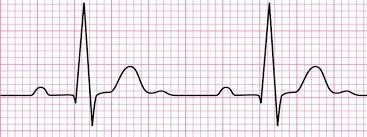
Type of device that measures the electrical currents created by the SA and AV nodes?
AED
MRI
ECG
CAT Scan

The main vein(s) that brings blood to the right atrium?
Aorta
Pulmonary veins
Superior and Inferior vena cava
Jugular vein

Which choice below correctly identifies the layers of the heart from the most outer layer to the most inner layer?
epicardium, myocardium, endocardium
endocardium, myocardium, epicardium
myocardium, endocardium, epicardium
myocardium, epicardium, endocardium
The sac that surrounds and protects the heart?
endocardium
epicardium
myocardium
pericardium

Instrument used to measure blood pressure?
AED
ECG
Sphygmomanometer
ultrasound

Name part N.
Right atrium
left atrium
right ventricle
left ventricle

Name part A.
Pulmonary artery
Pulmonary vein
Superior vena cava
Aorta

Name part B.
Pulmonary arteries
Pulmonary veins
Superior Vena cava
Aorta

Name part M.
Tricuspid valve
Semilunar valve
Bicuspid valve
Mitral valve

Which type of blood vessel carries blood TO the heart?
Arteries
Capillaries
Veins
Venules

High blood viscosity will cause blood flow to...
decrease.
increase.
stay the same.
speed up & then slow down.

What is blood pressure?
Pressure of the blood against the walls of the veins.
Pressure of the heart pushing the blood out.
Pressure of the heart receiving blood.
Pressure of the blood against the walls of the arteries.

As the diameter of a blood vessel DECREASES...
resistance INCREASES.
resistance DECREASES.
resistance is NOT affected.
1. larynx
2. nasal cavity
3. pharynx
4. trachea
Which of the following is the correct order that air would flow during inhalation.
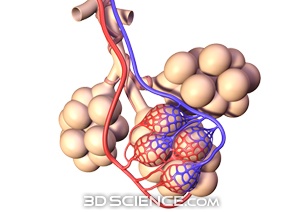
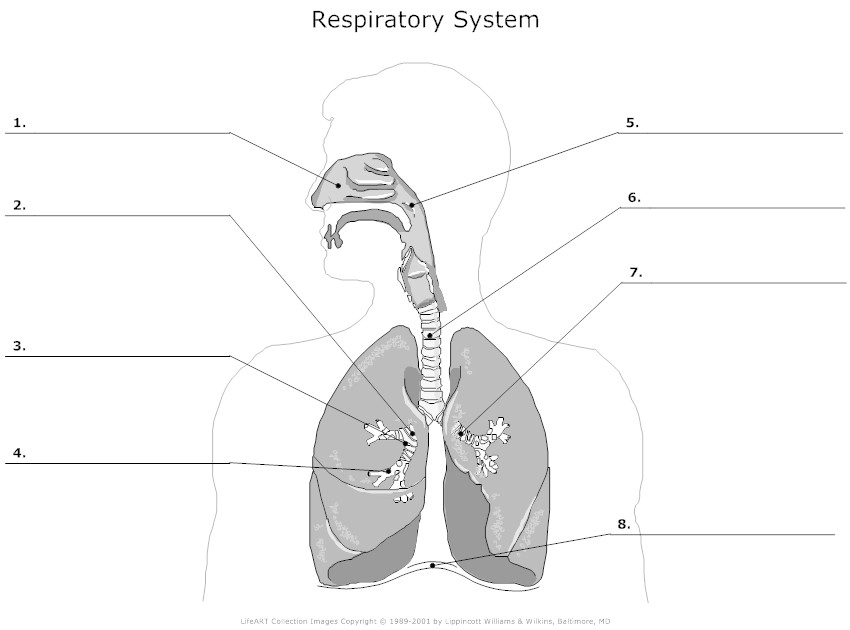

What keeps your bronchi and bronchiole tubes open?
cartilage rings
ligament squares
ciliated cells
muscle
Which system shares the pharynx with the respiratory system?
circulatory
digestive
excretory
skeletal
When you exhale, the diaphragm
moves upwards
moves downwards
flattens
none of the above

