
Font size
 Worksheets
Lowe Final Exam Review 2
Total questions: 50
Worksheet time: 1hrs 28mins
an energy resource that takes millions of years to form from the remains of plants and animals, such a coal, oil, and natural gas
nonrenewable
renewable
a natural non renewable fuel such as coal, oil, or natural gas formed over a very long time in the geological past from the remains of living organisms
fossil fuel
hydropower
geothermal
wind
heat harnessed from deep beneath Earth's surface and converted to useable energy
Geothermal
biomass
wind
solar
the sun's energy is collected and converted to useable energy
nuclear
biomass
natural gas
solar
the splitting of uranium atoms to release energy.
geothermal
wind
nuclear
natural gas
turbines harness the movement of air and convert it to useable energy
wind
biomass
natural gas
hydropower
Calculate the energy released from a battery in a hand vacuum cleaner that was switched on for 45 s. The voltage drop was 6 V and the current was 0.30 A.
35 J
81 J
42 J
82 W
Calculate the power rating of an electric toaster that uses 210 000 J while toasting bread for 140 s
1500 J
1200 W
1500 W
1300 J
Calculate the percent efficiency of an electric motor that uses 15 000 J of energy to produce
11 500 J of useful movement.
76.6%
82.3%
75.4%
23.3%
Calculate the energy used by a coffee maker that has a power rating of 0.900 kW and operated for 17 hours.
15.3 kwh
17.3 kwh
900 kwh
1200 kw
Calculate the cost of operating a heater of 1.75kw for 20 hours at rate of $0.13 per kwh?
$6.75
$4.55
$53.43
$45.53
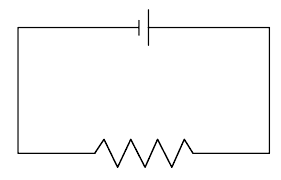
Resistor symbol is


Potentiometer symbol is
Battery symbol is
LED symbol is
LED negative is
Longer pin
Shorter pin
LED positive is
Longer pin
Shorter pin
What is the main source of current(power) in a circuit?
wire
light bulb
battery
insulator


What is the centroid representing?
The object's center of gravity.
The object's dimensions.
The object's X and Y.
The object's shape.

What is the centroid of the following object?
X=2 in, Y=1 in
X=1 in, Y=2 in
X=4 in, Y=2 in
X=2 in, Y=4 in

What is the centroid of the following object?
X=1 in, Y=2 in
X=3 in, Y=1.5 in
X=2 in, Y=1 in
X=1.5 in, Y=3 in

What is the centroid of the following object?
X=2.5 in, Y=2.5 in
X=5 in, Y=5 in
X=1.06 in, Y=2.5 in
X=1.67 in, Y=1.67 in

What is the centroid of the following object?
X=0.375 in, Y=0.25 in
X=0.25 in, Y=0.375 in
X=0.75 in, Y=0.5 in
X=0.25 in, Y=0.17 in

What is the centroid of the following object?
X=0.17 in, Y=0.33 in
X=0.33 in, Y=0.17 in
X=0.25 in, Y=0.5 in
X=0.5 in, Y=0.25 in

What is the centroid of the following object?
X=1.27 in, Y=3 in
X=3 in, Y=1.27 in
X=3 in, Y=3 in
X=2.55 in, Y=3 in
Σ =
Sigma
Delta
epsilon
Beta
What are you finding with sigma?
the centroid of a square
The total sum
The dived sum
The area of a triangle

What is the centroid of the following object?
X=0.85 in, Y=2 in
X=2 in, Y=0.85 in
X=2 in, Y=1.7 in
X=1.7 in, Y=2 in

What is the centroid of this object?
x = 2.71 in, y = 2.71 in
x = 3 in, y = 3 in
x = 2.75 in, y = 2.75 in
x = 3.14 in, y = 3.14 in
If given a complex shape how do you find the true centroid?
Break it into smaller shapes and add the centroid locations together
Break it into smaller shapes and average the centroid locations
Break it into large shapes and subtract the smallest from the largest
Multiply the centroid locations with the shape area, add the products up, divide by total shape area
If you have a semicircle with a radius of 6.72 cm, where is it's centroid located? (length in x, height in y)
x = 6.72 cm, y = 2.85 cm
x = 3.36 cm, y = 2.85 cm
x = 13.44 cm, y = 0.62 cm
x = 3.36 cm, y = 0.57 cm

