Wayground logo

Free Printable Worksheets

Font size

S
M
L
XL
Worksheets

Biology Final Exam

Total questions: 75

Worksheet time: 2hrs 49mins

Name
Class
Date
1.
The tendency of an organism to maintain a balanced state in order to stay healthy.
a)
Stimuli
b)
Response
c)
Tropism
d)
Homestasis
2.
A water strider can skate along the top of a pond because:
a)
covalent bonds result in water cohesion
b)
hydrogen bonds result in water cohesion (surface tension)
c)
water striders have adapted to take advantage of water cohesion
d)
low surface tension of water
3.

Which of the following is NOT a biological molecule>

a)

Carbohydrates

b)

Lipids

c)

Proteins

d)

Water

4.
What is the purpose  of an enzyme?
a)
give permission for the reaction
b)
raise activation energy
c)
speed up reactions
d)
control how many reactions occur
5.
Basic unit of life
a)
Cell
b)
Tissue
c)
Organ
d)
Organ System
6.

Which is a characteristic of most single-celled organisms?

a)

They have a complex nervous system.

b)

They contain several different types of cells.

c)

They perform all life processes.

d)

They have a circulatory and a respiratory system.

7.

Cells

a)

have the same DNA regardless of type

b)

have DNA based on cell type

8.
What is NOT TRUE about the cell membrane
a)
It controls what enters and leaves the cell
b)
Semipermeable
c)
Phospholipid bilayer
d)
Contains digestive enzymes
9.

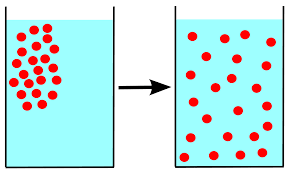
The picture below is an example of _________________.

a)

osmosis

b)

isotonic

c)

diffusion

d)

active transport

10.
Contains the genetic material and serves as the control center of the cell
a)
nuclear membrane
b)
spindle fibers
c)
nucleus
d)
telophase
11.

Mitotic cell division is...

a)

the process in which a daughter cell copies itself to generate one new cell.

b)

the process in which a parent cell copies itself to generate four identical daughter cells.

c)

the process in which a parent cell copies itself to generate two identical daughter cells.

12.

Plant cells make their own food by taking in

a)

oxygen and water.

b)

oxygen and hydrogen.

c)

carbon dioxide and water.

d)

carbon dioxide and oxygen.

13.

In what organelle of plant cells does photosynthesis occur?

a)

mitochondria

b)

centrioles

c)

chloroplast

d)

ribosomes

14.
This process releases chemical energy from sugars and other carbon-based molecules to make ATP when oxygen is present.
a)
photosynthesis
b)
light-independent reaction
c)
cellular respiration
d)
light-dependent reaction
15.

A nucleotide is composed of

a)

A phosphate, sugar and nitrogenous base

b)

A protein, protein and Guanine

c)

A phosphate, Adenine, and nitrogenous base

d)

A protein, Adenine and nitrogenous base
16.
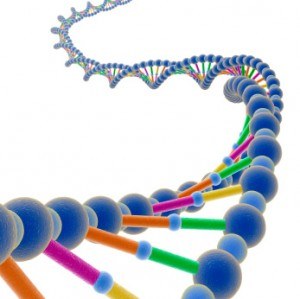
Which of the following best describes a DNA molecule?
a)
double helix
b)
contains ribose
c)
made of amino acids
d)
contains Uracil
17.

Why must transcription occur where DNA can be found?

a)

because DNA can't leave

b)

because ribosomes are in the nucleus

c)

because DNA polymerase is found there

d)

because helicase unzips the DNA

18.

Which organelle is the location where protein is made?

a)

Ribosome

b)

Nucleus

c)

Cytoplasm

d)

Nucleotide

19.

When these bond together, they form a protein

a)

Amino Acids

b)

Peptide Bonds

c)

Ribose

d)

Nucleotides

20.
The cells produced via meiosis are called:
a)
sex cells
b)
somatic cells
c)
body cells
d)
skin cells
21.
Meiosis makes sperm and egg cells. In humans, sperm and egg cells each have _____ chromosomes. Therefore a fertilized human egg cell (sperm and egg cell combined) would create a cell with _____ chromosomes.
a)
23, 46
b)
46, 23
c)
2, 4
d)
50, 100
22.

If the diploid number of carrots is 18, the haploid number is

a)

18

b)

9

c)

27

d)

36

23.

The exchange of pieces of chromatin between homologous chromosomes during Prophase I of meiosis is called

a)

independent assortment

b)

mutation

c)

crossing over

d)

random fertilization

24.

What mutation has occurred here?

T-G-A-C-C-A

T-G-A-G-C-A

a)

Substitution

b)

Deletion

c)

Insertion

d)

Frameshift

25.

Why are insertion and deletion (frameshift) mutations so harmful?

a)

They change all of the codons from the mutation on down the line, which changes the amino acid sequence

b)

They insert things that an organism doesn't need.

c)

They often delete things that organisms need.

d)

Insertion and deletions are not any more harmful than substitution mutations.

26.

What does the notation TT mean to a geneticist?

a)

two dominant alleles

b)

heterozygous alleles

c)

at least one dominant allele

d)

one dominant and one recessive allele

27.

Factors that control traits are called

a)

parents

b)

genes

c)

purebreds

d)

recessives

28.

If a homozygous black guinea pig (BB) is crossed with a homozygous white guinea pig (bb), what is the probability that an offspring will have black fur?

a)

25%

b)

50%

c)

75%

d)

100%

29.

Which of the following statements about chromosomes is correct?

a)

Chromosomes are long, thread-like structures

b)

Chromosomes are found in the nucleus of all cells in the human body

c)

Chromosomes contain DNA

d)

All of the above

30.
Putting the gene for bioluminescence into a fish is an example of...
a)
Genetic Engineering
b)
Selective Breeding
c)
Artificial Selection
d)
Gene Mutation
31.
Advantages of genetically modified crops include(s)
a)
insect resistance
b)
drought/freeze resistance
c)
higher yield
d)
all of these are reasons for using GMOs
32.
Bob was found dead in his home.  Crime scene analysis showed signs of a struggle.  Blood was collected from the crime scene, the victim, and three suspects.  Which suspect likely committed the crime? 
a)
Sue
b)
Lisa
c)
John
d)
None of these
33.

When organisms are better adapted to their environment they will survive and reproduce more successfully than organisms less adapted. This process is called what?

a)

Selective breeding

b)

Natural Selection

c)

Cloning

d)

Evolution of all species

34.

Sometimes bones in the front limbs of animals are very similar in structure. What do we call similar bone structures that indicate a link to a common ancestor?

a)

Adaptations

b)

Gradualism

c)

Homologous Structures

d)

Extinction

35.

What most likely caused the finches on the Galapagos Islands to have beaks that were different from the finches on the mainland?

a)

There were different types of predators on the island.

b)

There were different types of food available on the island.

c)

The finches had no water to drink.

d)

The finches on the mainland could not fly high enough.

36.

The history of life as documented by the remains or imprints of organisms from earlier geologic periods preserved in rock is called the _______________.

a)

fossil record

b)

rock bed

c)

chemical compound

d)

varying isotope

37.

_________________ show clear changes in an organism over time, the environment organisms lived in, the time period the organism lived in, and where the organism lived.

a)

DNA

b)

Vestigial structures

c)

Fossils

d)

Homologous structures

38.

Recently, scientists have been able to use ___________to find common proteins and amino acids to determine how closely related species are.

a)

DNA

b)

Vestigial structures

c)

Fossils

d)

Homologous structures

39.
Survival of the Fittest and Evolution were proposed by what scientist?
a)
Charles Darwin
b)
Albert Einstein
c)
Steven Hawking
d)
Isaac Newton
40.
A flash flood carried a raft of Amazon ants away from their original population. There is enough distance between the two groups, that they will never meet in nature again. What type of reproductive barrier is this?
a)
behavioral isolation
b)
temporal isolation 
c)
gametic isolation
d)
geographic isolation 
41.
The flowers of pink tulips open in the morning, while the flowers of lavender tulips open in the early afternoon. The bees that pollinate these tulips cannot carry pollen back & forth between the two types of tulips because of their flowers being closed at different times of day. What type of reproductive barrier is this?
a)
behavioral isolation
b)
hybrid sterility 
c)
temporal isolation
d)
mechanical isolation 
42.
The term for the formation of new and distinct species over the course of evolution is...
a)
speciation
b)
biological species concept
c)
reproductive barrier
d)
natural selection
43.
What is a species? 
a)
A group of organisms that can mate with each other and produce fertile offspring. 
b)
A group of organisms that can mate and produce offspring even if those offspring are infertile.
c)
A group of organisms that genetically are very different from each other. 
d)
Indivual organisms that live in the same environment. 
44.

Viruses are microscopic infectious agents that can only replicate inside a host cell

a)

FALSE

b)

TRUE

45.
Viruses are...
a)
prokaryotic
b)
eukaryotic
c)
non-living
d)
endospores
46.
Needs host cell to reproduce.
a)
Virus
b)
Bacteria
c)
Fungus
d)
Protozoan
47.
One reason that viruses are considered to be nonliving is that they are not made of ______.
a)
protein
b)
viruses
c)
bacteria
d)
cells
48.
Prokaryotes are found in which domain
a)
Animalia
b)
Plantae
c)
Eukarya
d)
Bacteria
49.
When a new viral infection appears in a population, scientists usually try to develop a vaccine against the virus. Which substances would most likely be contained in the new vaccine?
a)
live bacteria that ingest viruses
b)
white blood cells from an infected individual
c)
weakened viruses associated with the infection
d)
a variety of microbes that will attack the virus
50.

Which kingdoms contain autotrophic organisms?

a)

Protista and Fungi

b)

Fungi and Animalia

c)

Plantae and Protista

d)

Animalia and Plantae

51.
What is the difference between unicellular and multicellular?
a)
They are the same
b)
One has a nucleus and one doesn't
c)
Unicellular has one cell and multicellular has many 
d)
One is bacteria and the is archaebacteria
52.
Which domain is capable of living in extreme environments like hot springs, geysers, or very salty waters?
a)
Bacteria
b)
Archaea
c)
Eukarya
53.
What taxa are in a scientific name?
a)
Genus and Kingdom
b)
Species and Family 
c)
Species and Class
d)
Genus and Species
54.
What are the 8 levels of classification of living things from most general to most specific?
a)
domain, kingdom, phylum, class, order, family, genus, species
b)
domain, kingdom, class, phylum, order, family, genius, species
c)
domain, kingdom, family, class, order, family, genus, species
d)
domain, king, phillip, class, order, family, genus, species
55.

How does an amoeba move?

a)

It uses cilia.

b)

It uses a flagellum.

c)

It uses pseudopods.

d)

It cannot move.

56.

Which organelle functions to remove excess water in many protists?

a)

micronucleus

b)

contractile vacuole

c)

food vacuole

d)

oral groove

57.

The long, whip-like structure which helps some protists move is called the ______________.

a)

cilia

b)

flagellum

c)

tail

d)

pseudopod

58.

What substance is made through photosynthesis and is food for the plant?

a)

Chlorophyll

b)

Chloroplast

c)

Glucose

d)

Dextrose

59.
Which of these includes a plant embryo (seed), a food supply, and a protective covering?
a)
flower
b)
fruit
c)
stem
d)
stamen
60.
Organisms such as fungi return chemicals to the soil and the atmosphere and are called . . 
a)
Autotrophs
b)
Decomposers
c)
Photosynthetic
d)
Prokaryotes
61.

Which of the following is a unicellular fungus?

a)

Foraminifera

b)

Yeast

c)

Amoeba

d)

Algae

62.
All these organisms share the same
a)
Biome
b)
Population
c)
Community
d)
Habitat
63.

Which of the following statements account for the change in population seen between years 7 and 8?

a)

The birth rate of the pigeons increased.

b)

The emigration rate of the pigeons decreased.

c)

The death rate of the pigeons exceeded the birth rate.

d)

The neighborhood reached its carrying capacity for the pigeon population

64.
In the energy pyramid here, which organisms have the most energy available?
a)
Producers
b)
Carnivores
c)
Herbivores
d)
Top Predator
65.
If there is 1000 Kcal available in the producers in trophic level 1, how much energy is available in the herbivores in trophic level 2?
a)
10 Kcal
b)
1 Kcal
c)
100 Kcal
d)
1000 Kcal
66.
A human & a Tape Worm: The tape worm gets a place to live in the intestines of the human and food from the human. The human loses weight and nutrients from the tape worm.
a)
Mutualism
b)
Commensalism
c)
Parasitism
67.
Bird & Tree: A bird builds a nest in a hole in the trunk of the tree. It is protected from the rain and predators. The tree is not harmed or helped by the bird.
a)
Mutualism
b)
Commensalism
c)
Parasitism
68.
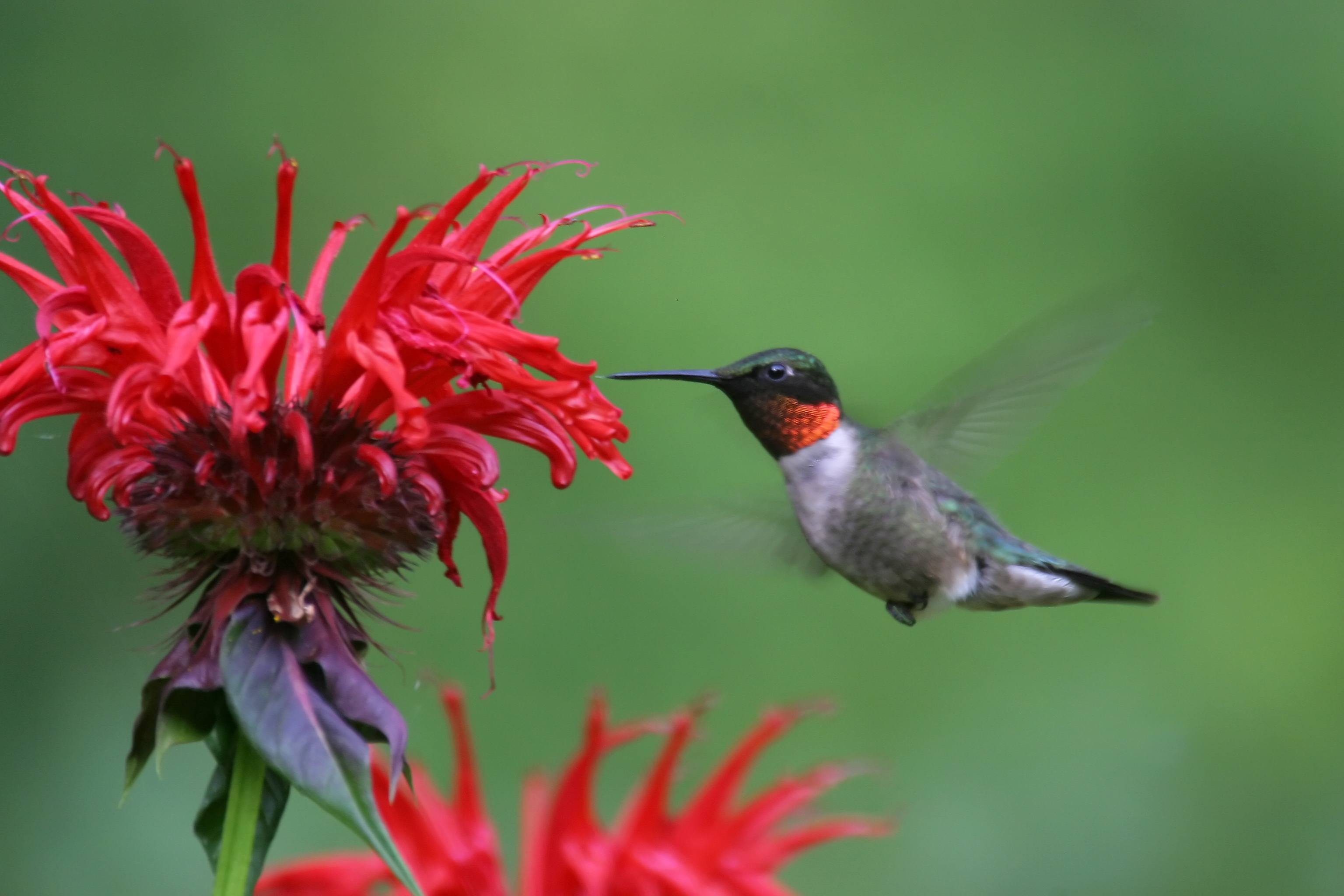
What type of symbiosis?  Hummingbirds feed on nectar from flowers.  The flowers are pollinated by hummingbirds as they move from flower to flower.
a)
commensalism
b)
mutualism
c)
parasitism
d)
predation
69.
What type of cell has a nucleus? 
a)
eukaryotic
b)
prokaryotic 
70.
All vertebrates have
a)
4 legs
b)
wings
c)
lungs
d)
a backbone
71.
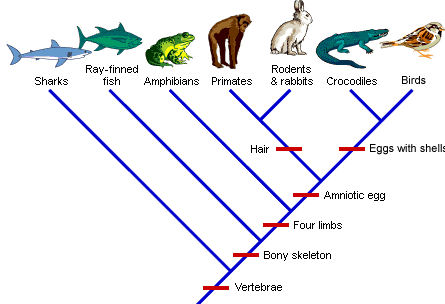
According to this cladogram, primates are most closely related to -
a)
Amphibians
b)
Rodents and rabbits
c)
Crocodiles
d)
Birds
72.
Individuals that are well adapted to their environment will survive and produce:
a)
Fewer mutations
b)
Stronger genes
c)
More offspring
d)
Better traits
73.
Why is DNA important?
a)
it is very small and very complicated
b)
it's in everything
c)
it serves as the blueprint for traits of all living things
d)
because we eat it every day for energy
74.
This trait always shows up in an organism when the allele is present
a)
dominant allele
b)
codominance
c)
probability
d)
recessive allele
75.

Which of the following is an example of incomplete dominance?

a)

A red cow and a white bull have a red and white spotted calf.

b)

Human ABO blood types

c)

A red flowering plant and a white flowering plant have pink flowered offspring.

d)

A tall plant and a short plant have tall offspring.