wayground logo

Free Printable Worksheets

Font size

S
M
L
XL
Worksheets

Final Exam Review Honors Biology 2022

Total questions: 69

Worksheet time: 2hrs 38mins

Name
Class
Date
1.
The physical appearance of an organism based on traits
a)
Genotype
b)
Phenotype
c)
Meiosis
d)
Genetics
2.
Hair colour is an example of
a)
genotype
b)
phenotype
3.

The alleles that are in your genes (AA for example, or Aa)

a)
genotype
b)
phenotype
4.
The main goal of the Human Genome Project (HGP) was to:
a)
Identify the unique parts of each person's DNA.
b)
Identify genes responsible for human diseases.
c)
Identify genes responsible for human behavior.
d)
Determine the entire sequence of human DNA.
5.
Which best describes the impact that the Human Genome Project (HGP) has had on society?
a)
It has helped scientists determine that certain genes can cause diseases 
b)
It has led to discrimination against genetically flawed individuals
c)
It has led to the appearance of new diseases
d)
It has cost society billions of dollars without any major benefits
6.
How many base pairs (bp) are in the human genome?
a)
1 billion bp
b)
4 billion bp
c)
3 billion bp
d)
3.5 billion bp
7.
Identify an application of genetic sequencing below:
a)
Improved and more accurate diagnosis of inherited disorders due to single genes
b)
Providing personalised medication and treatment depending on the genetic combination
c)
Determine evolutionary relationships between species
d)
All of the above
8.

CRISPR can edit DNA. What organisms naturally has CRISPR?

a)

Viruses

b)

Humans

c)

Plants

d)

Bacteria

9.

Scientists have adapted it to turn it into a biotechnology tool for _______ DNA.

a)

building

b)

editing

c)

destroying

d)

synthesizing

10.
What is a Gene?
a)
A segment of RNA that encodes for a protein
b)
A chromosome
c)
A segment of DNA that encodes for a protein
d)
Your genome
11.
Autotrophs- make their own  food.
Heterotrophs- obtain food from other animals.
Observing the table above, Fungi and Animals are________?
a)
Autotrophs
b)
Heterotrophs
12.
Which of the following animals is not an invertebrate?
a)
octopus
b)
shrimp
c)
Sea anemone
d)
Pelican
13.
Which of the following vertebrate is not a mammal?
a)
Koala
b)
Kangaroo
c)
Giant Salamander
d)
Whale
14.

Which best explains why a sponge is an animal?

a)
b)

All animals breath and sponges breath

c)

Animals live underwater and so do sponges

d)

Animals are multicellular heterotrophs and so are sponges

15.
In the 8 levels of classification which level is the broadest category? 
a)
Kingdom
b)
Family
c)
Species
d)
Domain
16.

Which organism is most closely related to Quercus rubrum?

a)

Acer rubrum

b)

Quercus macrophylla

17.

Which of the following taxa contain the fewest members?

a)

phylum

b)

family

c)

genus

d)

class

18.
What is the purpose of a dichotomous key?
a)
to find a common ancestor
b)
to show the evolution of organisms
c)
to show relationships between organisms
d)
to identify organisms
19.
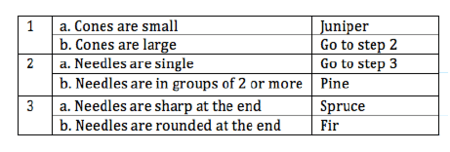
A dichotomous key for trees is provided. Hikers found a tree that has large brown cones and single sharp needles. What species of tree have the hikers found?
a)
Juniper
b)
Pine
c)
Spruce
d)
Fir
20.
When using a dichotomous key to identify organisms, what do we look at?
a)
physical features
b)
weather patterns
c)
environment
d)
diet
21.
Using this dichotomous key, identity the name of the circled fish.
a)
band-tail puffer
b)
spotted goat fish
c)
peacock flounder
d)
trumpet fish
22.
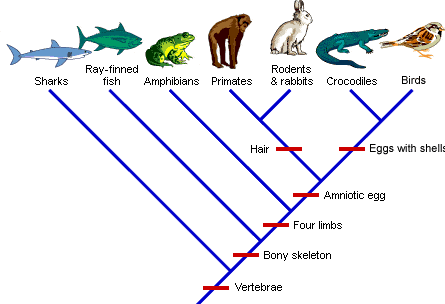
According to this cladogram, sharks are MOST closely related to which organism? 
a)
Amphibians
b)
Ray finned fish
c)
Crocodiles
d)
Birds
23.
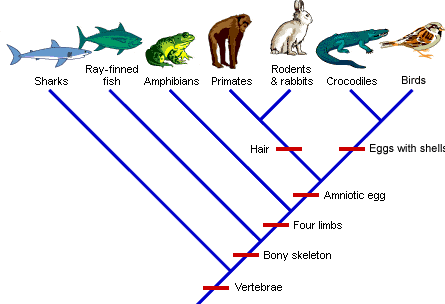
According to this cladogram, birds are LEAST related to: 
a)
Amphibians
b)
Sharks
c)
Ray Finned Fish
d)
Crocodiles
24.
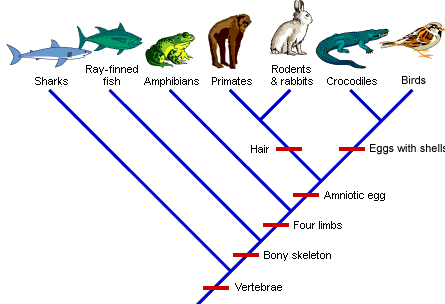
Which two orgainsms have hair? 
a)
Sharks & Ray Finned Fish
b)
Primates & Rodents
c)
Birds & Crocodiles
d)
Rabbits & Birds
25.

Which species is most closely related to species C?

a)

A

b)

B

c)

D

26.

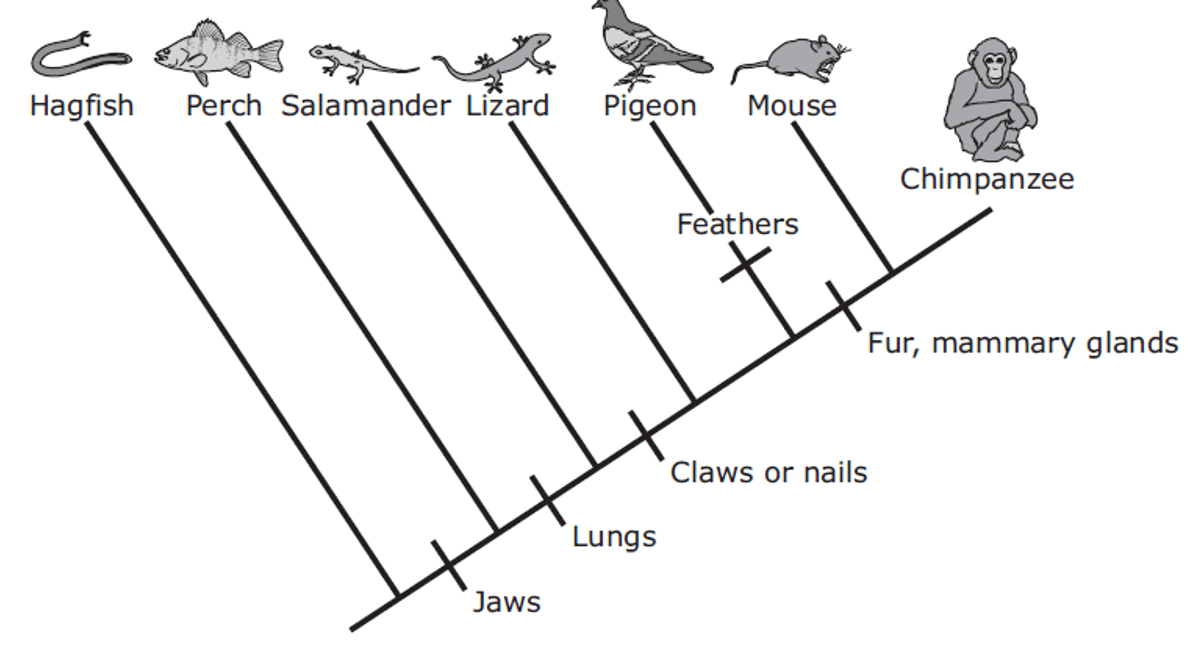
All the animals to the right of the salamander would have the common characteristic of...

a)

Fur

b)

Claws or nails

c)

Lungs

d)

Jaws

27.
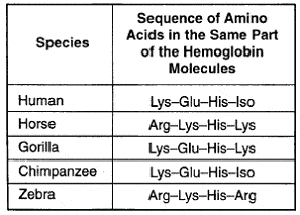
You look at two species and see very similar amino acid sequences. What does this likely tell you?
a)
These are the same animal.
b)
These animals have a common ancestor.
c)
These animals are not likely related.
d)
These animals are likely becoming one species.
28.

Which letter represents the most recent common ancestor of sponges and mushrooms?

a)

A

b)

B

c)

C

d)

D

e)

E

29.

Which cladogram best fits the data table?

a)
b)
c)
30.

Which is more closely related?

a)

Lamprey and tiger

b)

Gorilla and Human

c)

Salamander and Tiger

31.

What number is the common ancestor of C and D

a)

1

b)

2

c)

4

32.

SELECT ALL THAT APPLY: Which of the following must be true in order for organisms to be considered the same species?

a)

They must be able to mate

b)

They must be able to produce viable offspring

c)

They must have structural similaries

d)

They must have the same bone structure

33.
When a population becomes divided by an event such as a new river forming, ____________ has occurred.
a)
Differentiation 
b)
Isolation
c)
Adaptation
d)
Separation
34.
Variations in a population are caused by:
a)
Natural Selection
b)
Selective Breeding
c)
Artificial Selection
d)
Random Mutations
35.
The climate of a certain area is cold, and snow is found on the ground most of the year. Equal numbers of two populations of rabbits are introduced into this climate by a group of scientists. One of the populations is brown and the other is white. Predict what will happen over several generations.
a)
There will be equal numbers of brown and white rabbits
b)
There will be more brown rabbits that white rabbits
c)
There will be more white rabbits than brown rabbits
d)
There is no way to predict what will happen to the rabbit population
36.

Members of a species can breed with other members of the same species.

a)

True

b)

False

37.
___ are mistakes in the DNA that cause variation within a species.
a)
mutations
b)
adaptations
c)
speciations
d)
isolations
38.
Some female peacocks prefer males with large, colorful tales while other female peacocks prefer males with no tail at all. Females are beginning to only mate with the type of males with the tail they prefer. What type of reproductive barrier is this?
a)
behavioral isolation
b)
hybrid sterility 
c)
temporal isolation
d)
mechanical isolation 
39.
The flowers of pink tulips open in the morning, while the flowers of lavender tulips open in the early afternoon. The bees that pollinate these tulips cannot carry pollen back & forth between the two types of tulips because of their flowers being closed at different times of day. What type of reproductive barrier is this?
a)
behavioral isolation
b)
hybrid sterility 
c)
temporal isolation
d)
mechanical isolation 
40.
The term for the formation of new and distinct species over the course of evolution is...
a)
speciation
b)
biological species concept
c)
reproductive barrier
d)
natural selection
41.
What is a species? 
a)
A group of organisms that can mate with each other and produce fertile offspring. 
b)
A group of organisms that can mate and produce offspring even if those offspring are infertile.
c)
A group of organisms that genetically are very different from each other. 
d)
Indivual organisms that live in the same environment. 
42.
A flash flood carried a raft of Amazon ants away from their original population. There is enough distance between the two groups, that they will never meet in nature again. What type of reproductive barrier is this?
a)
behavioral isolation
b)
temporal isolation 
c)
gametic isolation
d)
geographic isolation 
43.

how well an organism can survive and reproduce in its environment

a)

fossil

b)

fitness

c)

inherited trait

44.

the principle that, among the range of inherited trait variations, those contributing to reproduction and survival will most likely be passed on to succeeding generations

a)

fitness

b)

natural selection

c)

evolution

45.

study of the distribution of organisms around the world

a)

herpetology

b)

biogeography

c)

evolution

46.

the gradual change in a species over time

a)

natural selection

b)

evolution

c)

adaptation

47.

What was the name of the book Darwin published?

a)

How it is we evolved.

b)

What is evolution?

c)

The Origin of Species.

d)

The Starting Point of All Life.

48.

What were Darwin's 4 major finding about evolution?

a)

Millions of species alive today arose from single original

life form branching through a process known as speciation

b)

Evolutionary change was gradual

c)

Evolution is process that moves towards complexity and perfection

d)

Evolution did occur

e)

The primary mechanism for evolution is natural selection

49.
Which of these is an example of natural selection?
a)
The largest animal in a population will have more opportunities for reproduction.
b)
Several species of organisms work together so that they all succeed.
c)
One species takes all the resources in an environment leaving none for others.
d)
Organism that are best suited to an environment tend to survive and reproduce more often.
50.
A large herd of goats lives in a field full of poison ivy.  Some goats are able to eat the poison ivy while others have become sick when they eat it. Over time the herd as a whole will tend to
a)
Become more likely to eat poison ivy.
b)
Become less likely to eat poison ivy.
c)
Not change in the proportion of goats that can and can not eat poison ivy.
d)
Eat all the poison ivy and leave only plants all the goats can eat.
51.

How do you "win" at natural selection?

a)

survive

b)

go extinct

c)

survive & reproduce

52.

What word describes a trait that helps an organism survive in its environment?

a)

natural selection

b)

mutation

c)

camouflage

d)

adaptation

53.
Which organisms are most likely to survive?
a)
the best adapted
b)
the fastest
c)
the strongest
d)
the most domesticated (tamed)
54.
Change over time
a)
Natural Selection
b)
Selective Breeding
c)
Homeostasis
d)
Evolution
55.
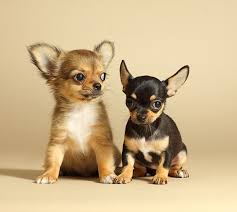
Dogs such as Chihuahuas are examples of....
a)
Artificial Selection 
b)
Natural Selection 
c)
Mutations 
56.
What is the process of which humans breed organisms for certain traits?
a)
artificial selection
b)
descent without modification
c)
inheritance of acquired characteristics
d)
natural selection
57.
Individuals that are well adapted to their environment will survive and produce
a)
better traits
b)
stronger genes
c)
more offspring
d)
fewer mutations
58.
Which of the following is a circular DNA from bacteria that can hold a foreign gene?
a)
plasmid
b)
restriction enzyme
c)
ligase
d)
protein expression
59.
Why are plasmids sometimes given an antibiotic resistance gene?
a)
So that scientists can make antibiotic resistant bacteria and make more money for pharmaceutical companies.
b)
So that scientists can create super bugs.
c)
So that scientists can identify which cells have the rDNA plasmid.
d)
So that scientists can kill the bacteria.
60.

What is genetic transformation?

a)

A prokaryotic cell turning into a eukaryotic cell

b)

Foreign DNA being inserted into a plasmid

c)

A host organism taking in foreign DNA

d)

A gene being mutated

61.

Which one of these agar plates would there be no bacteria growth?

a)

+pGLO LB/amp

b)

+pGLO LB/amp/ara

c)

-pGLO LB/amp

d)

-pGLO LB

62.

Which image is a plasmid?

a)
b)
c)
d)
63.
The "central dogma" states that genetic information flows from 
a)
Protein-->mRNA-->DNA
b)
Protein-->DNA-->mRNA
c)
mRNA-->DNA-->Protein
d)
DNA-->mRNA-->Protein
64.

What is the result of translation?

a)

The synthesis of RNA from protein

b)

The synthesis of protein from RNA

c)

The synthesis of protein from DNA

d)

The synthesis of RNA from DNA

65.

Ecological restoration is defined as

a)

creating an emergency action strategy to protect biodiversity hot spots

b)

the process of repairing damage caused by humans to the biodiversity of natural ecosystems

c)

identifying what places should be protected and connected by corridors

d)

setting aside lands that cannot be developed and are limited to only hikers and campers

66.

Phenology is the study of the _________ of life cycle events in plants and animals, their recurrence, and relationship to the environment

a)

frequency

b)

timing

c)

dependency

d)

magnitude

67.

A(n) ___ worldview believes that while humans are most important, they have an obligation to leave the earth a better place for future generations.

a)

planetary-management and stewardship

b)

planetary-management

c)

stewardship

d)

environmental-wisdom

68.
Soil is made of
a)
weathered rocks and minerals
b)
dead plants and animals
c)
air and water
d)
all of the above
69.

Soil sample that is 60% clay, 30% silt, and 10% sand has which texture?

a)

clay

b)

clay loam

c)

sandy loam

d)

silt