
 Worksheets
environmental science
Total questions: 154
Worksheet time: 2hrs 55mins
What is the difference between Ecology and Environmental Science?
1)Ecology is the study of how organisms interact with their environments.; and environmental science is the study of how the natural world works, and how humans and the environment affect each other.
2)Ecology studies nature; environmental science studies an organism only
3)Ecology is the study of an organism and environmental science does not study any organisms
4)None of these answers are correct
Sustainability is defined as…
1) Consuming at a rate to satisfy the current generation.
2) Rapidly increasing resource consumption over time.
3) Maintaining a rate of resource consumption that will allow the population to survive indefinitely.
4) Not consuming any resources at all.
What is made up of all the living and nonliving things which an organism interacts with?
1) Atmosphere
2) Water Supply
3) Environment
4) Soil

Which is a social movement dedicated to protecting the natural world from human actions
1) Environmental Science
2) Environmental Policy
3) Environmental Ethics
4) Environmentalism
A natural resource that is naturally formed much more slowly than we use it is called
1) renewable
2) ecological
3) non-renewable
4) sustainable
Which of the following is a nonrenewable resource?
1) Wind
2) Sunlight
3) Water
4) Coal
As the human population grows, resources
1) decrease
2) increase
3) stay the same
4) increase, then decrease

Which one is a completely renewable resource?
1) Oil
2) Sunlight
3) Coal
4) Fresh water

Any materials or energy from nature that humans need to survive.
natural resource
environment
nonrenewable resource
inference

True or False? Humans affect the environment but the environment does NOT affect us.
True
False
The environment contains
1) biotic organisms.
2) abiotic things.
3) both biotic and abiotic things.
4) none of the above
Which of the following resources are considered renewable natural resources?
• Sunlight • Wind energy • Wave energy • Geothermal energy
Sunlight only
Petroleum Oil, sunlight, geothermal energy
none of the above
Which of the following are examples of nonrenewable natural resources ?
1) • Sunlight • Wind energy • Wave energy • Geothermal energy
2) • Crude oil • Natural gas • Coal • Copper, aluminum, and other metals
3) Wind Energy only
4) None of the above
What's the difference between renewable and nonrenewable natural resources?
1) Non-renewable natural resources are naturally formed much more slowly and once they are used up--, they are gone forever!
2) options 1 and 4 of the answer choices
3) Non-renewable natural resources are naturally formed much more slowly and once they are used up--, they are gone forever!
4) Renewable natural resources are naturally replenished, or renewed, over short periods.
Completely renewable resources, such as sunlight and wind energy, will always be there for us.
True
False
What will happen if we use resources globally at an unsustainable rate?
1) a lot can happen
2) No one is responsible for using up all of the resources--its the Earth's own fault.
3) when resources are unregulated, everyone takes what he or she or they can until the resources are depleted. No one takes responsibility, so everyone eventually loses.
4) resources can replenish itself it just takes time.

This land form was most likely formed by __________.
the movement of wind
the movement of water
the movement of a glacier
the movement of a tornado

This image shows the slow movement of a glacier. What process is taking place at the point where the ice lands on the water.
weathering of sediment
deposition of sediment
erosion of sediment
melting of sediment
A glacier is __________
a large river that slowly flows towards the ocean
a cave inside a mountain that contains stalactites and stalagmites
a large body of ice that does not move across the earth's surface
a large body of ice and snow that slowly moves towards the ocean
A u-shaped valley can take millions of years to form. Which diagram best represents how a u-shaped valley can form?


Some students were conducting the experiment shown above. What question were the students trying to answer?
What effect does water have on land?
What effect does wind have on land?
What effect does ice have on land?
What effects do water, ice, and wind have on land?
The closer you live to the ocean, the more likely your climate will be a...
marine climate
tropical climate
continental climate
subtropical climate

Which zones are polar zones?
Zones A and B
Zones A and E
Zones E and D
Zones A, E, and C

Which zone is the tropical zone?
Zone B
Zone C
Zone D
Zone E
Possible human solutions for limiting global warming and climate change are...
being more energy-efficient
using renewable sources of energy
removing carbon from fossil fuel emissions
all of the above
Name Greenhouse gas
CO2
Methane
Oxygen
All of above
Possible human solutions for limiting global warming and climate change are...
being more energy-efficient
using renewable sources of energy
removing carbon from fossil fuel emissions
all of the above
Floating sea ice melts...
and causes sea levels to rise because it adds water to the ocean.
but does not cause sea levels to rise because the ice displaces the same amount of ocean water as the melted ice would displace.
Melting land ice...
causes sea levels to rise because it adds water to the ocean.
does not cause sea levels to rise because the water fills the space left by the melted sea ice.

Which is not going to help reduce our carbon footprint?
eating local food
recycling
driving to school
planting trees

Which statement about the albedo of ocean water and sea ice in the summer is correct?
The low albedo of ocean water means the heated water will sink and form ocean currents.
The albedo of sea ice is lower than the albedo of ocean water, leading to the melting of sea ice.
Sea ice absorbs less radiation, making it warmer than ocean water.
Ocean water absorbs more radiation and is warmer than sea ice.

What has the highest albedo?
the oceans
Ice in the Arctic or Antarctic
the ground
roads
Preconceived opinion that is not based on reason or actual experience is called
Brainstorming
Debate
Prejudice
Civil Discourse
Prejudice in favor of or against one thing, person, or group compared with another, usually in a way considered to be unfair is called
Bias
Disagreement
Civil Discourse
Agreement
Leaving out someone's opinion in an article is called bias by
Emphasis
Omission
Use of language
Headlines
When the author of an article has a huge influence on how the article is biased it is
Bias by repetition
Bias by headline
Bias by omission
Bias in the source
When both graphs show the same information, but one is altered to mislead the public, it is called
Bias in numbers and statistics
Bias by omission
Bias by emphasis
Bias by repetition
When the media uses certain words to make people feel a certain way about the report it is called bias by
Repetition
Emphasis
Omission
Use of language
When media creates a distorted view of the event by sensationalizing what is happening it is bias by
Repetition
Omission
Headlines
Use of language
When the media puts certain stories on the front page of the newspaper, or show certain news stories first, it is bias by
Omission
Emphasis
Numbers and statistics
Connotation
When the media repeats the same stories and headlines, it is bias by
Prejudice
The source
Numbers and statistics
Repetition


The main human activity that releases greenhouse gases is
using public transportation and there by reduce the affects of greenhouse gases.
burning fossil fuels
texting on cellphones
eating meat
Which of the following gases IS NOT considered a greenhouse gas?
carbon dioxide
nitrogen
water vapor
methane
Which of the following is contributing to an increase in carbon dioxide in the atmosphere?
deforestation
photosynthesis and respiration
oceans acidification
all of the above
Global temperatures have been increasing drastically?
since the Jurassic Era (time of dinosaurs) 65 million yr ago
since the advent of human kind.
since the industrial revolution.
Climate change is not real and there is not scientific evidence of temperature change.

The largest store of Carbon Dioxide on our planet is found in which of the following?
In the atmosphere
In our Oceans
Barried in the ground
In living organisms
Scientists collect data on climate all around the world. They then input this data into a mathematical or computer-based model to simulate real-world conditions.
True
False
Currently, about 10% of Earth is covered with ice all year-round. If this ice melts, what could happen to Earth's temperature?
decrease in temperature
increase in temperature
rise in sea level
rise of zombie polar bears
The total amount of greenhouse gases released by a product, service or event over its full life cycle is linked to __________________________
the carbon cycle
it’s carbon footprint
pollution
CFCs
The thinning of the ozone layer is also known as the
ozone hole
ozone gap
ozone space
ozone void
SUnburn occurs when your skin is exposed to harmful ______ rays
radio
magnetic
ultraviolet
infrared
Gamma radiation can be used to treat
cataracts
sunburn
reduced crop yields
cancer
What is the normal amounts of ozone in the atmosphere?
100
160
200
300

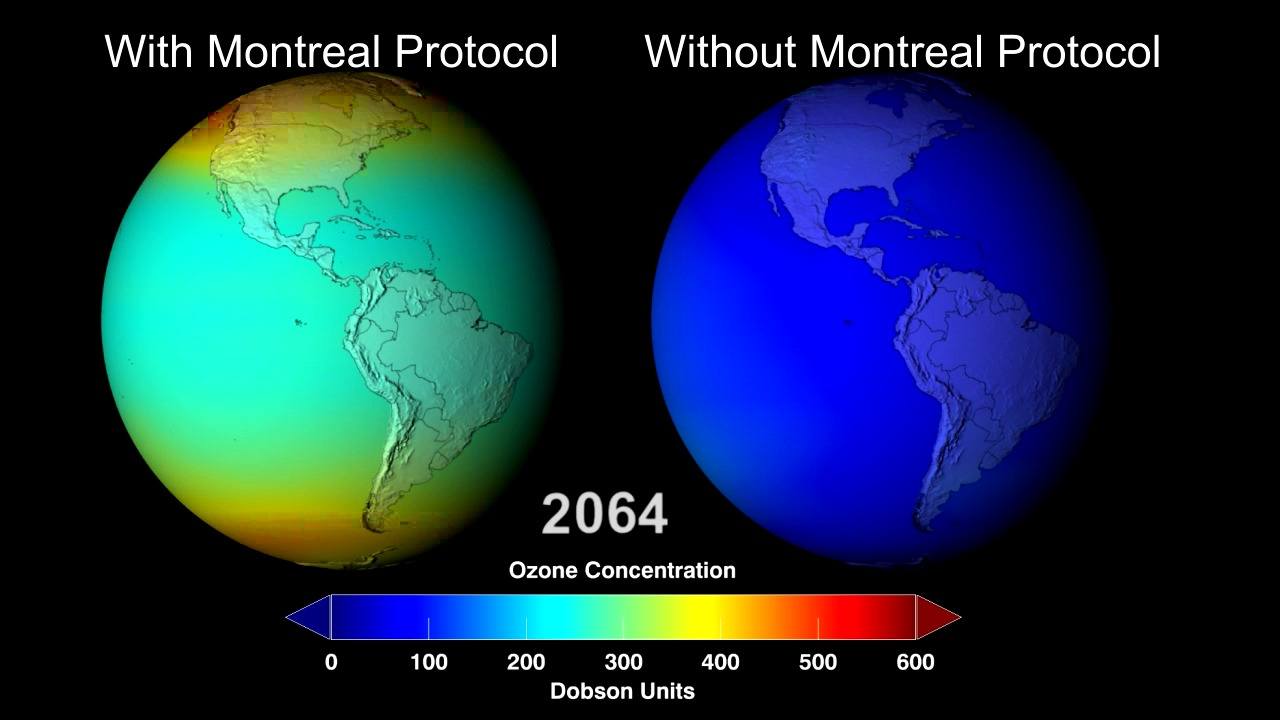
The concentration of ozone is measured in _____ units. The blue and purple colours represent ____ levels of ozone.
Dobson , Low
Dobson , High
Dobson , zero
The thinning of the ozone layer is also known as the
ozone hole
ozone gap
ozone space
ozone void
Ozone is formed in the
troposhere
stratosphere
mesosphere
thermosphere
The ozone layer is an actual hole. True or false?
True
False
Which type of radiation is absorbed by the ozone layer?
infrared
gamma
visible light
ultraviolet
Ozone is made of which chemical element?
Carbon
Hydrogen
Oxygen
Nitrogen
CFCs are responsible for the damage caused to the ozone layer. Select ALL of chemical elements make up CFCs.
Carbon
Hydrogen
Oxygen
Fluorine
Chlorine
Adding harmful things to the environment is called
Pollution
Waste
Acid rain
Sulfur dioxide
Which of these problems can be caused by air pollution?
Respiratory problems
Increased disease for humans
Reduced food sources for humans
Decrease in global temperatures
Ozone is made of which chemical element?
Carbon
Hydrogen
Oxygen
Nitrogen
The thinning of the ozone layer is also known as the
ozone hole
ozone gap
ozone space
ozone void
Ozone is formed in the
troposhere
stratosphere
mesosphere
thermosphere
The concentration of ozone is measured in _____ units. The blue and purple colors represent ____ levels of ozone.
Dobson , Low
Dobson , High
Decibel , Low
Decibel , High

How many oxygen atoms does a molecule of ozone contain?
1
2
3
4
When was the first news of the ozone hole first published?
1965
1974
1985
1994
The depletion in the Ozone layer is caused by:
Carbon dioxide
Nitrous oxide
Methane
Chlorofluorocarbon
Which of the following represents ozone gas molecule:
O6
O4
O9
O3
The Montreal Protocol was passed in
1985
1986
1987
1982
Where is the largest 'hole' in the ozone layer located?
Over the United States
Over Europe
Over Antarctica
Around the equator

Which of these sets of three items produce CFCs
cars, factories, and cardboard
spray cans, cardboard, insulation
spray cans, refrigerant, cardboard
spray cans, refrigerant, insulation
Which are effects of UV radiation on living organisms? select ALL that are true.
It can cause cataracts.
It can cause mutation in DNA.
It can disrupt food chains by causing harm to photosynthetic organisms.
It can cause organisms to overheat.
Which is the proper expression about OZONE?
Good Up High, Bad Nearby
Bad Up High , Good Nearby
The ozone layer protects us from
Increased atmospheric heat
CFCs
UV rays
Decreased atmospheric heat
Though CFC production has been curtailed, the threat to upper atmospheric ozone continues because CFCs
become harmless quickly.
destroy ozone for only a short time.
persist but stop destroying ozone.
persist and continue to destroy ozone for decades.
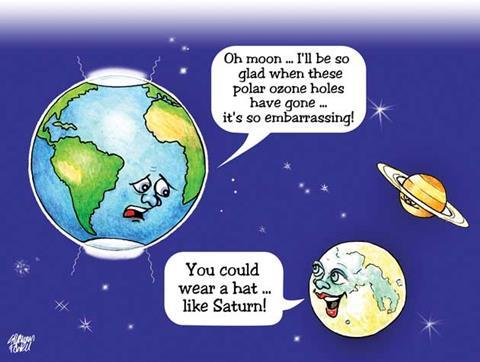
When is the ozone hole largest?
early Antarctic spring
late Antarctic summer
early Antarctic winter
late Antarctic fall
Which of the following is NOT an ingredient that is needed to produce the ozone hole?
Infrared Light
Cold Temperatures
UV Light
Chlorine from CFCs
Which are effects of UV radiation on living organisms? select ALL that are true.
It can cause mutations in amphibians.
It can decrease crop yield because it interferes with photosynthesis.
It can cause skin cancer and premature aging in humans.
It can cause positively effect the marine food chain.
Ground level ozone (also known as tropospheric ozone) is ______________________.
a significant source of air pollution and contributes to the formation of smog
also found in the exosphere
found only in rural areas
a significant source of air pollution and contributes to the increase in the hole in the ozone layer.
Ozone is made up of __________________ oxygen atoms.
3
2
1
5
The atmospheric layer that humans live in is known as the _____________________.
troposphere.
stratosphere.
exosphere.
thermosphere.
"Criteria Air Pollutants" were established by the _________________________________.
Environmental Protection Agency (EPA)
Department of the Interior (DI)
Center for Disease Control (CDC)
United Nations (UN)
Nitrous oxides enter the atmosphere from _____________________.
fossil fuels
meteorites
ozone depletion
CFC's
Chlorofluorocarbons is represented by the abbreviation _________________.
CFC
ChFC
Chl
hydrocarbons
Bad or Hazardous ozone is found in the _______________________________.
troposphere
stratosphere
mesosphere
thermosphere
The most common source of carbon monoxide comes from _____________________________.
vehicles
swamp gases
industrial sources
none of these
Which of the following is an adverse health effect from air pollution?
allergic reactions
bronchial inflammation
eye and lung irritants
All of these are correct
Air pollution causes all of the following, except
holes in the ozone layer
increased particles in the air
acid rain
healthy air to breath
smog
Natural causes of air pollution include all of the following
forest fires
dust
volcanic ash
wind
pollen
A radioactive gas that can build up in homes.
uranium
helium
oxygen
radon
Exposure to too much radon gas can cause
lung cancer
sun burn
blindness
acne
Radon is usually found in this location in your home.
attic
basement
bathroom
kitchen
How do humans cause air pollution?
plowing of fields
burning fossil fuels (coal, oil)
using solar power
driving electric cars
What is the main cause of air pollution?
plowing fields and releasing dust
using solar power
burning fossil fuels
using water power
Climate change caused by extra carbon dioxide in the air that causes heat to get trapped in the atmosphere is called
global warming
photosynthesis
smog
Gases released from power plants mix with water vapor in the sky to make ________________.
smog
acid rain
global warming
particulate matter
A mixture of smoke, fog and chemicals in the air is known as ________.
oxygen
radiation
smog
What are ways that we can decrease air pollution?
carpool
conserving electricity
follow laws made by the EPA
burning extra fossil fuels
Which layer of the atmosphere has meteors?
troposphere
stratosphere
mesosphere
thermosphere
Which layer of the atmosphere contains the ionosphere?
troposphere
stratosphere
mesosphere
thermosphere
Which layer of the atmosphere has weather?
troposphere
stratosphere
mesosphere
thermosphere
Which layer of the atmosphere contains the ozone?
troposphere
stratosphere
mesosphere
thermosphere
"atmo-" means
gas or vapor
water
Earth or rocks
life
Airplanes fly in the
troposhphere
mesosphere
stratosphere
exosphere
As you get farther away from the Earth, the layers of the atmosphere get
colder
warmer
Earth's atmosphere is mostly made up of which 2 gases? CHOOSE 2!!!!!!
nitrogen
oxygen
ozone
water vapor

