wayground logo

Free Printable Worksheets

Font size

S
M
L
XL
Worksheets

NTSE: THE FUNDAMENTAL UNIT OF LIFE

Total questions: 60

Worksheet time: 2hrs 42mins

Name
Class
Date
1.

_______ are the smallest units of life because they grow, reproduce, respond, and use energy.

a)

atoms

b)

elements

c)

cells

d)

all of the above

2.

Cells come from______.

a)

other preexisting cells

b)

cytoplasm

c)

organelles

d)

prokaryotes

3.

The cell theory states that_________

a)

cells come from cells

b)

all organisms are made of cells

c)

cells are the basic unit of structure and function for life

d)

all of the above

4.

________ is the scientist who saw small chambers when looking at cork, and named them “cells”.

a)

Newton

b)

Hooke

c)

Carson

d)

Manning

5.

The size of an organism is determined -

a)

by the size of the cells that make up the organism.

b)

by the number of cells that the organism has.

6.

The cell theory is a result of the work of one very important scientist name Hooke.

a)

True

b)

False

7.

A multicellular organism is made of

a)

one cell

b)

multiple cells

c)

unicellular cells

d)

there is no such thing as a "multicellular" organism

8.

One common feature of all cells is their ability to -

a)

work with other cells in a "unicellular" organism.

b)

reproduce themselves.

c)

be formed by spontaneous generation.

d)

exist without needing a cell membrane

9.

When a cell is ready to reproduce, it duplicates its contents, then divides into two similar (and sometimes exact duplicate) cells.

a)

True

b)

False

10.

Regardless of type, all cells

a)

have a cell membrane

b)

have cytoplasm

c)

can duplicate themselves by undergoing cell division

d)

all of the above

11.
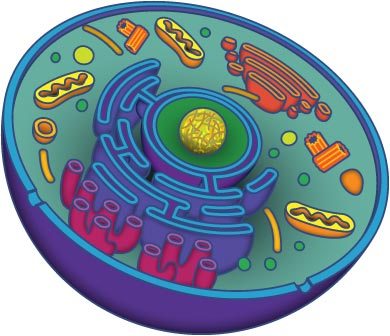
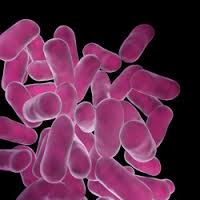
What characteristic defines this organism as prokaryotic?
a)
Ability to move
b)
Ability to respond
c)
Shape and size
d)
Lacking of membrane-bound organelles
12.
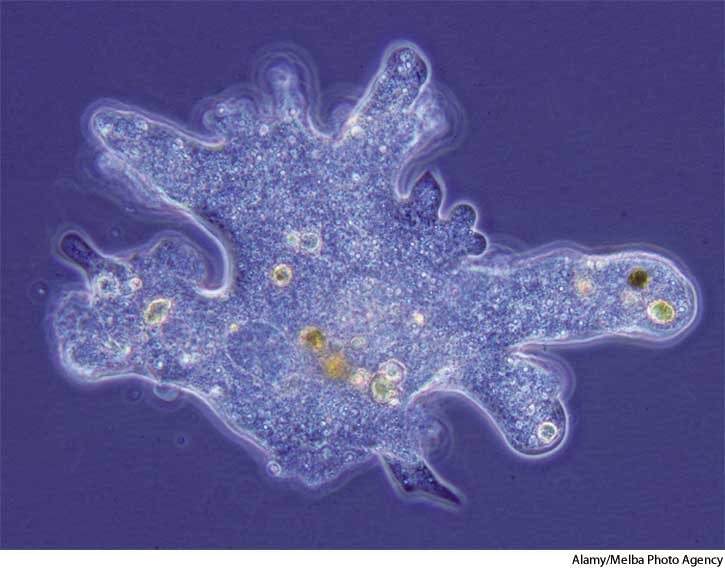
An Amoeba is a unicellular, animal-like protist that lives in ponds and streams. According to cell theory, where did this cell come from?
a)
another pre-existing amoeba cell.
b)
energy from sun that allowed the protist to reproduce.
c)
a multicellular organism.
d)
the nonliving environment.
13.
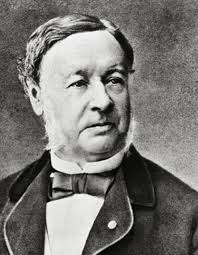
Robert Hooke, Anton van Leeuwenhoek, Theodor Schwann, Rudolf Virchow, and Matthias Schliden were all responsible for what theory?
a)
The Theory of Gravity
b)
The Theory of Relativity
c)
The Cell Theory
d)
The Theory of Continental Drift
14.
What tool do you use to view the cells?
a)
metric ruler
b)
centrifuge
c)
microscope
d)
telescope
15.
Which of the following is NOT a cell theory.
a)
All non-living things are made of cells
b)
All cells come from pre-existing cells
c)
Cells are the basic unit of structure and function of all living things
16.
All living things are made up of...
a)
cells
b)
cell tissues
c)
organ
d)
organ systems
17.
All cells come from___________ cells.
a)
pregnant
b)
pre-existing
c)
paternal
d)
pin size
18.
Rocks are not living because
a)
they never move
b)
they aren't needed for humans
c)
they are not made of cells
d)
they don't break down
19.
What is the basic structural and functional unit of all living things? 
a)
atom
b)
cell
c)
molecule
d)
human
20.
All cells are produced ____________.
a)
From pre-existing and deceased cells
b)
from other pre-existing cells
c)
Cells can come from anywhere, as long as there is the sun.
21.
An organism made of one cell is called
a)
unicellular organism
b)
multicellular organism
22.
What is one way in which all living things on Earth are alike?
a)
All living things have hair.
b)
All living things are made of cells and come from other cells.
c)
The cells of all living things have chloroplast.
d)
All living things can move. 
23.
Which of the following statements is not part of the cell theory?
a)
Cells are the basic unit of structure and function in all living things.
b)
All cells are produced from other cells.
c)
Only animal cells are composed of cells.
d)
All living things are composed of cells.
24.
Which of the following scientists concluded that all animals are made of cells?
a)
Rudolf Virchow
b)
Matthais Schleiden
c)
Robert Hooke
d)
Theodor Schwann
25.
Which of the following scientists was the first to observe bacteria under a microscope?
a)
Anton van Leuwenhoek
b)
Matthais Schleiden
c)
Robert Hooke
d)
Theodor Schwann
26.
what is a cell classified as?
a)
a basic unit of structure and function of all living organisms
b)
a unit based on only plants and animals that are living
27.
In order to sustain life, all cells must...
a)
digest nutrients and water
b)
excrete waste and fluids
c)
must be able to maintain a homeostasis environment (aka cellular respiration and regulation)
d)
All of the above
28.
Which is NOT part of the Cell Theory
a)
New cells are produced from existing cells
b)
All living things are composed of cells
c)
Only eukaryotic cells have a nucleus
d)
Cells are the basic unit of structure & function in living things
29.
How are unicellular organisms different from multicellular organisms? 
a)
There are no differences.
b)
They are made of many cells. 
c)
They are only classified as prokaryotes.
d)
They are made of only one cell. 
30.

This is a larger cell and has a nucleus.

a)

Prokaryotic

b)

Eukaryotic

c)

Both

31.

This cell has DNA.

a)

Prokaryotic

b)

Eukaryotic

c)

Both

32.

This cell is a bacterial cell.

a)

Prokaryotic

b)

Eukaryotic

c)

Both

33.

This cell can be a protist, fungi, plant, or animal cell.

a)

Prokaryotic

b)

Eukaryotic

c)

Both

34.

This cell has circular DNA floating in the cytoplasm.

a)

Prokaryotic

b)

Eukaryotic

c)

Both

35.

This cell has linear DNA found in the nucleus.

a)

Prokaryotic

b)

Eukaryotic

c)

Both

36.

This cell is smaller and does NOT have a nucleus.

a)

Prokaryotic

b)

Eukaryotic

c)

Both

37.

What 4 things do ALL cells have in common?

4 lines
38.

Check all that apply. The three parts of the cell theory are:

a)

All living things are made from one or more cells.

b)

Cells are the basic unit of structure and function of living things.

c)

Cells are the largest living organism.

d)

All cells come only from other living cells.

39.

Part one and two of the Cell Theory were created by:

a)

Virchow/Remak

b)

Schwann

c)

Hooke

40.

Part three of the cell theory was created by:

a)

Virchow/Remak

b)

Schwann

c)

Hooke

41.

Which scientist created the first microscope?

a)

Hooke

b)

Leeuwenhoek

c)

Schleiden

42.

Which scientist created the second microscope?

a)

Hooke

b)

Leeuwenhoek

c)

Schleiden

43.

Which scientist said all plants have cells?

a)

Hooke

b)

Schleiden

c)

Virchow

44.

Which scientist said BOTH plants and animals have cells?

a)

Schwann

b)

Hooke

c)

Virchow

45.

Which scientist stole Remak's work?

a)

Virchow

b)

Hooke

c)

Schwann

46.
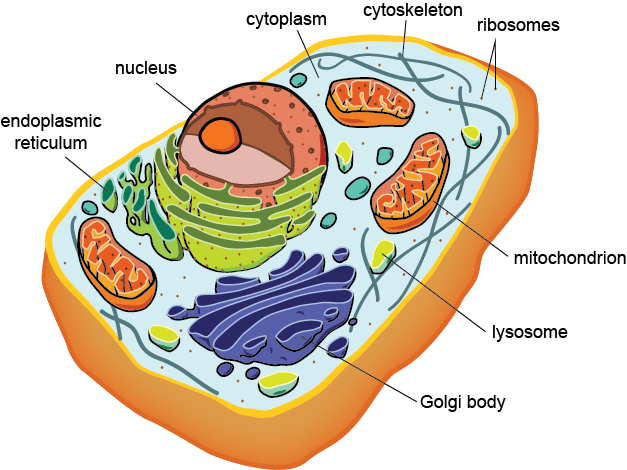
What organelle of the cell produces energy?
a)
Mitochondria 
b)
Golgi Body 
c)
Vesicle 
d)
Vacuole 
47.
What kind of transport does not require energy?
a)
Active 
b)
Vacuole 
c)
Passive 
d)
Na/K Pump 
48.
Which of the following is the best example of osmosis? 
a)
NA/K Pump 
b)
Water moving though the cell membrane 
c)
Kidneys 
d)
Photosynthesis 
49.
Which of the following is correct about the Golgi? 
a)
Digests waste materials 
b)
Protection and Support 
c)
Modifies and packages molecules 
d)
cellular movement 
50.
Molecules using simple diffusion move from 
a)
high to low concentrations 
b)
low to high concentrations 
c)
no concentrations  
d)
both concentrations  
51.
Osmosis is the movement of... 
a)
salt 
b)
sugar 
c)
water 
d)
none of these 
52.
What characteristic defines this organism as prokaryotic?
a)
Ability to move
b)
Ability to respond
c)
Shape and size
d)
Lacking of membrane-bound organelles
53.
Which structures are found in plant cells, but not in animal cells?
a)
Cell membranes and mitochondria
b)
Vacuoles and cholorplasts
c)
Cell walls and cytoplasm
d)
Chloroplasts and cell walls
54.
Which structure is found only in eukaryotic cells?
a)
DNA
b)
Phospholipid membrane
c)
Nuclear membrane
d)
Cytoplasm
55.
Which cellular structure in plants is responsible for photosynthesis?
a)
Nucleus
b)
Cell membrane
c)
Mitochondrion
d)
Chloroplast
56.
What structure is found in plants, but not fungi or animal cells?
a)
Mitochondria
b)
Cell Wall
c)
Phospholipid Bi-layer
d)
Chloroplast
57.
The process where only water is allowed to pass through the cell membrane from a high to low concentration.
a)
meiosis
b)
respiration
c)
diffusion
d)
osmosis
58.
The movement of molecules from an area of high concentration to an area of low concentration.
a)
Osmosis
b)
Respiration
c)
Diffusion
d)
Active Transport
59.
Cells use energy to move materials across a membrane (low to high concentration).
a)
Active transport
b)
Passive transport
c)
Diffusion
d)
Osmosis
60.
Cells transport material across a cell membrane without using energy (high to low concentration)
a)
Passive transport
b)
Concentration
c)
Endocytosis
d)
Active Transport