
 Worksheets
Science 8 Final Review - Water Systems
Total questions: 66
Worksheet time: 34mins
Considering that about 70% of Earth is covered by water, why is much of the world population currently experiencing a water crisis?
Earth's water lies deep in underground caverns that accessible only by deep drilling.
Most of Earth's water has sediment mixed in with it and sediment is very difficult and expensive to remove.
Most of Earth's water is salt water and salt water isn't drinkable.
Most of Earth's water is in a frozen state and therefore it is inaccessible for drinking.
What is virtual water?
Water on a computer screen
Water that is salty
Amount of water to create a product
Water that is frozen
What is water used for in agriculture?
As a pesticide
Cleans crops
Water parks
Irrigation
Which answers are below are the reasons for unequal distribution of water?
Being rich or poor
There is no modern plumbing access to water
fresh water access due to contaminated water and walking many miles to water source
Water is often wasted for building projects and irrigation
All the above
Which type of food has the largest water footprint?
Hamburger
Diet coke
Chocolate
Cheese

The majority of water used worldwide is for...
Domestic use
Industry use
Agricultural use
Water can be found in a variety of forms and locations. Which answer choice orders the sources from most water to least water?
Ocean, frozen in ice, groundwater, lakes and streams
Frozen in ice, groundwater, ocean, lakes and streams
Lakes and streams, ocean, frozen in ice, groundwater
Ocean, groundwater, lakes and streams, frozen in ice

Freshwater only makes up 2.5% of Earth's total water. This table shows the distribution of Earth's freshwater sources. Which of these sources BEST completes the table?
oceans
streams
glaciers
rain water

This graphic shows the largest fresh and salt water sources on Earth. Which of these sources BEST completes the graphic?
snow
clouds
groundwater
swimming pools
What are some causes of water scarcity?
Over population
Over irrigation of agriculture
Climate change and variability
All of these
What are the effects of water scarcity?
Less water, dirty water
More drinkable water
Less crop production
Salty water
All are ways human lives are impacted because of changing water resources. Which of the following is an example of a POSITIVE impact?
Dried up rivers/seas can mean that people lose fishing jobs
Dust storms from the newly dried area can impact breathing and air quality
Dried up rivers/seas can mean loss of farmland and income
Water is able to reach farms and towns further away from a river, opening up more places for people to live

What uses the most water in a typical household?
bathing
laundry
sinks
toilets
Which of the following best describes a glacier that is retreating?
A glacier that has many crevasses.
A glacier that is located in a valley.
A glacier melts faster than it moves downhill.
A glacier that moves downhill faster than it melts
Which of the following is the best example of erosion?
formation of U-shaped valleys by glaciers
formation of sandbars in lakes and rivers
formation of moraines by glaciers
formation of sandy beaches by ocean waves and tides

The glacial feature seen here...
is a moraine.
are striations.
is a floodplain
is a U-shaped valley

Study this diagram of a glacier. Moraines are shown. Moraines are found when what happens to sediment in a glacier?
Abrasion
Erosion
Deposition
Accumulation
A u-shaped valley can take millions of years to form. Which diagram best represents how a u-shaped valley can form?


If a well is over-pumped... what could happen?
there will be more groundwater
less groundwater + aquifers will dry out
the water table does not change
What is an aquifer?
a body of permeable rock which can contain or transmit groundwater.
a well in which water is under pressure especially : one in which the water flows to the surface naturally.
confining layer
solid rock underlying loose deposits such as soil or alluvium.


What else could happen here?
Which surface would be impermeable?


What river feature does this picture show?
V-shaped valley
Meander
Sea arch
waterfall
What geographical feature is caused by fast moving rivers?
U shaped valley
V shaped valley
Sea caves
moraines
As the current in a stream becomes stronger, what will happen to its erosional power?
it will increase
it will decrease
it will stay the same
it will increase then decrease

Seawater is typically denser than freshwater due to seawater’s
Greater depth
Lower freezing point
Smaller mass
Higher salinity


Which ocean feature is pictured?
Trench
Mid-Ocean Ridge
Seamount
Volcanic Island
Which statement correctly describes the motion of water particles due to the action of waves?
they travel from one crest to another
they move in opposite direction of the wave
they rise and fall in a circular motion
they move back and forth
Based on what you learned in this unit, how do you think the climate of an area close to a large body of water would likely be described?
Very hot and dry.
Extremely cold
Unpredictable.
Mild with few extremes.
Why are climates close to water more moderate than in other places?
Water gives up its heat quickly.
Water doesn't freeze.
Water takes the heat from the land.
Water keeps its heat for longer.
In general, surface currents that flow from the tropics toward the poles carry ______________ water.
Warm
Cold
Fresh
oxbow lake
What is the main difference between marine and freshwater ecosystems?
the amount of animals
the amount of plants
the amount of rocks
the amount of salt
What is a limiting factor?
Factors that always increase a population
Factors that always decrease a population
Resources that are unlimited
Factors/resources that limit how many organisms can live in an area at the same time
An animal has thick white fur, which climate is it most likely suited for?
intertidal zone (sea shore)
lake
arctic
river
Which of the following is an example of an adaptation an organism has made to its environment?
Star fish have suction cup-like bottoms to cling onto rocks in intertidal zones.
Pond salamanders die when the weather changes and the water disappears.
Sewage adds nitrogen to water that makes micro-organisms multiply and suffocate the fish.
None of the above.
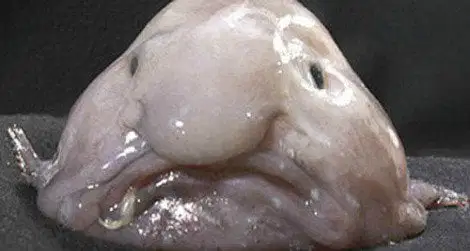
Blobfish, which are found in the deep ocean, have no bones so they don't get crushed by extreme pressures. What limiting factor is described here?
pressure
nutrients
bones
light

Giant lily pads are large to capture more light for photosynthesis. What limiting factor is at work here?
pressure
sunlight
water movement
temperature

The process shown here is called __.
biomagnification
eutrophication
invasive species
mass extinction
When excess nutrients make their way into the waterways in runoff from lawns:
fish populations increase
frog population increases
algal blooms increase
people get more vitamins in their water
What are the effects of overfishing?
Drop in the fish population and fish species going extinct
Threatens the food availability as many people rely on fish as a source of food
Loss of jobs in the fish industry
People earning more money
New species being discovered

If large amounts of shark are removed from the ecosystem below due to overfishing, which of the following are most likely to occur?
Tuna populations would decrease from starvation
Tune populations would increase from less predation
No effect as food webs are not affected by changes
All populations would increase due to less predation
Climate change is a concern for aquatic ecosystems because
It has led to a reduction in large fish by 90%
It can lead to rising sea levels and flooding of coastal habitats
It reduces the number of predators in an ecosystem
Many fish and marine mammals suffocate in the cooler waters


Approximately 90% of fish stocks of large predatory fish are already gone because of this
nutrient pollution
bioinvasion
climate change
overfishing

Consider the following food chain:
Algae > Mayfly > Minnow > Trout
In a polluted ecosystem, which organism would likely have the HIGHEST level of toxic chemicals in its body?
Algae
Mayfly
Minnow
Trout


At which part of the river, Q, R, S or T, is it expected to be least polluted?
Q
R
S
T
What does a pH below 7 mean?
acid
base
neutral

Which beaker in the image has the lowest turbidity?
A
B
C
D
Why are too many nutrients (like nitrates and phosphates) bad for our waters?
Nutrients decrease the pH of the water, causing it to become increasingly acidic
Nutrients change the salinity of the water
Wetlands filter out runoff that may contain nutrients
Nutrients in the water cause too much algae growth, which decrease the level of oxygen in the water

Which is a true statement of the diagram above?
As temperature increases dissolved oxygen increases
As temperature decreases dissolved oxygen decreases
As temperature increases dissolved oxygen decreases
Noe of the above
Which is an accurate prediction of the pH of a lake that receives large amounts of acid rain?
4-5
7-8
9-10
13-14
If there is a large number of living organisms in and around a water supply, then could the water supply be considered healthy?
No, because it contains nitrates.
No, because it contains living organisms.
Yes, because it contains bioindicators, which are used to assess the health of a water supply.
Yes, because it contains nitrates, which are used to assess the health of a water supply.
Which of the following statements best explains why nonpoint pollution is so difficult to prevent?
Because nonpoint pollution can be traced to only one source.
Because the source of nonpoint pollution is difficult to identify.
Because the source of nonpoint pollution may be a factory that can afford large fines.
Because nonpoint pollution is mainly from high temperature, which is impossible for us to affect.

Which of the following can be concluded based on the data?
Sites 5 through 8 are most healthy because they have a high % of bioindicators.
Sites 1 and 13 are most concerning because they have low % of bioindicators.
Sites 5 through 8 are most concerning because they have a high % of bioindicators.
Site 12 is most healthy because it has the lowest % of bioindicators.
Which factors are most characteristic of a healthy body of water?
high temperature and low amounts of algae
low salinity and high turbidity
high pH and low dissolved oxygen
low turbidity and high dissolved oxygen

What can you determine about the health of the stream?
The stream is extremely healthy and has little to no pollution.
The stream has some pollution.
The stream is extremely unhealthy and heavily polluted.
There is no way to determine how healthy this stream is based on this information.

What conclusion could you infer from the graph?
More fish in a pond causes the oxygen to dissolve more
The greater the oxygen concentration the more fish you usually find
The greater the oxygen concentration the fewer fish you usually find
More fish in a pond causes the oxygen to dissolve less
A paper company wants to build a paper mill in the watershed where a village exists. In order to minimize the effect of pollution, where would be the best place to build it?
at the highest point in the watershed
downstream from the village
closest to freshwater
near a main street in the village
"A study published in the Marine Pollution Bulletin recently reported that plastic pollution in the world's oceans costs society up to $2.5 trillion a year." The perspective described here is
technological
economic
ecological
political

