Worksheets
Lab Physics Final Exam
Total questions: 70
Worksheet time: 18hrs 30mins

At which point is potential energy greatest?
W
X
Y
Z

What kind of energy is stored energy?
Potential
Kinetic
None of the above
All of the above

The faster an object moves, the ________ kinetic energy it has.
more
less
none of the above
same

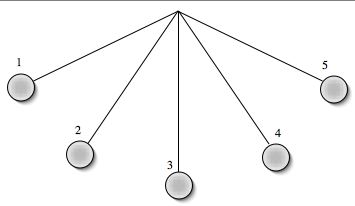
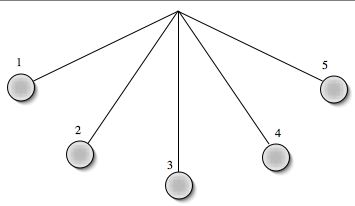
A 60.0 kg person walks from the ground to the roof of a 75m tall building. How much gravitational potential energy does she have at the top of the building (answer in J) ?

What are the two ways in which waves oscillate?
polarization and diffraction
sound and light
kinetic and potential
longitudinal and transverse

What is the number of complete waves passing a fixed point in a given amount of time?
Amplitude
Intensity
Wavelength
Frequency

What is the frequency of this wave? You must count the number of complete waves.
1 Hz
5 Hz
10 Hz

What is frequency measured in?
Milliseconds
Miles
Hertz
Kilograms

Period of a wave refers to...
how long it takes for the event to repeat.
how strong a wave is.
how long a wave is.
how much energy a wave has.

Wavelengths are usually measured in ....
seconds
Hz
inches
meters

What is the distance between the calm sea and the highest wave called?
Wave
Frequency
Amplitude
Magnitude

What does #1 represent in the diagram to the left?
Period
Frequency
Wavelength
Amplitude


Determine the momentum of 1000-kg car moving northward at 20 m/s. Make sure to give your answer in kg * m/s and specify the direction.


When you walk across a carpet in socks, they pick up charges. Later, there aren't any charges in your socks. what probably happened to the charges?
The charges disappeared.
The charges switched signs.
The charges transferred to another object.
The charges broke apart into smaller particles.
You have 2 circular objects, and each has a positive charge near each other, but not touching. Which statement describes the force that is exerted on the objects due to their electric charge?
There is a force pushing both objects to the left.
There is a force pulling the objects toward each other.
There is a force pushing the objects away from each other.
There is no force on the objects due to their electric charge.
A repelling force occurs between two charged objects when the charges of are of __________.
like signs
unlike signs
equal magnitude
unequal magnitude
An attracting force occurs between two charged objects when the charges are of _______________.
like signs
unlike signs
equal magnitude
unequal magnitude
You have two pairs of charged objects interacting with each other. The first pair (A and B) are 10 cm apart. A has a +1 charge and B has a -1 charge.
Pair C and D are 17cm apart. C has a +1 charge, and D has a -1 charge.
Which of these statements is true?
There are no electric forces because the charges in each pair of objects cancel.
The electric force between A and B is smaller than the electric force between C and D.
The electric force between A and B is greater than the force between C and D.
The electric force between A and B is identical in magnitude to the electric force between C and D.
What happens when a neutral material becomes attracted to a negatively charged object that is brought near it?
It doesn't become attracted.
The charges in the neutral object move around because of the nearby charged object.
The neutral material will repel the negatively charged object.
The neutral material loses some of it's positive charges.
Which has a charge with the greatest magnitude?
An object with a charge of 0.
An object with a charge of -2
An object with a charge of +2
An object with a charge of -3
A physical property of matter that moves through wires and causes static electricity.
conservation of a charge
a circuit
electric charge
positive and negative
What unit is used to measure voltage?
Ohms
Omega
Volts
Amps
What unit is used to measure current?
Ohms
Omega
Volts
Amps
What unit is used to measure resistance?
Ohms
Omega
Volts
Amps
Which is the right form of Ohm's Law?
V=I/R
V=R/I
I=V/R
I=R/V
What is the voltage of a circuit with 4 ohms of resistance and 3 amps of current?
What is the current in a circuit with 6 ohms of resistance and a battery containing 24 Volts?
1/4 A
144 A
4 A
0.4 A

If a toaster produces 12 ohms of resistance in a 120-volt circuit, what is the amount of current in the circuit?

What is a circuit?
A rate of charges flow through a cross-sectional area of a wire
A closed path that a current can flow along
In a stereo amplifier circuit, there is a resistor across which you measure 25V, and your ammeter indicates 50mA of current through the resistor. What is the resistor’s value in ohms?
20Ω
500Ω
1250Ω
5150Ω

What type of circuit is shown in the diagram?
Series
Parallel
Andalusian
Trifling

Based on the graph, which of the following would be true regarding the relationship of voltage and current?
As voltage increases, current decreases.
Voltage will not affect current.
As voltage decreases, current increases.
As voltage increases, current also increases.

In the motor schematic shown here, the current loop serves as the _______ of the motor.
Battery
Resistor
Multimeter
Armature
The purpose of the paper clips in the project was to: ___________________.
hold the battery in place.
provide electromagnetic induction.
connect the battery to the current loop.

What is the purpose of removing the insulation from one side of the enamel wire in the electric motor project?
To increase the resistance of the wire
To create intermittent contact that allows the current loop to rotate in one direction
To create contact between the enamel coating and the battery
To decrease the length of the wire so that it can rotate freely
A material through which electrons do NOT flow easily is a(n) ______.
insulator
conductor
fuse
circuit breaker

This is an example of what type of circuit?
simple
series
parallel

Which statement accurately describes the charged particles in Diagram A?
The particles have opposite charges:
Blue: Negative Red: Positive
The particles repel one another.
The particles have like charges:
Blue: Negative Red: Negative
The particles attract one another.
The particles have opposite charges:
Blue: Positive Red: Negative
The particles attract one another.
The particles have like charges:
Blue: Positive Red: Positive
The particles attract one another.


Based on the arrangement of the electric field lines in the diagram, what are the charges?
both charges are the same
the charges are opposite
they are neutral; no charge

Which statement best describes the electric field lines in the image?
The charges are neutral.
Both charges are negative, so the field lines are alike.
The field lines move toward a positive charge and away from a negative charge.
The field lines move away from a positive charge and toward a negative charge.

The quantity that causes electric charges to move is called ______ . Pick the best answer.
resistance
voltage difference
static electricity
current

Electric field lines always flow from _____ charges to _____ charges.
positive; negative
negative; positive
neutral; negative
neutral; positive
The Law of Conservation of Charge states that _____.
charge can be created and destroyed but NOT transferred.
charge cannot be created and destroyed but it can be transferred.
charge cannot be created and destroyed and it cannot be transferred.
none of the answers


What happens if you line the magnets up so that two of the same poles face each other? (ex. North Pole & North Pole)
They will attract
They will repel

Which of the following statements about electric charge is true?
Objects must be touching on another to exert electrical force.
Electrical forces act at a distance.
Air cannot conduct electricity; it is conducted only by solid materials.
Opposite electric charges always repel one another.

A ________ is a device that has a magnet on a needle that spins freely. It is used for navigation because its needle usually points north.
calculator
ruler
compass
map

Dylan puts two magnetic toy trains very close to each other on a track. What will happen next, and why?
The trains will not move because the magnets are not touching.
The trains will move closer to each other because the magnetic force will pull the trains together.
The trains will move away from each other because the magnetic force will push the trains apart.
The trains will move away from each other because the magnets are not touching.
A 2.0 m long wire carrying 10 A of current moves through an 6.0 T magnetic field. What is the magnetic force acting on the wire?
A 6.0 C charge with a mass of 0.20 kg is moving with a speed of 2.5 m/s. It enters into a magnetic field of 3.0 T and begins to move in a circle. What is the radius of curvature of the path the charge follows in this field?
45.0 m
.028 m
.139 m
36 m
A straight wire carrying a 9.0 A current is in a uniform magnetic field oriented at right angles to the wire. When 0.75 m of wire is in the field, the force on the wire is 1.2 N. What is the strength of the magnetic field (B)?
F = I×L×B
⊙⊙⊙⊙⊙⊙⊙⊙⊙⊙⊙⊙⊙⊙⊙
⊙⊙⊙⊙⊙⊙⊙⊙⊙⊙⊙⊙⊙⊙⊙
⊙⊙⊙⊙⊙⊙⊙⊙⊙⊙⊙⊙⊙⊙⊙
⊗⊗⊗⊗⊗⊗⊗⊗⊗⊗⊗⊗⊗⊗⊗⊗
⊗⊗⊗⊗⊗⊗⊗⊗⊗⊗⊗⊗⊗⊗⊗⊗
⊗⊗⊗⊗⊗⊗⊗⊗⊗⊗⊗⊗⊗⊗⊗⊗

Two long, parallel wires each carry the same
current 𝐼 in the same direction. What is the total
magnetic field at the point 𝑃 midway between the
wires?
Zero
Directed into the page
Directed out of the page
Directed to the left
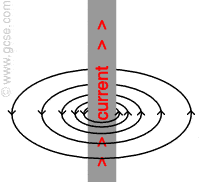
What is the shape of a magnetic field around a wire?